


Sermo
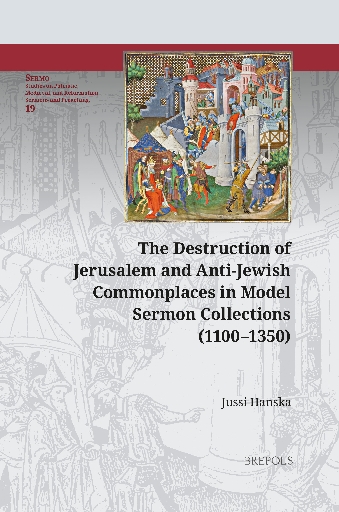
The Destruction of Jerusalem and Anti-Jewish Commonplaces in Model Sermon Collections (1100–1350)
This book analyses the diffusion of anti-Judaic stereotypes and topoi in thirteenth- and early fourteenth-century model sermon collections. It concentrates on the sermons on Luke 19.41-48 where Jesus foretells the Destruction of Jerusalem. The preachers took the view that the Destruction of Jerusalem was divine vengeance for the Jews because they killed Jesus. Thus these sermons were a good venue for those preachers who wanted to preach against the Jews.
Model sermon collections were the closest thing to modern mass media. Consequently their role in the diffusion of anti-Judaic attitudes was significant. The anti-Judaic writings of the early Church Fathers were only read by few literate church men whereas model sermons reached the illiterate masses all over Christianity. Therefore they played a major role in diffusing anti-Judaic attitudes amongst the population at large and thus contributed to the marginalization of the Jews to various libels expulsions violence and eventually to large-scale pogroms.
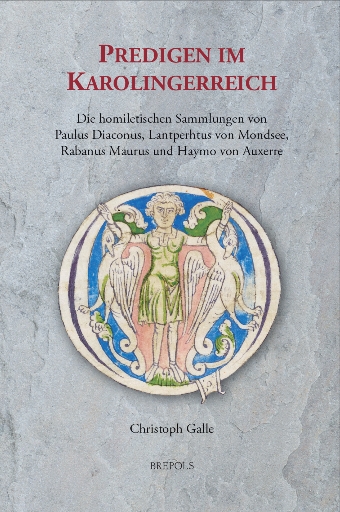
Predigen im Karolingerreich
Die homiletischen Sammlungenvon Paulus Diaconus, Lanthpertus von Mondsee, Rabanus Maurus und Haymo von Auxerre
By supporting the Christianization process within their realm Carolingian rulers not only served matters of faith obedience and healing of the soul; they also intended to unify the conquered tribes remove their pagan traditions and strengthen royal power. Carolingian sermon collections provide significant insights into the cultural political and social background to the process of Christianization in the Carolingian world. Five sample collections compiled by leading intellectuals are now explored extensively and comparatively for the first time.
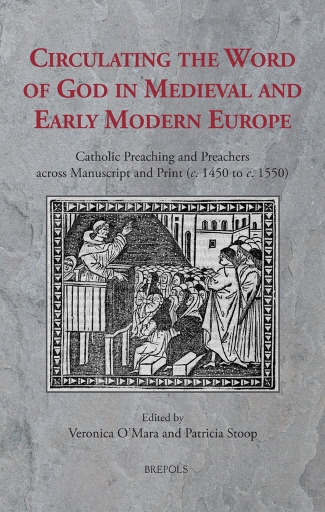
Circulating the Word of God in Medieval and Early Modern Europe
Catholic Preaching and Preachers across Manuscript and Print (c. 1450 to c. 1550)
This volume concentrates on how the sermon a pivotal element in mass communication aimed to shape the people of Europe. Rather than setting up the usual binary divides it highlights the linguistic complications the textual inter-relationships the confessional cross-currents and the variations between public and private sermon dissemination operating at different rates and with variable results throughout Europe. Effectively the emphasis here is on how Catholic preachers and Catholic preaching carried on in the period between the handwritten and the printed sermon a time when not only the mode of production was changing but when the very purpose and meaning of preaching itself would soon alter in a western Christian world that was becoming no longer completely Catholic. By examining case-studies chosen from countries with contrasting manuscript and printing traditions (Denmark England Finland France Germany Italy the Low Countries Romania Spain and Sweden) we aim to examine some of the main historical literary and theological factors in the development of the sermon in Latin and the vernaculars which is itself in the process of changing formats and sometimes languages at a time of religious ferment from the advent of print to the death of Martin Luther. These essays which are effectively in dialogue with each other are divided into geographical/linguistic sections organized along broadly chronological lines. They circulate from the peripheries of Europe to the centre moving from areas where evidence is now scarce to situations of thriving production.
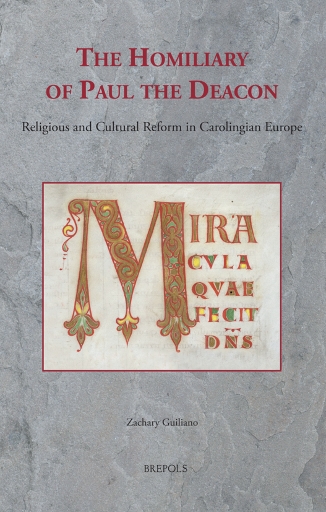
The Homiliary of Paul the Deacon
Religious and Cultural Reform in Carolingian Europe
As one of the most widely used products of Charlemagne’s religious and cultural reforms the homiliary of Paul the Deacon is a unique monument in the history of Western Europe. Completed around AD 797 this collection of patristic homilies and sermons shaped the religious faith and liturgical practices of the churches in Carolingian Europe and those of countless other churches over the course of a millennium of use.
Until now scholarly study of the homiliary has rested on seven partial witnesses to the collection. This study however draws on over 80 newly identified witnesses from the Carolingian period while providing a brief guide and handlist to hundreds of later manuscripts. It replaces the current scholarly reconstruction of the homiliary discusses the significance of the collection’s liturgical structure and provisions and considers the composition of the homiliary in the context of Charlemagne’s reforms and Paul’s patron-client relationships. The study also brings together evidence for the production and use of this text in thirty-three Carolingian monasteries cathedrals and churches.
The book then addresses the homiliary’s theological character: the contents of the homiliary reflected a concern for expressing and defending orthodox doctrine at Charlemagne’s court against Trinitarian and Christological heresies as well as an urgent attention to moral reform in the light of a belief in the imminence of divine judgement. Finally the study demonstrates the varied uses of Paul’s collection and its historical legacy.
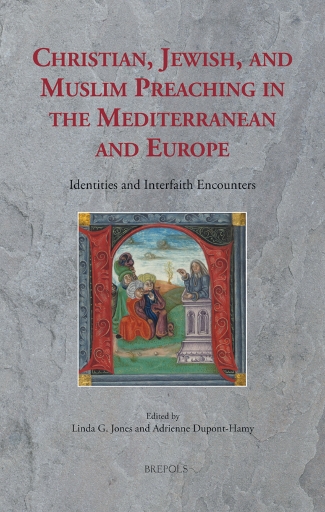
Christian, Jewish, and Muslim Preaching in the Mediterranean and Europe
Identities and Interfaith Encounters
This volume explores the sermons and activities of Christian Jewish and Muslim preachers who shaped ideas about religious and gendered identities and alterity throughout the Mediterranean and northern Europe. Preachers of all three traditions played a decisive role in defining the religious identities of their communities often in response to negative images projected onto religious others. The studies cover a broad spectrum of premodern Europe and the Mediterranean and address the ways that preaching reflects transcultural contacts as well as social intellectual and hermeneutical encounters among diverse societies and religious communities.
The essays are divided into three themes. Part One ‘Religious and Gendered Identities and Alterities’ examines how religious identity is inflected by the presence or the ‘absent presence’ of religious others and interrogates how gender informs religious identity piety and alterity. The chapters in Part Two ‘Hermeneutical Identities Alterities and Transcultural Relations in Christian and Jewish Preaching’ offer contrasting interpretations of the impact of anti-Judaism in Christian preaching and analyse Jewish responses to Christian polemic. Part Three ‘Muslim and Christian Orators and Inter-faith Encounters’ explores these encounters from the dual perspectives of Crusade and military conflict and interreligious dialogue disputation and proselytization. The volume positions itself at the intellectual crossroads between comparative medieval sermons studies and transcultural Mediterranean and European studies.
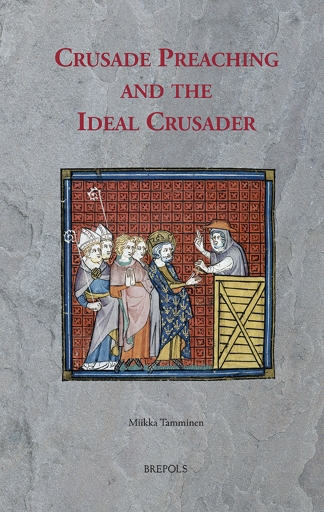
Crusade Preaching and the Ideal Crusader
Crusade preachers had a number of responsibilities during the Middle Ages. Preachers were responsible for communicating crusading messages to Christian subjects. They recruited crusaders and sought supporters for the movement. They collected crusading funds and participated in campaigns. During the journeys the preachers played a central role in creating the identity of the crusading armies in sustaining the morale of the crusaders and in explaining the goals of an expedition to the participants. This book explores the creation of the ideal crusader in thirteenth-century society. It presents for the first time a study of the crusade model sermons of the thirteenth century as a corpus in its entirety. How were the crusades promoted? How was crusading ideology disseminated throughout Christendom by experienced crusade preachers? What were the characteristics of the ideal crusader? The book considers various dimensions of crusade ideology and the values associated with crusading in thirteenth-century society - the qualities that were appreciated and valued by contemporaries and the traits that were considered disadvantageous in a crusading context. The expectations the aspirations and the concerns of crusade preachers with regard to the conduct and the quality of the crusaders are also explored.
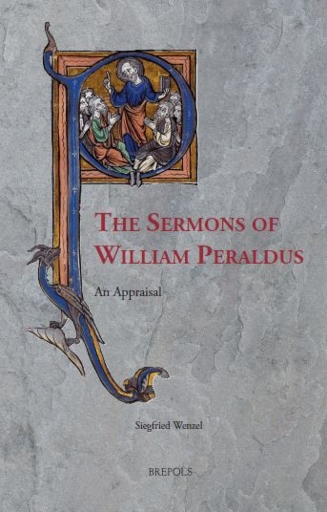
The Sermons of William Peraldus
An Appraisal
The French Dominican William Peraldus or Guillaume Peyraut (died c. 1275) well known for his long summae on the vices and virtues also produced several cycles of sermons of which two deal with the Epistle and the Gospel readings for the Sundays of the Church year. This study analyzes the latter in some detail and argues that rather than collecting sermons he had preached earlier Peraldus wrote these sermons systematically for the use of other preachers. The Epistle sermons for the first Sunday in Advent and the Gospel sermons for the third Sunday in Advent are presented in their original Latin text together with an English translation in order to demonstrate how Peraldus dealt with the biblical text as well as his moral concerns and his literary style. The selected texts are then compared with several other major cycles produced in France in Peraldus’s time. Like his summae on the vices and the virtues Peraldus’s sermons became very popular in medieval Europe as is witnessed by selective copying and citations that can be seen in a number of instances primarily from the sermon literature of later medieval England. One aspect of this popularity is the adaptation of his material into a genuine sermon as it can be found in the sermons attributed to Repingdon of which one is here examined in detail.
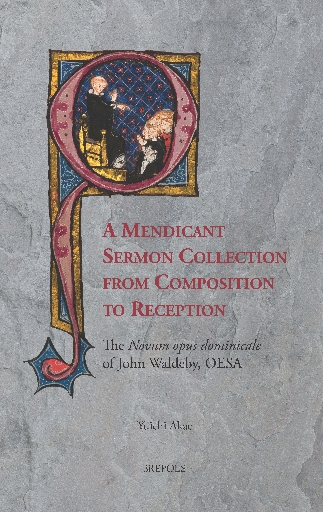
A Mendicant Sermon Collection from Composition to Reception
The 'Novum opus dominicale' of John Waldeby, OESA
This study analyzes in detail the Novum opus dominicale of John Waldeby a member of the convent of the Augustinian friars in York. This unedited collection of some sixty sermons for Sundays and major feasts is extant in two manuscripts in the Bodleian Library (Oxford) MSS Laud misc. 77 and Bodley 687. The present study places the work and the preacher within the wider context of mendicant preaching as mass communication in the Middle Ages. In doing so it focuses on the educational environment which encompasses conventual education and preaching to the laity and on the library in which this model sermon collection was compiled and used identifying the role and meticulous design of the mendicant library collection. Through a detailed examination of sermon form in conjunction with Robert of Basevorn’s Forma praedicandi it tries to disentangle the intricate considerations involved in the processes of sermon composition and reveals the strategies of interpretation and communication in the use of exempla and imagery in preaching. It investigates the careful organization of Waldeby’s work as a cycle of sermons for an entire year. In this way it makes possible a deeper understanding of a wide range of complex issues from composition to reception through the prism of this important fourteenth-century sermon collection.
From Words to Deeds
The Effectiveness of Preaching in the Late Middle Ages
Preaching is a method of exhorting the practice of virtues and the performance of one’s duties. If people are not moved to act preachers become obsolete. Because of this preachers in the Middle Ages understood the importance of ensuring that their words were heeded and disseminated.
The focus of this volume is the relationship whether direct or indirect between what was preached and what was achieved. The articles in this collection present a range of studies from the thirteenth to the sixteenth century and while focused on Italy also give a broad European perspective.
The volume investigates both the tools employed by preachers and the pragmatic aims and outcomes of their sermons. It does this by exploring the various oratorical and gesticular techniques employed by preachers as well as their methods of preparing themselves to deliver their message and preparing their audiences to receive it. Furthermore the volume considers both hypothetical and concrete relationships between preachers’ words and civic policies and the behaviours of groups or individual citizens as well as the question of how and when words were translated into actions.
Sermo doctorum
Compilers, Preachers and their Audiences in the Early Middle Ages
Despite their large number and their potential significance for our understanding of the genesis of Christian thought and practice early medieval sermons have been conspicuously neglected by modern scholarship. Taking their lead from recent studies that transformed our understanding of the post-Roman world the various contributors to this collection of essays explore a wide range of topics related to the composition transmission and dissemination of sermons and homiliaries in the early medieval West. Some papers focus on individual sermons in an attempt to identify their authors and aims; others examine the manuscript evidence for the compilation and transmission of composite homiliaries; and a few question our concept of early medieval sermons as a peculiar genre that merits special attention. By bringing early medieval sermons into the centre of discussion this volume which is the first book dedicated to early medieval sermons and homiliaries makes an important contribution to our understanding of the religious culture of the early medieval West. This multi-lingual collection of papers examines a plethora of texts which in the past were pushed to the margins of historical research and offers a fresh look at these works in their own cultural religious and social context.

Preaching and Political Society
From Late Antiquity to the End of the Middle Ages / Depuis l'Antiquité tardive jusqu'à la fin du Moyen Âge
Depuis au moins l’Antiquité tardive les relations entre prédication et société politique ont été nombreuses et variées. Dans le présent volume ont été réunies douze contributions qui en mettant en œuvre une documentation le plus souvent encore inédite étudient comment dans des contextes historiques culturels et géographiques différents ces relations complexes se sont déployées. Les contributions permettent ainsi de mieux apprécier dans quelles circonstances et selon quelles modalités plusieurs prédicateurs ont été amenés à proposer dans leurs sermons une réflexion de nature politique censée contribuer à la formation de l’opinion des puissants et des fidèles en général. Elles montrent aussi quelques-unes des voies qui permettent d’explorer un domaine de recherche qui n’a suscité jusqu’ici qu’un nombre limités de travaux mais dont la connaissance est sans aucun doute indispensable pour mieux comprendre la complexité des sociétés médiévales.
Preaching the Word in Manuscript and Print in Late Medieval England
Essays in Honour of Susan Powell
The focus of this volume on Middle English and Latin material in prose and verse concerns the preaching of the word of God in an expansive sense in late medieval England. This collection of essays explores the multiple ways in which the sermon in England in the later Middle Ages both influenced and was influenced by other devotional and didactic material both implicitly and explicitly. The essays pay special attention to examples of textual complexity in the sermon as manifested in the manuscript and early printed traditions. By examining sermon technique and methodology contributors present related material that either travels alongside sermons or shares the same preaching or teaching milieu. While analysing sermons and other homiletic material the essays also explore areas such as the dating and illustration of incunabula which have an important bearing on the sermons and devotional literature of the period but are normally studied in an isolated fashion. These fit in well with the particular emphasis in the collection on the sermon in the early printed period. In addition attention is paid to some of the ways in which sermon-study was first brought to the fore by late nineteenth-century editors and early twentieth-century commentators. In this way various threads are brought together new texts and ideas presented and potential future avenues for research suggested that will continue to be important for an understanding of sermons and related religious literature in late medieval England.
The Last Judgement in Medieval Preaching
In the Middle Ages the sermon was a powerful and versatile means of bringing the Word of God to the people. In fact in the oral culture of that period it was the primary medium for Christian clergy to convey religious education to lay audiences. Moreover the sermon played an important role in the liturgy and life of the religious orders. With the growth of lay literacy the sermon collection also developed into a vernacular literary genre of its own.
Two aspects of Christian piety hopeful expectation on the one hand and fearful anticipation on the other were decisive factors for the shaping of religious life and practical pastoral care. Both these aspects were often brought to the fore in sermons on the Last Judgement as part of a recurrent argument against a life too much oriented towards the world. The preachers dwell on both the Particular Judgement occurring immediately after death and the General Judgement over the whole of creation at the end of times.
This volume brings together scholars from several European countries with the purpose to present their research on the theme of the Last Judgement in medieval sermons. The scope of scholars is broadened to incorporate not only specialists in sermon studies but also historians theologians and literary historians to encourage research along new multi-perspectival lines.
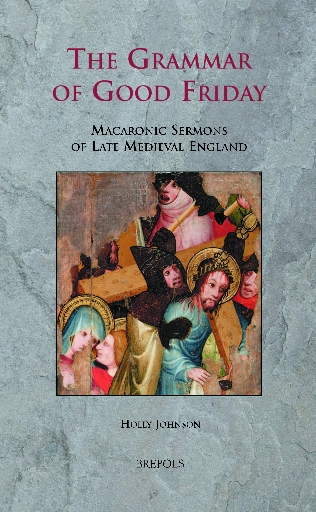
The Grammar of Good Friday
Macaronic Sermons of Late Medieval England
This volume offers a study of Good Friday preaching and an edition (with modern translation) of five highly imaginative rhetorically sophisticated macaronic (mixed Latin and Middle English) Good Friday sermons preached in late medieval England (c. 1350-1450). The study investigates the way medieval preachers made use of popular topoi and popular categorizations reworking and recombining well-known material to create new sets of associations and images. The features that these sermons share with other genres such as Passion plays meditative treatises and Middle English lyrics reveal the rich cross-fertilization of this material and the cultural pervasiveness of topoi and images we often associate with literary works such as Piers Plowman. The sermons in this edition all but one previously unavailable increase our understanding of the medieval art of memory the relationship between verbal and visual images affective piety and medieval rhetoric. Finally all five of the sermons edited are macaronic two of them switching between Latin and Middle English within almost every sentence; they thus offer a significant witness to this curious linguistic phenomenon. This volume presents new and rich source material and places this material into its wider cultural contexts with a detailed investigation of the rhetorical dimensions and intended effects of late medieval Good Friday preaching.
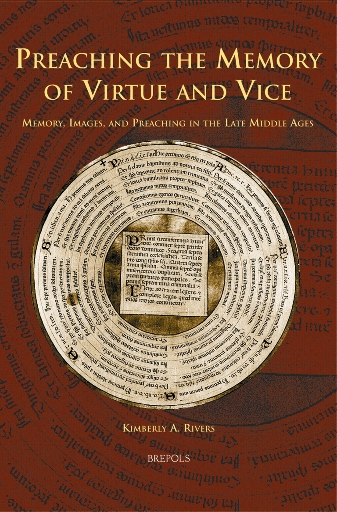
Preaching the Memory of Virtue and Vice
Memory, Images, and Preaching in the Late Middle Ages
This volume explores the integral role of memory and mnemonic techniques in medieval preaching from the thirteenth to the early fifteenth century. It argues that the mendicant orders inherited from the early Middle Ages both the simple mnemonic techniques of rhetorical practice and a tradition of monastic meditation founded on memory images. In the thirteenth century Dominican and Franciscan writers drew on these basic techniques even as they re-evaluated the ancient mnemonic system of the Rhetorica ad Herennium (first century BC). The increasing emphasis that intellectuals placed upon cognitive science ethics and on distinctions between rhetoric and logic created a climate that welcomed an image-based memory system designed for orators. The book also explores the Franciscan contribution to mnemonics which has been almost entirely neglected by scholars. As the Franciscans came to value imaginative meditation as part of their own spiritual lives their habit of meditating on mental images of the virtues and vices eventually spilled out into their sermons. As the new orators of the period Franciscans and Dominicans each inserted mnemonic images into their sermons as a way to aid the recall of both preachers and listeners. The products of such mnemonic practices in medieval sermons which included elaborate descriptions of buildings schematic renderings of the number seven and verbal images of the virtues and vices were then allegorised in moral terms and circulated on the continent in exempla collections. This book argues that verbal images and complicated schema functioned as ‘ordering devices’ for those preaching and listening to sermons whilst also provoking an affective response that enhanced listeners’ devotional and penitential experiences.
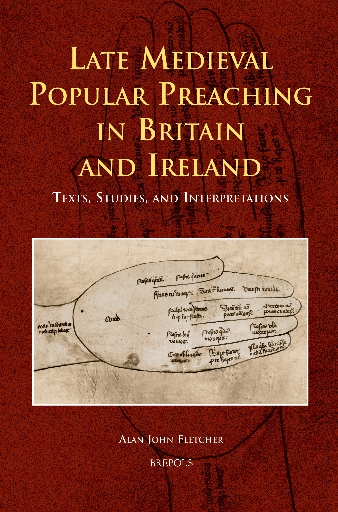
Late Medieval Popular Preaching in Britain and Ireland
Texts, Studies, and Interpretations
Sermons and preaching played a key role in forming the religious mentality and outlook of many late medieval men and women. Yet the practice of preaching depended on many variables: the nature and disposition of the audience the competence of the preacher and even the stylistic variations that different Orders developed to distinguish their preachers from others. This study and anthology of late medieval popular preaching intended for the laity explores aspects of this diversity by presenting examples of sermons from each of the major wings of the late medieval orthodox Church: the friars the regulars the canons regular the secular canons and the seculars. It also reveals the ways in which this diversity in forms of preaching finds its correlate in the codicological diversity that existed between sermon manuscripts themselves. Late Medieval Popular Preaching in Britain and Ireland demonstrates how formidable and culturally constitutive a force preaching was and also examines some of the ways in which it impinged on the production of vernacular literature ultimately revealing the powerful and wide-spread influence of sermon discourse on cultural production in greater British society.
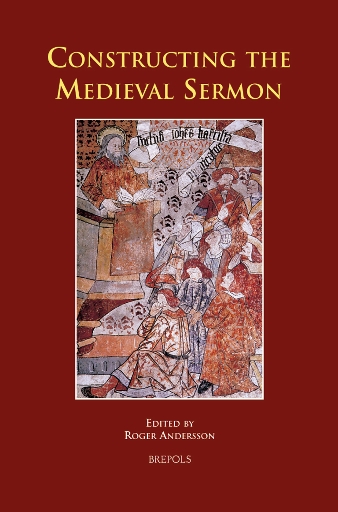
Constructing the Medieval Sermon
In considering the construction of medieval sermons the term ‘construction’ has many meanings. Those studied here range from questions about sermon composition with the help of artes praedicandi or model collections to a more abstract investigation of the mental construction of the concepts of sermon and preacher. Sermons from a range of European countries written both in Latin and vernaculars are subjected to a broad variety of analyses. The approach demonstrates the vitality of this sub-discipline. Most of the essays are more occupied with literary and philological problems than with the religious content of the sermons. While many focus on vernacular sermons the Latin cultural and literary background is always considered and shows how vernacular preaching was in part based on a more learned Latin culture. The collection testifies both to the increasing esteem of the study of vernacular sermons and to a revival in the study of all those things contained in a preacher’s ‘workshop’ ranging from rhetorical invention medieval library holdings and study-aids through to factors that are crucial for the successful delivery of the sermon such as the choice of language mnemonic devices and addressing the audience. The interdisciplinary approach remains ever-present not only in the diversity of the academic disciplines represented but also within individual essays. The volume is based on a conference held in Stockholm 7-9 October 2004.
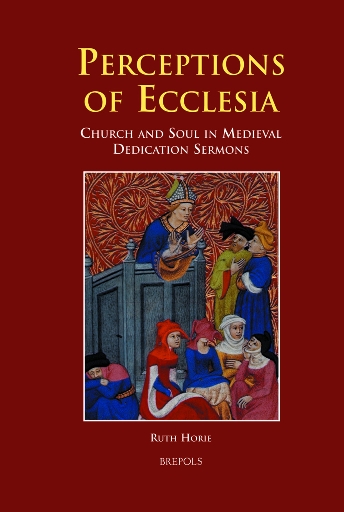
Perceptions of Ecclesia
Church and Soul in Medieval Dedication Sermons
The medieval laity’s understanding of the church and their own role within it was largely shaped by preaching. How did preachers actually define the word 'church' and what was the essence of their ecclesiological teachings? Sermons for the dedication of a church reveal that the term
ecclesia had numerous connotations. Three key ideas recur with particular frequency: the material church the Christian community and the church of the soul. The physical church building held an important place in medieval society as a tangible connecting link between ordinary people on the one hand and saints angels and the divine presence on the other. Yet perhaps more significantly it stood as a symbol for the human soul. Preachers treat the dedication of the physical church as an elaborate metaphor for the spiritual consecration of the soul. The prominent interest in the concept of the soul as church which is reflected in sermons suggests a much more individual less community-oriented focus in medieval spirituality than has been generally assumed.