


Studies in European Urban History (1100-1800)
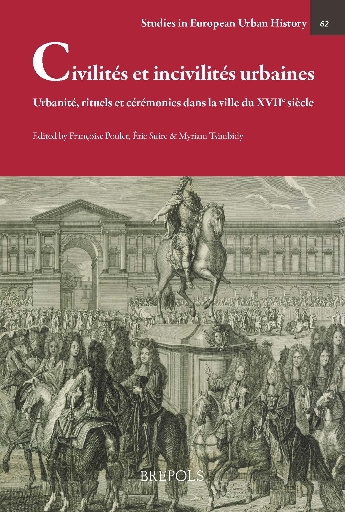
Civilités et incivilités urbaines
Urbanité, rituels et cérémonies dans la ville du xvii e siècle
Les notions d’urbanité de politesse et de savoir-vivre connaissent depuis une dizaine d’années un intérêt renouvelé à la fois dans leurs dimensions politique sociale et culturelle.
Cet ouvrage souhaite envisager le milieu urbain en tant qu’espace de civilité en croisant les regards des historiens et des spécialistes de la littérature de l’âge classique. Il s’agit aussi d’examiner les cérémonies et rituels du XVIIe siècle comme un ensemble de réseaux de pratiques codifiées dans lequel interagissent notamment des usages collectifs et des préséances individuelles. Ces usages organisent l’espace urbain comme l’espace curial en se déployant en leur sein. La confrontation des archives et des documents littéraires mais aussi des outils et des méthodologies utilisés par ces différents champs disciplinaires permet d’étudier à nouveaux frais les relations entre des concepts trop rapidement perçus comme antonymiques : l’incivilité n’est jamais le contraire de la civilité et il n’existe pas de civilisation ni de société civilisée qui puisse se revendiquer comme statique ou achevée. En revenant dans le sillage des travaux de Norbert Elias aux origines de la civilité moderne envisagée à l’échelle européenne cet ouvrage entreprend d’examiner ce processus non pas de manière linéaire et téléologique mais dans la complexité de ses évolutions et mutations afin de mieux contextualiser les débats contemporains autour de l’incivilité.
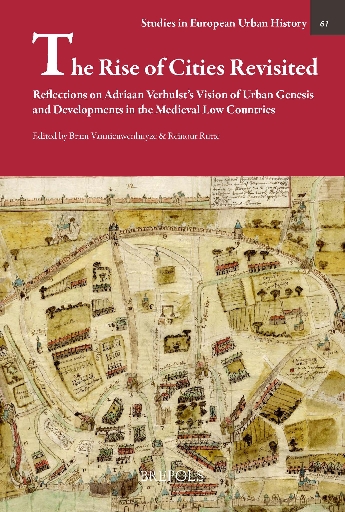
The Rise of Cities Revisited
Reflections on Adriaan Verhulst's Vision of Urban Genesis and Developments in the Medieval Low Countries
Adriaan Verhulst's The Rise of Cities in North-West Europe (1999) is the last comprehensive work written by a single author on the urban genesis and spatial developments of cities in the medieval Low Countries. Since then monographs specialised studies and articles have been published on various cities and towns while urban archaeologists have carried out numerous excavations. Much new knowledge has been gained yet many gaps and the need for comparative overviews remain.Twenty-five years after Verhulst’s synthesis The Rise of Cities Revisited takes a fresh look at the origins and developments of cities and towns in the Low Countries between the tenth and the sixteenth centuries critically assesses progress made in scholarship and outlines future directions for research. The chapters of the book are written by senior and junior specialists from various fields including medieval history historical geography economic history archaeology and building history. The Rise of Cities Revisited presents a state of the art and provides scholars with tools to study this complex subject in future.
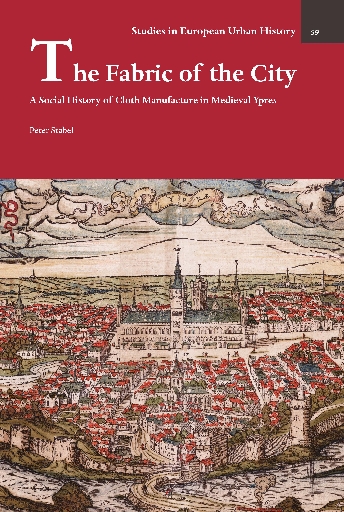
The Fabric of the City
A Social History of Cloth Manufacture in Medieval Ypres
Textile industries were one of the driving forces of the urbanisation process in medieval Northwest Europe and nowhere was their impact so profound as in Flanders where almost all larger and smaller cities were involved in manufacturing woollens from the 12th to the 16th century. Ypres the third city in the county was perhaps the most important concentration of industrial labour and capital in this period. In their heyday in the 13th and 14th centuries Ypres woollens were exported all over Europe and Ypres entrepreneurs and textile workers were able to adapt in very flexible ways to changes in demand. This book investigates not only what the impact of cloth manufacture was on urban society it also tries to unravel the social mechanisms of industrial development in late medieval cities. It focuses on social inequalities and on the often difficult relationship between the various stakeholders in the urban cloth industry: merchants entrepreneurs guild masters and skilled and unskilled workers. Through the analysis work practices wage levels investment strategies gender issues and political aspirations it unravels how urban industries in the pre-industrial era shaped social relations in the city how they moulded the urban fabric.
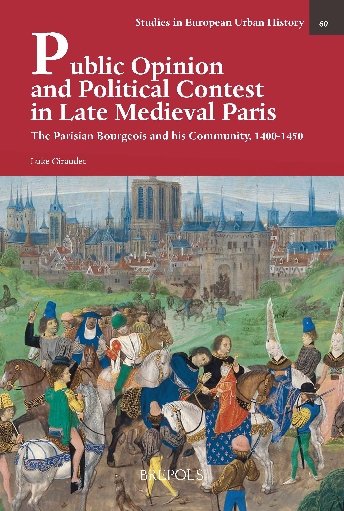
Public Opinion and Political Contest in Late Medieval Paris
The Parisian Bourgeois and his Community, 1400-50
Public Opinion and Political Contest presents an important historiographical intervention regarding the emergence of larger political publics during the fifteenth century. The study analyses political interaction and public opinion in medieval Europe’s largest city through the lens of the only continuous narrative source compiled in Paris during the early fifteenth century the well-known Journal d’un bourgeois de Paris. Examining one of the most turbulent periods in Paris’ history which witnessed civil conflict and English occupation the monograph contributes substantially to understandings of late medieval popular opinion conceptually and empirically revealing Parisian groups bound by shared idioms and assumptions engaging with supralocal movements. Through an assessment of contemporary reactions to official communication protest in public space rumour and civic ceremony the book presents a timely mirror to themes in flux today addressing historiographical conclusions that have relegated premodern societies from considerations of the public sphere. As a result this nuanced assessment of the Journal d’un bourgeois de Paris reveals how access to informational media and forums for discussion bound Parisians and framed a wider commentary upon political issues beyond the highest echelons of medieval society.
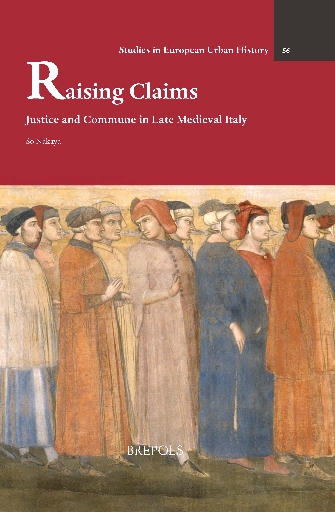
Raising Claims
Justice and Commune in Late Medieval Italy
Ceccholo making a claim against Nello for the payment of unpaid land rent. Jacopo Giovanni and Turi appealing for an exemption from tax. The long queue of claimants that formed in front of the communal palace was an everyday scene in fourteenth century Lucca. What is remarkable is the enormous ubiquity of such claims. In this Tuscan city of only twenty thousand people an average of ten thousand claims were filed at the civil court each year. Why did local residents submit claims to the commune in such numbers? And what effect did this daily accumulation have on the development of the commune?
In the fourteenth century Italian communes the established public authorities that governed the populace underwent a shift toward becoming oligarchic regimes. The communes’ character as a form of government in which power was held ‘in common’ by ‘the public’ seemed be on the verge of disappearing. At this time political leaders and judicial magistrates began to rely on their own discretion when rendering their decisions a practice that was recognized as legitimate even when such decisions deviated from positive law. By the beginning of the fifteenth century this shift in the underlying logic of the legitimacy of rulings became entrenched in the jural and political character of the commune portending the advent of the modern era. Based on the archival records from law courts and councils this book elucidates the process of the emergence and shaping of a new form of justice and the transformation of the commune by focusing on everyday practices that unfolded in the spheres of civil and criminal justice by inhabitants who raised claims and the governors who heard them.
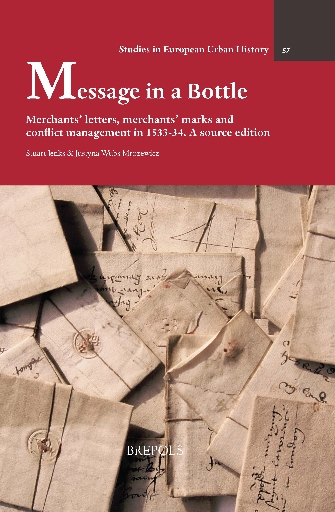
Message in a Bottle
Merchants' letters, merchants' marks and conflict management in 1533-34. A source edition
In 1533 a batch of merchant letters was to be delivered from Antwerp to London. They never reached their destination and were only opened in a Hanseatic archive almost 500 years later. Like a message in a bottle the letters unfold unknown individual stories and large-scale drama. They offer a fascinating glimpse into the world of the early 16th century from hard-nosed business and prices in code sent to a wife to the fond greetings of an English father to his three young sons or a secretive message of a grandmother from Antwerp. At the backdrop war was looming: the letters were part of a booty taken in the English Channel in August of 1533. Lübeck privateers plundered six neutral ships carting the goods of English Dutch Spanish Venetian and Hanseatic merchants off to Lübeck and Hamburg. As a result Henry VIII of England exploded with rage and restitution claims were made. Soon after Lübeck realized the potential political cost of the action and an administrative machinery for the return of the booty was set in motion. Extensive documentation was produced under the eye of notaries providing an overview of properties of the involved parties including many merchant marks.
The combination of unique letters and administrative documents offers new openings into the study of economic political and social history of pre-modern northern Europe. Highlights are the migration of people and goods resourceful conflict management and the voice of ordinary people captured in their letters.
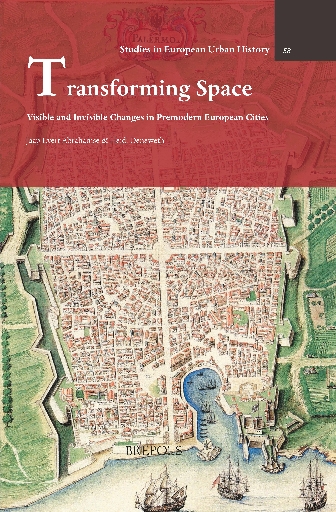
Transforming space
Visible and invisible changes in premodern European cities
Transforming Space deals with visible and invisible changes in premodern cities their causes and the way in which they were perceived and received. The chapters in this book analyse the development and management of urban space combining case studies and insights from a range of cities from all over Europe. Several contributions deal with the impact of major events on the urban tissue: geopolitics; disasters such as fires or wars; expropriation or redevelopment projects directed by urban governments; religious change such as the Dissolution in England and the Reformation and Counter-Reformation on the continent. On closer scrutiny however some of these major events were only an accelerator of already ongoing processes of change. By shifting the perspective from the city as a whole to neighbourhoods urban blocks or even plots of land other chapters reveal how functional change or real estate dynamics changed the urban landscape almost imperceptibly. This book is written from a comparative perspective that takes into account path-dependency. Pre-existing power relations ideology and mentality the resilience of property structures the impact of building regulations subsidies or the effects of real estate markets are shown to have had different outcomes for different social groups and the evolution of neighbourhoods.
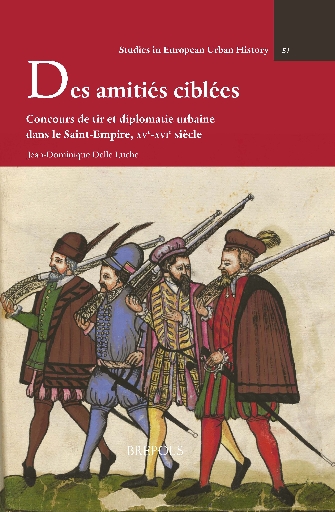
Des amitiés ciblées
Concours de tir et diplomatie urbaine dans le Saint-Empire, xv e-xvi e siècle
Plus d’un millier de concours de tir sont organisés aux xv e et xvi e siècles dans le sud du Saint-Empire. Comme pour les Jeux olympiques modernes villes libres et résidences des princes rivalisent lors de compétitions d’arbalète et d’arquebuse. À travers des performances sportives des rituels symboliques des stratégies de communication la constitution de délégations aux couleurs de chaque ville ainsi que des descriptions poétiques c’est la hiérarchie des villes allemandes et suisses ainsi que leur influence dans les réseaux régionaux ou confessionnels qui sont réaffirmées. Cet ouvrage contribue à la fois à l’histoire des villes de l’espace germanophone et à l’histoire des sports avant la modernité.
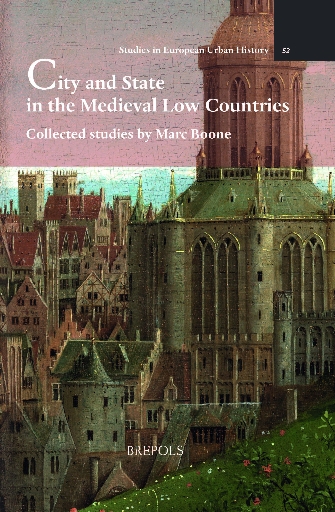
City and State in the Medieval Low Countries
Collected studies by Marc Boone
The oeuvre of Marc Boone (Ghent 1955) has become standard reading for specialists of medieval European towns and cities as well as for those interested in the history of state building - most notably that of the Burgundian polity. Honoring Ghent University’s venerable tradition of medieval studies begun by Henri Pirenne and building upon the work of his Doktorvater Walter Prevenier Marc Boone also investigated taxation and the history of government spending popular protest and the persecution of “deviant” sexuality. Over the course of his rich career he served as president of the European Association of Urban History and as dean of the Faculty of Arts and Philosophy of Ghent University. For more than twenty years he taught the introductory course on historical criticism to every first-year student of the faculty and thus had a major impact on the pensée critique of generations of young minds. Upon the occasion of his retirement in 2021 his former students have compiled this collection of some of his best historical essays half of which have been translated from French and Dutch into English.
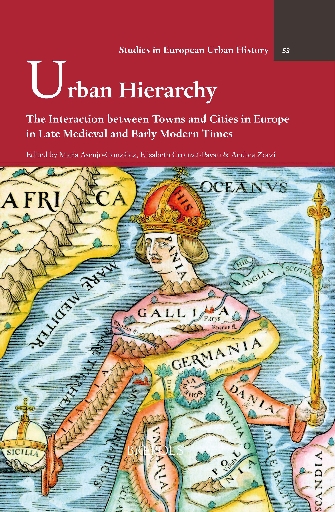
Urban Hierarchy
The Interaction between Towns and Cities in Europe in Late Medieval and Early Modern Times
Urban hierarchy means a new study approach that focuses on the reciprocal concurrence of relationships between urban centers their complementarity opposition support and ongoing collaboration. The goal is to go beyond the single analysis of a city and focus on the interaction between towns and cities and to distinguish their dynamics and the degree of specialization within a political framework. The final objective is to provide a comprehensive historical analysis as urban history requires open to the advantages of interdisciplinarity and the contributions of the international researchers that will take part in the session. The processes of urban hierarchization are not only vital for observing the dynamics of cities but also for studying in depth the response capabilities of the urban systems in the face of new challenges and stimuli. These aspects of the historical analysis of cities are still quite unexplored and therefore they will receive a great deal of attention in the book. The initial regional frameworks will not exclude small towns and rural centers since even though they may look less potentially relevant they might display greater specific development. Thanks to a renewed methodology and special attention to the empirical basis it is possible to improve our knowledge of the urban systems of European regions at the end of the Middle Ages and the beginning of the Early Modern Era shedding light on some aspects of the medieval past that will also influence other scientific areas of humanities.
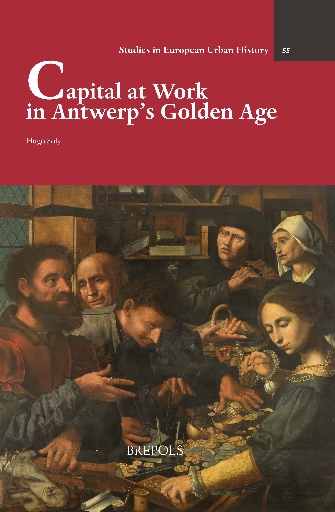
Capital at Work in Antwerp’s Golden Age
Erasmus Schetz Gaspar Ducci and Gilbert van Schoonbeke. Contemporaries made it indisputably clear that these three moneymakers were exceptional from different perspectives and for different reasons but all commentators implicitly or explicitly referred to their unique economic achievements and they were right to do so. The exceptional careers of the three protagonists shed light on the potential of the most dynamic economic centre of Europe - and the world - during early globalization. Precisely because their economic initiatives were far more ambitious than what other businessmen in Antwerp could or would consider or achieve their careers are ideal vantage points for observing and analysing ‘capital at work’. They also provide an opportunity to examine how commercial capitalism changed and/or was transformed and in what measure the three protagonists extended the frontiers of capitalism.
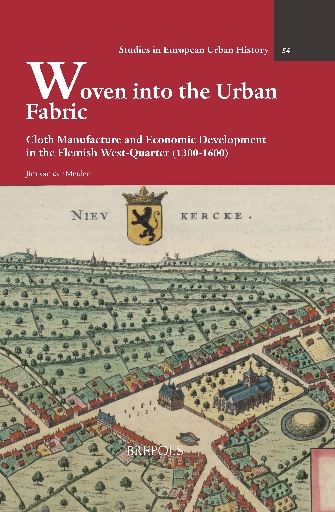
Woven into the Urban Fabric
Cloth Manufacture and Economic Development in the Flemish West-Quarter (1300-1600)
This regional study focuses on the socio-economic development of the so-called West-Quarter of the county of Flanders during the period 1300-1600. Through the expansion of potent textile industries in the countryside from the fourteenth century onwards this region gradually attained distinctly ‘urban’ characteristics in terms of production scale specialisation product quality and the aim for external markets. By the middle of the sixteenth century the West-Quarter had even become one of Flanders’s main production regions of woolen cloth. This book assesses how and why this economic expansion took place why it happened at that particular moment and why in this region. The broader aims of the research are twofold: first to offer a contribution to the debate on Europe’s transition from a ‘feudal’ to a ‘capitalist’ or market economy by looking at the influence of specific social structures and institutional frameworks on the economic development of pre-industrial societies. Secondly this book contributes to the debate about the divide between town and countryside in pre-industrial Europe combining the outlooks and methods of both urban and rural historians in order to qualify this supposed dichotomy.
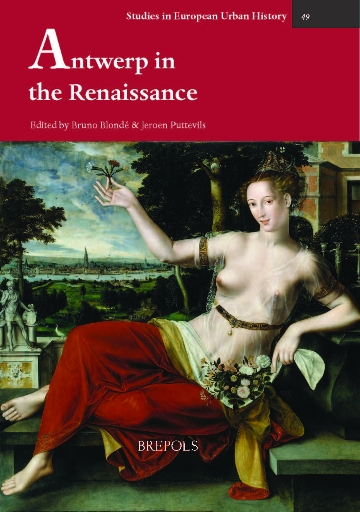
Antwerp in the Renaissance
This book engages with Antwerp in the Renaissance. Bringing together several specialists of sixteenth-century Antwerp it offers new research results and fresh perspectives on the economic cultural and social history of the metropolis in the sixteenth century. Recurrent themes are the creative ways in which the Italian renaissance was translated in the Antwerp context. Imperfect imitation often resulted from the specific social context in which the renaissance was translated: Antwerp was a metropolis marked by a strong commercial ideology a high level affluence and social inequality but also by the presence of large and strong middling layers which contributed to the city’s ‘bourgeois’ character. The growth of the Antwerp market was remarkable: in no time the city gained metropolitan status. This book does a good job in showing how quite a few of the Antwerp ‘achievements’ did result from the absence of ‘existing structures’ and ‘examples’. Moreover the city and its culture were given shape by the many frictions and uncertainties that came along with rapid urban growth and religious turmoil.
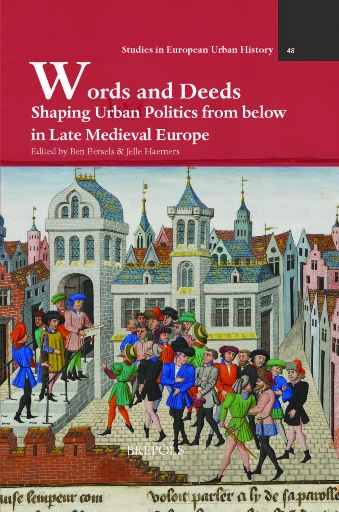
Words and Deeds
Shaping Urban Politics from below in Late Medieval Europe
This book focuses on the city and urban politics because historically towns have been an interesting laboratory for the creation and development of political ideas and practices as they are also today. The contributions in this volume shed light on why how and when citizens participated in the urban political process in late medieval Europe (c. 1300-1500). In other words this book reconsiders the involvement of urban commoners in political matters by studying their claims and wishes their methods of expression and their discursive and ideological strategies. It shows that in order to garner support for and establish the parameters of the most important urban policies medieval urban governments engaged regularly in dialogue with their citizens. While the degree of citizens’ active involvement differed from region to region and even from one town to the next political participation never remained restricted to voting for representatives at set times. This book therefore demonstrates that the making of politics was not the sole prerogative of the government; it was always to some extent a bottom-up process as well.
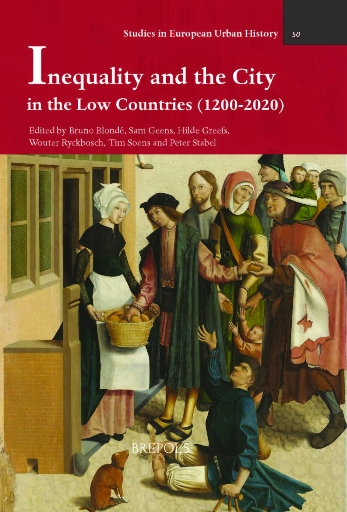
Inequality and the City in the Low Countries (1200-2020)
Social inequality is one of the most pressing global challenges at the start of the 21st century. Meanwhile across the globe at least half of the world’s population lives in urban agglomerations and urbanisation is still expanding. This book engages with the complex interplay between urbanisation and inequality. In doing so it concentrates on the Low Countries one of the oldest and most urbanised societies of Europe. It questions whether the historic poly-nuclear and decentralised urban system of the Low Countries contributed to specific outcomes in social inequality. In doing so the authors look beyond the most commonly used perspective of economic inequality. They instead expand our knowledge by exploring social inequality from a multidimensional perspective. This book includes essays and case-studies on cultural inequalities the relationship between social and consumption inequality the politics of (in)equality the impact of shocks and crises as well as the complex social relationships across the urban network and between town and countryside.
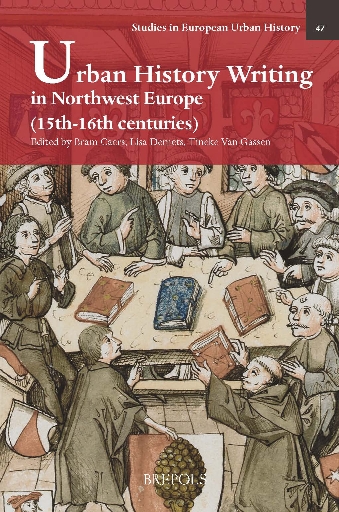
Urban History Writing in North-Western Europe (15th–16th centuries)
This volume aims at taking the first steps towards a revaluation of urban historiography in Northwest Europe including rather than excluding texts that do not fit common definitions. It confronts examples from the Low Countries to well-studied cases abroad in order to develop new approaches to urban historiography in general. In the authors' view there are no fixed textual formats social or political categories or material forms that exclusively define ‘the urban chronicle’. Urban historiography in pre-modern Western Europe came in many guises from the dry and modest historical notes in a guild register to the elaborate heraldic images in a luxury manuscript made on commission for a patrician family to the legally founded political narrative of a professional scribe in an official town chronicle. The contributions in this volume attest to the diversity of the ‘genre’ and look more closely at these texts from a broader comparative perspective unrestrained by typologies and genre definitions. It is mainly because of these hybrid guises that many examples of urban historiography from the Low Countries for instance succeeded in going unnoticed for a considerable amount of time.
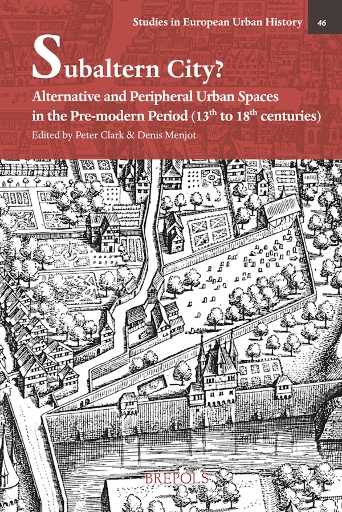
Subaltern City?
Alternative and peripheral urban spaces in the pre-modern period (13th-18th Centuries)
The purpose of this volume is to question traditional notions of city space in pre-modern Europe (with its stress on space being incorporated regulated and integrated dominated by its merchants and crafts) and to investigate how far it was in fact economically and politically pluralistic with a great variety of functions and juridictions. The volume examines comparatively the range of different urban spaces in and outside the medieval and early modern city from gardens farmland and wasteland to industrial sites poor and rich suburbs shooting grounds green space grey space and military zones. Case studies cover cities in France Germany Italy the Low Countries England Portugal and the Middle East. We ask: how far was the pre-modern city a compact city? Or was it in fact a ‘subaltern city’ as geographers have recently proposed where many urban spaces were contested and the municipality has to be seen as only one key spatial actor?
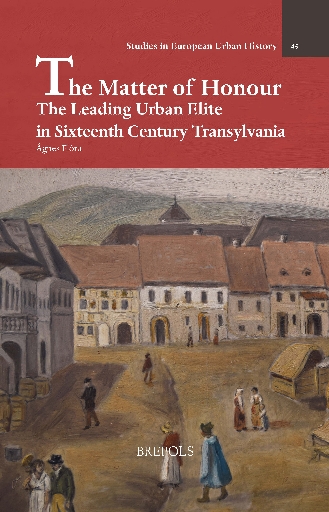
The Matter of Honour
The Leading Urban Elite in Sixteenth Century Transylvania
This monograph entails a comparative study of two early modern urban centers in Transylvania: Cluj (Kolozsvár Klausenburg) and Sibiu (Nagyszeben Hermannstadt). It develops a new perspective on urban history in Transylvania by filling the recent historiographical lacuna on early modern urban elites. This book attempts to combine traditional and modern research methods by analyzing and comparing a large volume of unpublished data along three research lines. First the historical background within which of the town elites in Cluj and Sibiu monopolized power are analyzed including the development of town autonomy and governmental systems the legal background of urban leadership its continuity and the conditions under which the political urban elite acted in each town. Secondly a thorough archontological and prosopographical research with a special focus on marriage strategies and professional competence leads to a socio-political characterisation of the elites of Cluj and Sibiu. Finally an attempt is made to provide insight into the representation and self-fashioning of these elites.
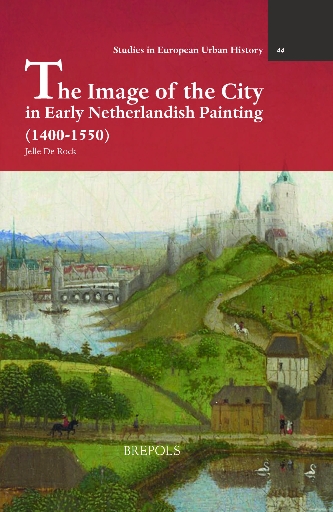
The Image of the City in Early Netherlandish Painting (1400-1550)
Painted cityscapes have always captivated the viewers of medieval works of art. To this day scholars are mesmerised by their capacity to mirror the urban context from which they sprang combined with their ability to symbolize a more abstract world view religious idea or social ideal. Especially oil painting which thrived in the fifteenth-century Low Countries among a heterogeneous elite and the well-off urban middling groups succeeded as no other medium in capturing the urban landscape in its finest details. In order to gain an insight into how late medieval citizens clerics and noblemen conceived of urban society and space this book combines a serial analysis of a large corpus of painted city views with a critical discussion of some well-documented and revealing works of art. Throughout the book a variety of questions are addressed ranging from the religious conception of the city the theatrical dimension of urban space the extent to which Early Netherlandish painting depicted the city as an economic space how images of city and countryside functioned as identity markers of the donor and how technical advances in the field of cartography impacted the portrayal of towns in the sixteenth century. In doing so this study explores the duality of some of the major interpretive schemes that have determined the last few decades of historiography on late medieval Netherlandish culture oscillating between bourgeois and courtly realistic and symbolic profane and religious and innovative versus traditional.
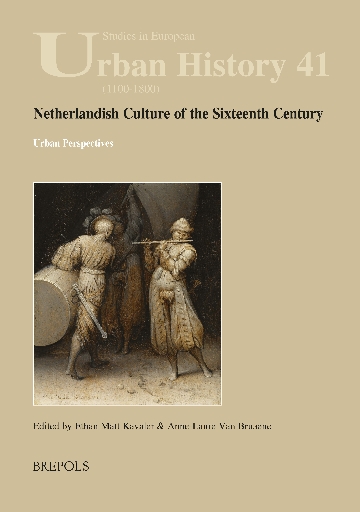
Netherlandish Culture of the Sixteenth Century
Urban Perspectives
The authors of this volume examine various fields of cultural discourse in the Netherlands of the sixteenth century: the political commercial religious artistic and sensory domains and less obviously metaphysical properties like time and space. What defined the Low Countries were not its borders and its territories but its cities and their economies dominated political relations. A dense network of large cities and small towns developed hand in hand with a broad range of textile and luxury industries. In Antwerp culture was commerce: its art and printing industries catered to much of the Western world and at the same time carved a confident self-image celebrating the liberal arts as a means of social and self-improvement. Antwerp is omnipresent in this book with essays on its painting printing politics and public festivals. But other cities such as Bruges Leuven and Leiden also figure prominently. It was precisely the interconnectedness of urban centers large middle and small rather than their autonomous character that defined civic culture in the Low Countries. Among the topics treated are differing notions of urban topography the dialogue between city and court issues of censorship and the sensory and psychological response to texts and images.