


Studies on the Faculty of Arts. History and Influence
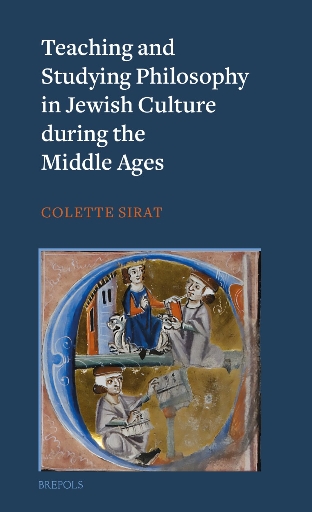
Teaching and Studying Philosophy in Jewish Culture during the Middle Ages
This book offers the first survey of philosophical pedagogy in Jewish culture during the Middle Ages with a focus on Northern France the Provence Italy and Spain. By examining not only the discourse of renowned philosophers such as Maimonides and Gersonides but also oft-neglected manuscript evidence of educational practices and students’ notes the book offers a nuanced understanding of the medieval Jewish intellectual landscape and shows how Jewish educators brought intricate debates on metaphysics ethics and epistemology into the classroom. The book also sheds light on the broader societal and cultural contexts that influenced these philosophical pursuits.
An essential read for anyone interested in the history of philosophy Jewish studies or medieval intellectual culture this book celebrates the enduring legacy of Jewish philosophical thought and its pivotal role in shaping the intellectual currents of the Middle Ages.
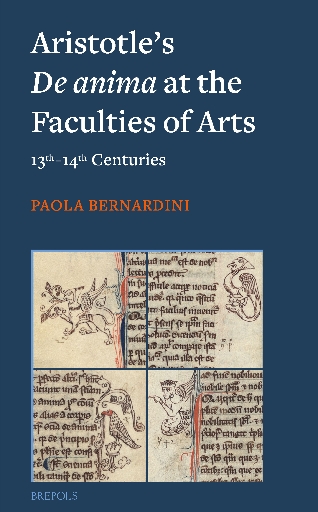
Aristotle’s De anima at the Faculties of Arts (13th-14th Centuries)
This book explores the intersection between the early development of medieval universities and the arrival of Aristotle's works in the Christian West especially De anima: one of his most famous and obscure writings straddling the fields of biology and psychology and devoted to the functions of living beings – including the human being.
The leading figures in this very special meeting of cultures also involving scientific writings from the Islamic world are the Masters of Faculties of Arts. From the first half of the 13th century they embarked on a theoretically very demanding enterprise namely to restore a complete understanding of De anima; and they accomplished this difficult task by establishing a close – and often polemical – relationship with their more famous colleagues: theologians such as Albert the Great and Thomas Aquinas.
By resorting to the research and teaching methods of their time the Masters of Arts addressed crucial topics such as the soul/body relationship sense perception intellectual knowledge and the special status of the human intellect mediating as far as possible between scientific requirements and those of the Christian faith.
Authors such as Adam of Buckfield Peter of Spain Siger of Brabant John of Jandun and John Buridan together with other less famous ones and a small crowd of completely anonymous – yet theoretically no less interesting – scholars gave rise to a choral narrative that disclosed new philosophical perspectives on man. It is in this intellectual context that the roots of Modern philosophical thought lie.
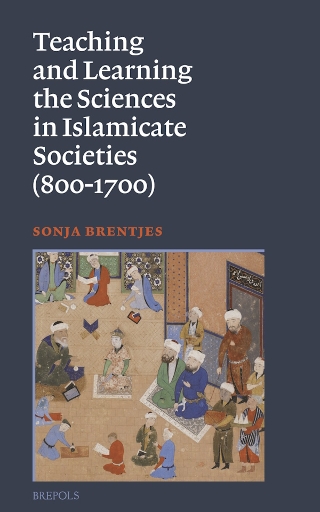
Teaching and Learning the Sciences in Islamicate Societies (800-1700)
This book surveys teaching and learning in the mathematical and occult sciences medicine and natural philosophy in various Islamicate societies between 800 and 1700. It focuses in particular on Egypt and Syria between 1200 and 1600 but looks also at developments in Iran India Anatolia and Iraq. It discusses institutions of teaching and learning such as house and court teachers madrasas hospitals in-family teaching and travelling in search of knowledge as well as the content of the various sciences taught by or at them. Methods of teaching and learning teaching bestsellers and their geographical and temporal dissemination as well as encyclopaedias and literature on the classification of the sciences are treated in further chapters.
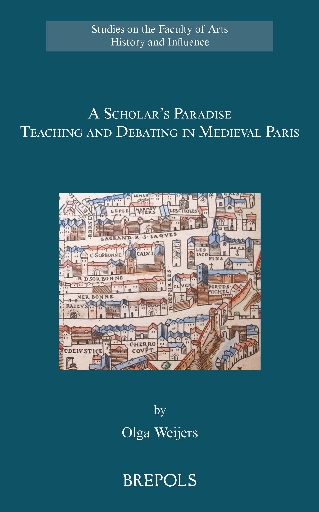
A Scholar's Paradise
Teaching and Debating in Medieval Paris
This volume offers the general reader a synthesis of academic life in Paris during the first centuries of its existence. These early years were a period of excitement discovery and intellectual freedom. Perhaps never again would a community of scholars engage in teaching and debate in such an astonishingly new and fresh world with people texts and ideas multiplying rapidly and surrounded by an equally rapidly developing city. From the perspective of the twenty-first century it seems an enviable period a time when optimism and eager research still went hand in hand with the idea that the whole of existence might be encompassed by the human mind.
Here Olga Weijers offers a comprehensive re-working of her 1995 publication (Le maniement du savoir. Pratiques intellectuelles à l’époque des premières universités) which has been re-organized extended to include less technical subjects updated and translated into English.
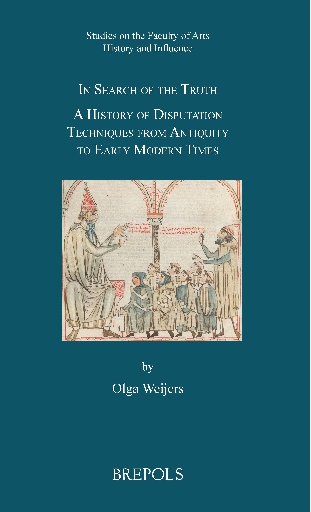
In Search of the Truth
A History of Disputation Techniques from Antiquity to Early Modern Times
Disputation and debate have accompanied human development from its beginnings. However what we still call ‘disputation’ technically speaking is a particular method of reasoning and analysing involving either a debate between two people or of one person with himself. It is this method which is the object of this study. The disputation was one of the main methods of teaching and research during the Middle Ages. Tracing its development shows how it influenced the way in which people examined abstract problems. Reasoning and arguing about contradictory positions remained a feature of intellectual life well into the nineteenth century and the practice remains alive even today.
For a long time the disputation was the main tool for analysing problems in a range of fields especially in philosophy and theology. The main features were the analysis of opposite positions and thorough discussion of the various arguments for both sides the collective search for the truth in special public disputations the recognition that the truth may differe from the conclusion reached and the willingness to accept better arguments if they brought one closer to the truth. All this is typical of an intellectual attitude the key features of which are critical thinking and honest collaborative research that still marks the Western world. The history of the disputation can tell us something about the way in which we learned to think.