


Studies in Old English Literature
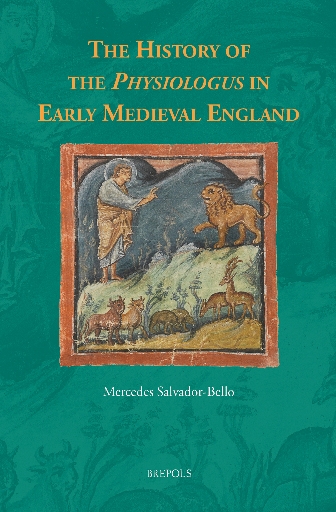
The History of the Physiologus in Early Medieval England
The Physiologus is the ancestor of the bestiary a collection of chapters describing animal qualities and behaviours usually with an allegorical meaning which proliferated especially in England in the late Middle Ages. While much scholarly attention has been directed to the bestiary the history of the transmission of the Physiologus has hardly been investigated. Evidence of the circulation of this treatise in the early medieval period is certainly scanty since only two brief versions dating from this period have been preserved one in Old English and another one in Latin. However this monograph shows further proof of the knowledge of the Physiologus in Anglo-Saxon England. It also reveals the relationship of the only two surviving texts and their connection to the main Continental recension of the time. This study therefore demonstrates that the popularity of bestiaries in the later Middle Ages was largely due to the prominence that its predecessor the Physiologus enjoyed in the preceding period.
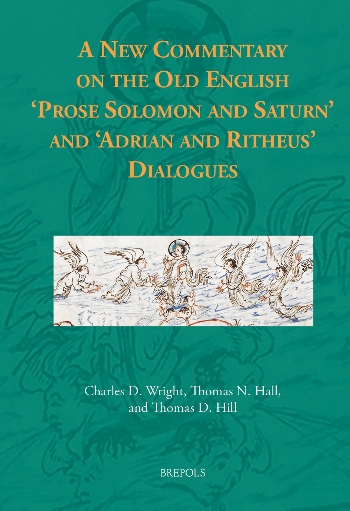
A New Commentary on the Old English ‘Prose Solomon and Saturn’ and ‘Adrian and Ritheus’ Dialogues
Who was not born was buried in his mother’s womb and was baptized after death? Who first spoke with a dog? Why don’t stones bear fruit? Who first said the word ‘God’? Why is the sea salty? Who built the first monastery? Who was the first doctor? How many species of fish are there? What is the heaviest thing to bear on earth? What creatures are sometimes male and sometimes female? The Old English dialogues The Prose Solomon and Saturn and Adrian and Ritheus critically edited in 1982 by J. E. Cross and Thomas D. Hill provide the answers to a trove of curious medieval ‘wisdom questions’ such as these drawing on a remarkable range of biblical apocryphal patristic and encyclopaedic lore.
This volume (which reprints the texts and translations of the two dialogues from Cross and Hill’s edition) both updates and massively supplements the commentary by Cross and Hill contributing extensive new sources and analogues (many from unpublished medieval Latin question-and-answer texts) and comprehensively reviews the secondary scholarship on the ancient and medieval texts and traditions that inform these Old English sapiential dialogues. It also provides an extended survey of the late antique and early medieval genres of ‘curiosity’ and ‘wisdom’ dialogues and florilegia including their dissemination and influence as well as their social and educational functions.
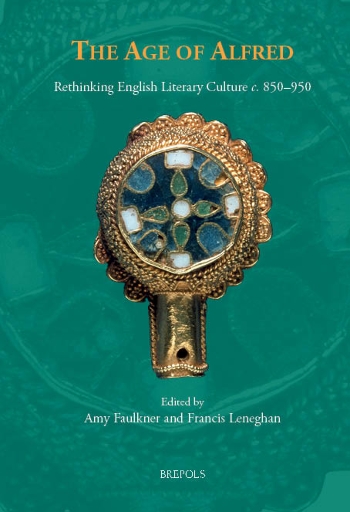
The Age of Alfred
Rethinking English Literary Culture c. 850–950
King Alfred the Great (r. 871–899) remains a key figure in English literary history. Although his reputation as a scholar who was personally responsible for the translation of a number of Latin works is no longer secure the figure of the wise king nevertheless casts a long shadow over vernacular writing from the late ninth century through to the twelfth. This volume takes stock of recent developments and debates in the field of Alfredian scholarship and showcases new directions in research. Individual chapters consider how English authors before during and after Alfred’s reign translated and adapted Latin works often in innovative and imaginative ways. Other contributions provide new contexts and connections for Alfredian writing highlighting the work of Mercian scholars and expanding the corpus beyond the works traditionally attributed to the king himself. Together these essays force us to rethink what we mean by ‘Alfredian’ and to revise the literary history of the ‘long ninth century’.
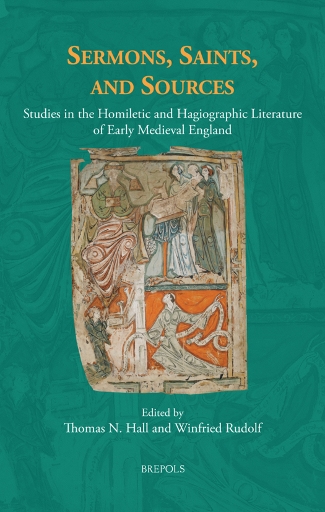
Sermons, Saints, and Sources
Studies in the Homiletic and Hagiographic Literature of Early Medieval England
The corpus of sermons and saints’ lives from early medieval England in English and Latin is the largest and most varied of its kind from a contemporary European perspective. In recent years this extraordinary body of literature has attracted increasing attention as witnessed by an efflorescence of new editions translations commentaries essay collections dissertations and amply funded research projects such as the Electronic Corpus of Anonymous Old English Homilies (ECHOE) project based at the University of Göttingen.
The present collection of thirteen essays grew out of a 2022 conference sponsored by the ECHOE project on Old English anonymous homilies and saints’ lives and their sources and reflects the best of current scholarship on early medieval homiletic and hagiographic literature from England. This literature is central to an understanding of the spiritual imagination and social practices of non-élite audiences. Together they introduce new discoveries identify new sources edit new texts make new claims about authors revisers and textual relationships revise previous arguments about aspects of literary history and provide new interpretations of Old English and Latin sermons and saints’ lives. These studies show vividly how European learning influenced the liturgical practices and peripheral education of early medieval England.
Contributors include Helen Appleton Aidan Conti Claudia Di Sciacca R. D. Fulk Thomas N. Hall Christopher A. Jones Leslie Lockett Rosalind Love Hugh Magennis Stephen Pelle Jane Roberts Winfried Rudolf and Charles D. Wright.
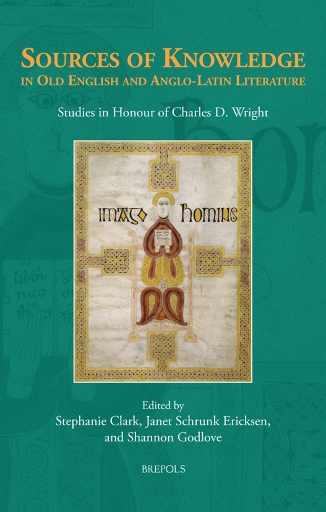
Sources of Knowledge in Old English and Anglo-Latin Literature
Studies in Honour of Charles D. Wright
This volume positions source scholarship as integral to an understanding of the transmission of knowledge across intellectual social and material networks in early medieval England. Essays in this collection situate source studies in Old English and Anglo-Latin literature within a range of theoretical and methodological approaches as varied as disability studies feminist theory history of science and network analysis tracing how ideas move across cultures and showing how studying sources enables us to represent the diversity of medieval voices embedded in any given text.
The essays in this volume extend the work of Charles D. Wright who mentored a generation of scholars in methodologies of source study. The essays are organized into three sections. The first demonstrates how source studies facilitate tracing ideas across space and time. The second explores what happens to texts and ideas when they are transmitted from one culture language or historical moment to another. The third shows how sources illuminate wider cultural discourses. The volume attests to the flexibility of source work for early medieval English literature and argues for increased access to the tools that make such work possible.
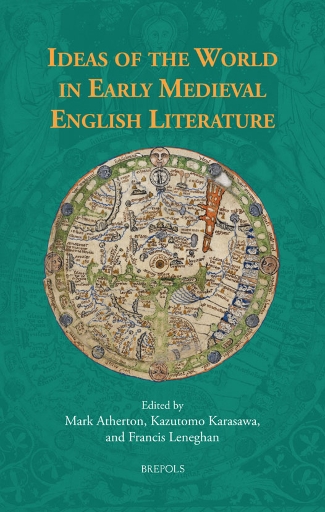
Ideas of the World in Early Medieval English Literature
Across three thematically-linked sections this volume charts the development of competing geographical national and imperial identities and communities in early medieval England. Literary works in Old English and Latin are considered alongside theological and historical texts from a range of disciplinary perspectives. Accounts of travel foreign contacts conversion migration landscape nation empire and conquest are set within the continual flow of people and ideas from East to West from continent to island and back across the period. The fifteen contributors investigate how the early medieval English positioned themselves spatially and temporally in relation to their insular neighbours and other peoples and cultures. Several chapters explore the impact of Greek and Latin learning on Old English literature while others extend the discussion beyond the parameters of Europe to consider connections with Asia and the Far East. Together these essays reflect ideas of inclusivity and exclusivity connectivity and apartness multiculturalism and insularity that shaped pre-Conquest England.