


Studies in Palmyrene Archaeology and History
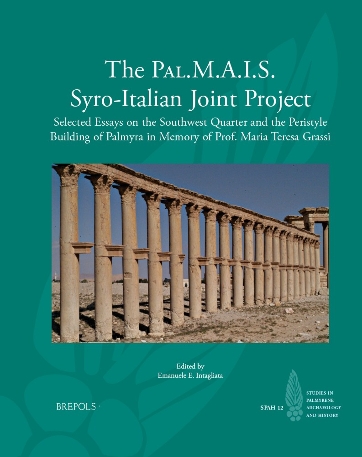
The Pal.M.A.I.S. Syro-Italian Joint Project
Selected Essays on the Southwest Quarter and the Peristyle Building of Palmyra in Memory of Prof. Maria Teresa Grassi
The Pal.M.A.I.S. Syro-Italian joint project at Palmyra established in 2007 aimed to shed light on private housing in the Roman East. Through excavations in Palmyra’s southwest quarter the remains of a residential complex the ‘Peristyle Building’ were uncovered; this site was built in the Roman period but was inhabited up to the eighth century ad.
This volume dedicated to Prof. Maria Teresa Grassi (Università degli Studi di Milano) who co-directed the project together with Dr Waleed al-As‘ad (Museum of Palmyra) presents selected studies stemming from the Pal.M.A.I.S. project. It draws together contributions dedicated to the topography of the southwest quarter the excavation of the Peristyle Building and selected classes of material. Through detailed analysis and the presentation of fresh data this volume sheds new light on a relatively unexplored sector of a threatened UNESCO World Heritage site.
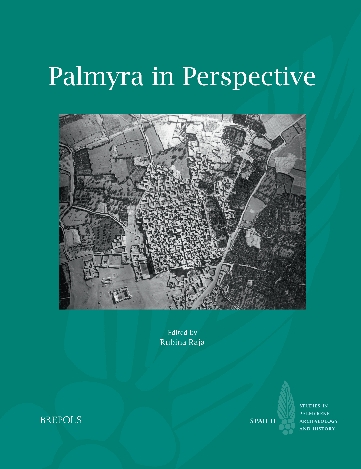
Palmyra in Perspective
The famous oasis city of Palmyra located in the Syrian Desert has long been the subject of scholarly research; and over the last decade it has been the focus of three key projects based at Aarhus University in Denmark. Together these projects have yielded results that have shed new light on Palmyra and have profoundly changed what we know about both the city itself and its place in the wider Roman Empire through a focus on sculptural production and the sustainability and economy that underpinned this urban development excavation history and legacy data. This volume based on a conference organized under the auspices of the Palmyra research projects in Aarhus draws together papers that reflect on our understanding of Palmyra up to now and pave the way for new lines of enquiry. Experts in the field engage with discussions of best practice offer new perspectives on the city its society and its environs and outline approaches that will allow research to continue to break new ground in our understanding of Palmyra.
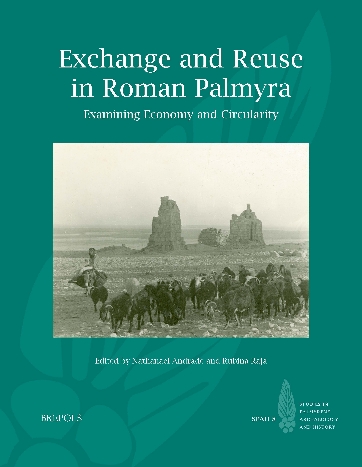
Exchange and Reuse in Roman Palmyra
Examining Economy and Circularity
How did ancient cities like Palmyra survive? How did their people produce and manage the resources required for both their short- and long-term needs? Were their methods circular or wasteful? What materials did they reuse and how? What form did their routine exchanges take? The material culture of Palmyra offers unique potential for addressing these questions in a concrete way. While the city is most famous for its long-distance commerce a century of excavations at the site together with a series of recent print publications and digital enterprises have provided scholars with unprecedented amounts of material objects among them inscriptions statues tesserae coins glass and metal finds textiles and other objects all of which shed new light on Palmyra’s economy and how its inhabitants consumed maintained exchanged or reused key resources.
Drawing together contributions from leading researchers on ancient Palmyra this volume explores various dimensions of the city’s economy from fresh angles. The chapters gathered here feature new methodologies for determining the size of Palmyra’s population and for understanding the nature of coins in local exchanges offer reassessments of the Palmyrene institutions that underpinned economic exchange examine how Palmyrenes used and reused materials and consider the forms of exchange and reuse that governed the building activity of Palmyrenes after the city’s Roman heyday and within areas of Egypt.
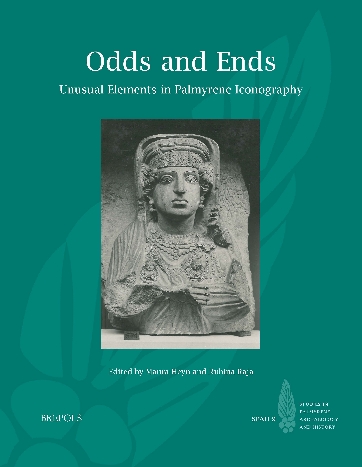
Odds and Ends
Unusual Elements in Palmyrene Iconography
The funerary art that was produced in Roman Palmyra a caravan city in the Syrian steppe desert is rightly world-renowned. The frontal depictions of the deceased featured in torso-length portraits and the large-scale banqueting scenes are iconic and lent an added mystique by the absence of any literary sources that might aid in their interpretation. But while from a distance these exquisite portraits might seem rather formulaic when examining more closely it is clear that these scenes reveal a surprisingly rich and varied funerary décor. Alongside the more popular iconographic choices are singular scenes motifs and elements that deviate from the norm while new patterns and connections between Palmyra and its surroundings are identifiable.
This volume which draws on the vast materials gathered under the auspices of the Palmyra Portrait Project directed by Professor Rubina Raja explores the ‘oddities’ raised by the Palmyrene corpus; it examines one-off scenes or elements and unusual or unparalleled iconographical choices and questions how and why such unusual choices should be interpreted. The chapters gathered here not only focus on these visual ‘hapax legomena’ in Palmyra but also explore the city’s connections with the art of Roman centres to the west as well as the nearby Hellenistic city states regional centres of production and Parthian and Persian sites to the east. Through this approach the authors engage with the visual richness and sheer amount of choice that existed in Palmyrene funerary art while also providing unique insights into the knowledge culture that existed within Palmyrene society.
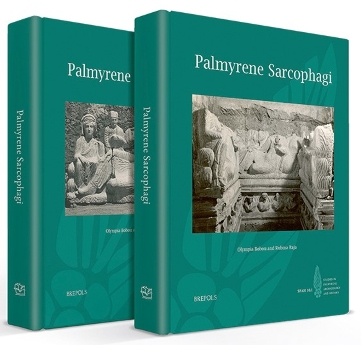
Palmyrene Sarcophagi
While the funerary portraiture of Palmyra is rightly world-renowned up to now the corpus of sarcophagi from the ancient city has received relatively little attention as a cohesive group in their own right. Comprising sarcophagi banqueting reliefs and founder reliefs as well as sarcophagus reliefs most of these objects share a common iconographic motif that of the banquet although other scenes mostly drawn from the daily life of the city’s caravan leaders and their families also appear. The emphasis on the banqueting scene in particular reveals the crucial importance of dining in ancient Palmyrene society: for the living banquets were a marker of social standing and gave hosts a chance to honour the gods and offer an ephemeral benefaction to their fellow citizens while for the dead the banquet motif offered the opportunity for the entire family to be depicted together and showcase their wealth and sophistication as well as their connections outside the city.
This single corpus of material gathered through the Palmyra Portrait Project is presented in this beautifully illustrated two-volume monograph. Through careful analysis of the portraits and the costumes and attribute choices that appear in these images the authors explore how the sarcophagi were used by Palmyrenes to project an image of local pride while at the same time participating in the visual cultures of the Roman and Parthian Empires between which their city was situated.
Excavating Palmyra
Harald Ingholt’s Excavation Diaries: A Transcript, Translation, and Commentary
When the Danish archaeologist Harald Ingholt conducted his ground-breaking excavations of Palmyra in the 1920s and 1930s during which time he investigated several grave monuments and carried out the first observations of Palmyra’s famous funerary portraits he kept detailed diaries of his work. For a long time these have been stored at the Ny Carlsberg Glyptotek in Copenhagen together with the extensive Ingholt Archive while further photographs and notes on Palmyrene sculpture have been kept with Ingholt’s family in the United States. Now this material and Ingholt’s diaries written primarily in Danish have for the first time been transcribed and translated into English with a full commentary written by Professor Rubina Raja Dr Julia Steding and Dr Jean-Baptiste Yon in order to make these unique texts available to a wider public. The diaries contain a wealth of information on Palmyrene sculpture grave complexes and inscriptions from the city as well as offering previously unpublished details into Ingholt’s excavations and his time in the field that will provide essential new insights for scholars working on Palmyra.
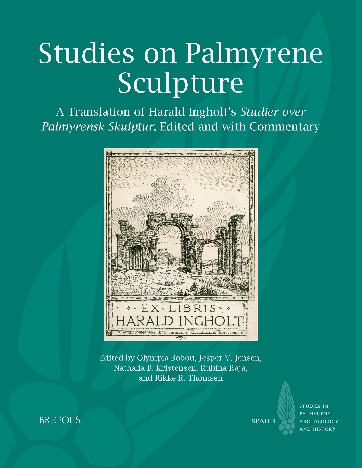
Studies on Palmyrene Sculpture
A Translation of Harald Ingholt’s Studier over Palmyrensk Skulptur, Edited and with Commentary
This volume presents the first English translation of Harald Ingholt’s seminal work Studier over Palmyrensk Skulptur together with a number of studies that contextualize this important volume in the light of current research. Almost a century after its publication in 1928 Ingholt’s ground-breaking Danish-language monograph remains essential reading for all scholars of Palmyrene archaeology and iconography setting out observations on the typology and style of securely dated Palmyrene portraits and establishing a stylistic and chronological sequence that remains in use today. Included alongside the translation of Ingholt’s writings are contributions by leading scholars in the field who seek to introduce Harald Ingholt and explore the impact of his work in Palmyra as well as presenting a survey of all the portraits from Palmyra that can be securely dated by inscription. The translation and commentary have been realized as part of the Palmyra Portrait Project directed by Prof. Rubina Raja.