


Modern & Contemporary History (Outside a Series)
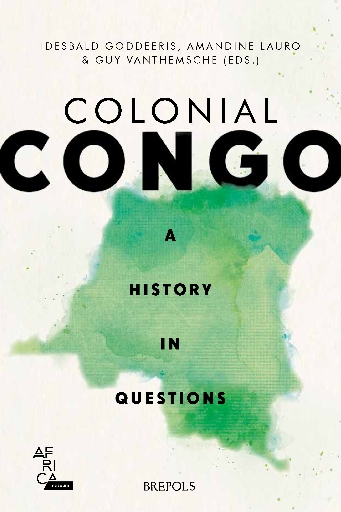
Colonial Congo
A History in Questions
Colonialism tends to arouse emotional debate often based on incomplete knowledge of the facts and context. Colonial Congo fills this gap by introducing the general reader to the latest academic thinking and research. Answering concrete questions pre-eminent historians offer a unique insight into the history of the Congo Free State and the Belgian Congo.
How did Leopold II’s autocratic government function and what do we know about the victims of his rule? How much profit was made in the Congo and who benefitted the most? What was life like for Congolese men and women during colonial rule and how did they feel about it? Did the Congolese offer resistance and in what ways? What was colonialism’s impact on the Congo’s natural world? How did colonial policy affect infrastructure education healthcare and science? Did missionaries give colonialism a more human face? Colonial Congo’s explorations of these issues and more are revealed in this eye-opening indispensable guide.

Résistance sans frontières
À propos de moines espions, de lignes d'évasions et du 'Hannibalspiel', 1940-1943
Le 9 octobre 1943 neuf membres de la résistance belge et néerlandaise étaient exécutés à Rhijnauwen (près d’Utrecht). Parmi eux deux moines de l’abbaye du Val-Dieu. En suivant le parcours de ces deux ecclésiastiques le livre retrace de façon précise l’histoire des groupes d’espionnage et des lignes d’évasion. Ces lignes de secours étaient utilisées par des prisonniers de guerre évadés par des pilotes alliés abattus par des personnes d’origine juive et des ressortissants néerlandais en fuite vers l’Angleterre. La ligne d’évasion partait d’Allemagne et des Pays-Bas pour rejoindre Eijsden puis Mouland et Visé. Une fois arrivés au pays de Herve ou de Liège les réfugiés étaient conduits à Givet ou à Bruxelles où d’autres groupes de résistance les prenaient en charge. En 1942 le contre-espionnage allemand infiltre les groupes au départ de Groningue et de Liège : l’Hannibalspiel. L’issue sera dramatique.
En cherchant à comprendre pourquoi dans la région de Liège ces deux moines se décident à entrer en résistance l’enquête met en lumière le rôle joué par l’Église et par l’abbaye du Val-Dieu mais aussi par leurs familles.
Résistance sans frontières est la première recension ayant trait à la résistance de chaque côté de la frontière belgo-néerlandaise pendant la deuxième guerre mondiale.
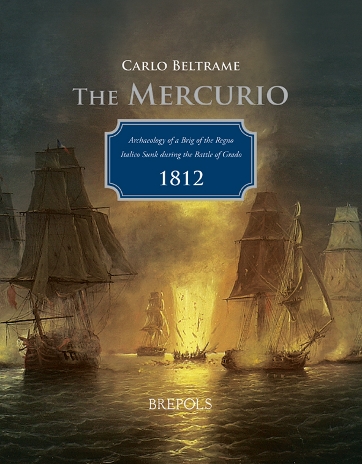
The Mercurio
A Brig of the Regno Italico Sunk During the Battle of Grado (1812)
The Italian brig Mercurio was escorting the French 80-gun vessel Rivoli from Venice on its very first expedition in 1812 when it was sunk by an English ship during the Battle of Grado. Since the wreck was identified the Mercurio has been the site of several underwater excavations beginning in 2001 and continuing from 2004 to 2011 by a team from the Università Ca’ Foscari of Venice together with the local Soprintendenza. Their work revealed a number of extraordinary finds and provided a unique insight into life - and death - on a brig during the period of the Napoleonic wars.
This volume offers a discussion and catalogue of the finds yielded by the Mercurio including photogrammetry-plans of the bow and stern together with an analysis of ship-building technique detail of the equipment and arms used and uniquely close detail of finds connected to the crew themselves. This is one of the few sites from the Mediterranean where human remains have been preserved and through the work of anthropologists it has even been possible to try and identify one of the men named on the crew list. Discovery of buttons footwear precious items and even foodstuffs also serve to shed light on the daily life of the crew. This volume thus draws together a wealth of archaeological and historical information to tell the hitherto untold story of the Mercurio.