


Studia Traditionis Theologiae
The Origins of Christianity in the Calendar Wars of the Second Century bce
In the Gospels Jesus is called a ‘Nazarene’ or ‘Nazoraean’. Does this mean he came from Nazareth? Basing himself on Lidzbarski’s analysis of the Hebrew/Aramaic origins of the Greek terms Nazarênos and Nazôraios Dr Osborne proposes that these epithets indicate that Jesus was a nôṣrî a ‘(Strict) Keeper/Guardian (of the Law)’. This meant he was a follower of the 364-day liturgical calendar known to us from 1 Enoch Jubilees and Qumran. An examination of the passages where these terms appear shows that this hypothesis leads to a deeper understanding of the circumstances in which the first Christian communities arose and clarifies greatly the background of Jesus’ crucifixion as Yēšû ha-Nôṣrî.
The book then traces the influence of the nôṣrîm on the history of Israel from their origin in the ‘calendar wars’ that tore apart the Jewish nation from 172-163 BCE. These broke out after the lunisolar calendar was introduced into the temple liturgy by Menelaus the high priest and only came to an end when the 364-day calendar was reintroduced under his successor Alcimus. In 151 BCE however Jonathan Maccabaeus was appointed high priest and reintroduced the lunisolar calendar. The nôṣrîm were suppressed and forced to emigrate or go underground. They reappear as leaders of Jewish resistance to Roman occupation after Pompey incorporated Judaea into the empire in 63 BCE. Eventually they became the chief instigators of the revolt against Rome that led to the destruction of Jerusalem in 70 CE. Osborne argues that the nôṣrîm thought to have been included in the Twelfth Benediction of the Amidah at Yavneh around 90 CE are these same ‘(Strict) Keepers/Guardians (of the Law)’.
Manichaeism: Encounters with Death
Studies in the Material, Spiritual and Parabolic Body
Born in Persian Mesopotamia in the year 232 CE the self-proclaimed prophet Mani promulgated a dualist faith that rapidly spread throughout the Roman Empire Central Asia and China. This monograph comprises a series of studies of the Manichaean conceptualization of death and the afterlife in the context of Manichaean soteriology eschatology and anthropology. Material documentary and liturgical evidence is analysed to enrich knowledge of Manichaean funeral ritual and mourning practice. The book explores the thematic symbolism of the corpse in Manichaean parabolic literature offering fresh interpretations and exploring the influence of Buddhist teachings on the impermanence of the body karma and metempsychosis.
In Principio
Genesis and Theology in St Bonaventure
This volume offers a fresh approach to the structure of Bonaventure’s thought. Ruben Martello argues that Bonaventure employs the Genesis creation account as an overarching framework and fecund source for understanding nature theology and even Scripture itself. Beginning with Bonaventure’s view of the literal meaning of Scripture the reception of the hexaëmeron is traced chronologically in a number of major theological works. Bonaventure is interpreted in light of the hexameral commentarial tradition like Augustine’s De Genesi ad litteram and filtered through Dionysian and Victorine inspired hermeneutics. It is proposed that reading Genesis in Bonaventure may clarify a number of contemporary disputed theological exegetical and epistemological concerns. This study also unpacks the Bonaventurian understanding of the distinctive senses of the 'image' and 'likeness' of God aiding in the articulation of a rich theological anthropology.
Dante the Theologian
Pierre Mandonnet
The Dominican master par excellence of the historical method Pierre Mandonnet (1858-1936) came to Dante as one of the leading Thomists and medievalists of his generation. However his monograph Dante le théologien (1935) was neglected and largely forgotten mainly as a result of the lay historian Étienne Gilson’s book-length refutation in Dante et la philosophie (1939).
This new edition and the first English translation re-presents Mandonnet’s erudite and thought-provoking monograph to contemporary scholars and Dante enthusiasts. It includes a critical introduction that situates Mandonnet’s work in relation to prevailing currents of Dante scholarship in the early twentieth-century and outlines how it might invite a reappraisal of central features of Dante’s thought today. Mandonnet’s historically-informed account of Dante the theologian as a preacher doctrinarian and distinctively medieval poet as well as his sophisticated analysis of the theological purpose method and content of the Commedia will be an invaluable resource for anyone who seeks to understand Dante’s works and their highly contested reception history.
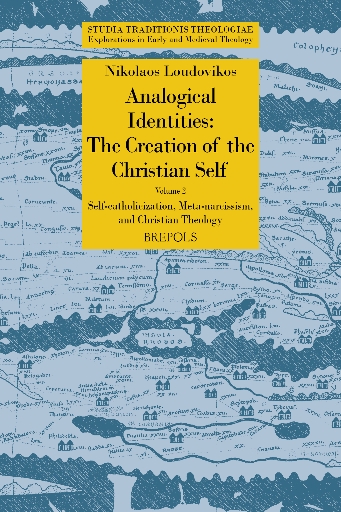
Analogical Identities: The Creation of the Christian Self
Volume 2: Self-Catholicization, Meta-Narcissism, and Christian Theology
Following the first volume entitled Analogical Identities: The Creation of the Christian Self of a trilogy dedicated to Christian anthropology in a modern re-assessment the present second volume deals with the specific content of this concept of “Analogical Identity” as a new hermeneutic retrieval of Christian anthropology in its relation with its historical roots and in the light of modern Philosophical and Psychological thought to which we thus introduce some new conceptual tools. At the same time a theological criticism of modern Philosophy and Psychology is initiated and some new anthropological concepts of theological provenance are proposed.
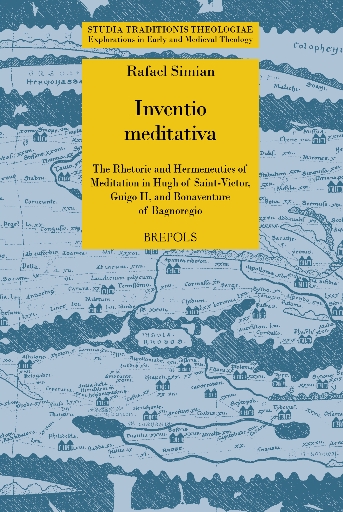
Inventio meditativa
The Rhetoric and Hermeneutics of Meditation in Hugh of Saint-Victor, Guigo II, and Bonaventure of Bagnoregio
The present volume develops a new conceptual perspective on late-medieval meditation particularly in Hugh of Saint-Victor Guigo II and Bonaventure of Bagnoregio. For the most part modern commentaries on the subject have relegated rhetoric to the margins of attention if not to complete silence. In contrast this book contends that these writers arrived at their distinctive conceptions of meditation by drawing from the Ciceronian rhetorical tradition. They did so by deepening earlier rhetorical treatments of inventio while adapting them to the Christian life. The examination of this topic is divided into three principal and related aspects. First meditation is studied as a rhetorical notion for a specific kind of mnemonic rational and affective exercise. Second that notion is used to shed light on meditation as a compositional textual practice whose outcomes bear striking analogy to what Umberto Eco called the ‘open works’ of the Western avant-garde. Finally meditation emerges as a form of literary reception required for approaching and construing certain works. In exploring each of these aspects the study shows that rhetoric radically informs not only Hugh’s Guigo’s and Bonaventure’s engagement with meditation but also their views on salvation history monastic life divine revelation scientific learning and biblical hermeneutics. Thus despite the omission or relative insignificance of the ars bene dicendi in most modern investigations it is argued that rhetoric lies at the core of these authors’ entire religious outlook. In this way the present volume aims to contribute to a better understanding of these medieval figures by filling an important gap in the scholarly literature.
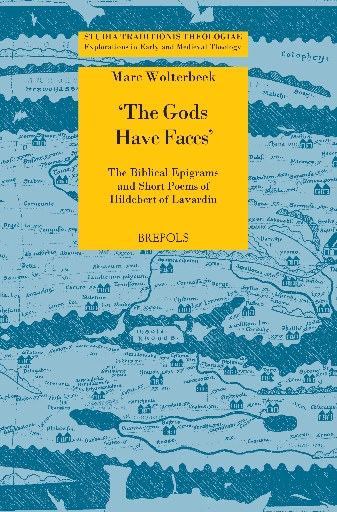
‘The Gods Have Faces’
The Biblical Epigrams and Short Poems of Hildebert of Lavardin
Hildebert of Lavardin is one of the great poets of the Middle Ages praised for his elegant style by his contemporaries and by modern scholars alike. He occupies a seminal position in the revival of learning in the late Middle Ages known as the Twelfth Century Renaissance and his mastery of classical Latin style was so refined that some of his works were long considered products of Antiquity. This collection of Hildebert's biblical epigrams and short poems introduces English-speaking readers to the best works of this neglected poet and places them in the context of his life and literary career. The translations attempt to bring the reader as close as possible to experiencing these poems in their original Latin while still being readable and comprehensible facilitated by notes and commentary. Hildebert's poetry is sometimes challenging dense and complicated yet his rhetoric is often beautiful even magnificent.
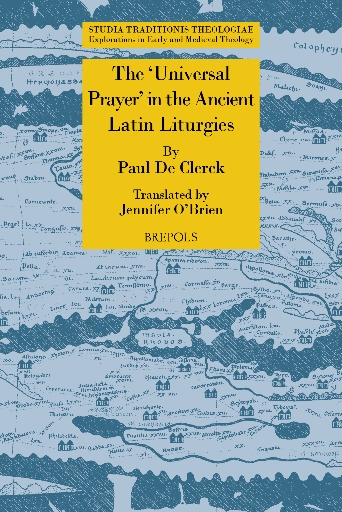
The ‘Universal Prayer’ in the Ancient Latin Liturgies
Patristic Evidence and Liturgical Texts
The reinstatement of the Universal Prayer into the Roman liturgy following the Second Vatican Council prompted Paul De Clerck to research its origins and development taking as his primary model the ancient Roman Orationes sollemnes of Good Friday. The result has been a marvellous gift to liturgical scholars as his meticulous study of texts from both East and West brings to light direct and indirect relationships and provides significant insight into the way in which Western liturgical families developed their intercessory formularies.
The first part of his study is devoted to analysis of allusions to the Oratio fidelium found in the writings of the Fathers and ecclesiastical writers of the first five centuries with the aim of discovering the prehistory of the ‘prayer of the faithful’ particularly with regard to its content form and placement within the liturgy. The second part of the study analyses and compares the oldest preserved texts that shed light on the prayer. Chief among these are the Deprecatio Gelasii in its various iterations the Orationes sollemnes of Rome (and parallels in other Churches) and the Gallic and Hispanic Orationes paschales together with relevant texts from Celtic and Gallican sources.
The translation of the French text will provide English-speaking scholars across the globe access to this excellent work and encourage similar in-depth research into liturgical sources that will continue to enhance the celebration of the Church’s liturgy and the full and conscious participation of the entire faithful.
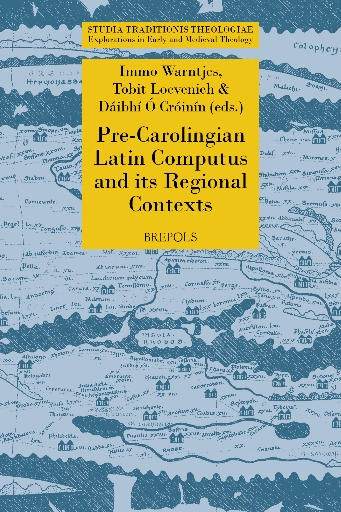
Pre-Carolingian Latin Computus and its Regional Contexts
Texts, Tables, and Debates
The period between the Fall of Rome and the rise of the Carolingians saw a major shift in knowledge production. Learning became monopolised by a Christian intellectual elite in a rapidly developing monastic landscape. This transition and transformation was only fully achieved by the time of Charlemagne whose reign saw a ‘Carolingian Renaissance’ that re-created links to Late Antiquity and its curriculum the seven liberal arts. The centuries in between from the fifth to the eighth are generally considered a time of stagnation in terms of intellectual achievements particularly in the quadruvial arts. From Boethius to Alcuin not a single noteworthy text was produced in the Latin West in astronomy geometry arithmetic and music.
This traditional view has been challenged in recent years by highlighting that the artes liberales may not provide the appropriate lens for this time-period and that it neglects the plentiful anonymous literature. By the seventh century a decidedly Christian curriculum had developed principally comprising exegesis grammar and computus as its three key pillars. Computus (with the calculation of Easter and therewith the mathematical modelling of the course of the sun and the moon at its core) developed out of the Easter controvery into a discipline of monastic learning in its own right. This volume seeks to highlight the vibrancy and regional characteristics of the study of computus and its underlying controversy about the correct calculation of Easter in this transition period from the mid-fifth to the mid-eighth centuries.
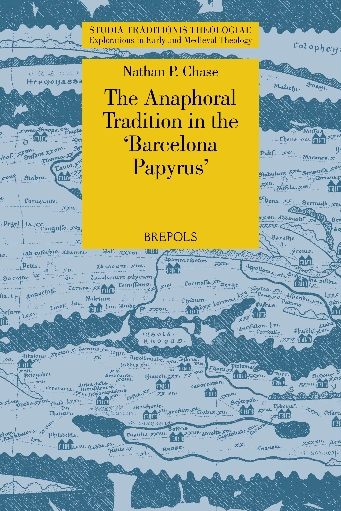
The Anaphoral Tradition in the ‘Barcelona Papyrus’
Since the discovery in the 1950’s of the so-called 'Barcelona Papyrus' the anaphora contained within it has remained the most understudied classical anaphora. However a close analysis of this anaphora can reshape liturgical historians’ understanding of a number of classical anaphoras and thus their approach to anaphoral development more broadly. This anaphora requires scholars to rethink questions concerning the construction geographical provenance and structural patterns of early anaphoras and their units. It is a witness to a very early form of Eucharistic praying and points to various ways in which older less developed Eucharistic prayers developed into the anaphoral patterns common in the fourth century. As such an analysis of this anaphora is of historical and methodological interest. This anaphora is also an early witness to Egyptian Eucharistic praying. It stems from the same anaphoral tradition as the anaphora of St. Mark but on the whole it is an earlier witness to that tradition. The anaphora in the Barcelona Papyrus also bears a number of structural and textual similarities to the anaphora described in the Mystagogical Catecheses which is often attributed to Cyril of Jerusalem. As such it sheds further light on the relationship between Egypt and Jerusalem.
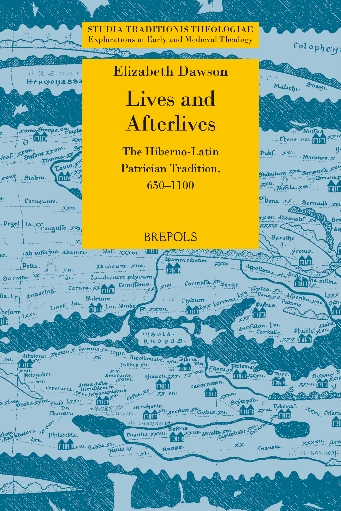
Lives and Afterlives
The Hiberno-Latin Patrician Tradition, 650–1100
Saint Patrick is a central figure in the medieval Irish Church. As the converter saint he was a central anchor through which Irish people came to understand their complicated religious past as well as their new place in the wider Christian world. This study considers some of the earliest and most influential writings focused on Saint Patrick and asks how successive generations forged sustained and redirected aspects of the saint’s persona in order to suit their specific religious and political needs.
In this book Elizabeth Dawson for the first time treats the Hiberno-Latin vitae of Patrick as a body of connected texts. Seminal questions about the corpus are addressed such as who wrote the Lives and why? What do the works tell us about the communities that venerated and celebrated the saint? And what impact did these Lives have on the success and endurance of the saint’s cult? Challenging the perception that Patrick’s legend was created and sustained almost exclusively by the monastic community at Armagh she demonstrates that the Patrick who emerges from the Lives is a varied and malleable saint with whom multiple communities engaged.
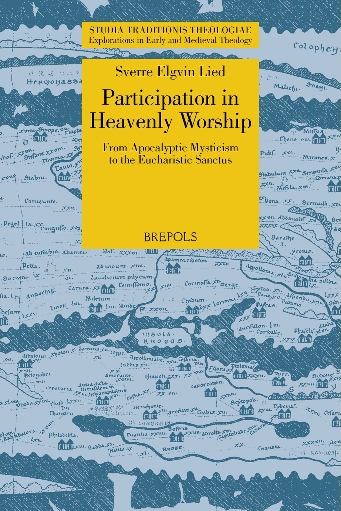
Participation in Heavenly Worship
From Apocalyptic Mysticism to the Eucharistic Sanctus
The idea of participation in heavenly worship is a fascinating perspective on the Christian Eucharistic liturgy. Although somewhat forgotten in modern times the early church knew it as a central aspect of meaning in interpretations of the Eucharistic rite. Through this rite worshippers could see themselves in communion with angels and saints in the eternal liturgy of heaven. Interpretations along such lines emerge clearly in catechesis and homilies from the fourth century onwards and continue to develop in the following centuries especially in the eastern liturgical traditions. The question remains however what are the origins of this concept?
In Participation in Heavenly Worship Sverre Lied explores how the relations between the earthly and heavenly realms were understood within the context of Christian worship during the first three centuries CE. He argues that the idea of participation is an aspect of Christian worship that may be traced back to Jewish Christian apocalyptic mysticism and shows how this concept with considerable variations was preserved and developed during the following centuries. These observations also shed new light on the appearance of the Sanctus in the Eucharistic liturgy.
Friendship as Ecclesial Binding
A Reading of St Augustine’s Theology of Friendship in His In Iohannis evangelium tractatus
In the age of Augustine within the classical structures of society nothing was more valued than friends and friendship. Augustine was an innovative thinker and friendship represents a good example of his flair for reconfiguring its framework into an ecclesial setting. He wrote: ‘what greater consolation do we have in this human society riddled with errors and anxieties than the unfeigned faith and mutual love of true and good friends?’. Yet as a Christian Bishop how would he reconceive this well established and treasured institution? Friendship was certainly something that became recast within the light of his conversion and immersion into the life of the Church. In Augustine’s exchange with the Donatists we glimpse his most fully developed vision of friendship. Through his preaching on John’s gospel which comes to us as his In Iohannis Euangelium Tractatus Augustine reveals this vision of what friendship is. Given that John’s gospel gives such weight to the incarnation and to friendship we can witness through his hermeneutical strategy of figuration his notion that friendship with God comes in belonging to the totus Christus ‘the whole Christ’. For Augustine the universal nature of the Church as Christ’s body and bride enjoys a continued connection to the head (Christ) and through the Church its members live within the embrace of the Spirit. With this foundation of friendship Augustine cried out to those separated by schism: belong-be bound-be friends with God in Christ.
Homo Interior and Vita Socialis
Patristic Patterns and Twelfth-Century Reflections
Just as apparently universal ideas of inwardness are different over time so the idea of the self in relation to others is subject to historical change and dependent on different contexts. Against a shared background of late antique and early medieval Christianity the thinkers who are the subject of this book develop their thoughts of a relational self within their wider concerns. Augustine is the thinker of interiority but also of the social life. For Augustine the opacity of others even of oneself and how to overcome it is a main concern. Cassian writes about the ideal of solitude yet neither the abbas who are the subject of his Conversations nor his readers can avoid the company of others. For Cassian human fellowship is instrumental in reaching the desired virtues of detachment which then enables love for others. Gregory the Great searches for the right balance of the contemplative and the active life but even the contemplative is not a separate individual. Gregory’s instruction of the leaders of the Church emphasises the need to widen in compassion against the constant danger for the preachers of hypocrisy and the swollenness of pride and arrogance. These three authors were among the most influential sources in later ages. Their echoes resonated in the twelfth century when a renewed interest in interiority raises the question how the twelfth-century ‘inner man’ relates to others. Hugh of Saint-Victor Abelard and Heloise are among the writers in whose thoughts we see patristic thought reflected and changed in various ways.
Bede and the Beginnings of English Racism
This book examines how the Venerable Bede constructs a racial order in his most famous historical writing Ecclesiastical History of the English People a remarkable eighth-century work known for how it combines myth and history into a compelling charming narrative of the English conversion to Christianity. Yet Bede’s History also disturbingly deploys Scripture’s tropes and types many of them anti-Jewish to render unflattering sketches of some of Britain’s “races” (gentes)-especially the Britons.
To uncover the History’s characterizations of what it identifies as the British Irish English and Latin races Foley examines three of its episodes that narrate attempted conversions of the first three races- respectively-either to Christianity or to a better more orthodox catholic Latin version of it. This close analysis exposes the theological dimensions of each episode’s racial constructions. Foley argues that unlike modern conceptions of race which are grounded in imagined biological difference Bede’s is rooted in his perception of a particular race’s affective disposition its habits of the heart. More than that Bede closely ties a race’s disposition to its relative proximity to theological orthodoxy and catholicity. This book’s close reading also highlights surprising similarities between Bede’s medieval Christian discourse and modern secular and white discourses on race.
“The Letter Killeth”
Redeeming Time in Augustine’s Understanding of the Authority of Scripture
The experience of time is always momentous and stimulating to Augustine’s theological reflection. This book asserts that even Augustine’s concept of the authority of Scripture was embedded in his awareness of time. This “awareness” was rooted in the tension between the “already” and “not yet” of the “last days” that permeated the entire New Testament theological outlook.
This does not mean that it is reflections on time that is the determining feature of a particular complex debate or the origin of a particular work in Augustine’s corpus. However this work argues that “time” is a factor which need to be taken into greater account than scholarship heretofore has done. Accordingly the author specifically delineates how Augustine’s experience of time as a living ongoing and creative tension critically determined his theological stances towards scriptural authority.
The book shows how Augustine’s awareness of this temporal tension was roused by the acceptance of his own temporality and creaturehood which brings to the fore the importance of the incarnate Christ. Exploring how Augustine and his contemporaries grappled with the existential implications of this tension in time this work asserts that the authority of Scripture is not the authority of “the Book” in the modern sense but is related to more complicated sources of authority that are linked to this specific notion of time.
Revealing Women
Feminine Imagery in Gnostic Christian Texts
Revealing Women offers a detailed and textually oriented investigation of the roles and functions of female characters in Gnostic Christian mythologies. It answers questions such as: to what end did Gnostic Christian theologians employ feminine imagery in their theology? What did they want to convey through it?
This book shows that feminine imagery was a genuine concern for Gnostic theologians and it enquires about how it was employed to describe the divine through a contextual reading of Gnostic Christian texts presenting Ophite Sethian Barbeloite and Valentinian mythologoumena and theologoumena. Overall it argues that feminine imagery ought to be acknowledged as an important theological framework to investigate and contextualize Gnostic works by showing that these theologians used feminine imagery to exemplify those aspects of the Godhead which they considered paradoxical and yet essential. The claims made in the first chapters are later substantiated by an in-depth investigation of understudied Gnostic texts such as the so-called Simonian Gnostic works the Book of Baruch of the Gnostic teacher Justin and the Nag Hammadi treatise known as Exegesis of the Soul.
Through the Bone and Marrow
Re-examining Theological Encounters with Dance in Medieval Europe
This book is a conversation starter. The author is re-imagining the theological landscape of historical practices of dance in order to open up a space where further explorations can be made. This is done in a two step manner. First the book uncovers the restrictions of earlier research on the topic of dance in and around churches. In the second step Hellsten suggests a practice for how historical sources can be imagined in a new frame. Opening up a new field of previously neglected and much needed historical studies on Dance in the Christian churches of the Latin West this study aims at questioning old paradigms and opening new vistas rather than reinterpreting concrete liturgical manuscripts or scrutinizing all the details of the historical sources presented.
The Donner Institute for Research in Religion and Culture in Turku Finland has awarded its Nordic Research Prize 2021 to Dr. theol. Laura Hellsten for her creative research widening our understanding of sacral dance in general and of the role of dance in the Christian church in particular.
Heralds of Hope
The Three Advent Hymns of the Roman Office
This book shares the fruits of several years of research on the Advent Hymns of the Roman Office. It provides an opportunity to gain fresh insights into the gradual development of the liturgical season of Advent and the particular characteristics assumed in its Roman form. The journey of the exquisite treasure of the Western Church that is the Latin hymn is explored before each of the three Advent hymns of the Roman Office is mined for its theology and rich scriptural associations. Its sometimes rocky journey through successive revisions of the Roman Office is considered through the lens of the three Advent hymns. Finally a number of important pastoral issues dealing with the celebration of the Advent Season in our contemporary Church are considered taking into account the nature of Advent as revealed in the traditional hymn texts the liturgical reforms following the Second Vatican Council and current liturgical texts for Advent.
My God, my God why have you abandoned me?
The Experience of God’s Withdrawal in Late Antique Exegesis, Christology and Ascetic Literature
The motif of God's turning away his face still matters in theology as a direct aftermath of the horrors that the world experienced during WWII and also in the wake of the promotion of an excessive reading of theology called kenotic. It even appears in unexpected places with no discernible association to the historical development of the Christian doctrine (Caputo Žižek and C.S.Lewis). This book provides a historical supplement to current approaches and explores the way that late antique theology laid out the theoretical substratum on which modern approaches could anchor themselves. It presents the nuanced ways in which the motif of divine abandonment developed in late antiquity displays the various threads of thought that theology pursued in different contexts (exegesis Christology and ascetic desert literature) and raises three points:
- the extent to which parallel lines were drawn in late antique theology between the experiences of the bride in the Song of Songs Jesus on the cross and the early ascetics;
- the normativeness of divine abandonment in early Christian thought and its association to sinfulness;
- the possibility that late antique theology had introduced a Jesus-like ‘kind’ of abandonment.