


Subartu
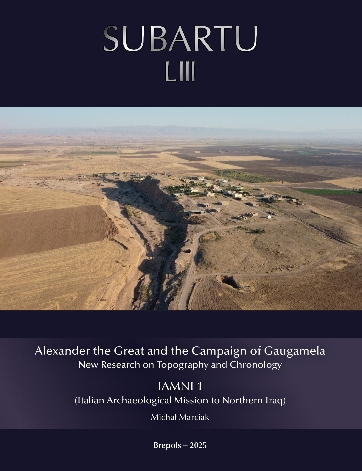
Alexander the Great and the Campaign of Gaugamela
New Research on Topography and Chronology IAMNI 1 (Italian Archaeological Mission to Northern Iraq)
The Battle of Gaugamela in which Alexander the Great’s army faced the Persian army of King Darius III in 331 bce remains a famous date in history the last battle that led to Alexander’s conquest of the Achaemenid Empire. However the topography and chronology of the campaign have up to now remained little studied. Taking these two elements as its starting point this volume draws both on the latest archaeological research in the region and on recent advances in science (in particular GIS) to offer a completely new reconstruction of the Gaugamela campaign arguing for a much shorter campaign than has hitherto been understood. By turning the spotlight for the first time onto the geographical and topographical context of the campaign the author here also provides a new understanding of both the scale of Alexander’s military achievement and the long-term effects of the military reforms introduced by his father Philip II.
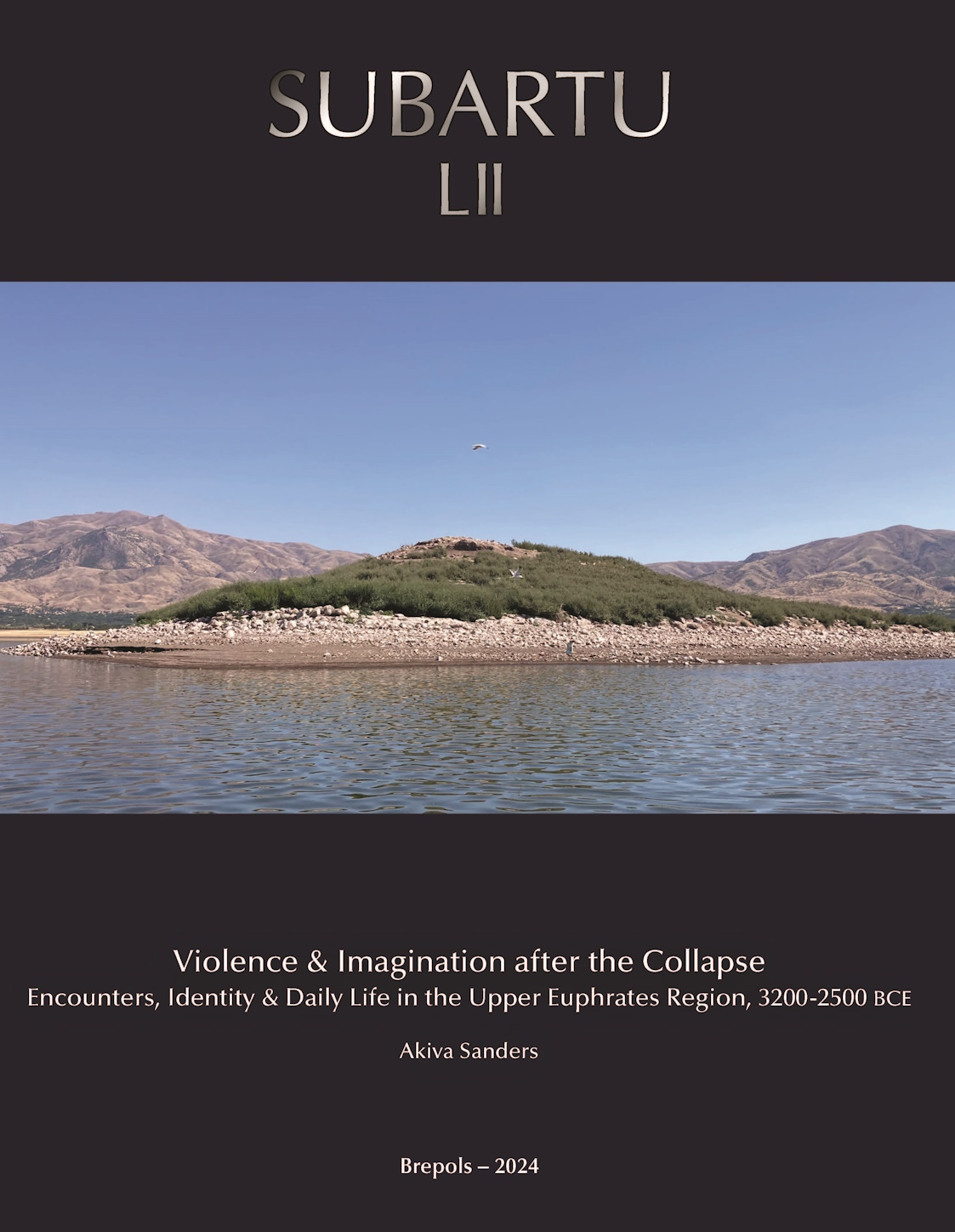
Violence and Imagination after the Collapse
Encounters, Identity and Daily Life in the Upper Euphrates Region, 3200-2500 BCE
In the late fourth millennium BCE the villages temples and palace of the Upper Euphrates region stood between two social worlds: the comparatively hierarchical centrally organized Mesopotamian social tradition to the south and the comparatively egalitarian decentralized Kura-Araxes social tradition to the north. Over the next seven centuries this positioning and the interactions it sparked fed into reactions among the region’s inhabitants that ranged from cataclysmic violence to a flowering of innovation in visual culture and social arrangements. These events had a wide array of short-term and long-term impacts some limited to a single house or settlement and some like the innovation of the Warrior Tomb template that transformed societies across West Asia. With an eye towards detail a theoretical approach emphasizing personal motivation and multiple scales of analysis this book organizes previously unpublished data from six sites in the region Arslantepe Ta kun Mevkii Pulur Nor untepe Tepecik and Korucutepe dating to this dramatic and transformative period.
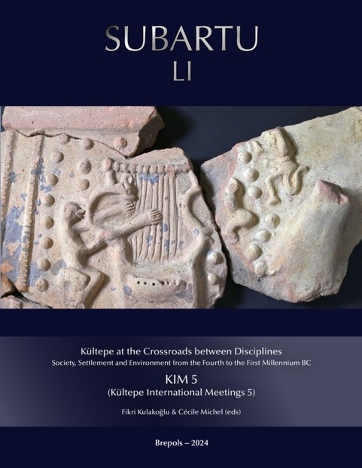
Kültepe at the Crossroads between Disciplines
Society, Settlement and Environment from the Fourth to the First Millennium bc
This fifth volume of a collection devoted to the interdisciplinary meetings held one every two years at Kültepe ancient Kaneš brings together eighteen contributions dedicated to the archaeology and history of this Central Anatolian site and its surroundings. Each chapter within the volume presents the results of current research into Kültepe thus continuing the holistic approach first demonstrated in earlier volumes of the Kültepe International Meetings sub-seriesof revitalizing one of the most important cultural centres of early Anatolia and of emphasising its importance as a pilot site for interdisciplinary studies. Drawing on Kültepe’s unique textual and archaeological data the studies gathered here are organized into four key thematic sections devoted respectively to politics law and religion; women family and correspondence; human and animal skeletons; and to the most recent archaeological excavations in Kültepe covering a period from the Chalcolithic to Hellenistic times.
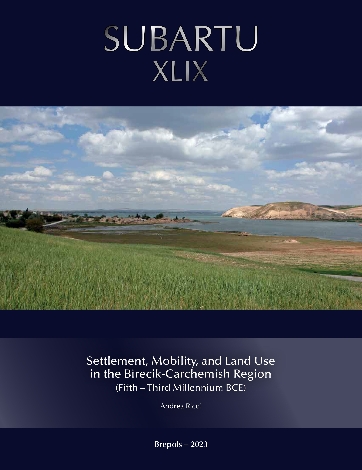
Settlement, Mobility, and Land Use in the Birecik-Carchemish Region
(Fifth–Third Millennium bce)
This volume investigates settlement trajectories and systems of movement in the Birecik-Carchemish sector of the Euphrates River Valley from the fifth to the third millennium BCE. Integrating remote sensing analyses published data of individual surveys and excavations and the original results of the ‘Land of Carchemish Project’ this multi-scalar study shows the significant longevity of settlement choices and the role of small sites in shaping the cultural landscape of the region both along the Euphrates and in the uplands. Attention is paid to the dynamics behind settlement creation and continuity while the author also provides a reassessment of the radiocarbon dates from sites in the area of study.
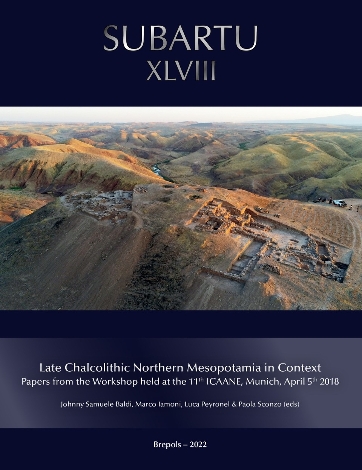
Late Chalcolithic Northern Mesopotamia in Context
Papers from a Workshop held at the 11th ICAANE in Munich, April 5th 2018
Many of the debates that have until recently driven research into Mesopotamia’s proto-urban phase (5th- 4th millennia bce) have now been reassessed thanks to new fieldwork in Iraqi Kurdistan and new data into the relationships between the north and south of the Alluvium from hitherto poorly-documented regions. These debates were re-examined in the light of this new material during a workshop held at the ICAANE in 2018 in Munich leading to unprecedented perspectives on the patterns of early urbanization social mobility and the organization of Late Chalcolithic communities. Drawing on research first presented at ICAANE and building on the most recent data from surveys and excavations this volume engages with one key question from different angles: namely how can we reconcile detailed analysis of the multifaceted local variations of proto-urbanism with the supra-regional intricate and more widespread nature of this same phenomenon across Mesopotamia?
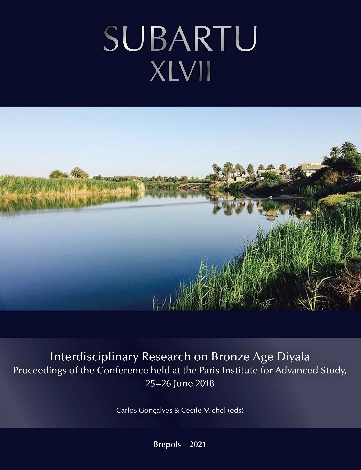
Interdisciplinary Research on the Bronze Age Diyala
Proceedings of the Conference Held at the Paris Institute for Advanced Study, 25–26 June, 2018
The Diyala region in eastern Iraq has long been a focal area of study for scholars of the Bronze Age thanks both to its long history of human occupation and its position as a site of strategic importance. Drawing on this strong tradition of scholarship and the results of numerous excavations and collections in the area the seven contributions gathered in this volume aim to offer new insights into the cultures and societies of the Bronze Age Diyala by proposing new questions problems and approaches. Exploring subjects as widespread as architecture and iconography cultural and economic history the study of social networks historiography and the identification of ancient cities these chapters explore the richness of the Bronze Age Diyala from a range of perspectives and together offer important new insights into our understanding of the area.