


The Archaeology of Northern Europe
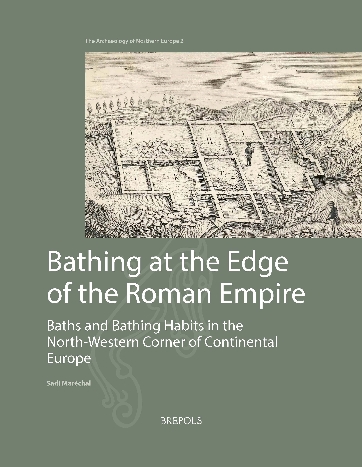
Bathing at the Edge of the Empire
Roman Baths and Bathing Habits in the North-Western Corner of Continental Europe
Roman bathhouses are considered to be prime markers when studying romanization in the provinces of the Empire as these very specific - and archaeologically recognizable - buildings together with their associated ideas about the body and personal health introduced a decidedly Roman habit into regions that had hitherto been unfamiliar with (communal) bathhouses and heating technology. While traditionally studies into Roman baths and bathing have focused on large public baths in the cities of the empire however those from the area that now roughly corresponds to modern-day Belgium have often been neglected in recent research as this was an area with few important urban centres.
This book for the first time investigates the introduction spread and eventual disappearance of Roman-style baths and of bathing habits in this north-western corner of the Roman Empire. A detailed analysis of the architecture technology and decoration of both public and private baths is combined with a discussion on the role of bathing in the area’s romanization and supplemented by a fully illustrated catalogue of all bathhouses in the area of study. In doing so the volume sheds new light not only on the evolution of baths and bathing in this region but also on their broader role in larger historic processes such as cultural change across the Empire.
Bear and Human
Facets of a Multi-Layered Relationship from Past to Recent Times, with Emphasis on Northern Europe
Bears have throughout human history been admired and feared by humans in equal measure with an interrelationship between the two species identifiable from pre-modern times through a wealth of material items as well as from cult sites sacral remains images and written sources. This unique interdisciplinary volume draws together sixty-four contributions by experts from across a range of fields in order to shed light on the complex connections between bears and humans in a period extending from the pre-modern into modern times and across an area stretching from England into Russia. From bear biology (represented by work from the Scandinavian Brown Bear Research Project) and archaeo(zoo)logy to art history and from history of religion to philology the research gathered across this three-volume set explores a wide-range of subjects. Among them are the bear in biology bears and animal agency bear remains in graves and churches the role of bears in religious beliefs (including berserker and bear ceremonialism) bears in literature the philology underpinning why bear is a taboo word and the image of the bear in rock art as well as political iconography up to the present day. Together these wide-ranging but closely thematic texts combine to produce a ground-breaking new work that will prove fundamental in understanding the human connection with this remarkable animal.
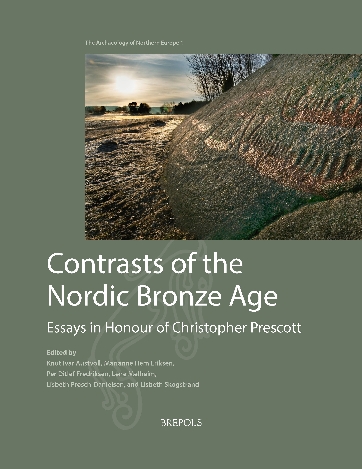
Contrasts of the Nordic Bronze Age
Essays in Honour of Christopher Prescott
The Bronze Age in Northern Europe was a place of diversity and contrast an era that saw movements and changes not just of peoples but of cultures beliefs and socio-political systems and that led to the forging of ontological ideas materialized in landscapes bodies and technologies. Drawing on a range of materials and places the innovative contributions gathered here in this volume explore the disparate facets of Bronze Age society across the Nordic region through the key themes of time and trajectory rituals and everyday life and encounters and identities. The contributions explore how and why society evolved over time from the changing nature of sea travel to new technologies in house building and from advances in lithic production to evolving burial practices and beliefs in the afterlife. This edited collection honours the ground-breaking research of Professor Christopher Prescott an outstanding figure in the study of the Bronze Age north and it takes as its inspiration the diversity interdisciplinarity and vitality of his own research in order to make a major new contribution to the field and to shed new light on a Bronze Age full of contrasts and connections.