


Medieval Texts and Cultures of Northern Europe

The Multilingual Dynamics of Medieval Literature in Western Europe, c. 1200–c. 1600
While the multilingualism of the medieval world has been at the forefront of research agendas across medieval studies in recent years there nonetheless remain many questions to answer. What for example were the stakes and consequences of multilingualism for literary culture? And how do these change if we think of multilingualism through cultural social artistic or material lenses? Taking such concerns as their starting point the essays in this volume address a variety of aspects of medieval literature and literary culture related to multilingualism. They deal with multilingualism in relation to manuscripts literary contexts and historical contexts. The chapters gathered together here address considerations that have been overlooked in previous scholarship and ask where the future of the study of medieval multilingualism lies. Contributions to the volume are grouped thematically rather than by date or period in order to draw out comparative perspectives with the aim of encouraging innovative new approaches to future research in the field.
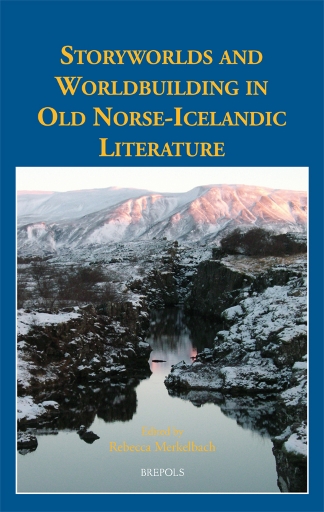
Storyworlds and Worldbuilding in Old Norse‑Icelandic Literature
The storyworlds of Old Norse-Icelandic literature are multifaceted and variable ranging from the worlds of heroic poetry and popular romance to the recognizable narrative universe built by the Sagas of Icelanders. Despite this they have rarely been explored and narratological theories of storyworlds or fantasy scholarship have had little impact on the field. Yet given that every story creates its own storyworld it can be assumed that Old Norse-Icelandic literary texts too build worlds — and these worlds are diverse and complex as shown by the contributors in this volume: they constantly engage with one another exploring shaping and expanding while also entering into a dialogue with the primary world from which they draw.
This volume brings together scholars from different areas of Old Norse-Icelandic studies to explore questions related to not only the storyworlds of medieval Icelandic literature but also those of legal and learned texts and to the way that they are built. Together they inquire into the nature of these worlds into their preservation and transmission in manuscripts their transmediality transnarrativity and reception. In doing so these inquiries showcase the breadth of new perspectives on medieval Icelandic literature made possible by the application of narratological theory in its study.

Cultural Models for Emotions in the North Atlantic Vernaculars, 700–1400
While the medieval regions that form modern-day Britain Ireland Iceland and the Scandinavian states were very much like today home to diverse ethnic and linguistic groups it is evident that the peoples who inhabited the north-western Atlantic seaboard at this time were nonetheless connected by key cultural environmental historical and ideological experiences that set them apart from other regions of Europe. This volume is the first to focus specifically on these cultural and linguistic connections from the perspective of the history of emotions. The contributions collected here examine cultural encounters among medieval North Atlantic peoples with regard to the gradual development of shared emotional models and the emergence of early cross-cultural emotional communities in this region. The chapters also explore how the folk psychologies illustrated in the oldest European vernacular writing traditions (Irish English and Scandinavian) bear witness to cultural models for emotions that first took shape in pre-Christian times.
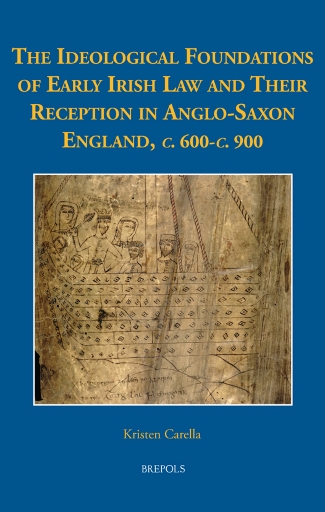
The Ideological Foundations of Early Irish Law and Their Reception in Anglo-Saxon England, c. 600–c. 900
Old Testament Levites who considered the Law of Moses to be the living law: this has long been the established view among many scholars for how early Irish jurists perceived themselves as well as how they saw the broader theoretical and religious bases of their jurisprudence. In this volume however Kristen Carella offers a timely reassessment of scholarly opinion exploring Irish legal texts within the broader context of both vernacular Irish and Hiberno-Latin literature to argue that early Irish Christian intellectuals in fact saw themselves as gentile converts subscribing to an orthodox Christian faith that was deeply infused with Pelagian theology.
Certain aspects of Irish legal ideology particularly Irish views of divine history and pseudo-historical ideas about their own ethnogenesis moreover extended out of Ireland and into Anglo-Saxon England; their impact can be seen on lawmakers such as Alcuin when he helped draft the Anglo-Latin Legatine Capitulary of 786 and King Alfred of Wessex when he composed the Old English prologue to his law code in the late-ninth century. Through this approach this volume not only challenges long-held scholarly views on Irish legal ideology and its influences beyond Ireland but also provides a new paradigm for intellectual relations between early medieval Ireland and England.

Multi-disciplinary Approaches to Medieval Brittany, 450–1200
Connections and Disconnections
While it is well-established that Brittany and the Insular world were closely linked during the medieval period the precise nature of these connections continues to spark debate. Was there a significant migration in the fifth century or were the connections more multi-faceted and enduring than medieval accounts suggest? And how might we triangulate the Atlantic connections with other influences on medieval Brittany including those from the Carolingian world?
Drawing together research that was first presented at the conference ‘Brittany and the Atlantic Archipelago: Contact Myth and History 450-1200’ held in Cambridge in December 2017 this volume seeks to present new and ground-breaking research into both Brittany and its broader European context during the medieval period. The chapters gathered here range across various disciplines including textual history archaeology hagiography onomastics and the study of liturgical evidence offering new insights into our understanding of medieval Brittany as well as drawing out particular connections (and disconnections) between Brittany and its neighbours.

The Cult of Saints in Nidaros Archbishopric
Manuscripts, Miracles, Objects
Scandinavia has often been considered as a peripheral part of the Christian world with its archbishopric in Nidaros an isolated outpost of the Catholic Church. This volume however offers a reassessment of such preconceptions by exploring the way in which the Nidaros see celebrated the cult of saints and followed traditions that were both part of and distinct from elsewhere in Christian Europe. The contributions gathered here come from specialists across different disciplines among them historians philologists art historians and epigraphists to offer a multifaceted insight into how texts and objects sculpture runes and relics all drove the cult of saints in this northern corner of Europe. In doing so the volume offers a nuanced understanding of the development of cults the saints themselves and their miracles not only in the Norse world but also more widely.

Celts, Gaels, and Britons
Studies in Language and Literature from Antiquity to the Middle Ages in Honour of Patrick Sims-Williams
Celts Gaels and Britons offers a miscellany of essays exploring three closely connected areas within the fields of Celtic Studies in order to shed new light on the ancient and medieval Celtic languages and their literatures. Taking as its inspiration the scholarship of Professor Patrick Sims-Williams to whom this volume is dedicated the papers gathered together here explore the Continental Celtic languages texts from the Irish Sea world and the literature and linguistics of the British languages among them Welsh and Cornish. With essays from eighteen leading scholars in the field this in-depth volume serves not only as a monument to the rich and varied career of Sims-Williams but also offers a wealth of commentary and information to present significant primary research and reconsiderations of existing scholarship.

Crusading and Ideas of the Holy Land in Medieval Britain
Crusading and western interaction with the Holy Land is often a contentious topic not least because modern popular perception of medieval east-west contact is that it was defined by violence conquest and religious persecution. Building on recent scholarship this collection of essays takes an interdisciplinary approach to the role of crusading and contact with the Holy Land in medieval Britain in order to investigate the myriad ways in which these contacts influenced artistic literary visual and social culture in medieval Britain. By looking at new material and focusing on the domestic response to crusading and the Holy Land the contributions gathered here offer new insights into the influence of these contacts on the medieval British world view as well as their impact on topics such as ideals about masculinity and kingship geographical perception and aspirational codes of conduct for the medieval British elite.

Making the Profane Sacred in the Viking Age
Essays in Honour of Stefan Brink
The term ‘sacred’ is often used in relation to the pre-Christian religions of Iron Age and medieval Scandinavia. But what did sacred really mean? What made something sacred for people? Why was one particular person place act or text perceived to hold a sacral quality while others remained profane? And what impact did such sacrality have on wider society culture politics and economics both for contemporaries and for future generations?
This volume seeks to engage with such questions by drawing together essays from many of the pre-eminent scholars of Old Norse in order to reinterpret the concept of the sacred in the Viking Age North and to challenge pre-existing frameworks for understanding the sacred in this space and time. Including essays from Margaret Clunies Ross Stephen Mitchell John Lindow and Judy Quinn it is a treasury of commentary and information that ranges widely across theories and sources of evidence to present significant primary research and reconsiderations of existing scholarship. This edited collection is dedicated to Stefan Brink an outstanding figure in the study of early Scandinavian language society and culture and it takes as its inspiration the diversity interdisciplinarity and vitality of his own research in order to make a major new contribution to the field of Old Norse studies.

The Chronicles of Medieval Wales and the March
New Contexts, Studies and Texts
The chronicles of medieval Wales are a rich body of source material offering an array of perspectives on historical developments in Wales and beyond. Preserving unique records of events from the fifth to the fifteenth centuries these chronicles form the essential narrative backbone of all modern accounts of medieval Welsh history. Most celebrated of all are the chronicles belonging to the Annales Cambriae and Brut y Tywysogyon families which document the tumultuous struggles between the Welsh princes and their Norman and English neighbours for control over Wales.
Building on foundational studies of these chronicles by J. E. Lloyd Thomas Jones Kathleen Hughes and others this book seeks to enhance understanding of the texts by refining and complicating the ways in which they should be read as deliberate literary and historical productions. The studies in this volume make significant advances in this direction through fresh analyses of well-known texts as well as through full studies editions and translations of five chronicles that had hitherto escaped notice.

Medieval Francophone Literary Culture Outside France
Studies in the Moving Word
In medieval Europe cultural political and linguistic identities rarely coincided with modern national borders. As early as the end of the twelfth century French rose to prominence as a lingua franca that could facilitate communication between people regardless of their origin background or community. Between the twelfth and fifteenth centuries literary works were written or translated into French not only in France but also across Europe from England and the Low Countries to as far afield as Italy Cyprus and the Holy Land. Many of these texts had a broad European circulation and for well over three hundred years they were transmitted read studied imitated and translated.
Drawing on the results of the AHRC-funded research project Medieval Francophone Literary Culture Outside France this volume aims to reassess medieval literary culture and explore it in a European and Mediterranean setting. The book incorporating nineteen papers by international scholars explores the circulation and production of francophone texts outside of France along two major axes of transmission: one stretching from England and Normandy across to Flanders and Burgundy and the other running across the Pyrenees and Alps from the Iberian Peninsula to the Levant. In doing so it offers new insights into how francophone literature forged a place for itself both in medieval textual culture and more generally in Western cultural spheres.

Crossing Borders in the Insular Middle Ages
This volume offers an in-depth exploration of the cultural connections between and across Britain Ireland and Iceland during the high and late Middle Ages. Drawing together new research from international scholars working in Celtic Studies Norse and English the contributions gathered together here establish the coherence of the medieval Insular world as an area for literary analysis and engage with a range of contemporary approaches to examine the ways and the degrees to which Insular literatures and cultures connect both with each other and with the wider European mainstream.
The articles in this collection discuss the Insular histories of some of the most widely read literary works and authors of the Middle Ages including Geoffrey of Monmouth and William Langland. They trace the legends of Troy and of Charlemagne as they travelled across linguistic and geographical borders give fresh attention to the multilingual manuscript collections of great households and families and explore the political implications of language choice in a linguistically plural society. In doing so they shed light on a complex network of literary and cultural connections and establish the Insular world not as a periphery but as a centre.

Norse-Gaelic Contacts in a Viking World
This multi-disciplinary volume draws on the combined expertise of specialists in the history and literature of medieval Ireland Iceland Norway and Scotland to shed new light on the interplay of Norse and Gaelic literary traditions. Through four detailed case-studies which examine the Norwegian Konungs skuggsjá the Icelandic Njáls saga and Landnámabók and the Gaelic text Baile Suthach Sith Emhna the volume explores the linguistic cultural and political contacts that existed between Norse and Gaelic speakers in the High Middle Ages and examines the impetus behind these texts including oral tradition transfer of written sources and authorial adaption and invention. Crucially these texts are not only examined as literary products of the thirteenth century but also as repositories of older historical traditions and the authors seek to explore these wider historical contexts as well as analyse how and why historical and literary material was transmitted. The volume contains English translations of key extracts and also provides a detailed discussion of sources and methodologies to ensure that this milestone of scholarship is accessible to both students and subject-specialists.
‘This is a brilliant and genuinely ground-breaking book representing a significant step forward in literary and historical analysis of the Norse-Gaelic interface’. (Professor Ralph O’Connor University of Aberdeen).

French in Medieval Ireland, Ireland in Medieval French
The Paradox of Two Worlds
This book is a ground-breaking study of the cultural and linguistic consequences of the English invasion of Ireland in 1169 and examines the ways in which the country is portrayed in French literature of the twelfth thirteenth and fourteenth centuries. Works such as La geste des Engleis en Yrlande and The Walling of New Ross written in French in a multilingual Ireland are studied in their literary and historical contexts and the works of the Dominican friar Jofroi de Waterford (c. 1300) are shown to have been written in Ireland rather than Paris as has always been assumed.
After exploring how the dissemination and translation of early Latin texts of Irish origin concerning Ireland led to the country acquiring a reputation as a land of marvels this study argues that increasing knowledge of the real Ireland did little to stymie the mirabilia hibernica in French vernacular literature. On the contrary the image persisted to the extent of retrospectively associating central motifs and figures of Arthurian romance with Ireland. This book incorporates the results of original archival research and is characterized by close attention to linguistic details of expression and communication as well as historical codicological and literary contexts.

Multilingualism in Medieval Britain (c. 1066-1520)
Sources and Analysis
This book is devoted to the study of multilingual Britain in the later medieval period from the Norman Conquest to John Skelton. It brings together experts from different disciplines — history linguistics and literature - in a joint effort to recover the complexities of spoken and written communication in the Middle Ages. Each author focuses on one specific text or text type and demonstrates by example what careful analysis can reveal about the nature of medieval multilingualism and about medieval attitudes to the different living languages of later medieval Britain. There are chapters on charters sermons religious prose glossaries manorial records biblical translations chronicles and the macaronic poetry of William Langland and John Skelton. By addressing the full range of languages spoken and written in later medieval Britain (Latin French Old Norse Welsh Cornish English Dutch and Hebrew) this collection reveals the linguistic situation of the period in its true diversity and shows the resourcefulness of medieval people when faced with the need to communicate. For medieval writers and readers the ability to move between languages opened up a wealth of possibilities: possibilities for subtle changes of register for counterpoint for linguistic playfulness and perhaps most importantly for texts which extend a particular challenge to the reader to engage with them.

Survival and Success on Medieval Borders
Cistercian Houses in Medieval Scotland and Pomerania from the Twelfth to the Late Fourteenth Century
This comparative study analyses Cistercian strategies on the northern and north-eastern frontiers of medieval Europe. Through case studies of six houses in Pomerania and Neumark (Kołbacz Marienwalde and Himmelstädt) and on the Scottish-English border (Melrose Dundrennan and Holm Cultram) the author traces the development of social networks around these monasteries within their own regions and across borders and explores the importance of the international Cistercian networks for communities located in these politically sensitive areas. Very different socio-economic conditions in the regions under discussion resulted in quite different strategies of land accumulation by Cistercian monasteries in Scotland and Pomerania which in turn had a lasting impact on their relationships with their neighbours. The author also examines the role of these abbeys in wider ecclesiastical politics and in relation to the key issues of the time: church reform and the expectations of the order’s lay patrons and benefactors. In the fourteenth century all of the abbeys experienced war violence and long-term instability. Their responses to these threats and difficulties are significant for our understanding of monastic strategies in hostile environments. Above all this study shows how a Cistercian model was adapted to fit the complex political cultural and ethnic contexts of the southern Baltic Northern England and Scotland.

Historical Narratives and Christian Identity on a European Periphery
Early History Writing in Northern, East-Central, and Eastern Europe (c.1070–1200)
This volume presents the first comprehensive overview of the major early historical narratives created in Northern East-Central and Eastern Europe between c. 1070 and c. 1200 with each chapter providing a short introduction to the narrative in question. Most chapters are written by established experts in their fields who have published critical editions of the discussed narratives their English translations or analytical works dealing with early history writing in corresponding regions. However the volume is more than just a summary of various narratives. Despite being written in such different languages as Latin Old Norse and Old Church Slavonic these narratives played similar roles for their reading audiences in that they were crucial in the construction of Christian identity in the lands recently converted to Christianity. The thirteen authors contemplate the extent to which this identity formation affected the nature of narrativity in these early historical works. The authors ask how the pagan past and Christian present were incorporated in the texture of the narratives and address the relative importance of classical and biblical models for their composition and structure. By addressing such questions the volume offers medievalists a coherent comparative study of early history writing in the peripheral regions of medieval Europe in the first centuries after conversion.

Normandy and its Neighbours, 900—1250
Essays for David Bates
One of the most important aspects of David Bates’s distinguished career has been his readiness to engage — as few of his predecessors did — with the world of modern French scholarship. The outcome of this engagement and of his familiarity with French archives has been the reshaping of our understanding of the Anglo-Norman realm founded by William the Conqueror. The Norman Conquest has always been seen as a defining event in medieval English history and David’s work has enabled us to place it in its broader European context. He has also welcomed insights from other disciplines including archaeology architectural history and numismatics. His impact as a scholar has been profound. His writings have made academic debate accessible to the general public and the scholar alike and he has conveyed his enthusiasm and commitment to both. He has brought together a generation of academics of various nationalities and from a broad range of disciplines to forge a new understanding of the relationship of England and Normandy in the central Middle Ages. This collection — offered in recognition of his contribution — acknowledges the many strands of his scholarship. It brings together specialist studies of Anglo-French culture law gender and historiography.

The Playful Middle Ages
Meanings of Play and Plays of Meaning: Essays in Memory of Elaine C. Block
Love play or playing dead wordplay or playing games - the notion of play inhabits all spheres of human activity. This collection of essays brings together international scholars from a range of disciplines to explore aspects of playfulness in the later European Middle Ages. From manuscript to performance and from the domestic to the doctrinal the exuberance and ambiguity of verbal and visual play is interrogated in order to decode layers of meaning in texts and artefacts. These twelve papers celebrate the work of Elaine C. Block whose dedicated study of misericords has through countless articles and books made the riches of this dizzying iconographic resource easily available to scholars for the first time. Her monumental Corpus on Medieval Misericords volumes will no doubt inform medieval scholars for generations to come and those included in the present collection are both proud and grateful to be of the first generation to benefit from her work on this body of carvings which challengingly - and playfully - straddles thesometimes invisible line between the sacred and profane.

Laments for the Lost in Medieval Literature
This is a collection of essays on the subject of lament in the medieval period with a particular emphasis on parental grief. The analysis of texts about pain and grief is an increasingly important area in medieval studies offering as it does a means of exploring the ways in which cultural meanings arise from loss and processes of mourning. The international scholars who come together to produce this volume discuss subjects as diverse as lament psalms in Old and Middle English medieval Latin laments mourning in Anglo-Saxon literature mourning through objects medieval art and archaeology Old French poetic elegy skaldic poetry medieval women’s writing Old Polish drama English massacre plays and Middle English nativity lyrics.