


Textes et Etudes du Moyen Âge

Loci Sepulcrales
Places of memory and burial in the Middle Ages
Assembling the contributions of twenty-two authors this volume aims at revisiting the question of the choice of burial sites throughout the Middle Ages in their political emotional and devotional dimensions across a wide chronology and in a vast palette of different social statuses. The choice of a burial site inevitably reflets very important statements made by the living persons not only regarding what they wished the memory of their passage on Earth to be but equally enlightening us on what their concern for the future of their souls was and how it should be cared for in the afterlife.
The first part of this volume is devoted to royal pantheons considering their development and relevance in the construction of royal legitimacy. Kings and Queens were not the only ones considering their lineage and personal memory: noblemen ecclesiastics rich tradesmen and their wives and daughters were also involved in a world of changing tendencies which are dealt with in the second part of the book. The third and last part looks at the strategies and interconnection between building a burial site and constructing collective memories whether in stone or in writing through the performing influence of rituals images or symbols.
This book proposes therefore a whole new set of approaches on the subject addressed either in interdisciplinary and all-around syntheses or via analysis of specific case-studies looking at panteons and other burial sites as the important witnesses of the lives emotions and devotions of the medieval society they served.
Contributors to this volume are Xavier Barral i Altet Catarina Fernandes Barreira Thiago José Borges Maria Helena Cruz Coelho Frederica Cosenza Antonio Pio de Cosmo Lorenzo Curatella Mário Farelo José Romón González de la Cal Linsy Grant Laurent Hablot Orlindo Jorge Emma Lano Martínez Christian de Mérindol Sonia Morales Cano Jorge Morín Pablos Pedro Redol Martina Saltamacchia Isabel Sánchez Ramos Lydwine Scordia Rosa Smurra and Christian Steer.
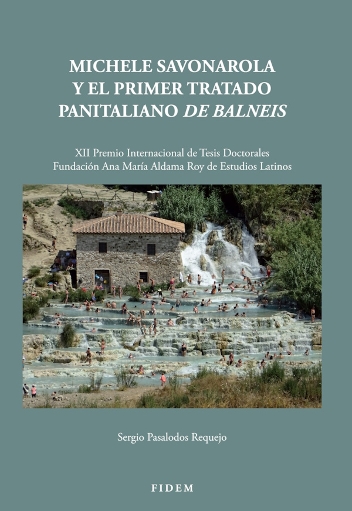
Michele Savonarola y el primer tratado panitaliano de balneis
En la Italia del Renacimiento Michele Savonarola abuelo del famoso Girolamo es llamado a la corte de los Este en Ferrara donde ejercerá como médico de la familia gobernante y como profesor de la universidad de la ciudad. Poco a poco la escritura se convertirá en su principal ocupación dando lugar a una prolija y variada producción literaria que acoge temas políticos religiosos históricos o morales sin descuidar su principal interés: la medicina. En este ámbito dedica escritos a materias tan dispares como la ginecología o la parasitología y acoge todos ellos en su obra enciplopédica Practica. Analizamos en el presente trabajo su obra monográfica sobre el termalismo y los baños de Italia texto fundamental que marca un punto de inflexión en la evolución del género de balneis al incluir en su estudio de los baños de Italia termas ubicadas en Sicilia y gran parte de la península itálica desde Padua hasta Nápoles además de analizar los diversos tipos de baños y la composición química de las aguas mineromedicinales.
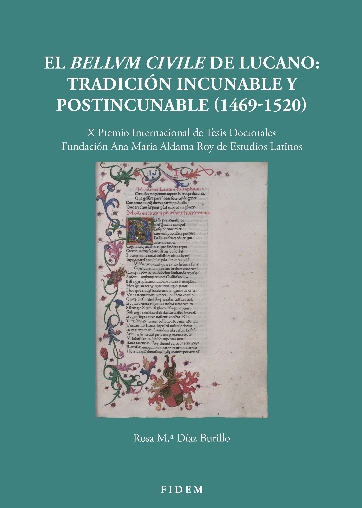
El Bellum Ciuile de Lucano: tradición incunable y postincunable (1469-1520)
Desde 1469 año en el que vio la luz la editio princeps del Bellum Ciuile en Roma el poema de Lucano se imprimió íntegramente en diecisiete ocasiones en el siglo XV y en dieciocho en los primeros veinte años del siglo XVI. Así su difusión y lectura durante el Renacimiento fue profusa. En muy poco tiempo los ejemplares impresos procedentes de diferentes talleres de imprenta europeos sobre todo italianos circularon por la Península Ibérica.
En el presente volumen se aborda en primer lugar el estudio filológico del texto transmitido por las ediciones incunables y postincunables del Bellum Ciuile. Durante estos primeros años de tradición impresa se establecieron diferentes formas textuales del poemay finalmente se configuró la vulgata del texto. El análisis filológico del texto de Lucano transmitido en estas ediciones incunables y postincunables ha permitido precisar las relaciones de filiación entre ediciones reconocer las diferentes familias textuales que convivieron en los primeros años de tradición impresa y dar los primeros pasos en la descripción de su relación con la tradición manuscrita así como en la identificación de la intervención de los editores sobre el texto. Todo ello contribuye desde el estudio de una tradición determinada al conocimiento del trabajo editorial realizado en el Renacimiento sobre textos latinos antiguos.
Igualmente se presenta el corpus de ejemplares conservados en bibliotecas españolas atendiendo a las huellas de lectura y a los poseedores que han dejado su rastro en este valioso patrimonio bibliográfico del que somos herederos.
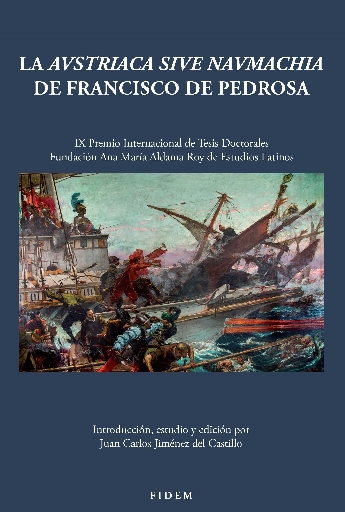
La Austriaca siue Naumachia de Francisco de Pedrosa
La insólita victoria de la Santa Liga sobre la flota turca en la batalla de Lepanto (1571) inspiró la puesta en marcha de la maquinaria propagandística imperial destinada a ensalzar el reinado de Felipe II y las virtudes de Juan de Austria como general de la armada cristiana. Esto ofrecía un marco idóneo para el desarrollo de toda clase de poesía encomiástica donde el género épico había ocupado un lugar destacado desde antiguo. El vigoroso aliento poético de Lepanto llegó a Santiago de Guatemala donde el poeta y gramático madrileño Francisco de Pedrosa compuso una epopeya titulada Austriaca siue Naumachia que ha permanecido inédita hasta nuestros días.
Este volumen consta de dos partes. La parte I contiene el estudio introductorio de la obra donde se ofrecen en primer lugar los datos biográficos de Pedrosa. Seguidamente se examinan las características y los diversos procedimientos compositivos de la Austriaca donde lo clásico y lo moderno la épica y la historia lo pagano y lo cristiano confluyen en un juego incesante. También se abordan algunas cuestiones problemáticas como la datación de algunos de los paratextos del manuscrito y los indicios que apuntan al estado in fieri de la versión que se ha conservado de esta epopeya. La parte II consta de la edición crítica del poema y de estos escritos que lo acompañan: dos versiones -una en latín y otra en castellano- de una carta prologal los poemas laudatorios y una carta de fray Martín de la Cueva dirigida a Pedrosa.
Past and Future
Medieval Studies Today
There was a time not so long ago when Medieval Studies constituted a major pillar for the understanding of the history of human civilization. Today things are different. While the medieval contribution to the project of humanity remains beyond doubt the challenges facing those interested in history have changed definitively. Currently different responses to the new situation are under discussion each with its own potential and challenges: e.g. global medievalism digital humanities comparative history rethinking the cultural narrative. In this volume specialists from the fields of Digital Humanities History Literary Studies Philosophy and Theology share with the readers their views about the possible futures of Medieval Studies. They evince the vitality and multi-perspectivism characteristic of the field today showing that Medieval Studies looks to a future that while different from the past promises to be at least as rich and creative.
The papers collected here were first presented and discussed at the 6th European Congress of Medieval Studies of the Fédération Internationale des Instituts d’Etudes Médiévales (FIDEM) which was held at the University of Basel Switzerland 2-5 September 2018.
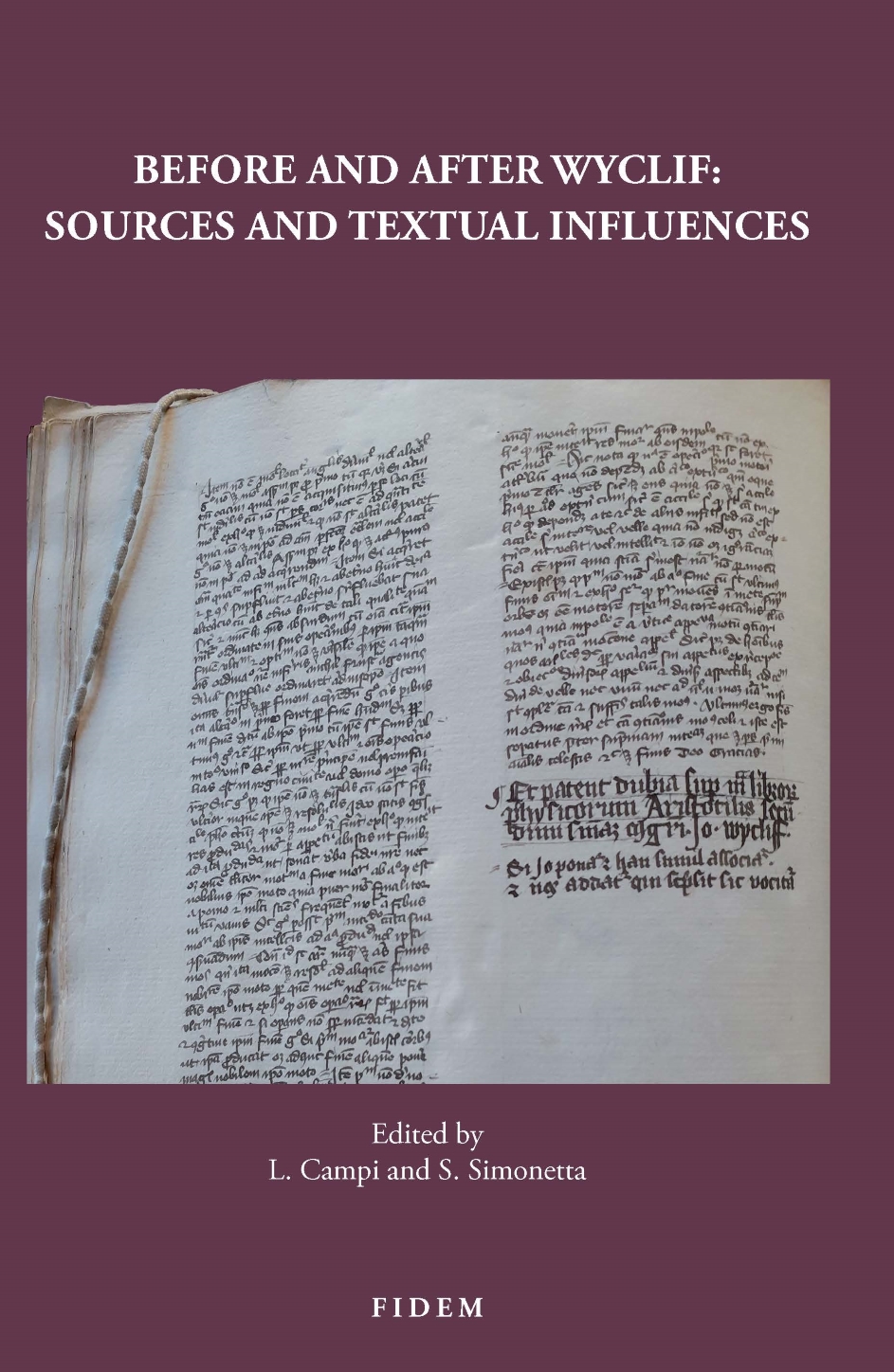
Before and After Wyclif: Sources and Textual Influences
In the almost twenty years between the two international conferences on John Wyclif organised by the University of Milan the most recent of which (September 2016) lies to some extent at the origin of the present volume an increasing number of studies have been devoted to this great English thinker theologian and reformer. These have enhanced our knowledge of his philosophical theological and pastoral work which had long remained in the shadows. The essays collected in the present book take further steps along this path through the contribution of a range of specialists who have been called to further reconstruct Wyclif’s place in his intellectual milieu from the standpoint of his textual and doctrinal dependence and influence: the collected essays deal with the antecedents of Wyclif’s thought his sources and his role as a source for countless followers and opponents.The following authors have contributed to the volume: Mark Thakkar Alessandro Conti Aurélien Robert Stephen E. Lahey Ian Christopher Levy Sean Otto Kantik Ghosh Jindřich Marek and Graziana Ciola.
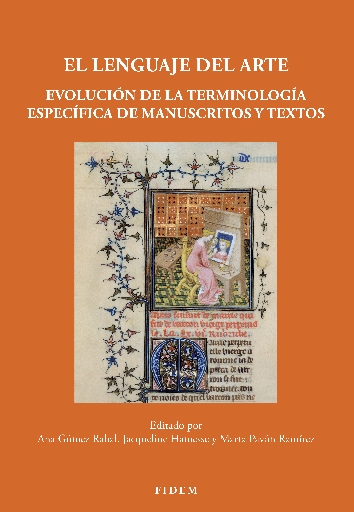
El lenguaje del arte
Evolución de la terminología específica de manuscritos y textos
El análisis de la evolución de la terminología técnica utilizada en la descripción científi ca de textos y manuscritos desde la Edad Media hasta nuestros días es el argumento que los responsables de este volumen pretenden poner al alcance del lector como tema de discusión y de reflexión. La particularidad del libro manuscrito reside en constituir un unicum donde los elementos materiales estructurales y de contenido (texto e imagen) se relacionan necesariamente entre sí. Asimismo los usos lingüísticos de los coetáneos de los manuscritos medievales para denominar su propia realidad libresca y textual se erigen en un objeto de estudio que ahonda en la consideración del manuscrito y del texto de su forma y de su contenido como entidades indisociables.
Es recomendable por lo tanto un acercamiento multidisciplinar al libro manuscrito un acercamiento que exige la colaboración de especialistas de disciplinas diversas cada una de ellas con una terminología técnica propia. Con esa perspectiva los trabajos presentados en estas páginas servirán como descripción del estado de la cuestión y a la vez como punto de partida útil para que paleógrafos codicólogos historiadores del arte o fi lólogos comparen sus respectivos modos de abordar el análisis del libro manuscrito y de sus textos enriqueciéndose unos a otros mediante sus conocimientos propios y particulares sobre la materia todo ello con el fi n de favorecer la utilización de un vocabulario adecuado y si se considera posible y conveniente común.
El presente libro tiene su origen en el Coloquio Anual de la Fédération Internationale des Instituts d’Études Médiévales organizado en Barcelona en julio de 2017 en la Institución Milá y Fontanals del CSIC. Cuenta con las contribuciones de Marina Bernasconi Joanna Frońska Ana Gómez Rabal Jacqueline Hamesse Christine Jakobi-Mirwald Marta Pavón Ramírez Merce Puig Rodríguez-Escalona Pere J. Quetglas y Elena E. Rodríguez Díaz.
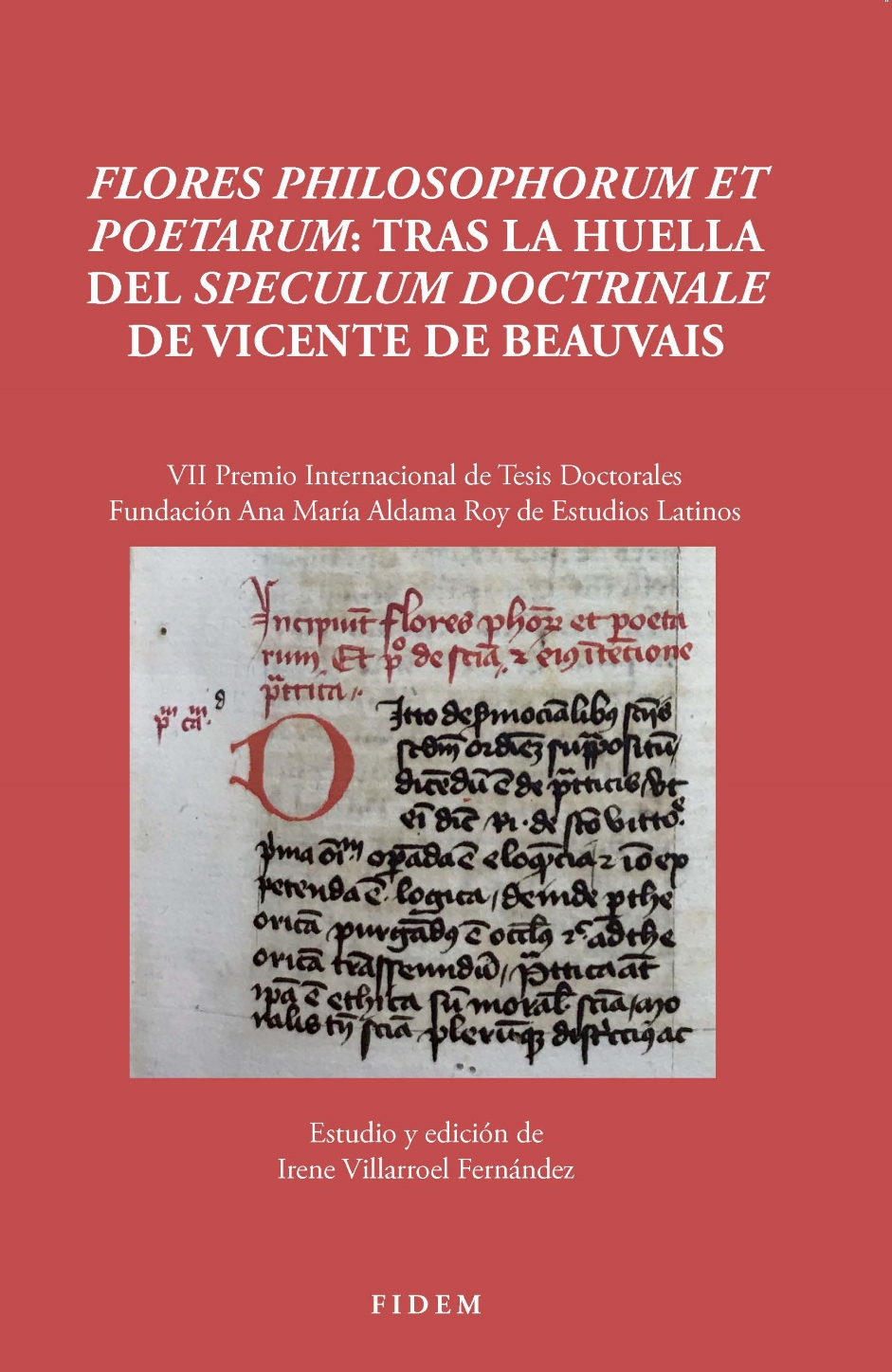
Flores philosophorum et poetarum: tras la huella del Speculum doctrinale de Vicente de Beauvais
La transmisión manuscrita de una obra depara en ocasiones sorpresas y sucesos inesperados. Este es el caso de los libros V y VI del Speculum doctrinale de Vicente de Beauvais dedicados a la ethica monastica que muy pronto se independizaron de la obra completa creando una tradición propia de la que incluso surgió tras diversas transformaciones una obra nueva los Flores philosophorum et poetarum.
En el presente volumen se aborda en primer lugar el estudio de los libros V y VI del Speculum doctrinale sus características y su transmisión manuscrita y posteriormente las modificaciones sufridas por estos dos libros tanto en su estructura como en su contenido que dan origen a los Flores philosophorum et poetarum y que implican una nueva fase en su transmisión con una evolución de enciclopedia a florilegio. Finalmente se presentan los testimonios manuscritos del florilegio y su filiación con la obra enciclopédica de Vicente de Beauvais.
La edición crítica de los Flores philosophorum et poetarum que ocupa la segunda parte del libro tiene en cuenta la doble condición de esta obra original y a la vez subordinada a los libros V y VI del Speculum doctrinale de Vicente de Beauvais por lo que se presenta con tres aparatos (de fuentes crítico e intertextual) con la intención de reflejar su transición entre la enciclopedia y el florilegio.
Signa Iudicii
Orígenes, fuentes y tradición hispánica
Surgida en la remota Antigüedad la leyenda de los signa iudicii ha permeado tradiciones y pueblos culturas y religiones diversas durante siglos. En todo ese tiempo esta relación de signos que precederán al fin del mundo ha sufrido variada suerte desde la gran productividad que presentó durante los albores de la apocalíptica con un primitivo catálogo de siete señales ampliado paulatinamente pasando por un uso pragmático y proselitista durante el período medieval hasta su eclipse con la llegada del racionalismo epistemológico. Se trata de un repertorio de señales escatológicas de amplia naturaleza (atmosférica legendaria geológica espiritual) que buscaba impactar en el imaginario social y colectivo a través de lo que hemos denominado factor miedo. La materia tuvo inmensa repercusión en las tradiciones gaélica anglosajona o latina y la recogen desde autores como Lactancio Orígenes o Comodiano hasta el mismo Agustín de Hipona. Posteriormente su difusión fue dilatada primero a través de varios teóricos y exégetas del cristianismo durante los siglos X XI y XII y más tarde de mano de los autores en lenguas vernáculas occidentales. A partir del siglo XIII se introduce en la Península Ibérica inaugurándose con un texto que Gonzalo de Berceo dedicó a los muy grandes signos ante [...] del Judicio cabdal. Paralelamente a las versiones cristianas destaca la incidencia que la materia tuvo entre varios autores musulmanes peninsulares a lo largo de los siglos.
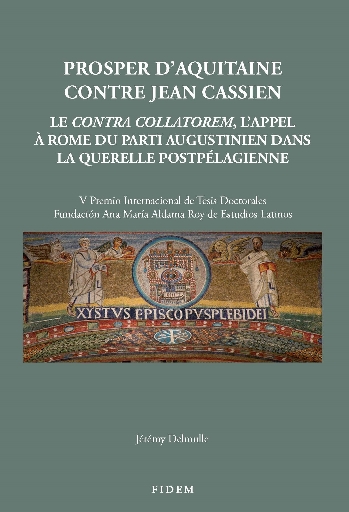
Prosper D’Aquitaine contre Jean Cassien
Le Contra collatorem, l’appel à Rome du parti augustinien dans la querelle postpélagienne
Composé en 432-433 le Liber contra collatorem de Prosper d’Aquitaine entend réfuter les positions d’un certain « conférencier » - comprendre : l’auteur des Conférences Jean Cassien. C’est dans cette oeuvre que Prosper défenseur autoproclamé de saint Augustin et de sa doctrine sur la grâce a pu fournir la première critique et la plus complète des théories propagées à Marseille et dans le sud-est de la Gaule par les adversaires provençaux de l’évêque d’Hippone en s’appuyant exclusivement sur des extraits tirés de la Conlatio XIII « Sur la protection de Dieu » publiée quelques années plus tôt.
En s’attachant par une approche philologique historique stylistique et doctrinale à étudier les diff érentes spécifi cités de l’oeuvre de l’Aquitain (la fi nalité du traité le modus operandi de l’auteur le genre littéraire adopté les stratégies du polémiste et les enjeux théologiques du traité) le présent livre cherche à défendre l’hypothèse qu’en composant son Liber Prosper a voulu constituer un dossier à charge suffi samment étayé pour obtenir de l’évêque de Rome nouvellement élu Xyste III (432-440) une condamnation offi cielle de ce que l’on a nommé le « semipélagianisme » et par là la reconnaissance de l’autorité de la doctrine augustinienne en matière de grâce.
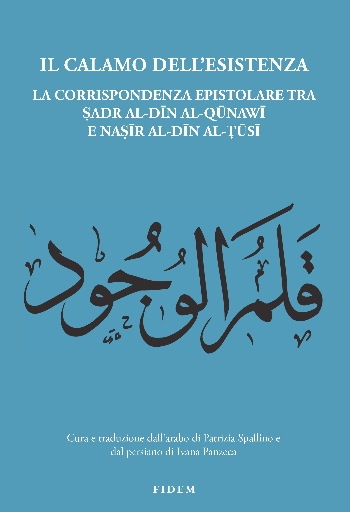
Il calamo dell'esistenza
La corrispondenza epistolare tra Ṣadr al-Dīn al-Qūnawī e Naṣīr al‐Dīn al‐Ṭūsī
Uno degli esempi più significativi dei frutti prodotti dal confronto aperto tra un sufi ed un filosofo è la corrispondenza tenutasi nel XIII secolo tra Ṣadr al-Dīn al-Qūnawī (m. 1274) e Nasīr al-Dīn al-Ṭūsī (m. 1274) il primo discepolo diretto e figlio adottivo dello šayḫ al-akbar Ibn al-‘Arabī il secondo seguace e commentatore di Avicenna. Soggetto centrale del dibattito è l’analisi dell’essere in tutte le sue molteplici determinazioni e manifestazioni: la realtà di Dio l’essere generale e comune la sostanza e la materia l’unità e la molteplicità la natura dell’anima del corpo delle forze celesti il dolore e la gioia spirituale l’emanazione il finito e l’infinito. Tutti i quesiti si sviluppano su uno scenario in cui si prendono in considerazione gli estremi limiti del pensiero teoretico che guarda e si interroga sulla sfera contemplativa della luce rivelativa; una dialettica serrata nel tentativo di armonizzare due dimensioni all’apparenza inconciliabili ma in realtà complementari.
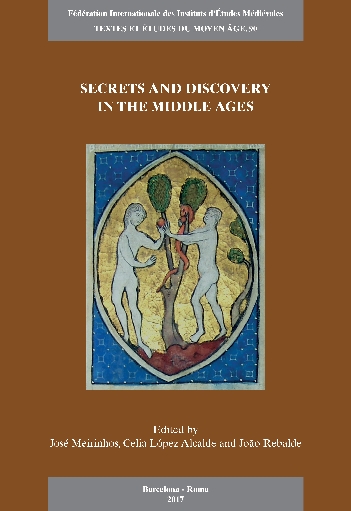
Secrets and Discovery in the Middle Ages
Proceedings of the 5th European Congress of the Fédération Internationale des Instituts d’Études Médiévales (Porto, 24 to 29 June 2013)
FIDEM’s 5th European Congress of Medieval Studies took place in Porto Portugal from 25th to 29th June 2013 under the title Secrets and Discovery in the Midle Ages. The Congress set out to discuss the presence and importance of secrets in the spheres of imagination culture thinking sciences politics religion and everyday life during the Middle Ages (from the onset of the 6th to the midle of the 16th century). The Congress was designed to promote discussion on secrets and discovery in all the domains of Medieval Studies in any medieval language and in a wide array of subjects: Confession and Intimacy; Conspiracy and Betrayal; Government and Diplomacy; Health and Life; Hermeticism and Transmutation; Holiness and Relics; Knowledge and Scepticism; Mysticisms and Kabbalah; Nature and the Supernatural; Past and Future; Planets and Harmony; Prophecy and Divination; Sermons and Preaching; Symbols and Dreams; Truth and Fakes; Unknown Worlds and Lost Places; Warfare and Strategy. In the tradition of FIDEM’s meetings the Congress enjoyed a very high attendance with addresses delivered on all these domains of which the present volume includes only a part submitted to and selected by a specialised committee.
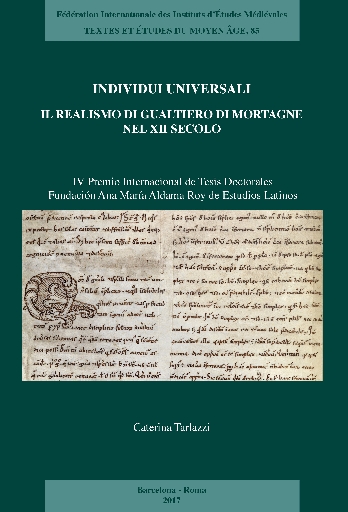
Individui universali. Il realismo di Gualtiero di Mortagne nel XII secolo
IV Premio Internacional de Tesis Doctorales, Fundación Ana María Aldama Roy de Estudios Latinos
Il realismo degli universali sostenuto nei primi decenni del XII secolo nelle scuole del Nord della Francia è stato studiato principalmente attraverso la critica di Pietro Abelardo mentre materiale inedito a favore delle teorie realiste non sempre ha ricevuto adeguata considerazione. Questo libro analizza la teoria realista sugli universali variamente nota come ‘teoria dell’indifferenza’ ‘dell’identità’ ‘degli status’ etc. per la quale si propone qui la denominazione di ‘teoria dell’individuum’. Secondo tale posizione infatti l’universale è l’individuo stesso in alcuni dei suoi status.
Si tratta di una forma mitigata di realismo sviluppatasi a partire dalla critica al più tradizionale realismo dell’essenza materiale. Elementi abelardiani sembrano incorporati nella teoria dell’individuum per un fine - la difesa del realismo - del tutto opposto a quello del maestro palatino. Lo studio considera sia fonti che criticano la teoria dell’individuum (Logica ‘Ingredientibus’ Logica ‘Nostrorum petitioni sociorum’ ‘De generibus et speciebus’) sia testi che la sostengono (il trattato ‘Quoniam de generali’ e il commento P17 all’Isagoge del ms. Paris Bibliothèque nationale de France lat. 3237 ff. 123ra-130rb) analizzando nel dettaglio i trentasette argomenti presenti nella discussione.
Oggetto di indagine è inoltre l’attribuzione della teoria al maestro Gualtiero di Mortagne attivo a Reims e Laon nella prima metà del millecento. A questo scopo sono presi in esame dati sulla vita le opere e l’insegnamento di Gualtiero considerando in particolare la testimonianza di Giovanni di Salisbury in Metalogicon II 17.
Caterina Tarlazzi è British Academy Postdoctoral Fellow alla Facoltà di Filosofia dell’Università di Cambridge e College Research Associate al St John’s College Cambridge. Ha studiato filosofia medievale alla Scuola Galileiana di Studi Superiori dell’Università di Padova l’École Pratique des Hautes Études l’Université Paris IV Sorbonne e l’Università di Cambridge. Le sue ricerche vertono sul pensiero del XII secolo e sui manoscritti che trasmettono le opere e l’insegnamento dei maestri di quell’epoca.
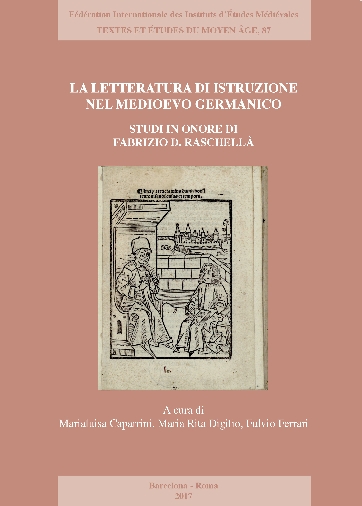
La letteratura di istruzione nel Medioevo germanico
Studi in onore di Fabrizio D. Raschellà
La letteratura d’istruzione intesa nella sua accezione più ampia costituisce uno dei campi d’indagine più fecondi della cultura medievale d’area germanica sia perché consente di seguire la nascita e lo sviluppo di diverse forme letterarie in società nelle quali a lungo la trasmissione della conoscenza era stata orale sia perché aiuta a comprendere le dinamiche di adattamento di quelle popolazioni al mondo classico e cristiano col quale esse vennero in contatto gradualmente nei secoli compresi tra la Tarda Antichità e il Medioevo.
Ma già prima dell’incontro con la superiore cultura latina le popolazioni germaniche dovettero essere ben consapevoli “dell’utilità di quella socializzazione del sapere che è alla base di ogni attività formativa” dandone evidenza anche nei primissimi documenti scritti perfino quelli runici.
L’istruzione che è primariamente condivisione del sapere diventa così il “pretesto” per la traduzione l’adattamento e l’originale redazione di opere di grande profondità. Opere dai contenuti più diversi: saggi grammaticali riflessioni sulla lingua testi filosofici storici pedagogici.
I saggi contenuti nel volume danno un quadro variegato del fermento d’interessi curiosità rifl essioni che le popolazioni germaniche non solo nei primi secoli della loro storia hanno dedicato a un tema centrale per lo sviluppo di qualunque comunità culturalmente evoluta come è la condivisione del sapere e la formazione delle generazioni future e costituiscono l’omaggio e il saluto della comunità accademica non solo italiana a Fabrizio D. Raschellà a conclusione della sua carriera.
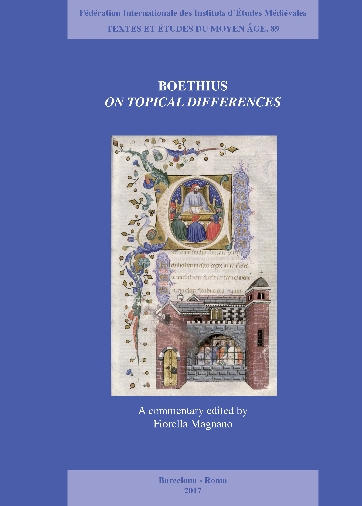
Boethius On Topical Differences
A commentary edited by Fiorella Magnano
This volume contains the first modern commentary to Boethius’s last logical monograph entitled De topicis differentiis his most original work written around 522 A.D. just before the incarceration and death of the Roman philosopher. His textbook aims at providing a method for the discovery of arguments that is an art that teaches how to solve any kind of question through the use of the topics litteraly places of our mind able to produce arguments subsequently developed into argumentations. Boethius inherited this teaching from two different traditions the Greek and Latin. In light of the differences found in them the Roman scholar undertook the writing of the De topicis differentiis precisely in order to show the possible way of reconciling these two philosophical traditions. In this way Boethius was able to disseminate a unified vision of this matter to the Latin world restoring the centrality that the Topics had in the Aristotelian Logic and restoring their noblest function that of being instruments at the service of the search for Truth. Finally he also provided the list of the rhetorical topics by showing the differences with dialectical topics. This study provides a full reconstruction of the structure of the Boethian work retraces and evaluates the sources investigates the implications and explains why the De topicis differentiis remains a foundational work for anyone who wants to understand the development of European Logic through the Middle Ages and the Renaissance.

Appropriation, Interpretation and Criticism
Philosophical and Theological Exchanges Between the Arabic, Hebrew and Latin Intellectual Traditions
The contributions in this volume are dedicated to cross-cultural exchanges during the Middle Ages among exponents of the Arabic Hebrew and Latin philosophical and theological traditions. They draw particular attention to the intellectual approaches which shaped the interplays among these traditions - interplays that were characterized by the contact of various languages being used by people of different religious beliefs in their quest for knowledge: Spanish Jews writing in Arabic Jews collaborating in the translation of Arabic texts into Latin through the vernacular Western Muslims whose writings were read mainly by Jews and Christians in Hebrew and Latin etc. Altogether the eleven studies contained in this book wish to offer new insights into the rich exchanges of knowledge among communities of learning and their scholarly traditions during the Middle Ages and beyond.
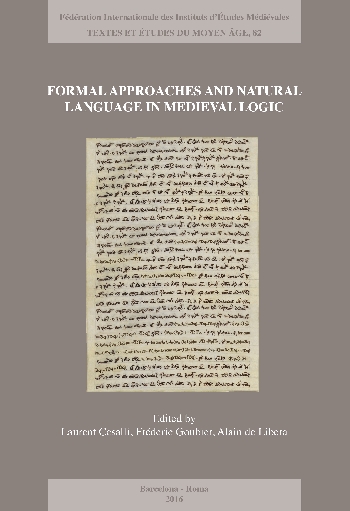
Formal Approaches and Natural Language in Medieval Logic
Proceedings of the XIXth European Symposium of Medieval Logic and Semantics, Geneva, 12-16 June 2012
The late medieval period is widely acknowledged as one of the most salient moments of the history of logic and semantics. It not only considered logic as a sine qua non condition for scientific knowledge it also begot highly sophisticated theories about both argumentation and language. The last fifty years of increasingly intense research have brought about an ever more detailed knowledge of these theories. And yet the questions as to what kind of logic is medieval logic whether and to what extent it corresponds to our conception of logic and even what the nature of its object was remain challenging. That it has a formal character is widely accepted; and its semantic components display remarkable affinities with contemporary ones. But is it formal in the way modern logic is - or believes it is? Medieval logic does not really make recourse to symbolisms after all and the fact that the idea of formal validity might have been born in the twelfth century does not mean that developing formal approaches was an aim of medieval logicians. And what is its semantics a semantics of? Medieval logicians use Latin to deal with Latin constructions but do these constructions belong to natural language or are they regimented to the point of forming some sort of ideal language?
The twenty-five papers gathered in this volume deal with these issues thus allowing to reassess the broader questions of the formal character and formalising ambitions of medieval logic as well as that of the natural character of the language in (and on) which it operated: in other words they address the question of the nature object and purpose of medieval logic.
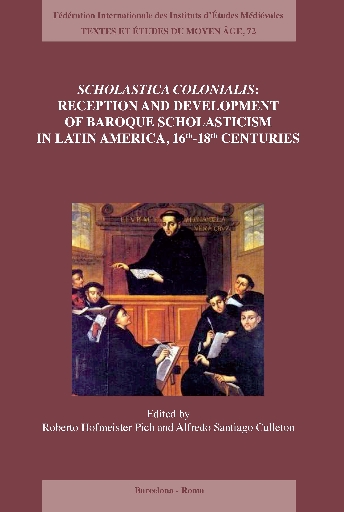
Scholastica Colonialis: Reception and Development of Baroque Scholasticism in Latin America, 16th-18th Centuries
This volume is a collection of studies on Latin American scholasticism originally presented at the Fourth International Conference of Medieval Philosophy at the Pontifícia Universidade Católica do Rio Grande do Sul (PUCRS) Porto Alegre Brazil November 12-14 2012. These essays provide a significant overview of authors works and areas of interest associated to scholastic thought in the 16th-18th centuries focusing particularly on Latin American or European-born authors whose philosophical and theological careers were significantly set in Latin American soil and due to their education reveal a profound acquaintance with European philosophical theories and problems. The reception and development of Medieval thought in Baroque scholasticism the connections between European philosophy mainly Iberian scholasticism and philosophical-theological debates in the «New World» and the revisiting by Latin American scholars of Medieval schools of thought and theoretical patterns taught in Europe prompted by the encounter with several peoples living in the new continent and the search and justification for models of colonization are some of the relevant issues discussed in here. The studies collected in this volume place colonial scholasticism in the history of ideas by letting authors and their writings speak for themselves.

Les Auctoritates Aristotelis, leur utilisation et leur influence chez les auteurs médiévaux
État de la question 40 ans après la publication
En 1974 à l'époque de la publication du texte des Auctoritates Aristotelis les chercheurs n'avaient pas encore mesuré l'influence que ce florilège avait pu avoir dans bon nombre d'œuvres médiévales. Nombreux étaient ceux qui ne connaissaient même pas ce recueil et qui préféraient se référer directement à l'œuvre même du Stagirite pour identifier des citations. Mais la réalité médiévale était bien différente. En effet les recherches menées après la parution de l'édition ont modifié considérablement notre conception de l'usage qu'en firent les intellectuels du 13e au 17e siècle. Beaucoup de progrès ont été faits depuis surtout dans le domaine des éditions critiques de textes philosophiques encore inédits à l'époque. Il suffit de consulter les apparats critiques des sources utilisées par ces auteurs pour constater qu'ils furent nombreux à citer des « auctoritates » d'Aristote extraites de ce florilège. D'autre part les recherches réalisées progressivement montrent que ce recueil a aussi une histoire.
Les études réunis dans ce volume se proposent de présenter un nouvel état de la question et de montrer à l'aide d'exemples pertinents l'usage qui fut fait des citations contenues dans le recueil par divers auteurs de l'époque. D'autre part les informations glanées dans les divers exposés illustrent parfaitement des moments de son histoire. Ils ne rendent pas stériles les recherches ultérieures mais proposent diverses voies d'accès à la reconstitution de son élaboration sans épuiser pour autant le sujet. Ces études permettent déjà de constater le succès énorme que connut le recueil non seulement pendant l'époque scolastique mais aussi jusqu'à la fin du 17e siècle ce qui peut paraître étrange à première vue.
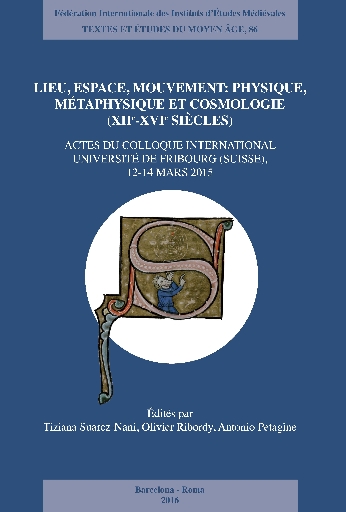
Lieu, espace, mouvement: Physique, Métaphysique et Cosmologie (xii e-xvi e siècles)
Actes du colloque international Université de Fribourg (Suisse), 12-14 mars 2015
Présentées dans le cadre d’un colloque organisé à l’Université de Fribourg (Suisse) les contributions rassemblées dans ce volume examinent des doctrines originales sur le lieu l’espace et le mouvement. En pointant des apports encore inexplorés elles permettent de mieux comprendre les transformations de ces notions entre Moyen Âge et première Époque moderne. Ce recueil offre ainsi une reconstruction thématique sur la longue durée : des questionnements suscités par la réception latine des traités platoniciens aristotéliciens et pythagoriciens (xii e-xiv e siècles) jusqu’aux synthèses élaborées durant la scolastique tardive (xvi e siècle). Les articles réunis dans ces Actes s’attachent à expliciter diverses thèses soutenues en physique métaphysique ou cosmologie et ayant contribué à façonner une nouvelle image de l’univers.