


Transcultural Medieval Studies

Maritime Exchange and the Making of Norman Worlds
Between c. 1000 and c. 1200 ad emigrants from Normandy travelled long distances from their homeland spreading their political influence to the shores of the North Sea the Irish Sea the Mediterranean the Black Sea and the Baltic. Their willingness to cross the seas gave Normans access to new territories and new ideas extending their authority and reputation far beyond northern France. But how and why were these Norman groups able to develop such power? The chapters collected here engage directly with this question by examining the sites and processes that underpinned this expansion. The contributors ask what different Norman groups took from the societies around them and what they rejected; they consider how non-Norman powers — in Ireland England the Fatimid Caliphate Byzantium the Holy Land and Rus — responded to and were shaped by their interactions with Normans in contested zones; and they examine how Normans understood and imagined their own relationship with the sea as a place of exchange a zone of uncertain control and an ambiguous kind of border. Drawing together material culture and written evidence this far-reaching volume offers a fully-developed discussion of how and in what ways these Norman worlds and societies could be said to be ‘transcultural’ and in doing so makes a compelling case that attention to movement and maritime exchange must be central to our understanding of the extension of Norman influence in this period.
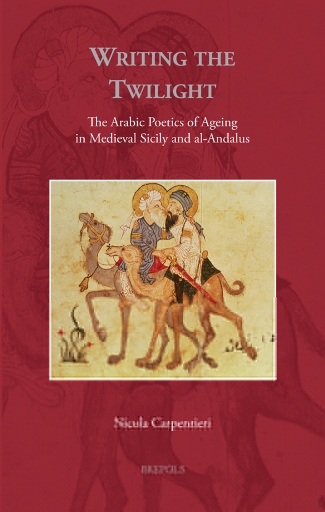
Writing the Twilight
The Arabic Poetics of Ageing in Medieval Sicily and al-Andalus
In the eleventh century as Muslim sovereignty in the Western Mediterranean was eroded by both internal divisions and external attacks Sicily fell to the Normans. At the same time al-Andalus fragmented into a series of small kingdoms that were then picked off by powerful conquerors. Against this backdrop Arabic poets made use of their craft to try and explain the changes in their world. Among them were the Andalusian Abū Ishāq and the Sicilian Ibn Hamdīs both of whom wrote vividly about their own ageing and mortality as well as about the broader twilight of the worlds they knew.
Taking these two protagonists as its starting point this extraordinary volume explores how Abū Ishāq and Ibn Hamdīs despite their different locations both made use of poetry. For them it was a tool to confront their mortality lament their own physical decay and appeal to their age and experience as well as a way of juxtaposing their concerns with the political and social dismemberment of their wider societies and the need for a restoration of world order. The result is also a broader discussion of the relationship between poetry and politics in Maghribī Islam and a reminder of poetry’s importance as a medium to engage with the world.

Transcultural Approaches to the Bible
Exegesis and Historical Writing across Medieval Worlds
This volume the first in the new series Transcultural Medieval Studies draws together scholars from around the world to offer new insights into the importance and role of the Bible across the varied cultures of medieval Europe. The papers gathered here take a comparative and multidisciplinary approach to the subject focusing on the biblical background of perceptions of the religious and cultural ‘Self ’ and ‘Other’ in the Mediterranean in Latin Europe and in the Baltic. In doing so the contributions identify commonalities and differences of the ‘uses of the Bible’ in these various worlds combining and contrasting studies on Bible manuscripts their exegesis and their use for historical writing.