


Utrecht Studies in Medieval Literacy
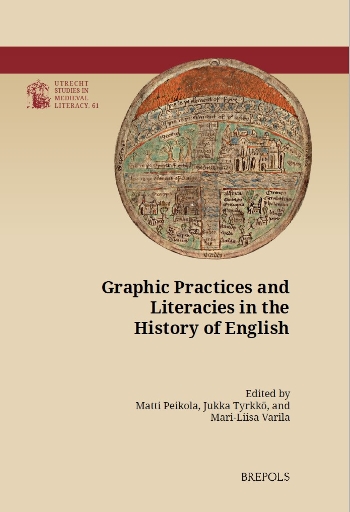
Graphic Practices and Literacies in the History of English
Graphic devices such as tables and diagrams and other visual strategies of organising text and information are an essential part of communication. The use of these devices and strategies in books and documents developed throughout the medieval and early modern periods as knowledge was translated and circulated in European vernaculars. Yet the use of graphic practices and multimodal literacies associated with them have mostly been examined in the context of Latin Greek Arabic and Hebrew and early vernacular writing remains an under-researched area. This volume brings together contributors from English historical linguistics and book studies to highlight multimodal graphic practices and literacies in texts across a range of genres and text types from the late medieval period until the eighteenth century. Contributions in the volume investigate both handwritten and printed materials from books in the domains of medicine religion history and grammar to administrative records and letter writing.
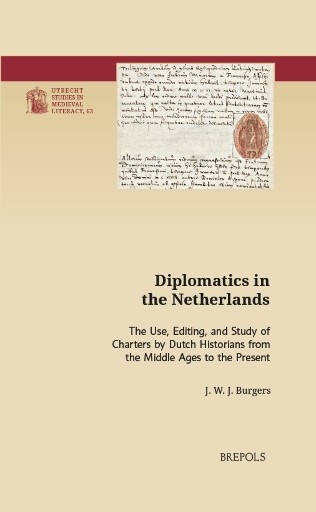
Diplomatics in the Netherlands
The Use, Editing, and Study of Charters by Dutch Historians from the Middle Ages to the Present
Charters and other administrative texts have long had the full attention of medievalists as primary sources in their historiographical work. This also applies to scholars from the Netherlands. Ever since the late Middle Ages they recognised the value of these sources included them as testimony in their historiography and gradually began to realise that charters and other documents required a specific form of textual criticism and a special way of editing. In this Dutch historians usually followed developments abroad. Sometimes as in the early seventeenth century they were ahead methodologically but for long periods they depended for new insights on developments elsewhere. This was especially true in the nineteenth century when scientific diplomatic methods and editing techniques emerged which would only be introduced and applied in the Netherlands in the next century. In the twenty-first century Dutch scholars are fully participating in the ‘digital turn’ that is creating new research tools in diplomatics.
Ultimately the history of diplomatics in the Netherlands is part of the broad development of historiography in the country and therefore a valuable aspect of the history of scholarship in general.
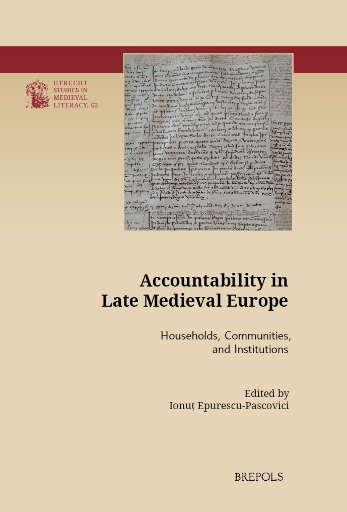
Accountability in Late Medieval Europe
Households, Communities, and Institutions
This volume brings together studies of late medieval accountability in both the domestic and the public realms. It traces practices of accountability across the social spectrum from households to small businesses to communal and regnal administrations highlighting the intersections between competing conceptions of personal and institutional responsibility. Focusing on France and Italy from the thirteenth to the early sixteenth centuries the case studies follow territorial officers consular agents and town notables co-opted into local governance from Avignon and Marseille to Tuscany and the Venetian and Genoese overseas territories. The studies explore both personal and institutional accounting registers as well as records of a textual nature such as rulebooks and inquests in an effort to reflect the range of records and procedures relied on to achieve a measure of accountability in late medieval Europe.
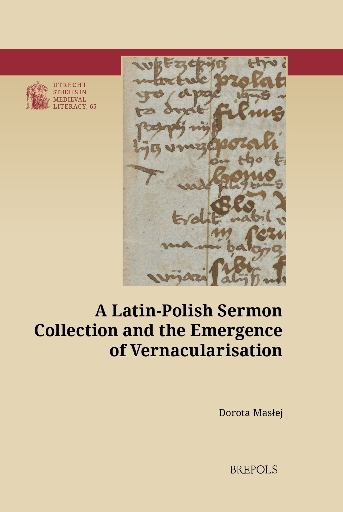
A Latin-Polish Sermon Collection and the Emergence of Vernacularisation
This monograph offers an analysis of the so-called Kazania augustiańskie (‘The Augustinian sermons’) a unique manuscript which represents a very early phase in the vernacularisation of medieval Polish textual culture when vernacular or bilingual texts started to manifest their independent development. The relationships between Latin and the Polish vernacular in this text surviving in a contemporary manuscript sheds light on the ways in which Latin determined the development of written Polish in the textual genre of the sermon. The detailed and multifaceted analysis of the linguistic features of the Kazania augustiańskie contributes to the continuing discussion in medieval studies on the emergence of the earliest texts in the vernacular languages and on the preconditions and dynamics of vernacularisation.
At a first glance this book may appear to be the tale of a single manuscript told solely from the point of view of a historian of language. However it also explores both the birth of a particular medieval text and more generally the growing ability to compose vernacular texts. This capacity which developed over the medieval period was based on Latin models; over the centuries it contributed to vernacular texts becoming a fundamental component of European culture.
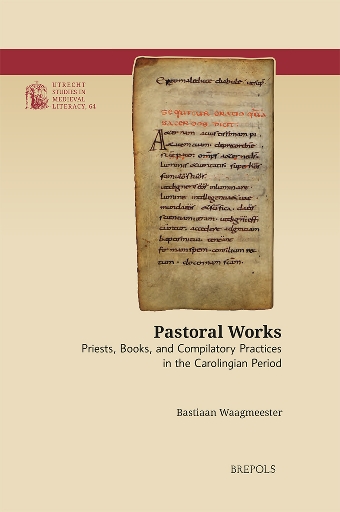
Pastoral Works
Priests, Books, and Compilatory Practices in the Carolingian Period
Much of the Christian empire established by the Carolingians in the eighth century was not only built through royal initiative but also through the work of local priests. Living among the laity these clerics provided pastoral care and religious instruction. Yet despite their vital contribution to the development of Christianity in Western Europe these clergymen and the communities they served remain understudied.
This book investigates the manuscripts they used offering a glimpse into everyday life around the local church. Far from being poor and illiterate priests had access to texts specifically adapted to their needs. By examining how these materials were compiled this study reveals what mattered most in the early medieval countryside. Drawing on excerpts from collections of liturgy canon law and patristic expositions — often preserved in the great monastic and court libraries — it uncovers the diversity of local religious practice. These texts reflect how the efforts instigated by Carolingians to foster ‘good Christianity’ were interpreted and implemented outside the centres of power. In exploring these seemingly modest manuscripts this study opens new pathways into the world of the Carolingian local church and the people who inhabited it.
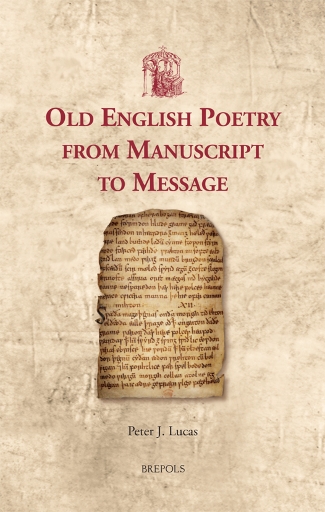
Old English Poetry from Manuscript to Message
By comparison with Latin Europe Anglo-Saxon civilization is notable for the amount of literature preserved in contemporary manuscripts in the vernacular language formerly called ‘Anglo-Saxon’ but now more usually called ‘Old English’. This literature includes some remarkable poetry which is the subject of the present collection of essays. Some of the earliest poems may well have been written at a time when northern England held the intellectual leadership of Europe. The approach is holistic investigating important issues in the manuscripts that affect the integrity of the texts to be studied or the way they relate to each other examining metrical issues that affect the way the poems are appreciated for their compositional skill studying particular textual problems that require elucidation or even emendation to make the meaning clear and finally offering readings of particular poems focussing on themes that are central to Old English poetry. A postscript examines Lewis Carroll’s Jabberwocky which is presented as a ‘Stanza of Anglo-Saxon Poetry’.
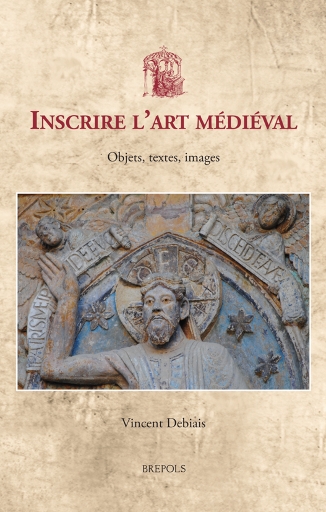
Inscrire l’art médiéval
Objets, textes, images
Ce livre est consacré aux relations entre écriture épigraphique et art médiéval. Il se propose de placer les inscriptions tracées sur la pierre le métal le bois la peinture ou la mosaïque dans le contexte des pratiques écrites et artistiques du Moyen Âge occidental et de signaler quelques pistes de recherche originales pour appréhender le statut la forme et la fonction de la rencontre entre l’écriture épigraphique et les oeuvres d’art médiévales.
Cet essai se situe à la confluence de l’histoire de l’écriture et de l’histoire des formes. Il est fondé sur l’analyse d’un certain nombre d’objets graphiques du Moyen Âge central produits en Europe occidentale. Il s’inscrit donc dans une pensée chrétienne de l’écriture et de l’image et accorde une place importante à la théologie. Il est moins pensé comme un manuel épigraphique à l’attention des historiens de l’art que comme un répertoire de questions à explorer à repenser ou encore à traiter et s’adresse à quiconque aspire à la réunion des cultures écrite visuelle et matérielle du Moyen Âge.
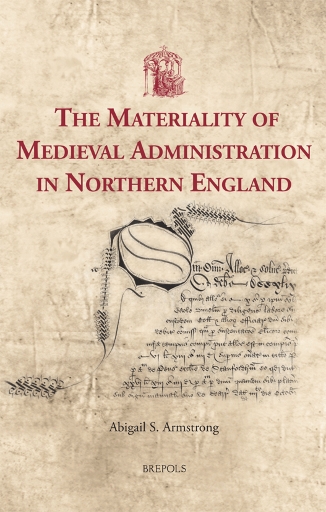
The Materiality of Medieval Administration in Northern England
In the late Middle Ages the Percy earls of Northumberland and the bishops of Durham were two of the largest landholders in the North East of England. This book is a study of their estate administrations based on the extant manorial accounts from the fourteenth through sixteenth centuries. Examining the documents holistically it investigates the shapes of the records and the materials they were written upon as well as how they were used and stored to provide new insights into late medieval lordly administration. Such a material-focussed approach explores the concurrent use of rolls booklets paper and parchment for different types of manorial accounts and at different steps of the multistage production and audit process. It also examines the hands drafting editing and auditing the accounts in addition to the layout and presentation of the contents of the records to further our understanding of the written burden of proof required in the management and audit of large estates in late medieval England. Studying the financial accounts of the earls of Northumberland and the bishops of Durham from a material perspective reveals two highly sophisticated administrative systems and structures of accountability.
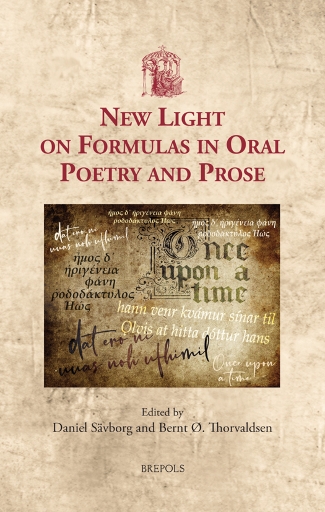
New Light on Formulas in Oral Poetry and Prose
During the twentieth century scholars discovered that oral poetry in entirely unrelated cultures in the world share a basic characteristic: the use of verbal formulas more or less fixed word strings which were inherited from tradition. The discovery of formulas revolutionized the understanding of oral tradition and how oral poetry was transmitted. Homer Eddic poems Karelian laments Serbian heroic poetry etc. were suddenly seen in a new light. But the original Oral-Formulaic Theory has also been questioned and revised. New approaches in the study of formulas have been developed among linguists and folklorists.
The present volume discusses new approaches models and interpretations of formulas in traditional poetry and prose. The twenty authors in the volume analyze formulas in a broad context by letting oral traditions from all over the world shed light on each other. The volume aims to deepen our understanding of the function and meaning of these formulas. A unique feature is that the volume focuses as much on formulas in oral prose as in poetry – usually formula studies have focused entirely or mainly on poetry.
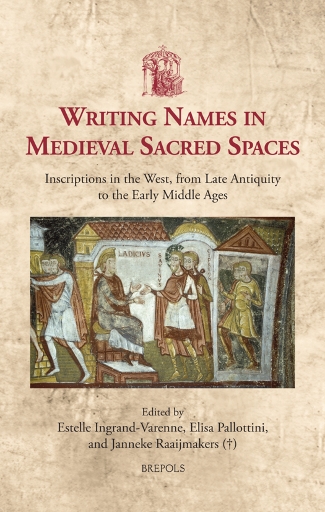
Writing Names in Medieval Sacred Spaces
Inscriptions in the West, from Late Antiquity to the Early Middle Ages
This volume proposes a framework for reflection on practices of writing personal names in medieval sacred spaces uniting historians art historians and specialists in written culture (both epigraphers and palaeographers). It traces the forms and functions of names that can be found within the space of early medieval churches and cemeteries focusing mainly but not solely on inscriptions. By examining names written in various kinds of media from liturgical books to graffiti and more formal inscriptions the contributors investigate the intentions and effects of the act of writing one’s own name or having one’s name written down. Their interest resides less in the name itself than the interactions it had with its spatial iconographic linguistic ritual and cultural context and what this indicates about medieval graphical practices. What is a name from a graphic point of view? What are the specificities of the epigraphic manifestations of names? By whom were names written and for whom were they intended (if they were even meant to be accessed)? Addressing these and other questions this volume shows the importance of inscriptions as historical sources and the contribution they give to the study of medieval societies at the intersection of history anthropology archaeology linguistics and semiology.
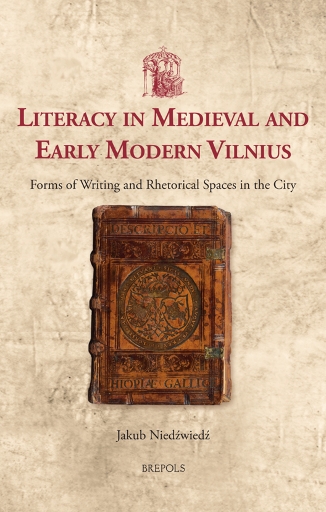
Literacy in Medieval and Early Modern Vilnius
Forms of Writing and Rhetorical Spaces in the City
Late medieval and early modern cities in Europe could not exist without the use of the written word. Based on a case study of Vilnius - the capital of the Grand Duchy of Lithuania in the fourteenth -eighteenth centuries - this book shows how rhetoric influenced all the spheres of urban literacy: the rules of writing rhetorical genres and their functions and the social practices of producing preserving and disseminating texts. Vilnius was a multi-ethnic multi-religious and multi-scriptural city and its literary culture was particularly rich. What was the legal basis of the city? Who were the professionals of the written word? What was the role of schools and books in the literary culture of the city? How did women participate in Vilnius’s textuality? Which rhetorical genres were used? This study is based on research into the different types of texts used in Vilnius: contracts; last wills; sermons; municipal state and church records; primers; shopping lists; poetry; manuals; and letters in Polish Latin Ruthenian Lithuanian Yiddish and other languages written or printed in five alphabets. The rhetorical organization of Vilnius can serve as a model for examining other towns of the time. It also shows the complexity of the use of script in the multi-ethnic urban communities of North-Eastern Europe.
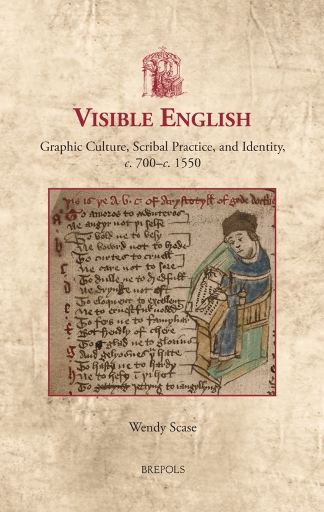
Visible English
Graphic Culture, Scribal Practice, and Identity, c. 700-c. 1550
Visible English recovers for the first time the experience of reading and writing the English language in the medieval period through the perspectives of littera pedagogy the basis of medieval learning and teaching of literate skills in Latin. Littera is at the heart of the set of theories and practices that constitute the ‘graphic culture’ of the book’s title. The book shows for the first time that littera pedagogy was an ‘us and them’ discourse that functioned as a vehicle for identity formation. Using littera pedagogy as a framework for understanding the medieval English-language corpus from the point of view of the readers and writers who produced it Visible English offers new insights on experiences of writing and reading English in communities ranging from those first in contact with Latin literacy to those where print was an alternative to manuscript. Discussing a broad range of materials from so-called ‘pen-trials’ and graffiti to key literary manuscripts Visible English provides new perspectives on the ways that the alphabet was understood on genres such as alphabet poems riddles and scribal signatures and on the different ways in which scribes copied Old and Middle English texts. It argues that the graphic culture underpinned and transmitted by littera pedagogy provided frameworks for the development and understanding of English-language literacy practices and new ways of experiencing social belonging and difference. To be literate in English it proposes was to inhabit identities marked by Anglophone literate practices.
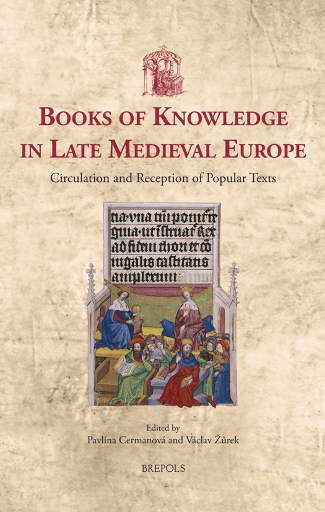
Books of Knowledge in Late Medieval Europe
Circulation and Reception of Popular Texts
This book provides a series of studies concerning unique medieval texts that can be defined as ‘books of knowledge’ such as medieval chronicles bestiaries or catechetic handbooks. Thus far scholarship of intellectual history has focused on concepts of knowledge to describe a specific community or to delimit intellectuals in society. However the specific textual tool for the transmission of knowledge has been missing. Besides oral tradition books and other written texts were the only sources of knowledge and they were thus invaluable in efforts to receive or transfer knowledge. That is one reason why texts that proclaim to introduce a specific field of expertise or promise to present a summary of wisdom were so popular. These texts discussed cosmology theology philosophy the natural sciences history and other fields. They often did so in an accessible way to maintain the potential to also attract a non-specialised public. The basic form was usually a narrative chronologically or thematically structured and clearly ordered to appeal to readers. Books of this kind could be disseminated in dozens or even hundreds of copies and were often available (by translation or adaptation) in various languages including the vernacular.
In exploring these widely-disseminated and highly popular texts that offered a precise segment of knowledge that could be accessed by readers outside the intellectual and social elite this volume intends to introduce books of knowledge as a new category within the study of medieval literacy.
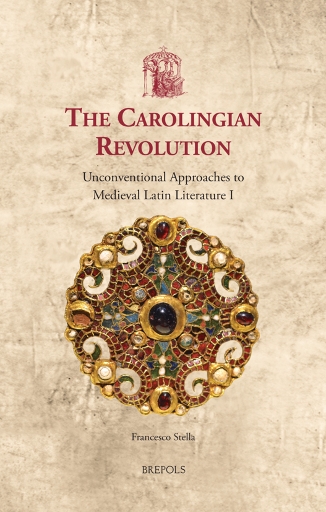
The Carolingian Revolution
Unconventional Approaches to Medieval Latin Literature I
This book presents samples of experimental methods for reading medieval Latin texts that have scarcely been adopted if at all by mainstream research in the field. It contributes to the discovery of some underestimated aspects of early medieval (especially Carolingian) Latin literature: intertextuality as intercultural relationship (in Biblical epic) intermediality (text-image-sound connections) interdisciplinarity (science religion and poetry) hermeneutics (Biblical exegesis as poetry-engine) post-colonial reading (medieval Latin as a second language) socio-literary approaches (monastic epigraphs as witnesses of everyday life writing as a status symbol of an intellectual class and a whole civilization). It also discusses quantitative methods which are explored in more detail in a second volume Digital Philology and Quantitative Criticism of Medieval Literature: Unconventional Approaches to Medieval Latin Literature II): http://www.brepols.net/Pages/ShowProduct.aspx?prod_id=IS-9782503588018-1.
The book thus seeks to encourage scholarly interest in obscure or less familiar elements of the Carolingian literary renewal interpreted here as more a laboratory of innovations than a revival of traditional patterns.
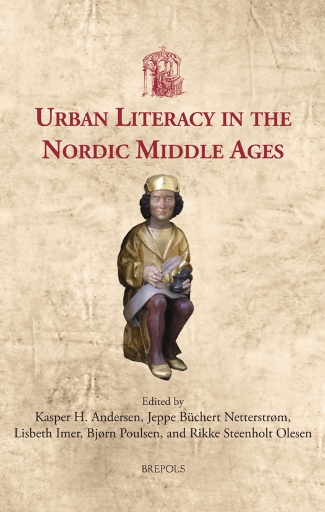
Urban Literacy in the Nordic Middle Ages
This volume is about literacy in the medieval towns of Denmark Norway Sweden and Finland and aims to understand to what extent these medieval urban societies constituted a driving force in the development of literacy in Nordic societies generally.
As in other parts of Europe two languages - Latin and the vernacular - were in use. However the Nordic area is also characterised by its use of the runic alphabet and thus two writing systems were also in use. Another characteristic of the North is its comparatively weak urbanization especially in Finland Sweden and Norway.
Literacy and the uses of writing in medieval towns of the North is approached from various angles of research including history archaeology philology and runology. The contributions cover topics related to urban literacy that include both case studies and general surveys of the dissemination of writing all from a Northern perspective. The thematic chapters all present new sources and approaches that offer a new dimension both to the study of medieval urban literacy and also to Scandinavian studies.
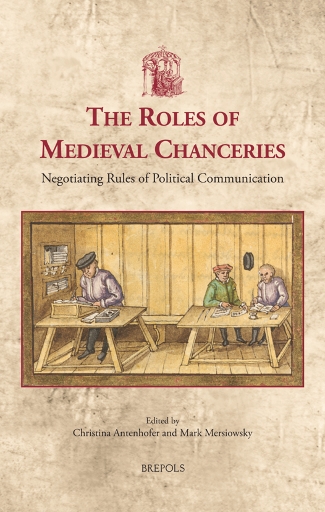
The Roles of Medieval Chanceries
Negotiating Rules of Political Communication
Medieval communication followed rules that were defined negotiated and altered in processes of exchange. Conflicts resulting from different communication practices as well as forms of innovation revolve around rules that are not self-evident. Political actors such as princes and cities chanceries secretaries ambassadors and councillors formed rules of political participation which became visible in written documentation. These rules were both formed and negotiated via processes of communication. Medieval chanceries can thus be understood as a vast field of experimentation where different solutions were tested passed on or discarded.
This book explores communication practices in German French Italian Tyrolian and Gorizian chanceries as well as at diets from the tenth to the sixteenth century. Its chapters examine royal monastic princely and communal chanceries. For the early and high Middle Ages a close analysis of documents will reconstruct negotiation and communication from within the documents themselves. For the later Middle Ages focus will turn to the chancery with the appearance of chancery orders and chancery annotations that provide explicit insight in communication between the chancellors secretaries and political authorities. The growing amount and variety of documents issued in the late Middle Ages allows us to retrace conflicts resulting from differing chancery practices as well as attempts to reorganise the chancery into a political instrument for the prince. The processes of political communication will be followed in three parts. Part I focuses on the rules within documents. Part II looks at administrative processes within specific chanceries while Part III explores forms of exchange between the chancery and other political actors.
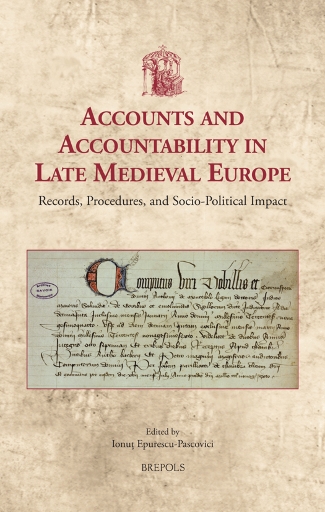
Accounts and Accountability in Late Medieval Europe: Records, Procedures, and Socio-Political Impact
Accounts and Accountability in Late Medieval Europe traces the momentous transformation of institutions and administration under the impact of accounting records and procedures c. 1250-1500. The volume’s focus on the materiality and organising logic of a range of accounts is complemented by close attention to the socio-political contexts in which they functioned and the agency of central and local officials.
The volume is divided into three parts: the role of financial accountability in the political designs of late medieval states the uses of accounts auditing and information management as tools for governance and their impact on the everyday life of local communities. Covering both the centre and the periphery of medieval Europe from England and the Papal curia to Savoy and Transylvania the case studies evince the difficult passage from the early experiments with financial accounts towards an accountability of office.
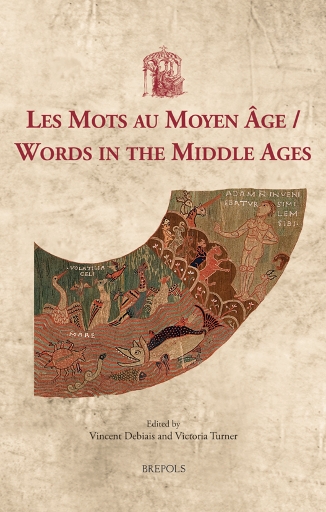
Words in the Middle Ages / Les Mots au Moyen Âge
This collection of essays is a return to words of the Middle Ages in and of themselves uniting philologists historians epigraphers palaeographers and art historians. It probes the intellectual technical and aesthetic principles that underpin their use and social function in medieval graphical practices from epigraphy and inscriptions to poetics ‘mots’ and ‘paroles’. By analysing the material and symbolic properties of a particular medium the conditions in which texts become signs and scribal expertise the contributors address questions that initially seem simple yet which define the very foundations of medieval written culture. What is a word? What are its components? How does it appear in a given medium? What is the relationship between word and text word and letter word and medium word and reader? In a Middle Ages forever torn between economic and extravagant language this volume traces the status of the medieval word from ontology to usage encompassing its visual acoustic linguistic and extralinguistic forms.
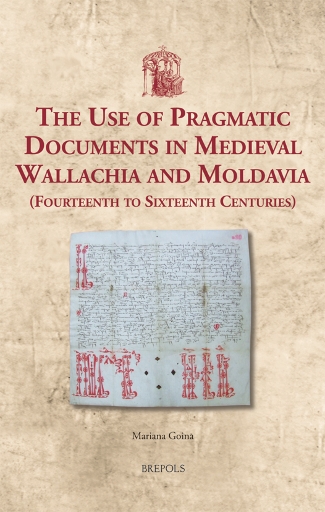
The Use of Pragmatic Documents in Medieval Wallachia and Moldavia (Fourteenth to Sixteenth Centuries)
In the region that was to become Moldavia and Wallachia there are almost no traces of the use of writing for the millennium after the Roman Empire withdrew from Dacia. Written culture surfaces only by the second half of the fourteenth century after the foundation of state institutions. This book surveys the earliest extant documents their issuers and the motives that triggered the development of documentary culture in Moldavia and Wallachia. By the fifteenth century Moldavians were already accustomed to the use of charters. In Wallachia noblemen also appealed to written records but at that stage mainly in extraordinary circumstances. Women could not inherit land and noblemen requested princely charters confirming a legal fiction that turned their daughters into sons. After the mid-sixteenth century Wallachia experiences a steep growth in the number of charters issued. In this period of economic and social upheaval charters proved an extraordinary means for the protection of landed property. Yet neither principality held secular archives - the storage of documents for later use in private hands suggests an early stage in the development of documentary culture.
By covering the ‘birth’ and spread of pragmatic literacy in medieval Moldavia and Wallachia this book thus fills an important lacuna in what is known about the development of literacy in the later Middle Ages.

Digital Philology and Quantitative Criticism of Medieval Literature
Unconventional Approaches to Medieval Latin Literature II
Building on The Carolingian Revolution: Unconventional Approaches to Medieval Latin Literature I (http://www.brepols.net/Pages/ShowProduct.aspx?prod_id=IS-9782503587998-1) this is the second of two volumes proposing ways of reading medieval Latin texts which up to now have had little or no attention within literary studies. This volume is founded on the belief that ‘the unprecedented empirical power of digital tools and archives offers a unique chance to rethink the categories of literary study’ (F. Moretti).
The book’s first section presents cases studies applying ‘quantitative’ criticism based on the linguistic and stylistic use of frequency wordlists which thanks to digital tools and to a larger literature are becoming more easily accessible and more powerful. The chapters of this section lead the reader from an application of stylometry within a traditional critical exercise via the structured use of frequency indexing as a warning light for cultural or stylistic phenomena undetectable to the naked eye to more technical corpus analysis experiments based on linguistic evolution or authorship attribution. The second section explores the encoding problems the author has faced when working on the realisation of digital editing projects such as the Corpus Rhythmorum Musicum the Archivio della Latinità Italiana del Medioevo (ALIM) Lexicon and the Eurasian Latin Archive (ELA) and proposes reflections on the typology of digital philological editions.