


oa ‘Dura and the Problem of Parthian Art’ (almost) a Hundred Years Later
- By: Henry P. Colburn
- Publication: Dura-Europos: Past, Present, Future , pp 42-57
- Publisher: Brepols
- Publication Date: January 2025
- DOI: https://doi.org/10.1484/M.SCA-EB.5.144231


‘Dura and the Problem of Parthian Art’ (almost) a Hundred Years Later, Page 1 of 1
< Previous page | Next page > /docserver/preview/fulltext/10.1484/M.SCA-EB.5.143377/M.SCA-EB.5.144231-1.gif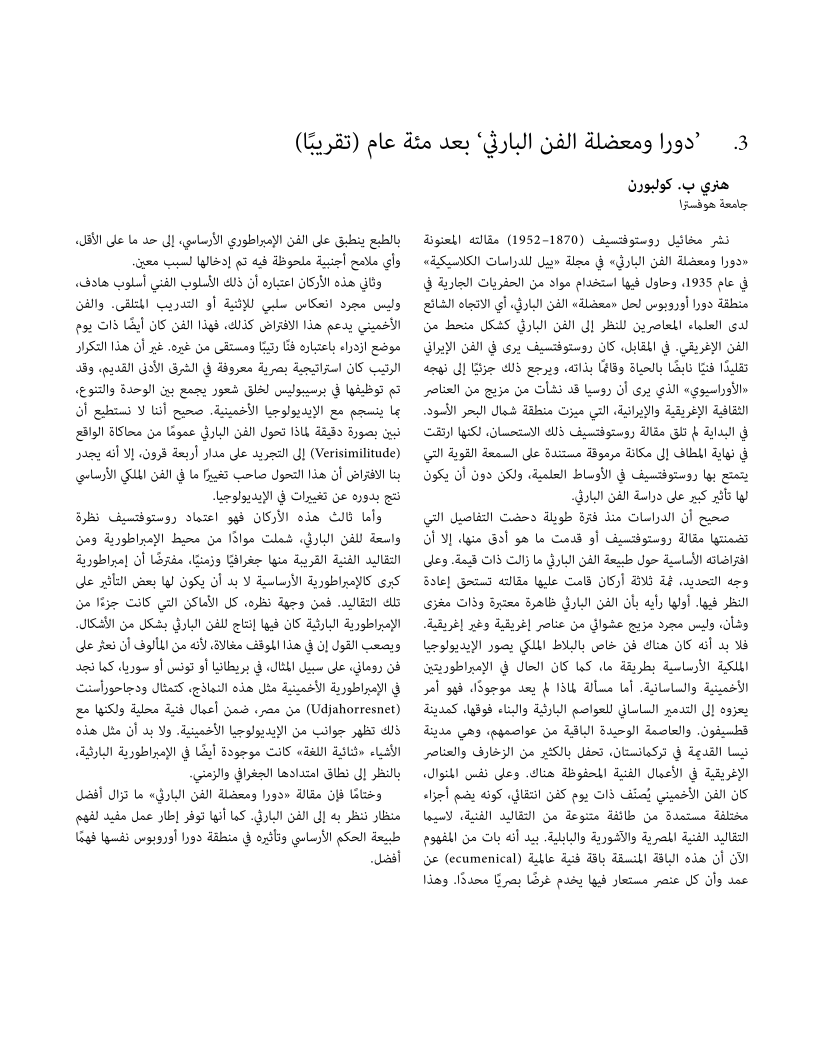
In 1935 Michael Rostovtzeff published his now-classic essay ‘Dura and the Problem of Parthian Art’. Although the details of his argument have not held up to critical scrutiny, the three main assumptions underlying his argument remain quite valuable. First, he saw Parthian art as a cogent phenomenon, not the naive eclecticism of imperial parvenus. Second, its style was a deliberate choice, rather than a result of the gradual degradation of a Greek aesthetic. Third, he took a broad view of Parthian art, which included material from both the empire’s periphery and from geographically and chronologically adjacent artistic traditions, on the assumption that a major empire such as that of the Arsacids would have had some impact on them.

Full text loading...
-
From This Site
/content/books/10.1484/M.SCA-EB.5.144231dcterms_title,dcterms_subject,pub_serialIdent,pub_author,pub_keyword-contentType:Contributor -contentType:Concept -contentType:Institution105