Studies in Viking and Medieval Scandinavia
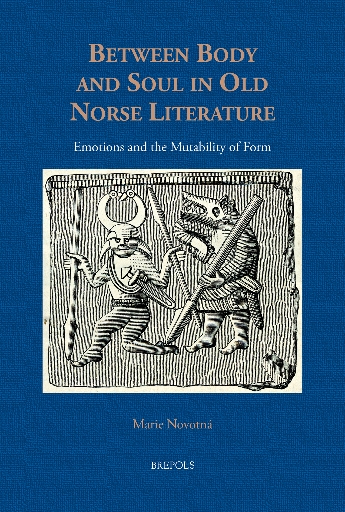
Between Body and Soul in Old Norse Literature
Emotions and the Mutability of Form
What did the body mean for inhabitants of the medieval Norse-speaking world? How was the physical body viewed? Where did the boundary lie between corporality and the psychological or spiritual aspects of humanity? And how did such an understanding tie in with popular literary motifs such as shape-shifting? This monograph seeks to engage with these questions by offering the first focused work to delineate a space for ideas about the body within the Old Norse world. The connections between emotions and bodily changes are examined through discussion of the physical manifestations of emotion (tiredness changes in facial colour swelling) while the author offers a detailed analysis of the Old Norse term hamr a word that could variously mean shape form and appearance but also character. Attention is also paid to changes of physical form linked to flight and battle ecstasy as well as to magical shapeshifting. Through this approach diametrically different ways of thinking about the connection between body and soul can be found and the argument made that within the Old Norse world concepts of change within the body rested along a spectrum that ranged from the purely physical through to the psychological. In doing so this volume offers a broader understanding of what physicality and spirituality might have meant in the Middle Ages.

Loanwords and Native Words in Old and Middle Icelandic
A Study in the History and Dynamics of the Icelandic Medieval Lexicon, from the Twelfth Century to 1550
Anyone familiar with the Modern Icelandic language will know that the country’s policy is to avoid borrowing lexemes from other languages and instead to draw on their own vocabulary. This often results in the formation of a word pair consisting of a loanword and its respective native equivalent as the process of borrowing systematically eludes the tight tangles of language policy. But how did this phenomenon develop in the Middle Ages before a purist ideology was formed?
This volume offers a unique analysis of a previously unexplored area of Old Norse linguistics by investigating the way in which loanwords and native synonyms interacted in the Middle Ages. Through a linguistic-philological investigation of texts from all medieval Icelandic prose genres the book maps out the strategies by which the variation and interplay between loanwords and native words were manifested in medieval Iceland and suggests that it is possible to identify the same dynamics in other languages with a comparable literary tradition. In doing so new light is shed on language development and usage in the Middle Ages and the gap between case-study and general linguistic theory is bridged over.
Magic and Kingship in Medieval Iceland
The Construction of a Discourse of Political Resistance
This volume examines the performative and ideological functions of texts dealing with magic in contexts of social and political conflict. While the rites representations and agents of medieval Scandinavian magic have been the object of numerous studies little attention has been given to magic as a discourse. As a consequence Old Norse sources mobilizing magic have been analysed mainly as evidence for a stable extra-textual phenomenon. This volume breaks with this perspective.
The book focuses on the use of discourses of magic in thirteenth- and fourteenth-century Icelandic texts concerned with kingship. It is argued that Icelanders constructed magic as a discursive answer to the increasingly pressing question of how to deal with the reality of their subordination to kings. This they did by telling stories of flattering Icelandic successes over kings brought about by magic in a bid to challenge dominant definitions and the social and political status quo. The book thus follows the conditions of emergence that made these subversive discourses of magic meaningful; it describes the various forms they were given the various constraints weighing upon their use and the particular political goals they served.
The Viking Age as a Period of Religious Transformation
The Christianization of Norway from AD 560 to 1150/1200
This volume is the first to delve into Norway’s history of Christianization since 1973 when Fridtjov Birkeli published his book on the topic. For the first time in over thirty years Dr Nordeide illuminates the change from non-Christian to Christian rituals by analysing archaeological resources from c. AD 560 to c. 1150/1200. This book both asserts and challenges previous hypotheses of the chronology of Christianization as well as offering fascinating new versions of the Norway’s eventual conversion. As well as asserting that local history leads Norway along chronological lines typical of its peripheral location the author argues that in some ways Norway’s history of Christianity is best located within the history of central European regions even more than has ever been suggested before.