
Full text loading...





Byzantine Homiletics: An Introduction to the Field and its Study, Page 1 of 1
< Previous page | Next page > /docserver/preview/fulltext/10.1484/M.CBM-SUBSIDIA-EB.6.09070802050003050408090501/M.CBM.1.101394-1.gif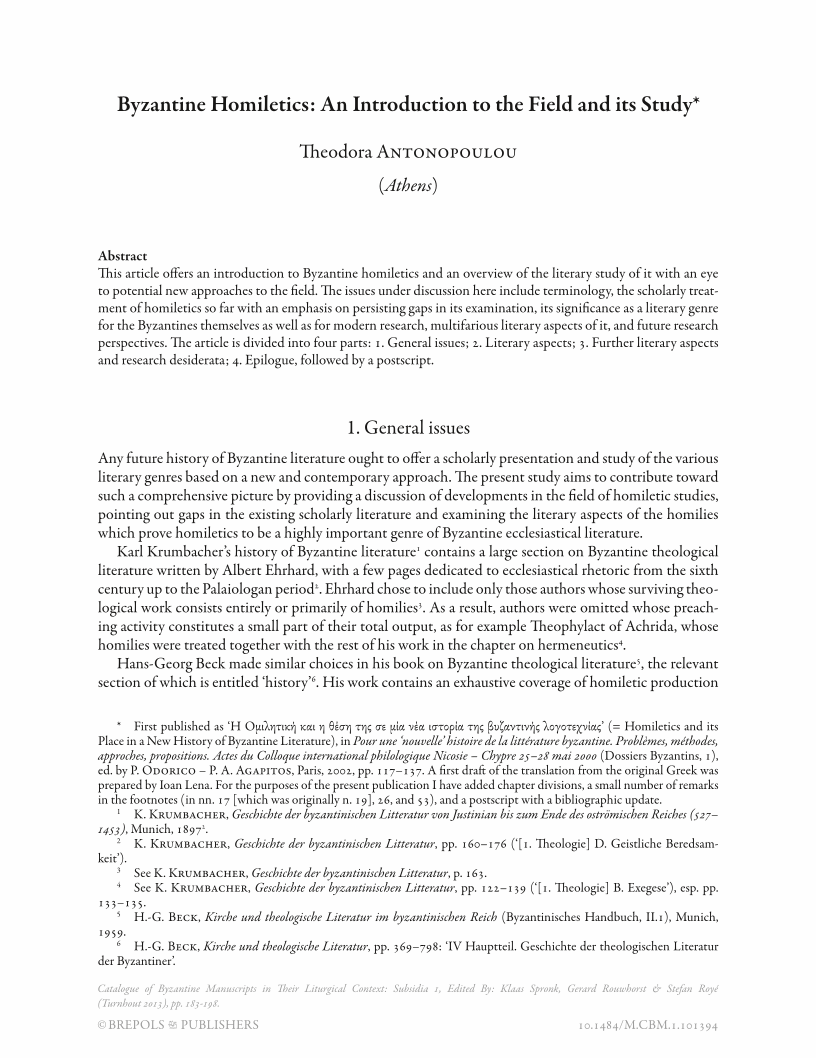
[
The world of Byzantine manuscripts is fascinating but also confusing. Although they play an important part in modern studies on the history of Christian liturgy and on the textual history of the Bible, a clear overview of the vast amount of these manuscripts in their many different forms is lacking. A new approach in their cataloguing is called for. The present volume brings together a number of specialists in the field of Byzantine, liturgical and Biblical studies with the aim to develop a new methodology for codicological research of the Byzantine manuscripts, taking seriously the original environment of the integral codices in the monasteries and the churches in which they were manufactured and functioned.
Prof. dr. Klaas Spronk is Head of the Research Department Sources of the Protestant Theological University (PThU), location Amsterdam, and chairman of the CBM Academic Board.
Prof. dr. Gerard Rouwhorst is Professor of Liturgical History at the Tilburg School of Catholic Theology and member of the Department of Biblical Sciences and Church History of that institution. He is member of the CBM Academic Board.
Dr. Stefan Royé is member of the Research Department Sources of the Protestant Theological University (PThU), location Amsterdam, and CBM programme coordinator and secretary of the Academic Board.
,This article offers an introduction to Byzantine homiletics and an overview of the literary study of it with an eye to potential new approaches to the field. The issues under discussion here include terminology, the scholarly treatment of homiletics so far with an emphasis on persisting gaps in its examination, its significance as a literary genre for the Byzantines themselves as well as for modern research, multifarious literary aspects of it, and future research perspectives. The article is divided into four parts: 1. General issues; 2. Literary aspects; 3. Further literary aspects and research desiderata; 4. Epilogue, followed by a postscript.
]
Full text loading...