
Full text loading...





Culmination of a Late Antique Legacy? The Golden Age of Armenian Architecture in the Seventh Century, Page 1 of 1
< Previous page | Next page > /docserver/preview/fulltext/10.1484/M.CONVISUP-EB.5.135265/M.CONVISUP-EB.5.135374-1.gif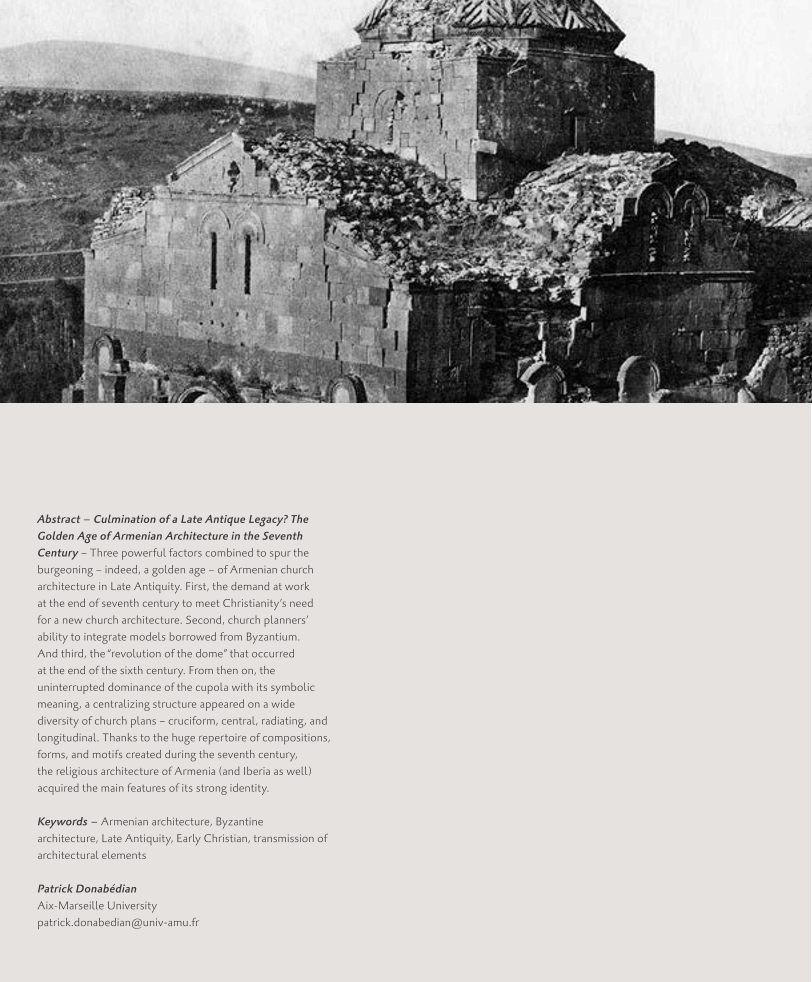
Three powerful factors combined to spur the burgeoning - indeed, a golden age - of Armenian church architecture in Late Antiquity. First, the demand at work at the end of seventh century to meet Christianity’s need for a new church architecture. Second, church planners’ ability to integrate models borrowed from Byzantium. And third, the “revolution of the dome” that occurred at the end of the sixth century. From then on, the uninterrupted dominance of the cupola with its symbolic meaning, a centralizing structure appeared on a wide diversity of church plans - cruciform, central, radiating, and longitudinal. Thanks to the huge repertoire of compositions, forms, and motifs created during the seventh century, the religious architecture of Armenia (and Iberia as well) acquired the main features of its strong identity.
Full text loading...