
Full text loading...





The First Armenian Christian Sanctuaries and Shrines. Reconsidering the Received Tradition, Page 1 of 1
< Previous page | Next page > /docserver/preview/fulltext/10.1484/M.CONVISUP-EB.5.135265/M.CONVISUP-EB.5.135375-1.gif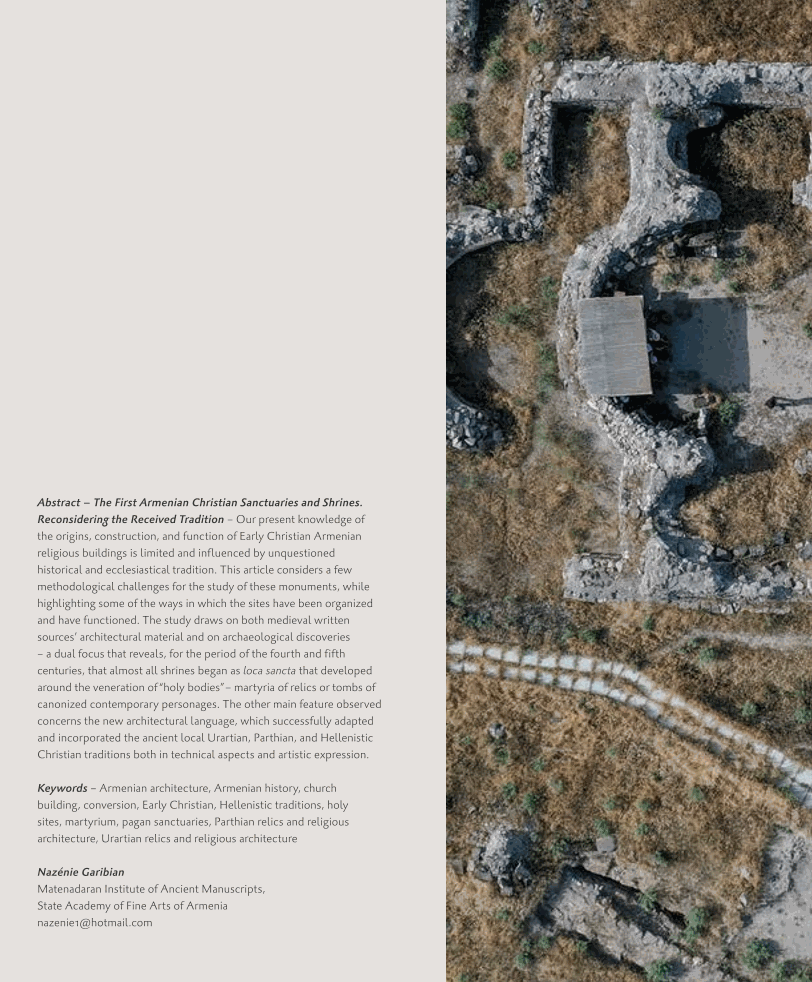
Our present knowledge of the origins, construction, and function of Early Christian Armenian religious buildings is limited and influenced by unquestioned historical and ecclesiastical tradition. This article considers a few methodological challenges for the study of these monuments, while highlighting some of the ways in which the sites have been organized and have functioned. The study draws on both medieval written sources’ architectural material and on archaeological discoveries - a dual focus that reveals, for the period of the fourth and fifth centuries, that almost all shrines began as loca sancta that developed around the veneration of “holy bodies” - martyria of relics or tombs of canonized contemporary personages. The other main feature observed concerns the new architectural language, which successfully adapted and incorporated the ancient local Urartian, Parthian, and Hellenistic Christian traditions both in technical aspects and artistic expression.
Full text loading...