
Full text loading...





A Theoretical Topography of Architecture. On the Problematic Connections between Rome, Byzantium, and Armenia in Italian Historiography (1914–1945), Page 1 of 1
< Previous page | Next page > /docserver/preview/fulltext/10.1484/M.CONVISUP-EB.5.135265/M.CONVISUP-EB.5.135380-1.gif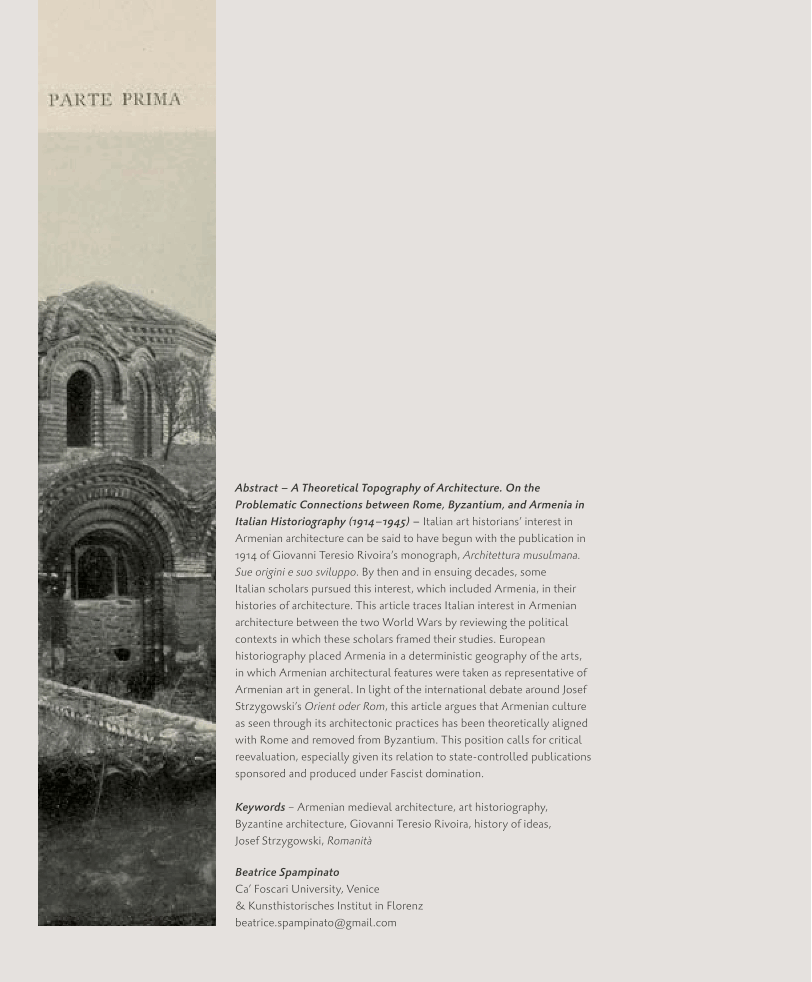
Italian art historians’ interest in Armenian architecture can be said to have begun with the publication in 1914 of Giovanni Teresio Rivoira’s monograph, Architettura musulmana. Sue origini e suo sviluppo. By then and in ensuing decades, some Italian scholars pursued this interest, which included Armenia, in their histories of architecture. This article traces Italian interest in Armenian architecture between the two World Wars by reviewing the political contexts in which these scholars framed their studies. European historiography placed Armenia in a deterministic geography of the arts, in which Armenian architectural features were taken as representative of Armenian art in general. In light of the international debate around Josef Strzygowski’s Orient oder Rom, this article argues that Armenian culture as seen through its architectonic practices has been theoretically aligned with Rome and removed from Byzantium. This position calls for critical reevaluation, especially given its relation to state-controlled publications sponsored and produced under Fascist domination.
Full text loading...