


Kings of the Street
Power, Community, and Ritual in Renaissance Florence
Abstract
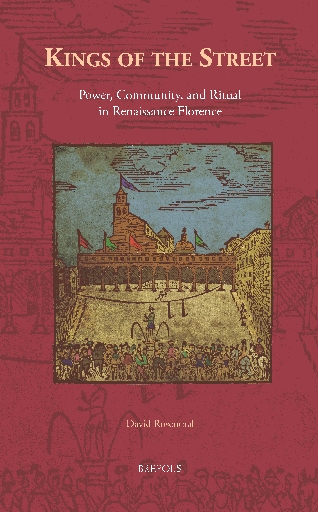
For more than a century the artisans and labourers of Renaissance Florence turned the city into their own ‘empire’ during times of public festivity. From the republic of the late 1400s through to the grand duchy of the early seventeenth century, up to forty brigades of men called the potenze, or powers, elected kings, carved out territories, and entered into a dialogue with citizens and with their Medici patrons.
This study traces the rise and fall of this carnivalesque subculture for the first time. It describes how workers represented themselves, their neighbourhoods, and their trades on the public stage through rituals such as stone-fighting and jousting, and reveals how the politics of this festive world were closely linked to everyday patterns of social bargaining around the person of the prince. In the early 1600s the micro-states of the potenze were partially suppressed and they gradually disappeared from the Florentine urban stage. The account of this transformation presented here shows how Tridentine reform and economic crisis combined to undermine hypermasculine carnival ritual as a language of civic contract, confining the potenze to making pilgrimages to shrines and convents in the Florentine countryside. At the same time it is shown how economic and religious change empowered groups of artisan women to take up the model of the potenze in order to make their own collective pilgrimages outside the city walls.
Through the story of the potenze, this book provides fresh insights into the dynamics of class and gender relations, and the nature of agency, in early modern Italy.
