
Full text loading...





Muliebribus uerbis usus sum. The Gynaecia of Mustio and the language of midwives, Page 1 of 1
< Previous page | Next page > /docserver/preview/fulltext/10.1484/M.LVLT-EB.5.142508/M.LVLT-EB.5.143303-1.gif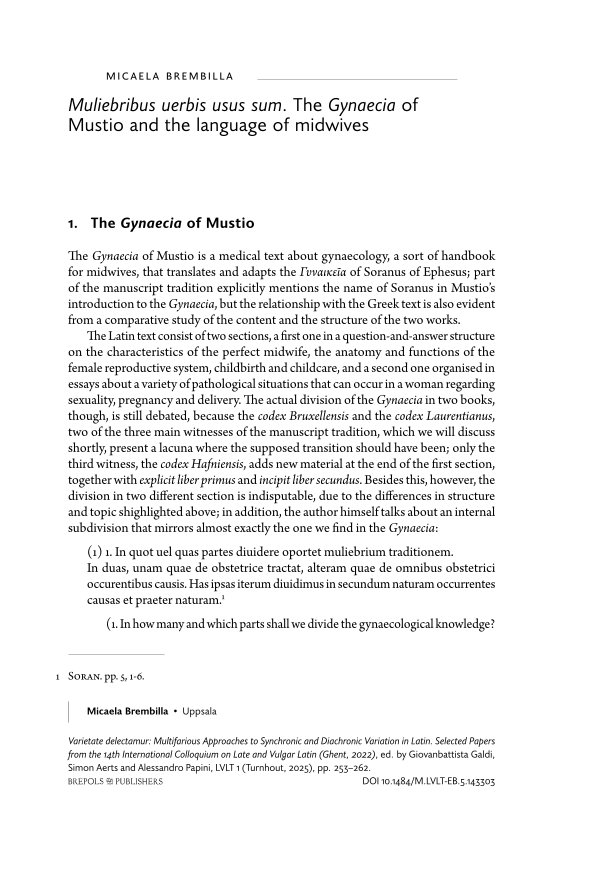
Mustio’s Gynaecia is a gynecological treatise, written in Africa during the sixth century ad. It consists of two parts, a handbook in a question and answer format, and a collection of essays about female diseases. In the introduction, the author declares that he translated the Γυναικεῖα of Soranus to help midwives ignorant of Greek, and that he used muliebria uerba in this process. Since the adjective muliebris in Mustio never means just ‘feminine, related to women’, but has the more specific sense of ‘obstetrical, related to gynecology’, I suggest that we should understand the expression ‘muliebria uerba’ as ‘language of midwives’, the peculiar speech of a group united by profession, gender and, probably, social class.
This paper represents an attempt to collect and analyse elements that I consider part of these muliebria uerba, starting from vocabulary. Besides the interest that such research can rouse in the field of Latin Linguistics, it is fundamental for trying to understand the relationship between Soranus and Mustio, not yet fully understood. By recognizing the presence of specifically chosen language, the aim to write for the sake of midwives gains solidity, and characterize with independence and intentionality the work modelled on the Greek original.
Full text loading...