
Full text loading...



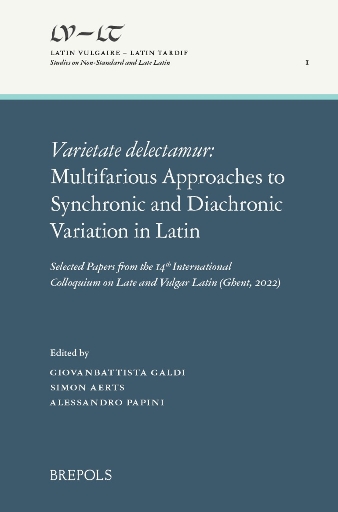


Latin varieties and the study of language. Social stratification in language evolution, Page 1 of 1
< Previous page | Next page > /docserver/preview/fulltext/10.1484/M.LVLT-EB.5.142508/M.LVLT-EB.5.143314-1.gif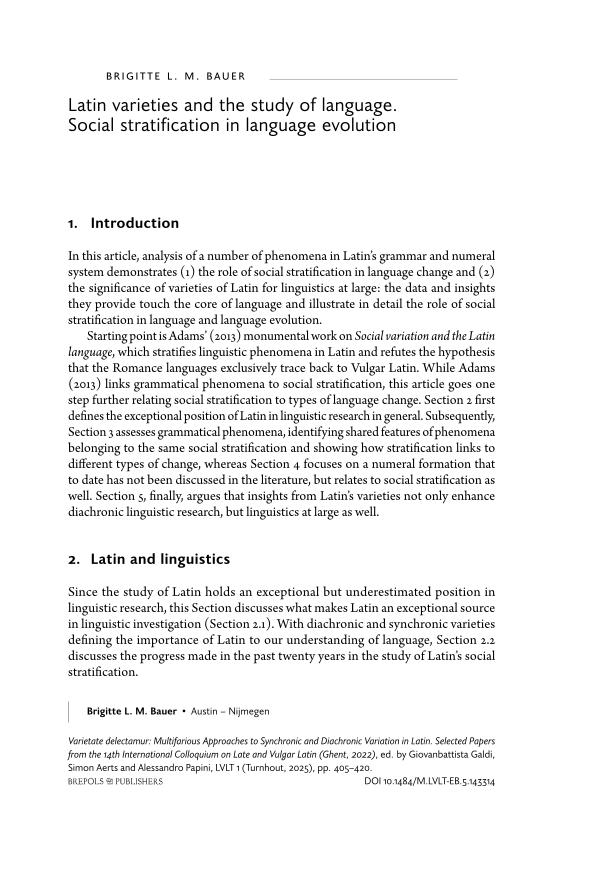
While Adams (2013) identifies social stratification of grammatical phenomena and proves that change was not the prerogative of informal Latin, this article goes one step further and relates social stratification to type of language change, identifying shared characteristics in phenomena belonging to the same level of stratification and positing stratification of change.
Results demonstrate that (a) all-level phenomena are grammatically correct and non-complex; (b) high-level phenomena and change are linguistically motivated, grammatically accurate, and potentially innovative; (c) low-level phenomena and change by contrast affect grammaticality.
Crucial to our understanding of diachronic change in Latin-Romance and language change in general, these findings further clarify general issues in linguistic theory: social stratification helps determine essential features in synchronic and diachronic language use, identifying those that belong to the ‘core of language’. Evidence and insights from Latin’s well-documented, long-term, stratified language change – with known outcome – therefore define the significance of varieties of Latin for linguistics at large.
Full text loading...