
Full text loading...





Tensions « linguistico-communautaires » en Occident dans l’Antiquité (tardive) et au haut Moyen Âge (résumé), Page 1 of 1
< Previous page | Next page > /docserver/preview/fulltext/10.1484/M.LVLT-EB.5.142508/M.LVLT-EB.5.143321-1.gif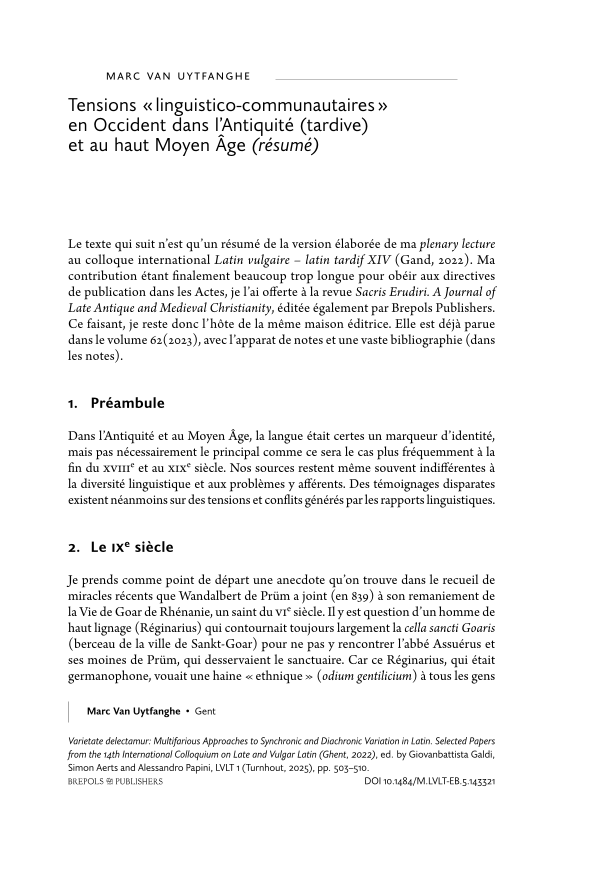
This contribution examines the existence of language conflicts and tensions in the West during (late) Antiquity and the early Middle Ages. It is key to realise that language was not necessarily the main identity marker in those periods and that historical and literary sources were often neglecting concrete linguistic circumstances and certainly languages other than Latin and Greek. The starting point is a conspicuous ninth-century text about a Germanic nobleman who despised all Romanae nationis ac linguae homines. Subsequently other ninth-century testimonies from the Carolingian empire and beyond are analysed. Finally, the focus is on what came before: the relationship between Latin (Romance) versus the so-called ‘substrate languages’ and ‘superstrate languages’.
Full text loading...