
Full text loading...





I toponimi nelle carte notarili della Langobardia minor (IX-X secolo): morfosintassi e proprietà testuali, Page 1 of 1
< Previous page | Next page > /docserver/preview/fulltext/10.1484/M.LVLT-EB.5.142508/M.LVLT-EB.5.143325-1.gif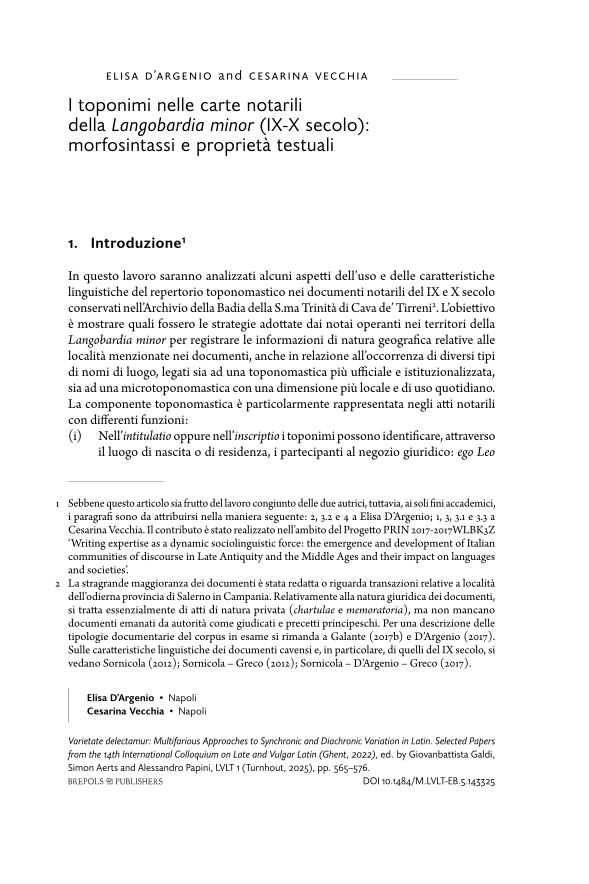
This paper focuses on the use and linguistic features of place names in notarial texts of the Codex Diplomaticus Cavensis, dating back to the ninth to tenth century. The aim is to describe the linguistic strategies employed by notaries of Langobardia minor to record geographical data related to the places mentioned in the documents. In legal texts, place names are widely used for various purposes, including identifying legal subjects by their place of birth or residence, recording the place where the action took place or where the document was drafted, and indicating the exact location of the property involved in the transaction. In the latter context, to which we will pay special attention, geographic data is represented by both official administrative subdivisions and local-agrarian micro-toponyms commonly used in everyday speech. After illustrating the ubicatory terminology used to introduce place names, the paper classifies the main syntactic structures in which place names occur, with emphasis on their related functions. Finally, the paper discusses the textual representation of place names, taking into account the peculiar administrative organization of the territories of Langobardia minor during the period being examined.
Full text loading...