
Full text loading...





El origen de tīrō, -ōnis ‘novillo uncido’ y de *tīrāre ‘tirar’. Dos creaciones del habla rústica, Page 1 of 1
< Previous page | Next page > /docserver/preview/fulltext/10.1484/M.LVLT-EB.5.142508/M.LVLT-EB.5.143335-1.gif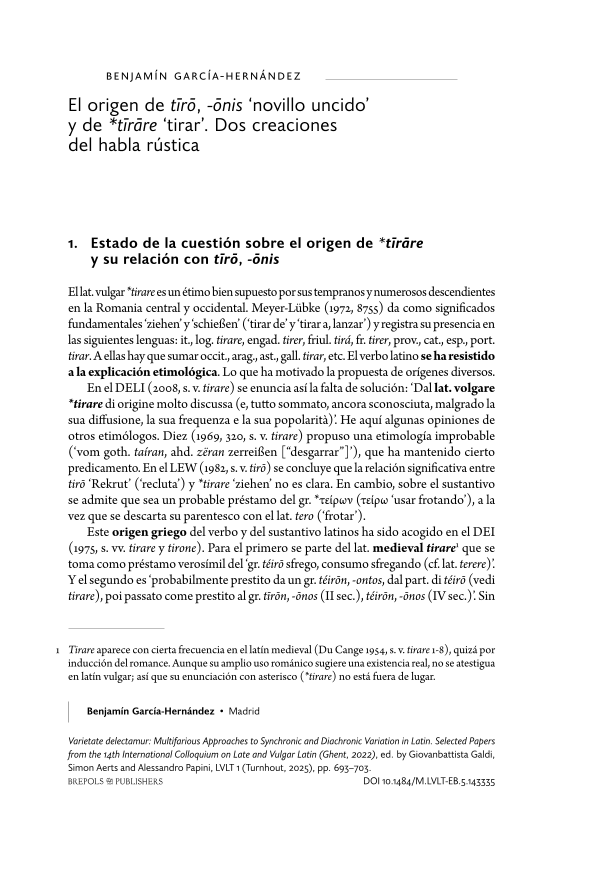
The origin of the Vulgar Latin *tīrare (‘to pull’, ‘to throw to’), which is so productive in Central and Western Romance, is a particularly difficult etymology to solve. However, by revealing the primary meaning of tīro, -onis ‘steer, yoked’ with an old ox (Varro Rust. 1, 20, 2), we are able to propose a complex hypothesis based on form and content. In turn, tiro arises through metathesis of the -r- in trio, -onis ‘yoke of oxen’; and this substantive, which also has no recognisable root, derives from the numeral tres, tria. The triangular form of the yoke (Varro Ling. 7, 74-75) is completed by the plougher who pushes the plough. As a consequence, here we have an etymological chain of four links: tres, tria> trio> tiro> *tirare. The latter two arise in the speech of the plougher himself, whilst he trains the newly yoked to take on the yoke: tiro comes from the vocative of trio and *tirare from the vocative of tiro. Both are characteristic of rustic speech.
Full text loading...