Skip to content
1882

The Rural World

image of The Rural World
Preview this chapter:
Loading full text...

Full text loading...

/content/books/10.1484/M.OUTREMER-EB.5.144282
View: Figures

Figures

Image of Fig. 51.
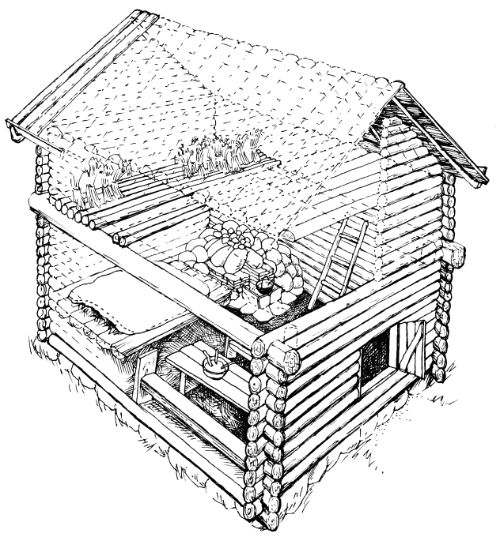
Fig. 51. Reconstruction of a rural dwelling. The high log building included a big stone stove without chimney for heating and a cooking fireplace before it. The second level, partly separated by movable thin logs, was used for drying sheaves of grain before threshing. Reconstruction by Ain Lavi, drawing by Kaja Lavi.
Image of Fig. 52.
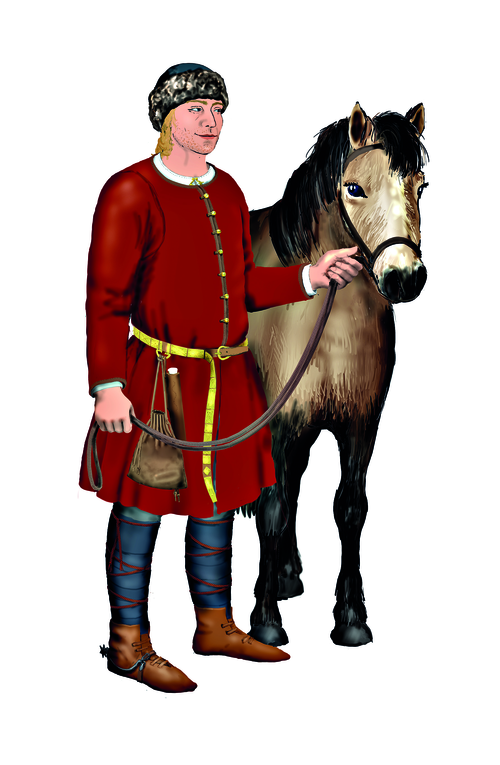
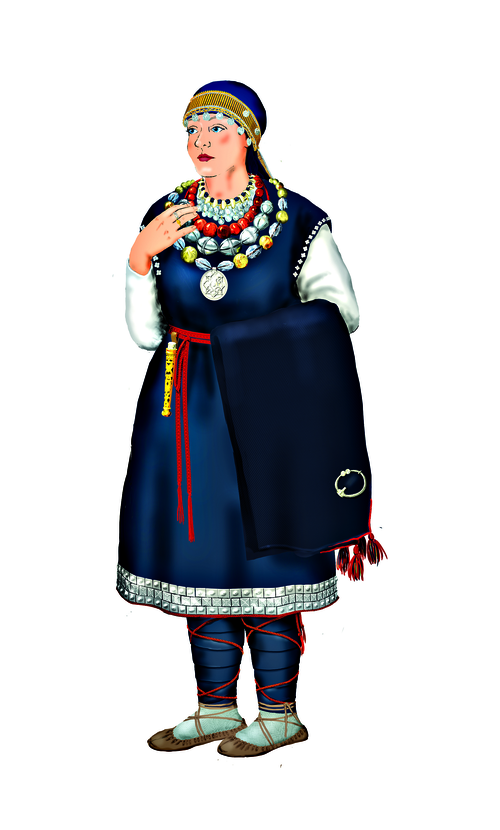
Fig. 52. Reconstructions of Livonian peasants’ clothes. A wealthy peasant of the fourteenth century could afford a coat made of red broadcloth in urban style. The metal bell buttons and belt adorned with mounts emphasise his economic position. The drawing was made on the basis of grave goods found in Siksälä cemetery (SE Estonia). The woman’s outfit was less influenced by urban fashion. The reconstruction of a sixteenth-century woman indicates necklaces made of pendants, beads, cowry shells, and coins. The hems of the coat were adorned with tiny pewter plaques. The drawing was made mainly on the basis of contemporary descriptions and bog finds from Parisselja and Ereste (Estonia). Reconstruction by Jaana Ratas and Riina Rammo, drawing by Jaana Ratas.
Image of Fig. 52.
Fig. 52. Reconstructions of Livonian peasants’ clothes. A wealthy peasant of the fourteenth century could afford a coat made of red broadcloth in urban style. The metal bell buttons and belt adorned with mounts emphasise his economic position. The drawing was made on the basis of grave goods found in Siksälä cemetery (SE Estonia). The woman’s outfit was less influenced by urban fashion. The reconstruction of a sixteenth-century woman indicates necklaces made of pendants, beads, cowry shells, and coins. The hems of the coat were adorned with tiny pewter plaques. The drawing was made mainly on the basis of contemporary descriptions and bog finds from Parisselja and Ereste (Estonia). Reconstruction by Jaana Ratas and Riina Rammo, drawing by Jaana Ratas.
Image of Fig. 53.
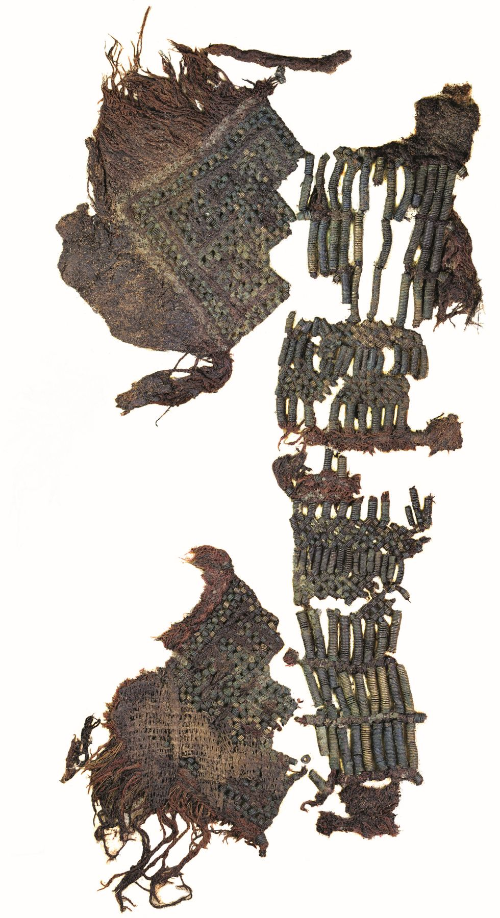
Fig. 53. Copper alloy decorations of fourteenth-century female dress from Virunuka cemetery (Estonia). Evidence about rural life in medieval Livonia is scanty and relies heavily on archaeological research (Tallinna Ülikooli arheoloogia teaduskogu AI 4342:V:9). Photograph by Jaana Ratas.
Image of Fig. 54.
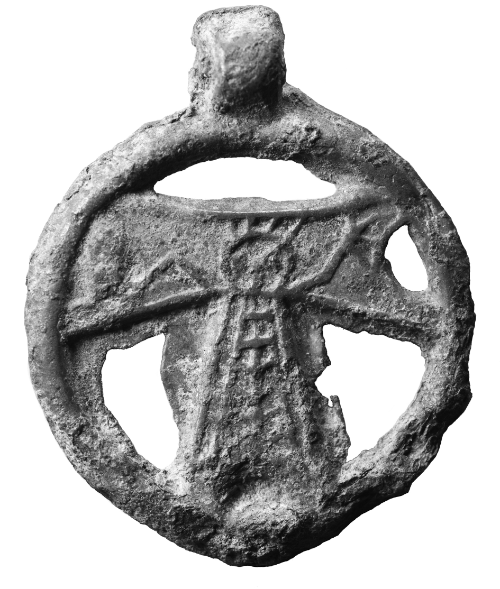
Fig. 54. Tin pendant with crucified Christ made around 1600 and found in northern Estonia. Similar pendants with the cross of St Anthony were widespread in the Middle Ages and indicate the popularity of the saint among the rural population (Rakvere Muuseum). Photograph by Tõnno Jonuks.
/content/books/10.1484/M.OUTREMER-EB.5.144282
dcterms_title,dcterms_subject,pub_serialIdent,pub_author,pub_keyword
-contentType:Contributor -contentType:Concept -contentType:Institution
10
5
This is a required field.
Please enter a valid email address.
Approval was a Success
Invalid data
An error occurred.
Approval was partially successful, following selected items could not be processed due to error:
Please enter a valid_number test
aHR0cHM6Ly93d3cuYnJlcG9sc29ubGluZS5uZXQv