Full text loading...



Reaching for the Stars during the Cold War. Science and Diplomacy in the Rise of Astronomy in Chile * , Page 1 of 1
< Previous page | Next page > /docserver/preview/fulltext/10.1484/M.SD-EB.5.141727/M.SD-EB.5.150715-1.gif
Abstract
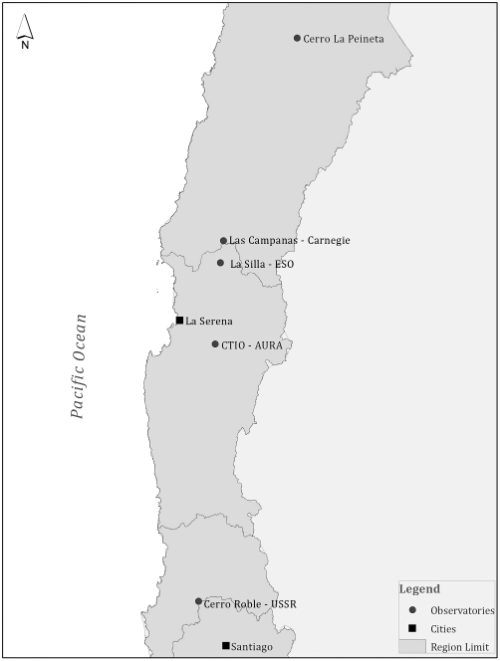
In the late 1950s and early 1960s, scientists from the United States, Western Europe, and the Soviet Union arrived in Chile to build astronomical observatories. Their initial task was to find a suitable location, which required exploring the desert and negotiating with local authorities, which had little experience in astronomy. Some Chilean scientists and politicians saw this as a unique opportunity to advance national interests by leveraging the involvement of three international organizations. The Chilean State University played a crucial role in negotiations with both the American team and the Soviet Union, while the government favoured Western Europeans and the US, involving the Ministry of Foreign Affairs. These transnational exchanges significantly advanced astronomy in Chile, highlighting how science in the 1960s was influenced by Cold War politics. This process not only impacted northern-hemisphere science but also enabled Chile, a Third World country, to take an active role in cutting-edge astronomy, establishing a precedent for international scientific agreements and paving the way for future astronomical growth in the country.
Full text loading...