


oa Germanic “bear” and Germanic personal names before c. AD 1000 with elements referring to “bear”
- By: Robert Nedoma
- Publication: Bear and Human , pp 921-932
- Publisher: Brepols
- Publication Date: January 2023
- DOI: https://doi.org/10.1484/M.TANE-EB.5.134371


Germanic “bear” and Germanic personal names before c. AD 1000 with elements referring to “bear”, Page 1 of 1
< Previous page | Next page > /docserver/preview/fulltext/10.1484/M.TANE-EB.5.133678/M.TANE-EB.5.134371-1.gif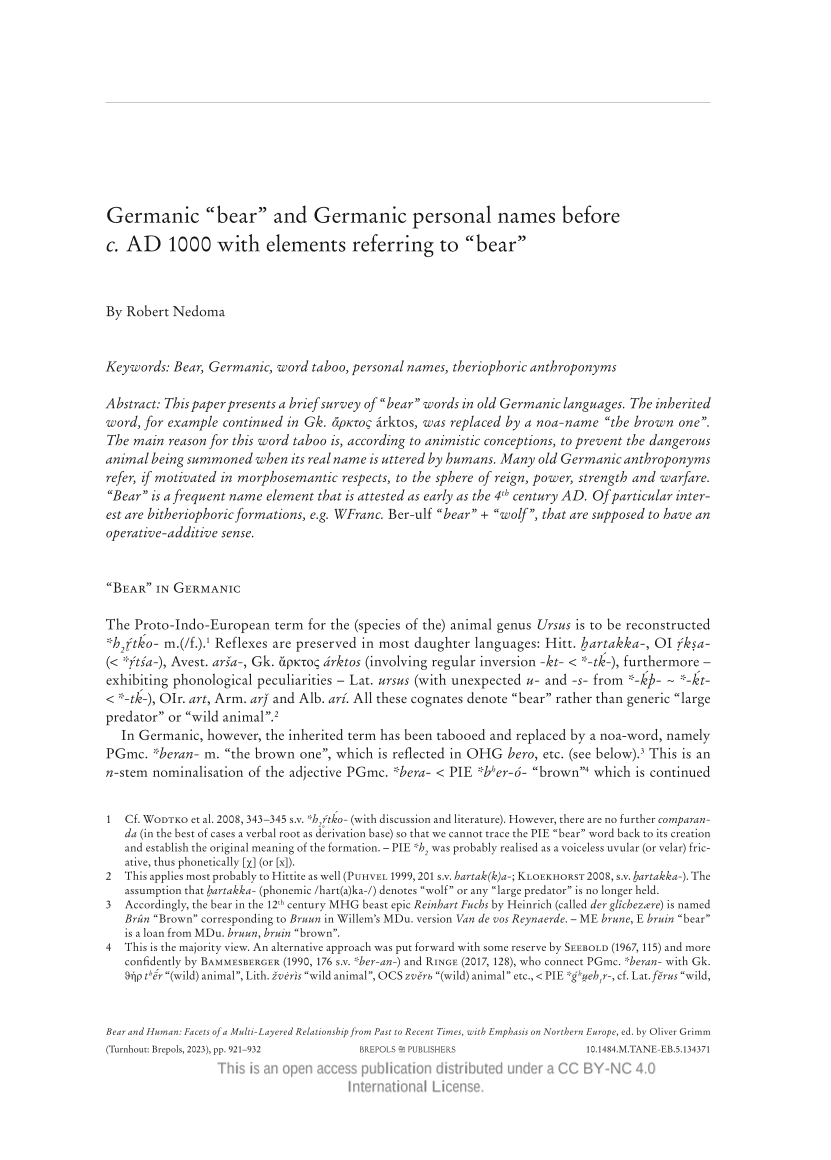
This paper presents a brief survey of “bear” words in old Germanic languages. The inherited word, for example continued in Gk. ἄρκτος árktos, was replaced by a noa-name “the brown one”. The main reason for this word taboo is, according to animistic conceptions, to prevent the dangerous animal being summoned when its real name is uttered by humans. Many old Germanic anthroponyms refer, if motivated in morphosemantic respects, to the sphere of reign, power, strength and warfare. “Bear” is a frequent name element that is attested as early as the 4th century AD. Of particular interest are bitheriophoric formations, e.g. WFranc. Ber-ulf “bear” + “wolf”, that are supposed to have an operative-additive sense.

Full text loading...
-
From This Site
/content/books/10.1484/M.TANE-EB.5.134371dcterms_title,dcterms_subject,pub_serialIdent,pub_author,pub_keyword-contentType:Contributor -contentType:Concept -contentType:Institution105