


oa Bears in Early and Middle Byzantine art (330-1204)
- By: Martina Horn
- Publication: Bear and Human , pp 1031-1060
- Publisher: Brepols
- Publication Date: January 2023
- DOI: https://doi.org/10.1484/M.TANE-EB.5.134377


Bears in Early and Middle Byzantine art (330-1204), Page 1 of 1
< Previous page | Next page > /docserver/preview/fulltext/10.1484/M.TANE-EB.5.133678/M.TANE-EB.5.134377-1.gif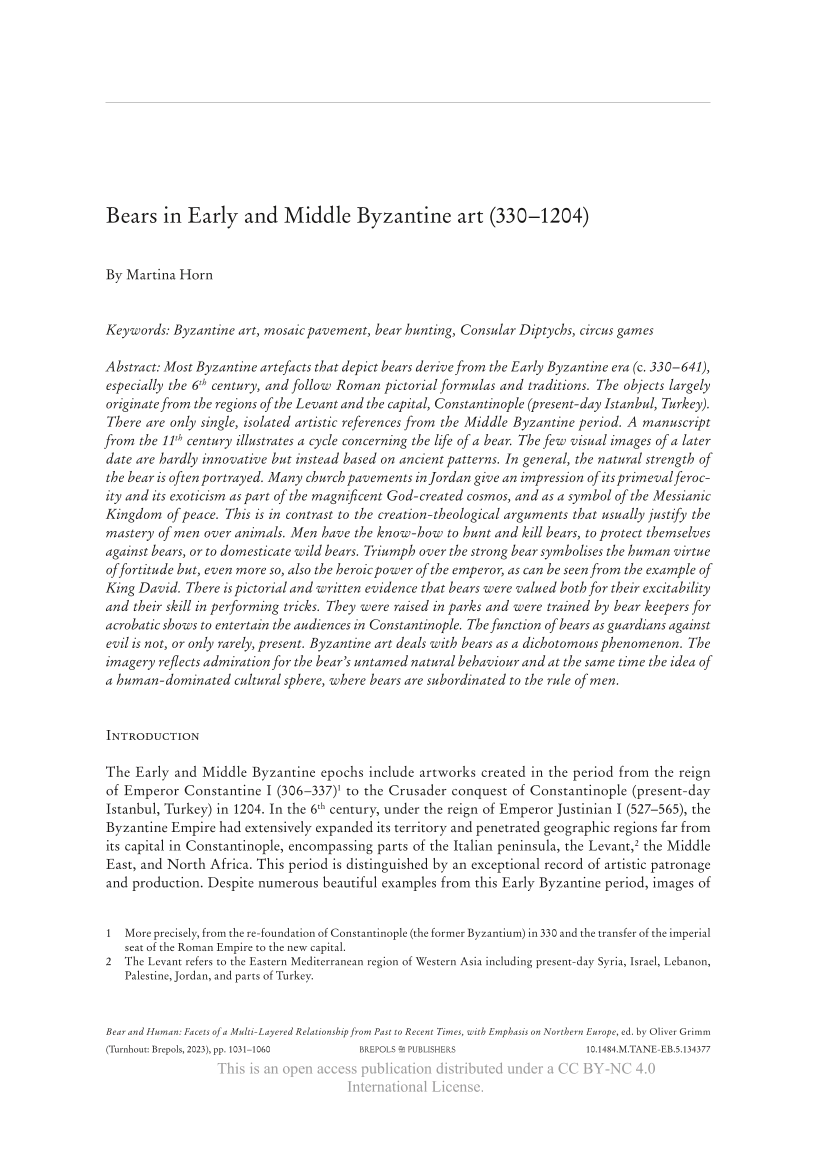
Most Byzantine artefacts that depict bears derive from the Early Byzantine era (c. 330-641), especially the 6th century, and follow Roman pictorial formulas and traditions. The objects largely originate from the regions of the Levant and the capital, Constantinople (present-day Istanbul, Turkey). There are only single, isolated artistic references from the Middle Byzantine period. A manuscript from the 11th century illustrates a cycle concerning the life of a bear. The few visual images of a later date are hardly innovative but instead based on ancient patterns. In general, the natural strength of the bear is often portrayed. Many church pavements in Jordan give an impression of its primeval ferocity and its exoticism as part of the magnificent God-created cosmos, and as a symbol of the Messianic Kingdom of peace. This is in contrast to the creation-theological arguments that usually justify the mastery of men over animals. Men have the know-how to hunt and kill bears, to protect themselves against bears, or to domesticate wild bears. Triumph over the strong bear symbolises the human virtue of fortitude but, even more so, also the heroic power of the emperor, as can be seen from the example of King David. There is pictorial and written evidence that bears were valued both for their excitability and their skill in performing tricks. They were raised in parks and were trained by bear keepers for acrobatic shows to entertain the audiences in Constantinople. The function of bears as guardians against evil is not, or only rarely, present. Byzantine art deals with bears as a dichotomous phenomenon. The imagery reflects admiration for the bear’s untamed natural behaviour and at the same time the idea of a human-dominated cultural sphere, where bears are subordinated to the rule of men.

Full text loading...
-
From This Site
/content/books/10.1484/M.TANE-EB.5.134377dcterms_title,dcterms_subject,pub_serialIdent,pub_author,pub_keyword-contentType:Contributor -contentType:Concept -contentType:Institution105