


oa Kupfer als Münzmetall in der Frühen Neuzeit. Der besondere Beitrag Westfalens
- By: Stefan Kötz
- Publication: Proceedings of the XVI International Numismatic Congress, 11–16.09.2022, Warsaw, Vol. iv: Medals, Modern and General Numismatics , pp 87-98
- Publisher: Brepols
- Publication Date: January 2025
- DOI: https://doi.org/10.1484/M.WSA-EB.5.145467


Kupfer als Münzmetall in der Frühen Neuzeit. Der besondere Beitrag Westfalens, Page 1 of 1
< Previous page | Next page > /docserver/preview/fulltext/10.1484/M.WSA-EB.5.143657/M.WSA-EB.5.145467-1.gif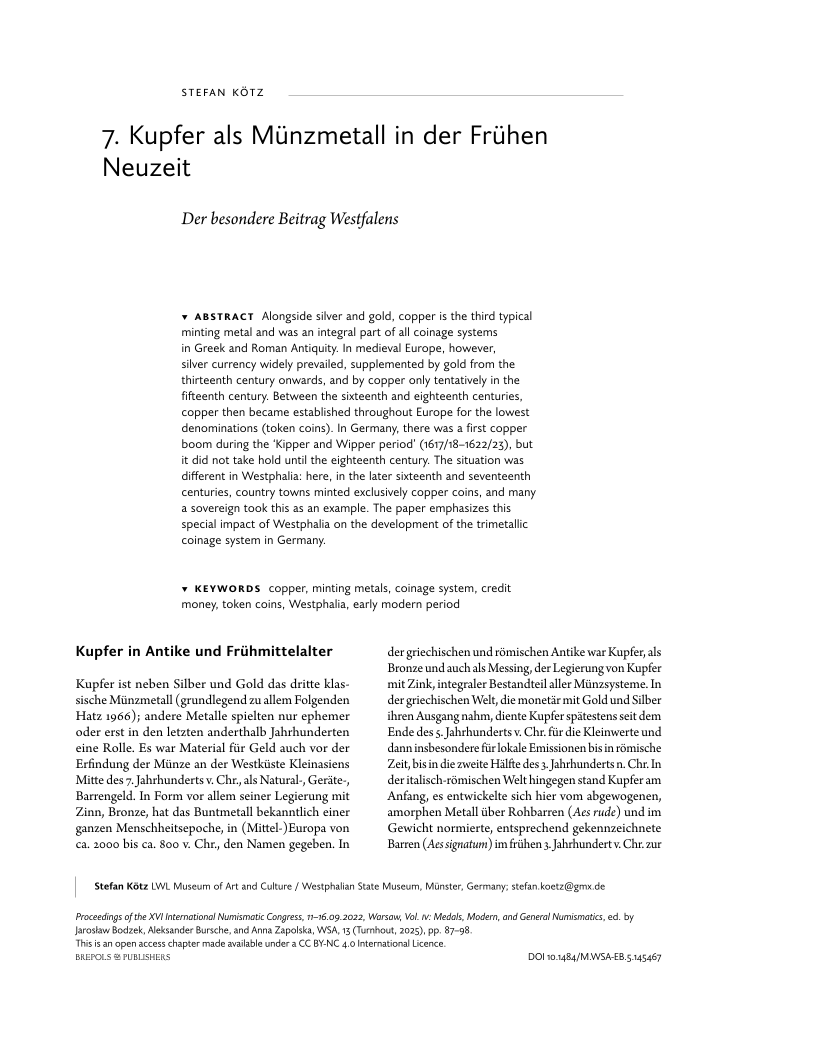
Alongside silver and gold, copper is the third typical minting metal and was an integral part of all coinage systems in Greek and Roman Antiquity. In medieval Europe, however, silver currency widely prevailed, supplemented by gold from the thirteenth century onwards, and by copper only tentatively in the fifteenth century. Between the sixteenth and eighteenth centuries, copper then became established throughout Europe for the lowest denominations (token coins). In Germany, there was a first copper boom during the ‘Kipper and Wipper period’ (1617/18–1622/23), but it did not take hold until the eighteenth century. The situation was different in Westphalia: here, in the later sixteenth and seventeenth centuries, country towns minted exclusively copper coins, and many a sovereign took this as an example. The paper emphasizes this special impact of Westphalia on the development of the trimetallic coinage system in Germany.

Full text loading...
-
From This Site
/content/books/10.1484/M.WSA-EB.5.145467dcterms_title,dcterms_subject,pub_serialIdent,pub_author,pub_keyword-contentType:Contributor -contentType:Concept -contentType:Institution105