


Brepols
Brepols is an international academic publisher of works in the humanities, with a particular focus in history, archaeology, history of the arts, language and literature, and critical editions of source works.2741 - 2760 of 3194 results
-
-
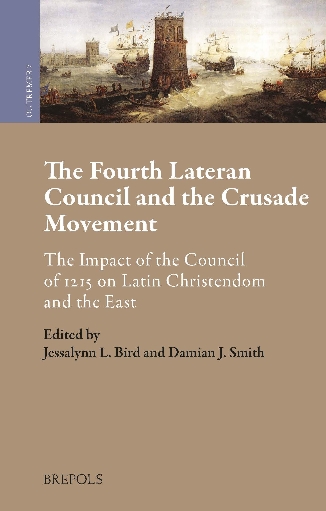
The Fourth Lateran Council and the Crusade Movement
The Impact of the Council of 1215 on Latin Christendom and the East
show More to view fulltext, buy and share links for:The Fourth Lateran Council and the Crusade Movement show Less to hide fulltext, buy and share links for: The Fourth Lateran Council and the Crusade MovementThe Fourth Lateran Council of 1215 is often considered as the high water-mark for the medieval church with its decisions affecting the cultural, social, religious and intellectual history of the later medieval world. The council was also a major event in the history of the crusades not only because the reform of the church and the recovery of the Holy Land were the central concerns of Pope Innocent III (1198-1216) but also because at the time of the council political decisions were made which affected all theatres of crusading and the canons of the council dealt with issues concerning piety and economics which had very long-term implications for the crusading movement. This book, bringing together an international team of scholars, is the first to deal with Fourth Lateran and the crusades in entirety and argues for the centrality of the council in the history of the crusades. It will be of interest not only to scholars of the history of the crusades but also to those interested in the history of the religious life of the Middle Ages as well to students of the particular areas and themes under discussion.
-
-
-
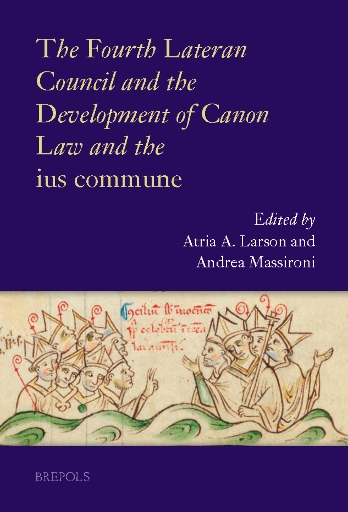
The Fourth Lateran Council and the Development of Canon Law and the ius commune
show More to view fulltext, buy and share links for:The Fourth Lateran Council and the Development of Canon Law and the ius commune show Less to hide fulltext, buy and share links for: The Fourth Lateran Council and the Development of Canon Law and the ius communeThis volume collects essays from an international group of scholars who treat various aspects of the Fourth Lateran Council's placement within the development of the ius commune. Topics include the canon law about armsbearing clergy, episcopal elections, heresy, degrees of affinity within marriage, the oversight of relic veneration; two essays highlight the council's reaction to the Fourth Crusade's sack of Constantinople in trying to incorporate the eastern church into the ecclesiastical structure and liturgical norms of the Roman Church; several essays concentrate on the usage of Roman or civil law in some of Lateran IV's constitutions and emphasize issues of private and procedural law. Collectively, and headed by an essay by Anne J. Duggan on the relationship of Pope Alexander III's pontificate to the Lateran IV constitutions, the essays create a fuller picture of Innocent III and his curia's reliance on developments within the jurisprudence of the preceding half century, but they also reveal the ways in which they forged new paths and made significant contributions to guide canon law in the years following the council.
-
-
-
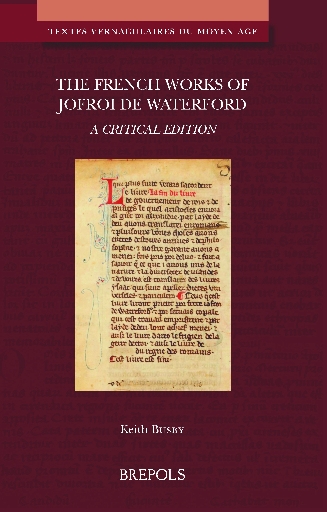
The French Works of Jofroi de Waterford
show More to view fulltext, buy and share links for:The French Works of Jofroi de Waterford show Less to hide fulltext, buy and share links for: The French Works of Jofroi de WaterfordAt the beginning of the fourteenth century, Jofroi, a brother of the Dominican house of St Saviour’s in Waterford, Ireland, translated into French and adapted from the Latin three texts: the De excidio Troiae of the so-called ‘Dares Phrygius’, the Breviarium historiae romanae of Eutropius, and Pseudo-Aristotelian Secretum secretorum. While the first two, La gerre de Troi and Le regne des Romains are generally close translations, Le secré de secrés is much modified by omissions and interpolations of exempla and scientific material. In his enterprise, Jofroi was aided and abetted by his scribe, the Walloon merchant and custos, Servais Copale. This book is the first critical edition of Jofroi’s œuvre. The texts are accompanied by a general introduction, individual introductions to each of the three texts, extensive notes, a substantial glossary, and an index of proper names. Jofroi and Servais collaborated in Waterford, not Paris, as has long been assumed, and these texts are therefore witness to the importance of French as a literary language in southeastern Ireland.
-
-
-
The Future of the Middle Ages and the Renaissance
Problems, Trends, and Opportunities for Research
show More to view fulltext, buy and share links for:The Future of the Middle Ages and the Renaissance show Less to hide fulltext, buy and share links for: The Future of the Middle Ages and the RenaissanceThis volume, containing a selection of essays from ACMRS's 1996 Conference, reflects a broad range of interests in medieval and Renaissance studies. Although most of the eleven essays address western European topics, one essay deals with Byzantine political and theological histroy, and one touches on Arabic poetry in medieval Sicily. The chronological range is also broad, extending from the seventh to the twentieth century and including topics from an early Byzantine polemicist to the recent growing interest in medievalism, and from critical readings of early texts to implications of computer technology for future manuscript study. In some significant ways the volume continues earlier discussions of the state of the profession, such as those in William D. Paden (ed.), The Future of the Middle Ages, and John Van Engen (ed.), The Past and Future of Medieval Studies. More generally, this second volume in the Arizona series extends the theme of the first, Reinventing the Past, and makes fresh contributions to the scholarship on a number of problems. If the current volume provides a reliable gauge for the future of medieval and Renaissance studies, we are on the verge of new beginnings, increasingly outward-looking, reexamining and redefining old boundaries to reach a new and sharpened understanding of the past.
-
-
-
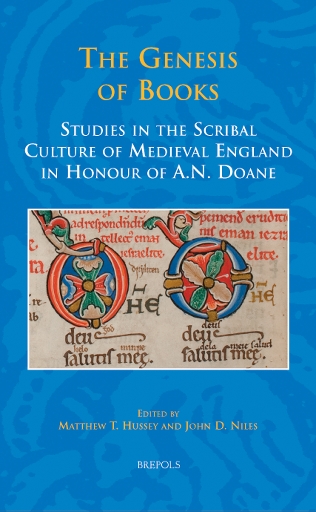
The Genesis of Books
Studies in the Scribal Culture of Medieval England in Honour of A.N. Doane
show More to view fulltext, buy and share links for:The Genesis of Books show Less to hide fulltext, buy and share links for: The Genesis of BooksThis volume is about the book itself, as shaped and made by medieval scribes and as conditioned by the cultural understandings that were present in the world where those scribes lived. Questions relating to the provenance, compilation, script, function, and use — both medieval and modern — of manuscripts are raised and are resolved in a fresh manner. The focal point of the volume is Anglo-Saxon England, approached as a cultural crossroads east and west, with attention given to English manuscripts produced both before and after the Conquest. The book thus contributes to a reassessment of early English culture as complex, emergent, and multi-stranded.
A number of different literary genres and types are explored, ranging from devotional materials (e.g. psalters, sermons, and illustrated gospel books) to texts of a more worldly orientation. A number of plates illustrate the work of particular scribes. While some beautiful codices are showcased, the emphasis falls on plain books written in English, including the Vercelli Book, the Exeter Book, and the Blickling Homilies. Analyses of the history of palaeography and the theory of editing raise the point that whatever we know from old books is conditioned by the tools used to study them.
-
-
-
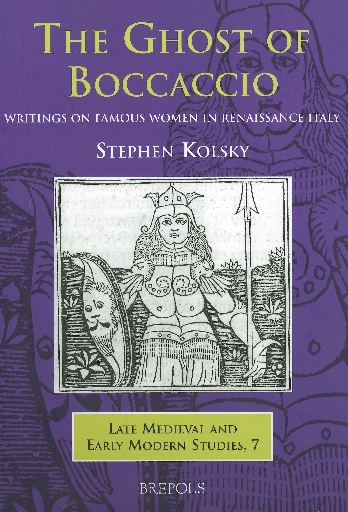
The Ghost of Boccaccio
Writings on Famous Women in Renaissance Italy
show More to view fulltext, buy and share links for:The Ghost of Boccaccio show Less to hide fulltext, buy and share links for: The Ghost of BoccaccioThis major study looks at the heritage and literary transformation of Giovanni Boccaccio’s De mulieribus claris in late-fifteenth and early-sixteenth-century Italy.The monograph is the first full-length study of the new elaborations of women’s role and potential that were being developed in the north Italian courts in this period. The Ghost of Boccaccio presents a sustained textual analysis of a selection of male-authored texts. It treats these texts as highly specific events in the development of the querelle des femmes, or ‘the woman question’, providing an important and often neglected Italian context for this question. By analysing these texts together in one volume, this study places them firmly on the scholarly map. They represent an extraordinary variety of voices seeking to be heard about the status of women in Renaissance Italy, ranging from the most conservative to the truly radical. They provide vital perspectives on constructions of women in the Renaissance. A number of these texts also represent a crucial moment in the development of intellectual strategies to challenge the dominant gender ideologies of Renaissance and early modern Europe. The book will be of interest to scholars and students of Renaissance history and culture, Italian studies, neo-Latin studies, and gender studies.
-
-
-
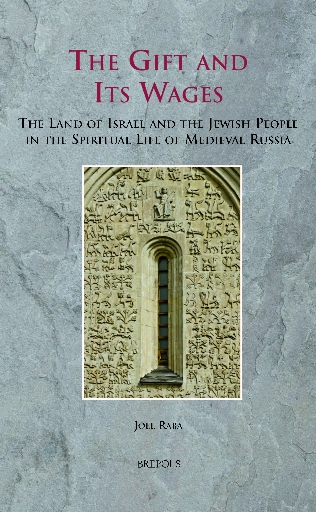
The Gift and Its Wages
The Land of Israel and the Jewish People in the Spiritual Life of Medieval Russia
show More to view fulltext, buy and share links for:The Gift and Its Wages show Less to hide fulltext, buy and share links for: The Gift and Its WagesRespect for the Old Testament and its heritage was an integral feature of Russian medieval culture and played a major role in determining Old Russia’s value system and its attitude toward past and contemporary events. Jerusalem and the Holy Land were ideals, and the Chosen People and Old Testament heroes were role models and standards for both the past and the present. Yet, in its ongoing effort to be recognized as the ‘New Chosen People’ within the family of nations, Old Russia rejected ‘the Other’, that is the descendants of the ‘Old Chosen People’. The almost total absence of Jews in Russia throughout the ancient period, along with the central role played by Jewish tradition in the development of its culture, are a contradiction. This book presents the story of this dichotomy during the Old Russian millennium, from its inception to the late seventeenth century. The material is organized chronologically, beginning with the creation of the Kievan state in the far reaches of the Khazar polity in the ninth century, and ending with the great transformation, the reforms of Peter the Great. This is preceded by a survey of two sources that shaped the image of the land and people of Israel in the erudite world of ancient Russia: a description of the Holy Land by Abbot Daniel in the early twelfth century, and the ancient Slavic translation of Josephus’s Wars of the Jews.
-
-
-
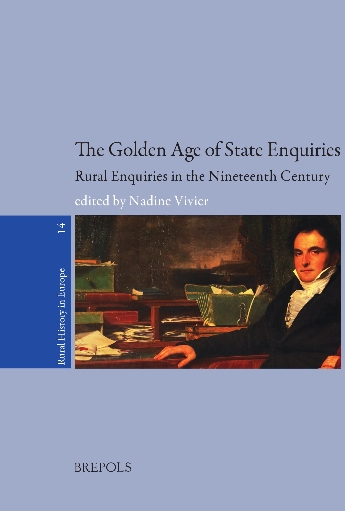
The Golden Age of State Enquiries
Rural Enquiries in the Nineteenth Century. From Fact Gathering to Political Instrument
show More to view fulltext, buy and share links for:The Golden Age of State Enquiries show Less to hide fulltext, buy and share links for: The Golden Age of State EnquiriesAny state intervention in society requires a high degree of knowledge. This is usually given by a state-sponsored enquiry. Some of these surveys can be traced back to Antiquity, but by the nineteenth century enquiries proved to be different because the nature of the state and the distribution of political influence had changed, and the scientific and financial means to investigate had progressed. This new context prompted states to launch large enquiries to assess transformations in the rural world: new techniques, opening to long distance trade. The heart of the nineteenth century was the golden age of state enquiries. Inspired by the nascent sociology, they fulfilled the desire for scientific knowledge accessible to everyone and the search for innovative solutions for the improvement of agriculture and rural life.
The present volume does not focus on the content of the enquiries; it examines their origins and functioning as new and important objects of historical research, with fourteen studies gathered from twelve countries. The main focus is on Western Europe, with broadening perspectives to the East (Ottoman Empire) and West (Canada and Mexico). The international comparative perspectives highlight the importance of transnational cultural transfers in the nineteenth century. French and British methods were considered models of progress and of a civilised state. Statistical methods and the needs of the administration were discussed and adapted in each state according to their conception of state power, in a context of the construction of the nation state.
-
-
-
The Gospel According to Thomas
Introduction, Translation and Commentary
show More to view fulltext, buy and share links for:The Gospel According to Thomas show Less to hide fulltext, buy and share links for: The Gospel According to ThomasThe Gospel According to Thomas is a collection of 114 sayings of Jesus attributed to a certain Didymus Judas Thomas. For scholars, the text has much to offer for the study of early Christian literature, history, and theology. This enigmatic collection of sayings is part of a series of tractates in the Nag Hammadi Codices, which were found in Egypt in 1945. Since the discovery of the Gospel According to Thomas, scholars have endeavoured to uncover the place of writing and the sources of these sayings, which in some cases are similar to those found in the synoptic gospels and other New Testament writings, as well as in several early Christian texts. Without neglecting nor negating this important historical research on the Gospel According to Thomas, this new translation accompanied by a commentary focuses on another aspect that has been given less attention in scholarship, namely that of a synchronic reading and interpretation of the text. The main question this book attempts to answer is: What does the Gospel According to Thomas actually mean?
-
-
-
The Gothic Missal
show More to view fulltext, buy and share links for:The Gothic Missal show Less to hide fulltext, buy and share links for: The Gothic MissalThe Missale Gothicum provides unique evidence relating to the liturgy of early medieval Gaul around 700 ad and offers insight into the development of the Latin language in this key period of Latinity. Its significance may therefore not be underestimated. The codex in which the text is transmitted, now preserved in the Vatican Library (Vat. reg. lat. 317), comprises the prayers for Mass for the entire liturgical year as recited by the celebrant, most probably the bishop of Autun. The Gothic Missal is the only surviving source of many rites and commemorations that characterise the specific liturgical tradition of late antique and early medieval (Merovingian) Gaul. At the same time, the codex is the earliest known source of a number of liturgical texts still in use in the liturgy of the Western Church, such as the Easter hymn Exultet and prayers featuring in Baptismal rites. This first integral English translation of the text is intended to make its sometimes rather obscure Latin more accessible to scholars of medieval liturgy (musicologists, religious and social historians) and of medieval Latin, as well as to new generations of students interested in the history and religious culture of the Middle Ages. Moreover, it is the hope of the author of the present volume to address a broad audience of interested readers, academic and otherwise, by opening up to them the unique and colourful world of late antique and early medieval liturgical life and its significance until the present day.
The source text of this volume appeared in the series Corpus Christianorum Series Latina as Missale Gothicum (CCSL 159D). References to the corresponding pages of the edition are provided in the margins of the present translation.
-
-
-
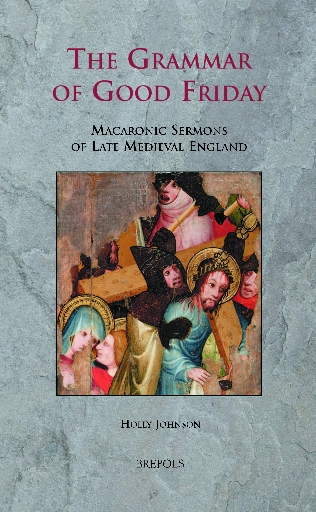
The Grammar of Good Friday
Macaronic Sermons of Late Medieval England
show More to view fulltext, buy and share links for:The Grammar of Good Friday show Less to hide fulltext, buy and share links for: The Grammar of Good FridayThis volume offers a study of Good Friday preaching and an edition (with modern translation) of five highly imaginative, rhetorically sophisticated macaronic (mixed Latin and Middle English) Good Friday sermons preached in late medieval England (c. 1350-1450). The study investigates the way medieval preachers made use of popular topoi and popular categorizations, reworking and recombining well-known material to create new sets of associations and images. The features that these sermons share with other genres, such as Passion plays, meditative treatises, and Middle English lyrics, reveal the rich cross-fertilization of this material and the cultural pervasiveness of topoi and images we often associate with literary works such as Piers Plowman. The sermons in this edition, all but one previously unavailable, increase our understanding of the medieval art of memory, the relationship between verbal and visual images, affective piety, and medieval rhetoric. Finally, all five of the sermons edited are macaronic, two of them switching between Latin and Middle English within almost every sentence; they thus offer a significant witness to this curious linguistic phenomenon. This volume presents new and rich source material and places this material into its wider cultural contexts with a detailed investigation of the rhetorical dimensions and intended effects of late medieval Good Friday preaching.
-
-
-
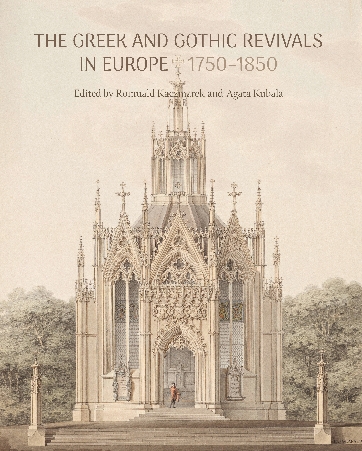
The Greek and Gothic Revivals in Europe 1750–1850
show More to view fulltext, buy and share links for:The Greek and Gothic Revivals in Europe 1750–1850 show Less to hide fulltext, buy and share links for: The Greek and Gothic Revivals in Europe 1750–1850This book combines the Greek and Gothic Revival phenomena in the period between 1750 and 1850, showing the common cultural background of these artistic trends referring to the past. It presents examples from almost all over Europe. In addition to the introductory text problematizing the idea, there are studies of more detailed issues - topographic shots presenting the aforementioned phenomena within artistic regions, presentations of projects undertaken by outstanding personalities of the era, as well as analyses of individual assumptions or works.
-
-
-
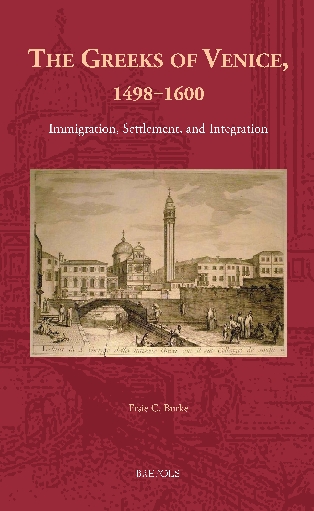
The Greeks of Venice, 1498–1600
Immigration, Settlement, and Integration
show More to view fulltext, buy and share links for:The Greeks of Venice, 1498–1600 show Less to hide fulltext, buy and share links for: The Greeks of Venice, 1498–1600People have always immigrated in search of better working and living conditions, to escape persecution, reconnect with family, or simply for the experience. This volume traces the history of Venice’s Greek population during the formative years between 1498 and 1600 when thousands left their homelands for Venice. It describes how Greeks established new communal and social networks, and follows their transition from outsiders to insiders (though not quite Venetians) through an approach that offers a comparative perspective between the ‘native’ and the immigrant. It places Greeks within the context of multi-cultural, multi-ethnic, and multi-lingual Venice. Personal stories are interwoven throughout for a more intimate account of how people lived, worked, prayed, and formed new social networks. These accounts have been drawn from a variety of sources collected from the Venetian state archives, the archives of the Venetian church, and documentation held by the Hellenic Institute of Venice. Notarial documents, petitions, government and church records, registries of marriages and deaths, and census data form part of the collected material discussed here. Above all, this study aims to reconstruct the lives of the largest ethnic and Christian minority in early modern Venice, and to trace the journey of all immigrants, from foreigner to local.
-
-
-

The Heresy of the Brothers, a Heterodox Community in Sixteenth-Century Italy
show More to view fulltext, buy and share links for:The Heresy of the Brothers, a Heterodox Community in Sixteenth-Century Italy show Less to hide fulltext, buy and share links for: The Heresy of the Brothers, a Heterodox Community in Sixteenth-Century ItalyAround the mid-sixteenth century, one of the largest Italian heterodox communities developed in Modena: the community of ‘Brothers’. At the beginning of the century, a flourishing humanistic tradition had inspired protests against the authority of the Church and had led many of the city’s prominent figures to sympathize with Luther and the Reformation. Over the following decades, such positions became more extreme: most of the ‘Brothers’ held radical convictions, ranging from belief in predestination to contestation of the Antichrist pope. In some cases, the ‘Brothers’ even went so far as to deny the value of baptism.
This heterodox community in Modena created a hidden network for the free expression of its reformed faith. Within twenty years, however, the election of Pope Pius V (1566-1572) and the consolidation of the Holy Office led to a harsh campaign to disperse dissenters in the city. Despite the protection of illustrious members of the Roman Catholic hierarchy, the bishops of Modena, and the dukes of Ferrara, the Holy Office succeeded in repressing the community. The history of the ‘Brothers’ of Modena therefore provides a case study for understanding how the Inquisition influenced the balance of religious Italy, changing the face of the Peninsula forever.
-
-
-
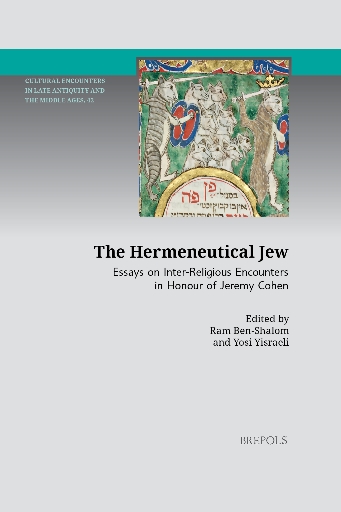
The Hermeneutical Jew
Essays on Inter-Religious Encounters in Honour of Jeremy Cohen
show More to view fulltext, buy and share links for:The Hermeneutical Jew show Less to hide fulltext, buy and share links for: The Hermeneutical JewThe interconnected histories of Judaism and Christianity are explored in this compelling volume honouring the influential work of Jeremy Cohen. Cohen’s pioneering studies have reshaped our understanding of these religious traditions, emphasizing the crucial role of cross-religious engagements in forming their self-perceptions and identities.
Comprising fifteen chapters, the book is organized into four thematic sections. The first section, Literary Mirrors and Inter-Religious Representations, explores patterns of internalizations, (mis)representations, and appropriations between competing religious traditions. The second section, Physical and Figurative Encounters, addresses the roles played by visible and physical markers in setting interreligious boundaries and exchanges. The third section, Agents of Anti-Jewish Discourse, focuses on Christian thinkers of the late Middle Ages who propagated anti-Jewish measures or prejudices across different genres and causes. The final section, The Transformability of the Jews and the Hermeneutics of Inter-Religious Conversion, examines the cultural and intellectual impact of different efforts to convert Jews and Jewishness.
This collection of new studies by leading medievalists serves as a fitting tribute to Jeremy Cohen’s groundbreaking contributions and offers readers an insightful look into the complex world of medieval and early modern religious identity.
-
-
-
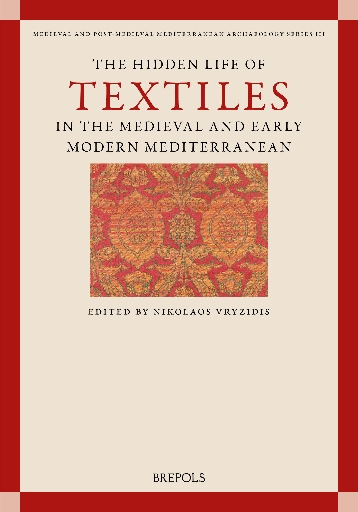
The Hidden Life of Textiles in the Medieval and Early Modern Mediterranean
Contexts and Cross-Cultural Encounters in the Islamic, Latinate and Eastern Christian Worlds
show More to view fulltext, buy and share links for:The Hidden Life of Textiles in the Medieval and Early Modern Mediterranean show Less to hide fulltext, buy and share links for: The Hidden Life of Textiles in the Medieval and Early Modern MediterraneanThe book contains published papers of the conference 'Textiles & Identity in the Medieval and Early Modern Mediterranean: Paradigms of Contexts and Cross-Cultural Exchanges' of the British School at Athens held at the (Benaki) Museum of Islamic Art in 2016, as well as some new contributions.
The focus in this wide-ranging collection of studies by key scholars in the field is on textiles and their functions in various Mediterranean contexts (and beyond) during medieval and post-medieval times (ca. 10th-19th c.). The scope of the contributions encompasses archaeological, anthropological and art historical perspectives on a great variety of subjects, such as textiles from the Byzantine Empire and the Medieval Islamic World (e.g. Spain, Mamluk Egypt, Seljuk Anatolia), as well as the production and use of textiles in Italy, the Ottoman Empire, Armenia and Ethiopia. The volume offers a state-of-the-art of an often still hardly known area of study of textiles as historical and cultural sources of information, which makes it essential reading for scholars and a larger audience alike.
The book includes contributions by Laura Rodríguez Peinado, Ana Cabrera-Lafuente, Avinoam Shalem, Scott Redford, Maria Sardi, Vera-Simone Schulz, Nikolaos Vryzidis, Marielle Martiniani-Reber, Elena Papastavrou, Jacopo Gnisci and Dickran Kouymjian.
-
-
-
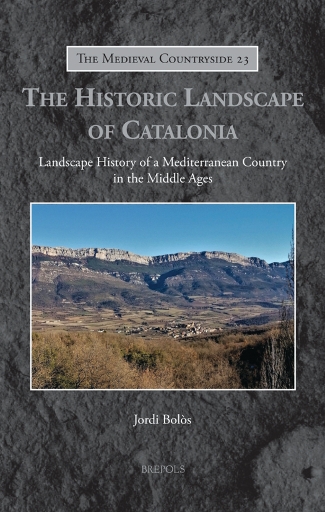
The Historic Landscape of Catalonia
Landscape History of a Mediterranean Country in the Middle Ages
show More to view fulltext, buy and share links for:The Historic Landscape of Catalonia show Less to hide fulltext, buy and share links for: The Historic Landscape of CataloniaThe landscape around us is largely the result of man-made transformations. It consists of villages, farmsteads, cities, fields, ditches, and roads. This book examines how the landscape of the Mediterranean country of Catalonia was created and transformed. Although Catalonia’s history goes back before the Middle Ages, it was during the medieval period that it saw significant development, which has continued ever since. Understanding the landscape helps us understand political, social, economic, and cultural changes. In this book we discover how the settlements built around a castle or a church were created, and what the open villages and new towns were like, both in Catalonia and in neighbouring territories. The book also explores the formation of cities and towns as well as the significance of hamlets and farmsteads, based on data provided by written documents and archaeological excavations. It also explores the formation of fields, ditches, and irrigated areas, and shows the importance of understanding the boundaries and demarcations that enclose valleys, villages, castles, and parishes. Finally, special attention is devoted to place names and cartography, as these shed light on numerous historical realities.
-
-
-
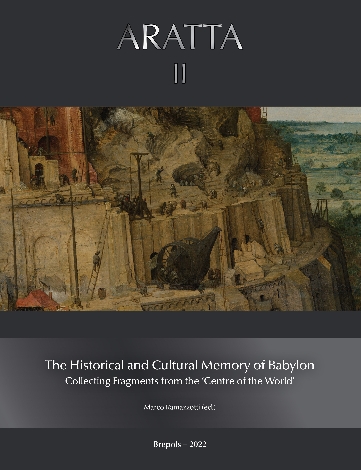
The Historical and Cultural Memory of the Babylonian World
Collecting Fragments from the 'Centre of the World'
show More to view fulltext, buy and share links for:The Historical and Cultural Memory of the Babylonian World show Less to hide fulltext, buy and share links for: The Historical and Cultural Memory of the Babylonian WorldIn the study of the ancient world, Babylon can be considered as the most impressive representation, historically, archaeologically, and in literature, of urbanism in the Near East. This first example of an urban centre and its cultural heritage - both tangible and intangible - provides a focal point for discussions of historical and cultural memory in the region. The eleven contributions gathered here draw together multidisciplinary research into Babylonian culture, exploring the epistemic foundations, contacts, resilience, and cultural transmission of the city and its milieu from ancient times up until the modern day. Through this approach, this volume is able to support conversations concerning the historical and cultural memory of Babylon and promote a dialogue that cuts across, and unites, both cultures and academic disciplines.
-
-
-
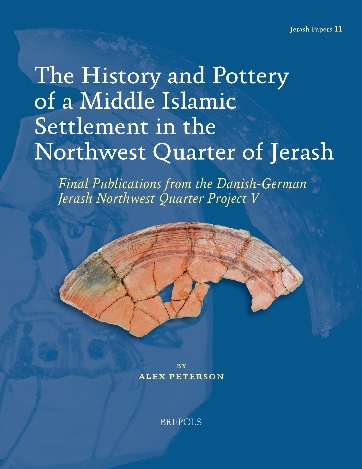
The History and Pottery of a Middle Islamic Settlement in the Northwest Quarter of Jerash
Final Publications from the Danish-German Jerash Northwest Quarter Project V
show More to view fulltext, buy and share links for:The History and Pottery of a Middle Islamic Settlement in the Northwest Quarter of Jerash show Less to hide fulltext, buy and share links for: The History and Pottery of a Middle Islamic Settlement in the Northwest Quarter of JerashIn 2015, the Danish-German Northwest Quarter Project working in Jerash uncovered a Middle Islamic farmstead. Subsequent excavations revealed that this settlement, far from marking a decline at the site, is in fact indicative of a broader active and dynamic rural community living within the ancient urban landscape of Jerash.This volume offers an in-depth focus on this Islamic settlement, with a particular focus on the ceramic material yielded by the site, which is here fully quantified and contextually analysed alongside historical sources. Through this approach, the author has reconstructed a new synthesis of Middle Islamic settlement history, shedding new light on the economic and social structures of a rural community in northern Jordan, as well as establishing a typology that can be used to refine the chronologies of Middle Islamic Jerash.
-
-
-
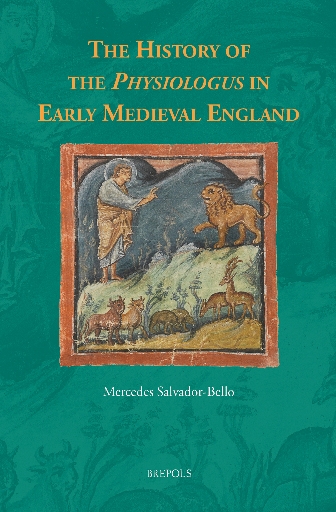
The History of the Physiologus in Early Medieval England
show More to view fulltext, buy and share links for:The History of the Physiologus in Early Medieval England show Less to hide fulltext, buy and share links for: The History of the Physiologus in Early Medieval EnglandThe Physiologus is the ancestor of the bestiary, a collection of chapters describing animal qualities and behaviours, usually with an allegorical meaning, which proliferated especially in England in the late Middle Ages. While much scholarly attention has been directed to the bestiary, the history of the transmission of the Physiologus has hardly been investigated. Evidence of the circulation of this treatise in the early medieval period is certainly scanty, since only two brief versions dating from this period have been preserved, one in Old English and another one in Latin. However, this monograph shows further proof of the knowledge of the Physiologus in Anglo-Saxon England. It also reveals the relationship of the only two surviving texts and their connection to the main Continental recension of the time. This study therefore demonstrates that the popularity of bestiaries in the later Middle Ages was largely due to the prominence that its predecessor, the Physiologus, enjoyed in the preceding period.
-