


Brepols
Brepols is an international academic publisher of works in the humanities, with a particular focus in history, archaeology, history of the arts, language and literature, and critical editions of source works.2821 - 2840 of 3194 results
-
-
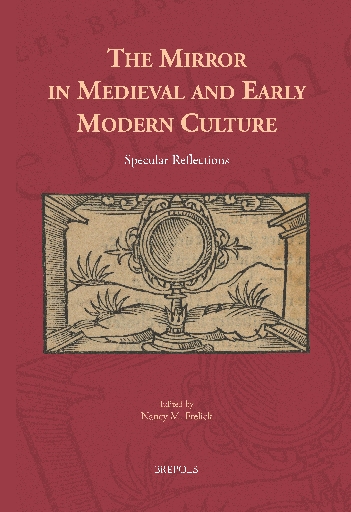
The Mirror in Medieval and Early Modern Culture
Specular Reflections
show More to view fulltext, buy and share links for:The Mirror in Medieval and Early Modern Culture show Less to hide fulltext, buy and share links for: The Mirror in Medieval and Early Modern CultureMirrors have always fascinated humankind. They collapse ordinary distinctions, making visible what is normally invisible, and promising access to hidden realities. Yet, these liminal objects also point to the limitations of human perception, knowledge, and wisdom. In this interdisciplinary volume, specialists in medieval and early modern science, cultural and political history, as well as art history, philosophy, and literature come together to explore the intersections between material and metaphysical mirrors in Europe and the Islamic world. During the time periods studied here, various technologies were transforming the looking glass as an optical device, scientific instrument, and aesthetic object, making it clearer and more readily available, though it remained a rare and precious commodity. While technical innovations spawned new discoveries and ways of seeing, belief systems were slower to change, as expressed in the natural sciences, mystical writings, literature, and visual culture. Mirror metaphors based on analogies established in the ancient world still retained significant power and authority, perhaps especially when related to Aristotelian science, the medieval speculum tradition, religious iconography, secular imagery, Renaissance Neoplatonism, or spectacular Baroque engineering, artistry, and self-fashioning. Mirror effects created through myths, metaphors, rhetorical strategies, or other devices could invite self-contemplation and evoke abstract or paradoxical concepts. Whether faithful or deforming, specular reflections often turn out to be ambivalent and contradictory: sometimes sources of illusion, sometimes reflections of divine truth, mirrors compel us to question the very nature of representation.
-
-
-

The Missing Interaction: Science and Diplomacy in the Early Cold War
show More to view fulltext, buy and share links for:The Missing Interaction: Science and Diplomacy in the Early Cold War show Less to hide fulltext, buy and share links for: The Missing Interaction: Science and Diplomacy in the Early Cold WarThis book enriches our understanding of the circumstances and conditions that have made the relation between science and diplomacy a primary concern of the political landscape in the twenty first century. As western liberal democracy and its effects on the environment but also on global war politics are under question, authors in this collective volume rethink the effects that an ahistorical definition of science diplomacy has had on world politics. They document the historicity of the entanglement between, on the one hand, epistemic practices and knowledge production and, on the other, foreign policy strategies and negotiation tactics. The book is the first in a series of what Rentetzi calls 'Diplomatic Studies of Science', a highly inter- and trans- disciplinary field that analyzes science and diplomacy as historically co-produced. It primarily focuses on the entanglements of science and diplomacy after the Second World War, bridging history of science, diplomatic history and international relations
-
-
-
The Multilingual Physiologus
Studies in the Oldest Greek Recension and its Translations
show More to view fulltext, buy and share links for:The Multilingual Physiologus show Less to hide fulltext, buy and share links for: The Multilingual PhysiologusThe Physiologus is an ancient Christian collection of astonishing stories about animals, stones, and plants that serve as positive or negative models for Christians. Written originally in Greek, the Physiologus was translated in ancient times into Latin, Armenian, Syriac, Coptic, Ethiopic, Georgian, Arabic, and Old Slavonic. Throughout its transformations and adaptations, the Physiologus has never lost its attraction.
The present volume offers an introduction to the significance of the Greek text, a new examination of its manuscript tradition, and a completely revised state of the art for each of the ancient translations. Two chapters of the Physiologus, on the pelican and on the panther, are edited in Greek and in each translation. These editions are accompanied by a new English rendering of the edited texts as well as short interpretative essays concerning the two animals.
The volume affords new insights into this fascinating book’s diffusion, transmission, and reception over the centuries, from its composition at the beginning of the third century CE in Alexandria to the end of the Middle Ages, and across all regions of the Byzantine Empire, the Latin West, Egypt and Ethiopia, the Middle East, the Caucasus, and Slavia orthodoxa.
-
-
-

The Multilingual Dynamics of Medieval Literature in Western Europe, c. 1200–c. 1600
show More to view fulltext, buy and share links for:The Multilingual Dynamics of Medieval Literature in Western Europe, c. 1200–c. 1600 show Less to hide fulltext, buy and share links for: The Multilingual Dynamics of Medieval Literature in Western Europe, c. 1200–c. 1600While the multilingualism of the medieval world has been at the forefront of research agendas across medieval studies in recent years, there nonetheless remain many questions to answer. What, for example, were the stakes and consequences of multilingualism for literary culture? And how do these change if we think of multilingualism through cultural, social, artistic, or material lenses? Taking such concerns as their starting point, the essays in this volume address a variety of aspects of medieval literature and literary culture related to multilingualism. They deal with multilingualism in relation to manuscripts, literary contexts, and historical contexts. The chapters gathered together here address considerations that have been overlooked in previous scholarship, and ask where the future of the study of medieval multilingualism lies. Contributions to the volume are grouped thematically, rather than by date or period, in order to draw out comparative perspectives, with the aim of encouraging innovative new approaches to future research in the field.
-
-
-
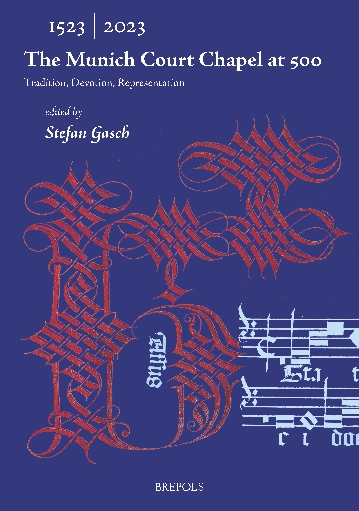
The Munich Court Chapel at 500
Tradition, Devotion, Representation
show More to view fulltext, buy and share links for:The Munich Court Chapel at 500 show Less to hide fulltext, buy and share links for: The Munich Court Chapel at 500This collection of essays is the first to focus exclusively on the Wittelsbach court of Duke Wilhelm IV of Bavaria (1493–1550). The contributors argue for a deeper understanding of this duke’s reign and acknowledge his crucial role in shaping the religious and cultural identity of the Duchy of Bavaria. By providing insights into the duke’s cultural aspirations, the organisation of the court, musical sources, religious musical practice, and everyday working life, this book aims to: (1) situate the court of Wilhelm IV in the context of the religious and political upheavals of the early sixteenth century; (2) trace the development of the musical repertoire and personnel of the Bavarian court chapel between 1500 and 1550; and (3) critically assess the degree to which the Munich court could be considered ‘modern’ by re-evaluating the broader cultural, religious, and musical life of the court around 1520. The volume thus sheds light on the cultural ambitions of a duke who defined music and art as expressions of strategic elements that interwove tradition, devotion, and representation in a programme of governance based on humanist education—a duke whose foresight enabled the Munich court to quickly become one of the most prestigious and famous seats of power in the Holy Roman Empire.
-
-
-
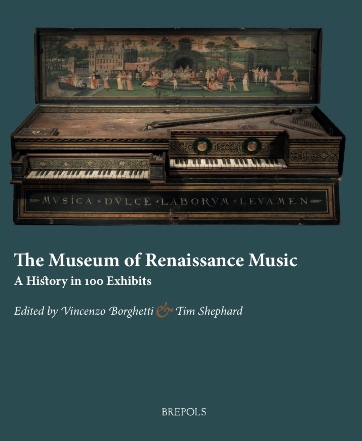
The Museum of Renaissance Music
A History in 100 Exhibits
show More to view fulltext, buy and share links for:The Museum of Renaissance Music show Less to hide fulltext, buy and share links for: The Museum of Renaissance MusicThis book collates 100 exhibits with accompanying essays as an imaginary museum dedicated to the musical cultures of Renaissance Europe, at home and in its global horizons. It is a history through artefacts-materials, tools, instruments, art objects, images, texts, and spaces-and their witness to the priorities and activities of people in the past as they addressed their world through music. The result is a history by collage, revealing overlapping musical practices and meanings-not only those of the elite, but reflecting the everyday cacophony of a diverse culture and its musics. Through the lens of its exhibits, this museum surveys music’s central role in culture and lived experience in fifteenth- and sixteenth-century Europe, offering interest and insights well beyond the strictly musicological field.
-
-
-
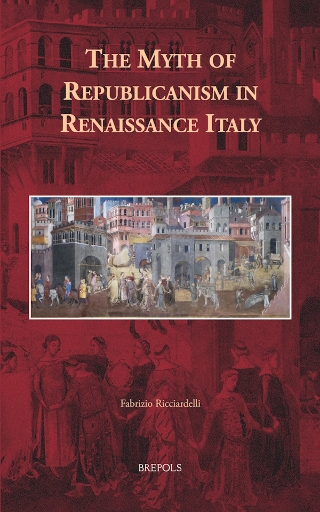
The Myth of Republicanism in Renaissance Italy
show More to view fulltext, buy and share links for:The Myth of Republicanism in Renaissance Italy show Less to hide fulltext, buy and share links for: The Myth of Republicanism in Renaissance ItalyThe period between the late thirteenth and early fourteenth centuries saw significant discussion in Italy about the two different political models of republicanism and seignorialism, reaching a climax at the end of the Trecento when the most influential scholars of Florence and Venice began to attack the despotism imposed on Milan by the Visconti. The arguments put forward by both sides were largely predictable: supporters of a Republic argued that liberty — represented by an elective government and independence from foreign powers — was of greatest importance, while those in favour of seignorialism instead claimed that they brought order, unity, and social peace.
In this book, the two systems of government represented in Italy are revisited, the arguments put forward by their supporters are compared and contrasted, and the development in the use of political language, especially in the city-states of Central and Northern Italy, is explored. The reality, it is suggested, is that the political systems of republicanism and seignorialism were not so very different. Republican governments ignored universal suffrage, those supported by signori did not always run totalitarian governments, and in both cases, power continued to be held by recurring oligarchical groups who were unwilling to enter into constructive dialogue with their opponents. However, as the two sides fought for power, the political arena became the testing ground for new forms of communication that could be used to manage and manipulate public opinion.
-
-
-
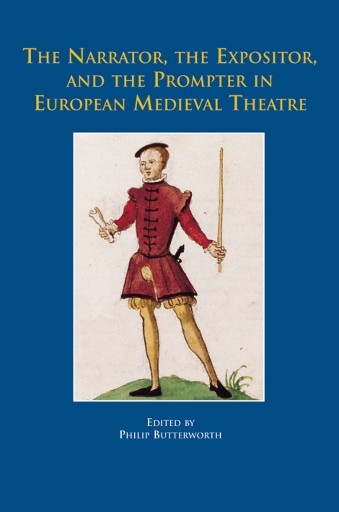
The Narrator, the Expositor, and the Prompter in European Medieval Theatre
show More to view fulltext, buy and share links for:The Narrator, the Expositor, and the Prompter in European Medieval Theatre show Less to hide fulltext, buy and share links for: The Narrator, the Expositor, and the Prompter in European Medieval TheatreInterest in the content of this book has developed out of an examination of the prompter who operated in full view of the audience and offered all the lines to the players. In 2001 at Groningen a production of the Towneley Second Shepherds’ Play focused on an examination of this convention. Many of the audience responses then were concerned with the figure of the prompter as he was seen to operate simultaneously both ‘inside’ and ‘outside’ the action of the play. Such a role and its function is fascinating, not only in its own right, but also in relation to how it might inform us about the nature and purpose of presented theatre. The ability of such a figure to move in and out of the action, and thus different realities, characterizes a relationship to the action and the audience. The same fascination exists in relation to roles of the narrator and the expositor. Sometimes these roles are overt ones; sometimes they ‘double up’ with roles of actors, personages or characters. These figures are of pivotal significance in the communication of those plays in which they operate. The purpose of this book is to investigate the nature of these roles in order to identify their influence upon the performance of medieval plays.
-
-
-
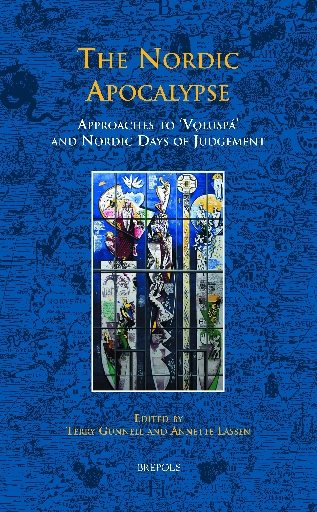
The Nordic Apocalypse
Approaches to Vǫluspá and Nordic Days of Judgement
show More to view fulltext, buy and share links for:The Nordic Apocalypse show Less to hide fulltext, buy and share links for: The Nordic ApocalypseThis book, with roots in a conference held in Iceland in May 2008, contains a series of articles reflecting modern approaches to the text, context, and performance of the Old Norse poem Vǫluspá, perhaps the best known and most discussed of all the Eddic poems. Rather than attempting to cover Eddic or Skaldic poetry as a genre, the main aim of this book is to present an overview of the ‘state of the art’ with regard to one particular Eddic poem. It focuses especially on the poem’s possible context within the apocalyptic tradition of Northern Europe in the early medieval period. The approaches of the articles range from placing the poem within the pre-Christian oral tradition to placing it within the written and liturgical context of Christianity. Two other chapters offer a possible context for the poem by examining the nature and background of the early medieval image of the Apocalypse known to have been on display in the Cathedral of Hólar in northern Iceland. While the approaches are focused on one specific poem, they are nonetheless applicable to many other Eddic works.
-
-
-
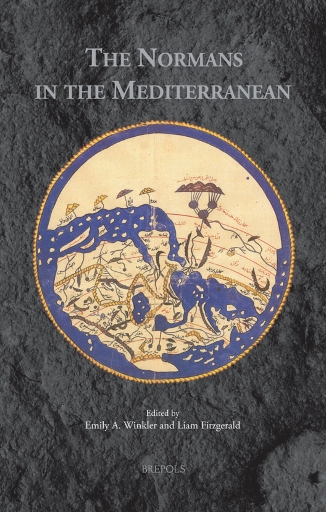
The Normans in the Mediterranean
show More to view fulltext, buy and share links for:The Normans in the Mediterranean show Less to hide fulltext, buy and share links for: The Normans in the MediterraneanIn both popular memory and in their own histories, the Normans remain almost synonymous with conquest. In their relatively brief history, some of these Normans left a small duchy in northern France to fight with Empires, conquer kingdoms, and form new ruling dynasties. This book examines the explosive Norman encounters with the medieval Mediterranean, c. 1000-1250. It evaluates new evidence for conquest and communities, and offers new perspectives on the Normans’ many meetings and adventures in history and memory.
The contributions gathered here ask questions of politics, culture, society, and historical writing. How should we characterize the Normans’ many personal, local, and interregional interactions in the Mediterranean? How were they remembered in writing in the years and centuries that followed their incursions? The book questions the idea of conquest as replacement, examining instead how human interactions created new nodes and networks that transformed the medieval Mediterranean. Through studies of the Normans and the communities who encountered them - across Iberia, the eastern Roman Empire, Lombard Italy, Islamic Sicily, and the Great Sea - the book explores macro- and micro-histories of conquest, its strategies and technologies, and how medieval people revised, rewrote, and remembered conquest.
-
-
-
The Notion of Liminality and the Medieval Sacred Space
show More to view fulltext, buy and share links for:The Notion of Liminality and the Medieval Sacred Space show Less to hide fulltext, buy and share links for: The Notion of Liminality and the Medieval Sacred SpaceThe thematic frame of this issue is the anthropological notion of liminality, applied both to physical as well as imaginary places of transition in medieval art. The volume is thus dedicated to the phenomenon of the limen, the threshold in medieval culture, understood mainly as a spatial, ritual and temporal category. The structure of the book follows the virtual path of any medieval visitor entering the sacred space. While doing so, the visitor encountered and eventually crossed several "liminal zones" that have been constructed around a series of physical and mental thresholds. In order to truly access the sacred - once again both physically and metaphorically - many transitional (micro)rituals were required and were therefore given particular attention within this volume. The volume was published as proceedings of the Liminality and Medieval Art II conference, which was held in October 2018 at the Masaryk University in Brno. Authors were supposed to conceive their contributions in pairs in order to reflect on the selected topics with an interdisciplinary approach. In the end, the very same pattern was also maintained for the final publication.
-
-
-
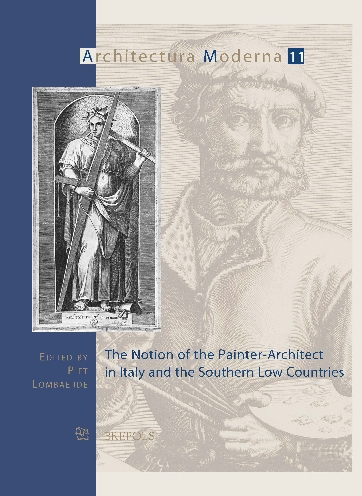
The Notion of the Painter-Architect in Italy and the Southern Low Countries
show More to view fulltext, buy and share links for:The Notion of the Painter-Architect in Italy and the Southern Low Countries show Less to hide fulltext, buy and share links for: The Notion of the Painter-Architect in Italy and the Southern Low CountriesSince the time of Vitruvius, architects have been expected to have a broad knowledge of the arts and sciences. The need for good skills in sketching and working up drawings even led, from the sixteenth century onwards, to fierce debates on the meaning and status of ‘disegno’. While Italy saw the emergence of famous painters who excelled as architects, also in the Southern Netherlands the notion that an architect must also have a mastery of the painter’s art became widespread, owing in part to the dissemination of publications by Sebastiano Serlio and Pieter Coecke van Aelst. In the seventeenth century, Peter Paul Rubens was able to make his own contribution to this discussion as a consequence of his sojourns in Italy (1601-1608). Bringing together distinguished art and architecture historians from Europe and North America, this interdisciplinary approach will shed light on the interrelationship of architecture and painting in the Southern Netherlands.
Piet Lombaerde is professor in theory and history of architecture and urbanism at the University of Antwerp, faculty of design sciences. His research interests cover the history of fortifications (1500-1900), urban history and the history of hydraulics. He is co-editor with Krista De Jonge (KU Leuven) of the series Architectura Moderna (Brepols Publisher) and author of several books on the history and theory of architecture and urban planning.
-
-
-
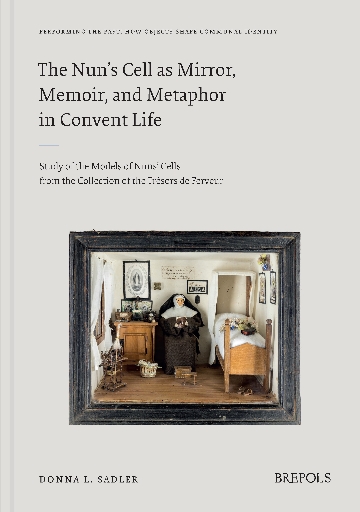
The Nun’s Cell as Mirror, Memoir, and Metaphor in Convent Life
Study of the Models of Nuns’ Cells from the Collection of the Trésors de Ferveur
show More to view fulltext, buy and share links for:The Nun’s Cell as Mirror, Memoir, and Metaphor in Convent Life show Less to hide fulltext, buy and share links for: The Nun’s Cell as Mirror, Memoir, and Metaphor in Convent LifeIn the eighteenth through the early twentieth century, French nuns from various orders created miniature simulacra of the cells in which they slept, studied, and performed their devotions. Each diorama contains an effigy of the nun, a prie-Dieu, devotional objects such as a crucifix, handiwork, and artifacts to foster study and contemplation. This book examines the lives of the brides of Christ as depicted in these dioramas, proposing that the material objects found in the chambers trace the contours of the collective and individual identities of the nuns who created these cells. Viewed as a type of memoir, the cells furnish the sisters a stage upon which to rehearse the meaning of their lives. The dioramas create a tension between the private and public presentations of the self, between verisimilitude and self-fashioning, and between reality and representation. The book contextualizes the miniature cells within the larger discourse of gender, identity, self-representation, monastic devotion, and the power wielded by the aesthetics of scale.
-
-
-
The Old English Homily
Precedent, Practice, and Appropriation
show More to view fulltext, buy and share links for:The Old English Homily show Less to hide fulltext, buy and share links for: The Old English HomilyThe quarter-century that has passed since Paul Szarmach’s and Bernard Huppé’s groundbreaking The Old English Homily and its Backgrounds (1978) has seen staggering changes in the field of Anglo-Saxon homiletics. Primary materials have become accessible to scholars in unprecedented levels, whether digitally or through new critical editions, and these have generated in turn a flood of secondary scholarship. The articles in this volume showcase and build on these developments. The first five essays consider various contexts of and infuences on Anglo-Saxon homilies: patristic and early medieval Latin sources, continental homiliaries and preaching practices, traditions of Old Testament interpretation and adaptation, and the liturgical setting of preaching texts. Six studies then turn to the sermons themselves, examining style and rhetoric in the Vercelli homilies, the codicology of the Blickling Book, sanctorale and temporale in the works of Ælfric, and the challenges posed by Wulfstan’s self-referential corpus. Finally, the last entries take us past the Conquest to discuss the re-use of homiletic material in England and its environs from the eleventh to eighteenth century. Together these articles offer medieval scholars a new Old English Homily, one that serves both as an introduction to key figures and issues in the field and as a model of studies for the next quarter-century.
-
-
-
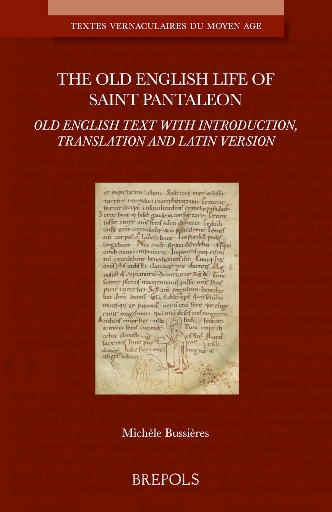
The Old English Life of Saint Pantaleon
British Library MS Cotton Vitellius D. xvii
show More to view fulltext, buy and share links for:The Old English Life of Saint Pantaleon show Less to hide fulltext, buy and share links for: The Old English Life of Saint PantaleonThe Old English Life of Saint Pantaleon survives in one eleventh century manuscript: it appears here for the first time in an easily available edition. This edition is based both on independent research and on the work of previous scholars. It is a challenging text, from a much-damaged manuscript, but well worth reading: it is interesting both from a linguistic point of view, as a testimony of late Anglo-Saxon language, and also as a sign of continental influence on Anglo-Saxon culture and of a change in literary taste in England on the eve of the Norman Conquest. It is preceded by a full introduction dealing with the history of the text, from Greece to Western Europe and the context of its translation into Old English. The text is accompanied by copious notes dealing with difficult passages and it is made more accessible by a Modern English translation. The edition is completed by a 12th century Latin version which seems to be the closer to its Old English counterpart. The edition is completed by an Anglo-Saxon glossary.
-
-
-
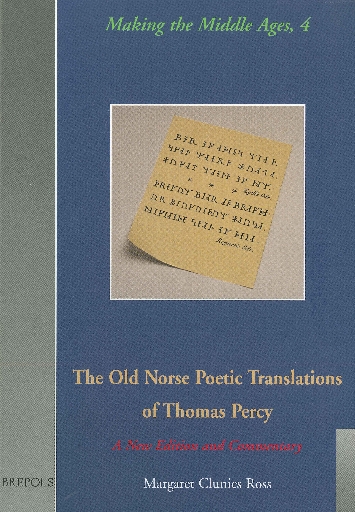
The Old Norse Poetic Translations of Thomas Percy
A New Edition and Commentary
show More to view fulltext, buy and share links for:The Old Norse Poetic Translations of Thomas Percy show Less to hide fulltext, buy and share links for: The Old Norse Poetic Translations of Thomas PercyThomas Percy was the first serious translator of Old Norse-Icelandic poetry into English. He published his Five Pieces of Runic Poetry in London in 1763 and in 1770 published his translation of Mallet's very influential work on early Scandinavian literature and culture as Northern Antiquities (with extensive annotations and additions by Percy himself). In publishing Five Pieces, Percy was influenced by the success of Macpherson's first volume of Ossian poetry (1760) and his own wide-ranging interest in ancient, especially 'gothic' poetry. Five Pieces had a mixed reception and was never republished as a separate work, but reappeared as an appendix to the second edn. of Northern Antiquities. Nevertheless, it was a seminal work in the history of reception and understanding of Old Norse poetry in Britain and it also has more general significance in our understanding of the development of the discipline of Old Norse-Icelandic studies. This work makes available to the modern scholarly community the work of one of the pioneers of the discipline and produces in easily accessible format a text that is currently only available as a rare book. The study comprises a facsimile of the 1763 edition, with facing-page notes to allow the modern reader to situate Percy's work in its intellectual context, together with an introduction on Percy himself, his work on Old Norse-Icelandic studies, and the contemporary context of the reception of Old Norse poetry in Britain (and to some extent in the rest of Europe). In addition, this study publishes eight other poetic translations (one from Old English and the others from Old Icelandic) that Percy completed about the same time as the translations now in Five Pieces of Runic Poetry, but did not then publish, due to the restrictions of contemporary tolerance for demanding or difficult 'ancient' poetry. This publication reveals his full range as a translator for the first time.
-
-
-
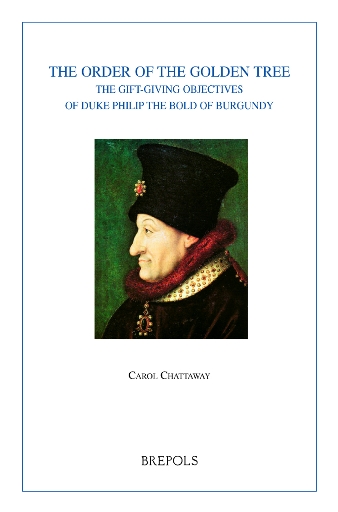
The Order of the Golden Tree
The Gift-giving Objectives of Duke Philip The Bold of Burgundy
show More to view fulltext, buy and share links for:The Order of the Golden Tree show Less to hide fulltext, buy and share links for: The Order of the Golden TreeThis book explores the policy objectives underlying the gift of this Order, to sixty men, on January 1 1403. Drawing primarily on Philip’s household accounts, it undertakes complementary iconographical and prosopographical analyses (of the Order insignia’s form, materials, design and motto; and of distinguishing common features among its recipients), refined by reference to his policy concerns around the occasion of its bestowal, to test seven hypotheses. The evidence from the analyses enables six of these (that it was purely decorative; a courtly conceit; crusade-related; a military chivalric order; a livery badge; or a military alliance) progressively to be discarded, pointing strongly to the seventh, that the Order was a specific policy alliance, designed in fashionable form, to obscure its politically sensitive purpose. The nature of that purpose then permits a revision of Philip’s role in history, particularly in relation to the creation of an independent Burgundian state, and the use of a co-ordinated propaganda campaign of slogan, badge, and supporting literature, to legitimise and popularise his plans. The analytical approach also offers insights into the significance of decorative, material gift-giving; the identification of networks; Christine de Pisan’s earlier political writings, and the origins of the Order of the Golden Fleece.
Carol Chattaway is Honorary Research Assistant at the Royal College of Art and University College, London University. She researches on the political significance of material objects at the Burgundian Court, in the later middle ages.
-
-
-
The Origin and Nature of Language and Logic.
Perspectives in Medieval Islamic, Jewish, and Christian Thought
show More to view fulltext, buy and share links for:The Origin and Nature of Language and Logic. show Less to hide fulltext, buy and share links for: The Origin and Nature of Language and Logic.The annual colloquium of the SIEPM in Freiburg, Germany, was groundbreaking in that it featured a more or less equal number of talks on all three medieval cultures that contributed to the formation of Western philosophical thought: the Islamic, Jewish, and Christian traditions. Indeed, the subject of the colloquium, ‘The Origin and Nature of Language and Logic in Medieval Islamic, Jewish, and Christian Thought’, lent itself to such a cross-cultural approach. In all these traditions, partially inspired by ancient Greek philosophy, partially by other sources, language and thought, semantics and logic occupied a central place. As a result, the chapters of the present volume effortlessly traverse philosophical, religious, cultural, and linguistic boundaries and thus in many respects open up new perspectives. It should not be surprising if readers delight in chapters of a philosophical tradition outside of their own as much as they do in those in their area of expertise.
Among the topics discussed are the significance of language for logic; the origin of language: inspiration or convention; imposition or coinage; the existence of an original language; the correctness of language; divine discourse; animal language; the meaningfulness of animal sounds; music as communication; the scope of dialectical disputation; the relation between rhetoric and demonstration; the place of logic and rhetoric in theology; the limits of human knowledge; the meaning of categories; the problem of metaphysical entailment; the need to disentangle the metaphysical implications of language; the quantification of predicates; and the significance of linguistic custom for judging logical propositions.
-
-
-
The Origins of Christianity in the Calendar Wars of the Second Century bce
show More to view fulltext, buy and share links for:The Origins of Christianity in the Calendar Wars of the Second Century bce show Less to hide fulltext, buy and share links for: The Origins of Christianity in the Calendar Wars of the Second Century bceIn the Gospels Jesus is called a ‘Nazarene’ or ‘Nazoraean’. Does this mean he came from Nazareth? Basing himself on Lidzbarski’s analysis of the Hebrew/Aramaic origins of the Greek terms Nazarênos and Nazôraios Dr Osborne proposes that these epithets indicate that Jesus was a nôṣrî, a ‘(Strict) Keeper/Guardian (of the Law)’. This meant he was a follower of the 364-day liturgical calendar known to us from 1 Enoch, Jubilees, and Qumran. An examination of the passages where these terms appear shows that this hypothesis leads to a deeper understanding of the circumstances in which the first Christian communities arose and clarifies greatly the background of Jesus’ crucifixion as Yēšû ha-Nôṣrî.
The book then traces the influence of the nôṣrîm on the history of Israel from their origin in the ‘calendar wars’ that tore apart the Jewish nation from 172-163 BCE. These broke out after the lunisolar calendar was introduced into the temple liturgy by Menelaus the high priest, and only came to an end when the 364-day calendar was reintroduced under his successor, Alcimus. In 151 BCE, however, Jonathan Maccabaeus was appointed high priest and reintroduced the lunisolar calendar. The nôṣrîm were suppressed and forced to emigrate or go underground. They reappear as leaders of Jewish resistance to Roman occupation after Pompey incorporated Judaea into the empire in 63 BCE. Eventually they became the chief instigators of the revolt against Rome that led to the destruction of Jerusalem in 70 CE. Osborne argues that the nôṣrîm thought to have been included in the Twelfth Benediction of the Amidah at Yavneh around 90 CE are these same ‘(Strict) Keepers/Guardians (of the Law)’.
-
-
-
The Ottoman Silk Textiles of the Royal Museum of Art and History in Brussels
show More to view fulltext, buy and share links for:The Ottoman Silk Textiles of the Royal Museum of Art and History in Brussels show Less to hide fulltext, buy and share links for: The Ottoman Silk Textiles of the Royal Museum of Art and History in BrusselsThe Royal Museums of Art and History in Brussels, commonly known as the Cinquantenaire, possess a collection of about 1200 pieces of Islamic Art (not including some 1.000 potsherds from Fustat in Egypt). They originate from countries located between Spain and India, and date from the 7th to the beginning of the 20th century. The emphasis is on silk textiles. This we owe to Isabella Errera (Florence 1869 - Brussels 1929), who collected, published and eventually donated or bequeathed no less than 764 textiles to the museum, about three hundred of which are Islamic. The 43 Ottoman items in this collection form the subject of this study.
Except two, for which we cannot be certain, these Ottoman textiles were woven in the major metropolitan weaving centres of the Ottoman Empire, namely Bursa, Istanbul and their surroundings. They all date from the period between the second half of the 15th and the early 19th century. Two types of weaves are represented: velvets and kemha or lampas fabrics. One of the velvets, of which the collection numbers 25 examples, is an important çatma, probably the earliest preserved in the world. Six kemha or lampas fabrics, of which we possess 16 specimens, bear inscriptions; the others are decorated with various patterns. The third main type of Ottoman weave, the serâser or cloth of gold and silver, which is rare in Western collections, is not represented. Finally, the collection contains two silks in a distinctive weave, an extended tabby, of which one is a military banner. Although these fall slightly outside of the otherwise homogeneous group, they where included in this study because they were definitely produced within the Ottoman realm.
This catalogue is the result of a collaboration between different specialists. The technological study of the textiles was executed by Daniël De Jonghe, textile engineer, and Chris Verhecken-Lammens, both independent scientific collaborators at the Royal Museums of Art and History. Mieke Van Raemdonck, curator of the Islamic Collection and editor of the present publication, described the textiles and traced their origin. For the natural dye analysis and conservation treatment, the museum appealed to the Royal Institute for the Cultural Heritage, located in the same Cinquantenaire-complex. The study and report of the natural dyes were performed by Ina Vanden Berghe, textile engineer, and Dr Jan Wouters, chemist, Head of the Laboratory of Materials and Techniques, with the practical assistance of Marie-Christine Maquoi, lab technician. The conservation treatment took place under the responsibility of Vera Vereecken, Head of the Textile workshop, who also wrote the reports and comments on this aspect.
The aim of this catalogue is to present a status quaestionis of knowledge that was gathered the past ten years regarding this group of silks and to put it at the disposal of other museum curators and researchers. Since the scrutiny of the weaving technology and of the natural dyes can lead to a better understanding of the silk industry, special focus is laid on these aspects. They may indeed yield concrete information allowing us to delimit groups of textiles and - why not - workshops and production centres.
-