


Brepols
Brepols is an international academic publisher of works in the humanities, with a particular focus in history, archaeology, history of the arts, language and literature, and critical editions of source works.2861 - 2880 of 3194 results
-
-
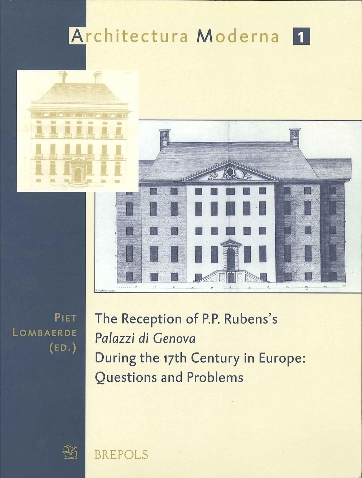
The Reception of P.P. Rubens's 'Palazzi di Genova' during the 17th Century in Europe: Questions and Problems
show More to view fulltext, buy and share links for:The Reception of P.P. Rubens's 'Palazzi di Genova' during the 17th Century in Europe: Questions and Problems show Less to hide fulltext, buy and share links for: The Reception of P.P. Rubens's 'Palazzi di Genova' during the 17th Century in Europe: Questions and ProblemsRubens' book 'Palazzi di Genova' was well diffused in European countries as England, the Netherlands, France, Germany and Italy thanks to the numerous contacts the famous painter and diplomat maintained in humanistic, artistic and political circles. From 1622 on this book, containing two volumes, was edited at several times during the 17th and 18th Century. But the direct influences of the numerous façades, plans, cross-sections, staircases and building details on modern architecture look rather limited, especially in his own country. In this study, several scholars in architectural history analyse how the examples of Genoese palazzi and churches as presented by Rubens were accepted in different European countries. Much attention is given to the question if these examples inspired a new architectural typology, in which the inner court of the houses was substituted by a 'salone in mezzo'. An attempt is made to situate Rubens' book among the late 16th and early 17th Century treatises and model books. The way in which Rubens presented the new Genoese architecture of villa's, palaces and churches and the introduction he wrote as a 'painter-architect' to this book were so modern at that time, that the reception of this prestigious edition in folio had more to do with changes in considering architectural theory and practice as with the propagation of a late renaissance style influenced by Antique examples.
-
-
-
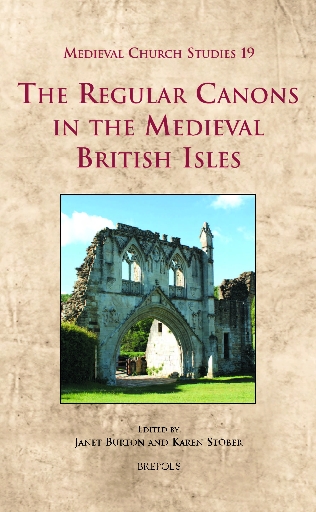
The Regular Canons in the Medieval British Isles
show More to view fulltext, buy and share links for:The Regular Canons in the Medieval British Isles show Less to hide fulltext, buy and share links for: The Regular Canons in the Medieval British IslesOf all the new monastic and religious groups to settle in the British Isles in the course of the twelfth century the regular canons were the most prolific. At the heart of their existence was the vita apostolica, but even more than other such groups the regular canons became involved in active spiritual care of their communities. Perhaps as a result of this feature they also enjoyed sustained support from founders, patrons, and benefactors, and new foundations continued to be made long after the main force of the expansion of the monastic orders had declined. This interdisciplinary volume brings together scholars from Scotland, Ireland, Wales, and England who work on aspects of the history, culture, art history, and archaeology of the regular canons in the medieval British Isles. Between them, the chapters of this book consider the regular canons in their wider historical and historiographical context, assessing their role in the religious, social, cultural, economic, and political world of the medieval British Isles, and introducing new and recent research on this important religious group.
Medieval Church Studies is a series of monographs and, sometimes, collections devoted to the history of the Western Church from, approximately, the Carolingian reform to the Council of Trent. It builds on Brepols’ longstanding interest in editions of texts and primary sources, and presents studies that are founded on a traditional close analysis of primary sources but which confront current research issues and adopt contemporary methodological approaches.
-
-
-
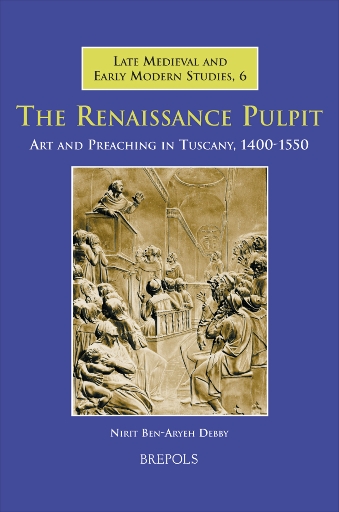
The Renaissance Pulpit
Art and Preaching in Tuscany, 1400-1550
show More to view fulltext, buy and share links for:The Renaissance Pulpit show Less to hide fulltext, buy and share links for: The Renaissance PulpitThis volume examines the relationship between preaching and art, addressing with particular detail the use of works of art in preaching and the importance of the pulpit itself. A challenging issue in the field of sermon studies is the relationship between preaching and art, in particular the manner in which preachers used works of art in their preaching and described specific pictures in their sermons; and the pulpit itself.
The thesis of the book is that pulpits should be viewed in the context of the world of preaching in Renaissance Florence and in connection with sacred oratory. Indeed, like preached sermons, pulpits used rhetorical strategies to deliver religious messages. The author adopts an interdisciplinary approach to the topic by combining art history, historical analysis, and sermon studies; and she examines the pulpit's patronage, location, and function as well as its chronological development. This book combines a general survey of pulpits in Tuscany, with close analysis of five specific pulpits. Designed and executed by important artists located in Florence and Prato, these five pulpits are the most exquisite and impressive monuments of their type, and each has a complex and rich iconographic programme. The author reveals that the period between the fifteenth and early sixteenth centuries constitutes a distinct phase in the development of pulpits, different from the earlier tradition, and from pulpits constructed after the Council of Trent and during the Catholic Reformation.
-
-
-
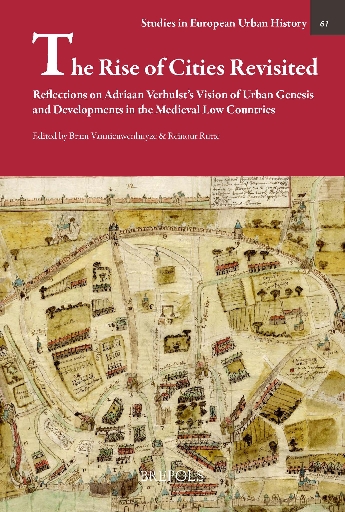
The Rise of Cities Revisited
Reflections on Adriaan Verhulst's Vision of Urban Genesis and Developments in the Medieval Low Countries
show More to view fulltext, buy and share links for:The Rise of Cities Revisited show Less to hide fulltext, buy and share links for: The Rise of Cities RevisitedAdriaan Verhulst's The Rise of Cities in North-West Europe (1999) is the last comprehensive work written by a single author on the urban genesis and spatial developments of cities in the medieval Low Countries. Since then, monographs, specialised studies and articles have been published on various cities and towns, while urban archaeologists have carried out numerous excavations. Much new knowledge has been gained, yet many gaps and the need for comparative overviews remain.Twenty-five years after Verhulst’s synthesis, The Rise of Cities Revisited takes a fresh look at the origins and developments of cities and towns in the Low Countries between the tenth and the sixteenth centuries, critically assesses progress made in scholarship and outlines future directions for research. The chapters of the book are written by senior and junior specialists from various fields, including medieval history, historical geography, economic history, archaeology and building history. The Rise of Cities Revisited presents a state of the art and provides scholars with tools to study this complex subject in future.
-
-
-
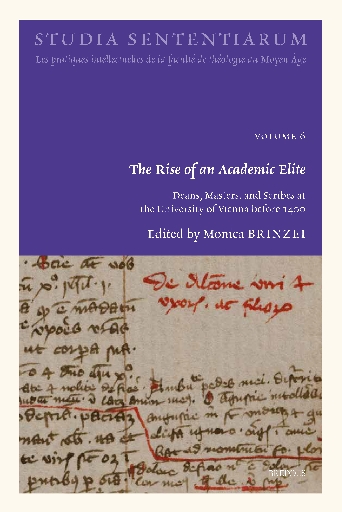
The Rise of an Academic Elite : Deans, Masters, and Scribes at the University of Vienna before 1400
show More to view fulltext, buy and share links for:The Rise of an Academic Elite : Deans, Masters, and Scribes at the University of Vienna before 1400 show Less to hide fulltext, buy and share links for: The Rise of an Academic Elite : Deans, Masters, and Scribes at the University of Vienna before 1400Henry of Rheinfelden, a Dominican from Basel, spent the last decade of the fourteenth century at the University of Vienna studying theology. During this time he took notes on the academic activities of the first rectors of the university and deans of the Faculties of Arts and Theology. This volume explores Rheinfelden’s contribution to our understanding of the doctrinal, curricular, administrative, and prosopographical history of the early University of Vienna. Deciphering Rheinfelden’s surviving notebooks in the Universitätsbibliothek Basel sheds new light on the rise of an academic elite in Vienna. His manuscripts reveal a network of scholars sharing a passion for knowledge and supply a gallery of intellectual profiles, starting with the mentors of the group, Henry of Langenstein and Henry Totting of Oyta, and continuing with the lesser-known figures Stephen of Enzersdorf, Gerhard Vischpekch of Osnabrück, Paul (Fabri) of Geldern, Andreas of Langenstein, Rutger Dole of Roermond, Nicholas of Hönhartzkirchen, Nicholas of Dinkelsbühl, John Berwart of Villingen, John Stadel of Russbach, Peter de Treysa, Michael Suchenschatz of Hausleiten, Peter Schad of Walse, Thomas of Cleves, and Leonhard of Dorffen. The papers gathered in this volume highlight the intricate relationship between a commitment to administrative duty and an appetite for the creation of a doctrinal tradition via debating, forging arguments, defending and attacking positions, commenting on authorities, and adopting and adapting academic practices imported from Paris, since the majority of the authors in our gallery were educated in Paris and built their careers in Vienna. Through Rheinfelden’s notebooks, this volume provides access to unique and previously unknown texts that together offer a new image of the medieval University of Vienna.
-
-
-
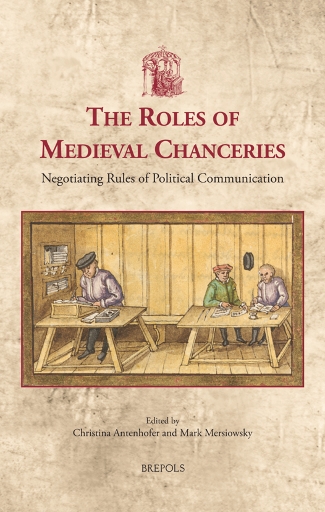
The Roles of Medieval Chanceries
Negotiating Rules of Political Communication
show More to view fulltext, buy and share links for:The Roles of Medieval Chanceries show Less to hide fulltext, buy and share links for: The Roles of Medieval ChanceriesMedieval communication followed rules that were defined, negotiated, and altered in processes of exchange. Conflicts resulting from different communication practices, as well as forms of innovation, revolve around rules that are not self-evident. Political actors such as princes and cities, chanceries, secretaries, ambassadors, and councillors formed rules of political participation, which became visible in written documentation. These rules were both formed and negotiated via processes of communication. Medieval chanceries can thus be understood as a vast field of experimentation where different solutions were tested, passed on, or discarded.
This book explores communication practices in German, French, Italian, Tyrolian, and Gorizian chanceries, as well as at diets from the tenth to the sixteenth century. Its chapters examine royal, monastic, princely, and communal chanceries. For the early and high Middle Ages, a close analysis of documents will reconstruct negotiation and communication from within the documents themselves. For the later Middle Ages, focus will turn to the chancery, with the appearance of chancery orders and chancery annotations that provide explicit insight in communication between the chancellors, secretaries, and political authorities. The growing amount and variety of documents issued in the late Middle Ages allows us to retrace conflicts resulting from differing chancery practices as well as attempts to reorganise the chancery into a political instrument for the prince. The processes of political communication will be followed in three parts. Part I focuses on the rules within documents. Part II looks at administrative processes within specific chanceries, while Part III explores forms of exchange between the chancery and other political actors.
-
-
-
The Roman Senate as arbiter during the Second Century bc
Two Exemplary Case Studies: the Cippus Abellanus and the Polcevera Tablet
show More to view fulltext, buy and share links for:The Roman Senate as arbiter during the Second Century bc show Less to hide fulltext, buy and share links for: The Roman Senate as arbiter during the Second Century bcIn the wider context of the border conflicts that involve Rome as a third authority super partes, for which there is evidence already in the second century BC, two epigraphic documents stand out for the peculiarities distinguishing them from all others: the so-called Polcevera Tablet (concerning a dispute between Genuates and Viturii Langenses) and the Cippus Abellanus (related to a border dispute between Nolani and Abellani and written in Oscan). They make us aware of the political and municipal dynamics underlying the complex principle of Roman arbitration, often required to resolve territorial disputes, which were gradually evolving as Rome opened up to the East. What role did the Roman Senate play in such disputes? What exactly was the function of the referees sent by the City to settle the disputes with a super partes judgment? What was the importance of the agrarian reform of the Gracchi and the realisation of road axes in the acuity of such antagonisms? These are the questions to which this study tries to provide an answer.
-
-
-
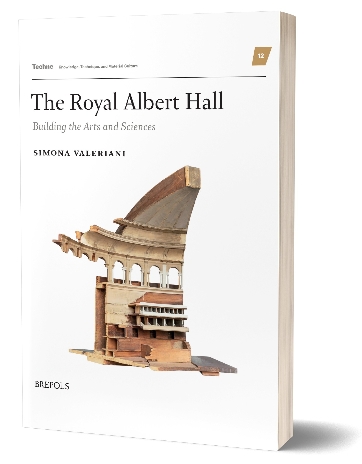
The Royal Albert Hall
Building the Arts and Sciences
show More to view fulltext, buy and share links for:The Royal Albert Hall show Less to hide fulltext, buy and share links for: The Royal Albert HallThis groundbreaking study takes one of London’s most iconic buildings and deconstructs it to offer new insights into the society that produced it. As part of the new cultural quarter built in South Kensington on the proceeds from The Great Exhibition of 1851, the Royal Albert Hall was originally intended to be a ‘Central Hall of Arts and Sciences’. Prince Albert’s overarching vision was to promote technological and industrial progress to a wider audience, and in so doing increase its cultural and economic reach.Placing materiality at its core, this volume provides an intellectual history of Victorian ideas about technology, progress, and prosperity. The narrative is underpinned by a wealth of new sources – from architectural models and archival materials to 19th century newspapers. Each chapter focuses on a particular element of the Royal Albert Hall’s construction, chronicling the previously overlooked work of a host of contributors from all walks of life, including female mosaic-makers and the Royal Engineers.Lighting, ventilation, fireproofing, ‘ascending rooms’, cements, acoustics, the organ, the record-breaking iron dome, and the organisation of internal spaces were all attempts to attain progress - and subject to intense public scrutiny. From iron structures to terracotta, from the education of women to the abolition of slavery, in the making of the Royal Albert Hall scientific knowledge and socio-cultural reform were intertwined.This book shows, for the first time, how the Royal Albert Hall’s building was itself a crucible for innovation. Illustrious techniques from antiquity were reimagined for the new mechanical age, placing the building at the heart of a process of collecting, describing, and systematising arts and practices. At the same time, the Royal Albert Hall was conceived as a ‘manifesto’ of what the Victorians thought Britain ought to be, at a crucial moment of its socio-economic history: a symbolic cultural hub for the Empire’s metropole.This is the Royal Albert Hall: a central piece of the puzzle in Britain’s march towards modernity.
-
-
-
The Rural History of Medieval European Societies
Trends and Perspectives
show More to view fulltext, buy and share links for:The Rural History of Medieval European Societies show Less to hide fulltext, buy and share links for: The Rural History of Medieval European SocietiesThis collection gathers together a range of scholars who reflect on recent historiographical developments in medieval rural history within their respective countries. Each contribution provides a survey of a recent area of research, as well as documenting its significant results, and offering perspectives for future investigations. This international approach not only provides a deeper insight into how medieval rural studies relates to current debates in the social sciences, but it also highlights the connections between specific national historical traditions and present-day research issues in their historical contexts. By comparing different European regions it is possible to see more clearly the similarities and the differences which lie between them; this volume therefore constitutes a truer means of constructing syntheses and for identifying fruitful lines of future research.
-
-
-
The Rural World in the Sixteenth Century
Exploring the Archaeology of Innovation in Europe
show More to view fulltext, buy and share links for:The Rural World in the Sixteenth Century show Less to hide fulltext, buy and share links for: The Rural World in the Sixteenth CenturyThe sixteenth century in Europe was a time of profound change, the threshold between the ‘medieval’ and the ‘modern’, as new technologies were introduced, distant lands explored, oceanic trade routes opened, and innovative ideas pursued in fields as varied as politics, science, philosophy, law, and religion. But sweeping transformations also occurred in the rural world, profoundly altering the countryside in both appearance and practices. Crucially for historians, there is abundant documentary evidence for these changes but, while they are less well-documented, their impact can also be traced archaeologically.
This cutting-edge volume is the first to explore the archaeology of the rural world across the ‘long’ sixteenth century and to investigate the changing innovations that were seen in landscape, technology, agriculture, and husbandry during this period. Drawing together contributions from across Europe, and from a range of archaeological disciplines, including zooarchaeology, archaeobotany, landscape archaeology, material culture studies, and technology, this collection of essays sheds new light on a key period of innovation that was a significant precursor to modern economies and societies.
-
-
-

The Sanctuary of Parthenos at Ancient Neapolis (Kavala), Volume i
Incised and Painted Ceramic Inscriptions from the Sanctuary and in Aegean Thrace
show More to view fulltext, buy and share links for:The Sanctuary of Parthenos at Ancient Neapolis (Kavala), Volume i show Less to hide fulltext, buy and share links for: The Sanctuary of Parthenos at Ancient Neapolis (Kavala), Volume iThe ancient city of Neapolis (modern Kavala, Greece) was founded by Thasos in the seventh century bce at a strategic location where the Thracian hinterlands meet the Aegean Sea. The patron deity of this North Aegean polis was Parthenos (the Maiden), known to us through epigraphic and archaeological evidence. Her sanctuary came to light in the twentieth century during rescue excavations, and yielded numerous finds, most of which date from the Archaic period.
This monograph provides a discussion of the history of excavations at this sanctuary, as well as a contextual examination of the material, leading to a new interpretation of Parthenos’ identity. Among the wealth of finds from the site, the corpus of incised and painted ceramic inscriptions stands out, as it offers a unique glimpse into the history of the cosmopolitan temenos and the dedicatory practices and rituals that took place there. The inscribed vessels carry dedications, numerical and other graffiti, and dipinti, as well as the initials of the goddess, which designate them as sacred equipment. When considered in the context of the ceramic inscriptions from sanctuaries across Aegean Thrace, they further underscore the important role of Neapolis and the Sanctuary of Parthenos in the commercial networks and cultural dynamics of the Aegean, both in the early stages of Greek colonization, and in the centuries that followed.
-
-
-
The Sanctuary of Parthenos at Ancient Neapolis (Kavala), Volume ii
Pottery, Stone Inscriptions, and Small Finds
show More to view fulltext, buy and share links for:The Sanctuary of Parthenos at Ancient Neapolis (Kavala), Volume ii show Less to hide fulltext, buy and share links for: The Sanctuary of Parthenos at Ancient Neapolis (Kavala), Volume iiThe ancient city of Neapolis (modern Kavala, Greece) was founded by Thasos in the seventh century BCE at a strategic location where the Thracian hinterlands meet the Aegean Sea. The patron deity of this North Aegean polis was Parthenos (the Maiden), a goddess often associated with Artemis and known to us through epigraphic and archaeological evidence. Her sanctuary came to light in the twentieth century, during rescue excavations, and yielded numerous finds, most of which date from the Archaic period.
This edited volume draws together the material evidence from the Sanctuary of Parthenos, with a particular focus on the ceramic wares, stone inscriptions, and small finds from the site. Published as a counterpart to an earlier publication in this series, Amalia Avramidou’s monograph, The Sanctuary of Parthenos at Ancient Neapolis (Kavala): Incised and Painted Ceramic Inscriptions from the Sanctuary and in Aegean Thrace, the essays gathered here nonetheless form a stand-alone volume that sheds light on both the importance of the site as a place of cult, and more broadly the role that it played within the commercial networks and cultural dynamics of the Aegean.
-
-
-
The Scriptures and Early Medieval Ireland
Proceedings of the 1993 Conference of the Society for Hiberno-Latin Studies on Early Irish Exegesis and Homiletics
-
-
-
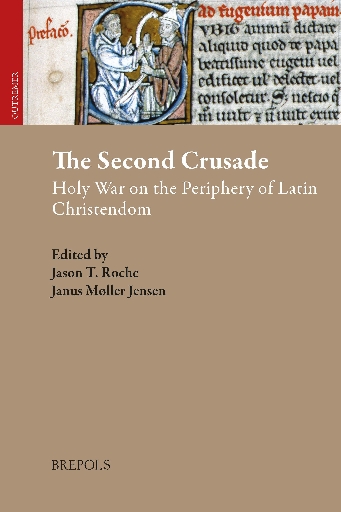
The Second Crusade
Holy War on the Periphery of Latin Christendom
show More to view fulltext, buy and share links for:The Second Crusade show Less to hide fulltext, buy and share links for: The Second CrusadeA seminal article published by Giles Constable in 1953 focused on the genesis and expansion in scope of the Second Crusade with particular attention to what has become known as the Syrian campaign. His central thesis maintained that by the spring of 1147 the Church “viewed and planned” the Second Crusade as a general Christian offensive against and the Muslims of Syria and the Iberian Peninsula and the pagan Wends of the southern Baltic lands. Constable's work remains extremely influential and provides the framework for the recent major works published on this extraordinary twelfth-century phenomenon. This volume aims to readdress scholarly predilections for concentrating on the venture in the Near East and for narrowly focusing on the accepted targets of the crusade. It aims instead to place established, contentious, and new events and concepts associated with the enterprise in a wider ideological, chronological, geopolitical, and geographical context.
Jason T. Roche is a Lecturer in Medieval History at Manchester Metropolitan University. His research interests cover the history of the crusades and the Latin East and the topography of medieval Anatolia and the Near East.
Janus Møller Jensen is head of department at Nyborg Castle, Museums of Eastern Funen, Denmark. His main research interests cover the history and historiography of the Crusades and Scandinavian medieval history.
-
-
-
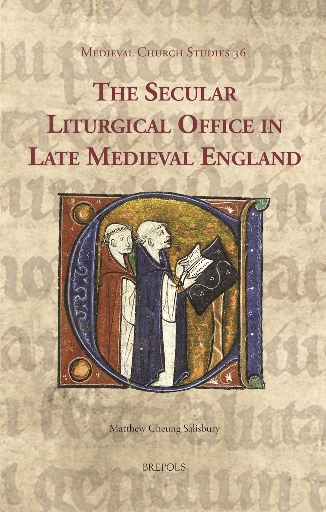
The Secular Liturgical Office in Late Medieval England
show More to view fulltext, buy and share links for:The Secular Liturgical Office in Late Medieval England show Less to hide fulltext, buy and share links for: The Secular Liturgical Office in Late Medieval EnglandUntil recently, research on the late medieval English Office liturgy has suggested that all manuscripts of the same liturgical Use, including those of the celebrated and widespread Uses of Sarum and York, are in large part interchangeable and uniform. This study demonstrates, through detailed analyses of the manuscript breviaries and antiphonals of each secular liturgical Use of medieval England, that such books do share a common textual core. But this is in large part restricted to a single genre of text - the responsory. Other features, even within manuscripts of the same Use, are subject to striking and significant variation, influenced by local customs and hagiographical and textual priorities, and also by varying reception to liturgical prescriptions from ecclesiastical authorities. The identification of the characteristic features of each Use and the differentiation of regional patterns have resulted from treating each manuscript as a unique witness, a practice which is not common in liturgical studies, but one which gives the manuscripts greater value as historical sources. The term ‘Use’, often employed as a descriptor of orthodoxy, may itself imply a greater uniformity than ever existed, for the ways that the ‘Use of Sarum’, a liturgical pattern originally designed for enactment in a single cathedral, was realised in countless other venues for worship were dependent on the times, places, and contexts in which the rites were celebrated.
-
-
-
The Septuagint of Ruth
Translation Technique, Textual History, and Theological Issues
show More to view fulltext, buy and share links for:The Septuagint of Ruth show Less to hide fulltext, buy and share links for: The Septuagint of RuthFor many years, the Septuagint of Ruth (LXX-Ruth) has been considered a literal translation. Several authors have emphasized the similarities between the Greek text and the Masoretic Text, while others have also noted the divergences. In the wake of this second stream, this book seeks to answer the crucial question: How can we nuance the definition of “literalism” for LXX-Ruth, and which innovations and specifics can be detected in this text? A fresh analysis of the Greek rendering of the Hebrew proper names, toponyms, hapax legomena as well as legal aspects makes it possible to develop new perspectives on the translation technique of LXX-Ruth and to highlight several characteristics of this text. This volume, moreover, extends the discussion by including the analysis of the theological accents of LXX-Ruth and an up-to-date presentation of its textual history including the fragments of the book in the Dead Sea Scrolls. Overall, this volume enhances our understanding of the linguistic and literary background of the LXX, as well as its specific features.
-
-
-
The Septuagint: Multilateral Focus on the Text
Proceedings of the Conference Held in Bratislava, 22–23 April 2022
show More to view fulltext, buy and share links for:The Septuagint: Multilateral Focus on the Text show Less to hide fulltext, buy and share links for: The Septuagint: Multilateral Focus on the TextThe phenomenon of the Septuagint is a matter of interest for several areas of research – not only for Old Testament scholars, but also for researchers of Hellenistic Judaism, patristic exegesis, translation theory and practice, and others. What they all have in common is the text of the Septuagint. Unfortunately, the research is often so compartmentalized that scholars do not know about each other’s work and cannot profit from it. The aim of the conference “The Septuagint: Multilateral Focus on the Text” was to bring together scholars studying the text of the Septuagint in its various aspects: its reconstruction, peculiarities of language, and lexical semantics in their relationship with the Semitic background and within the Greek-speaking world, whether Jewish or Christian. These different approaches to the same matter are bound to lead to mutual enrichment.
-
-
-
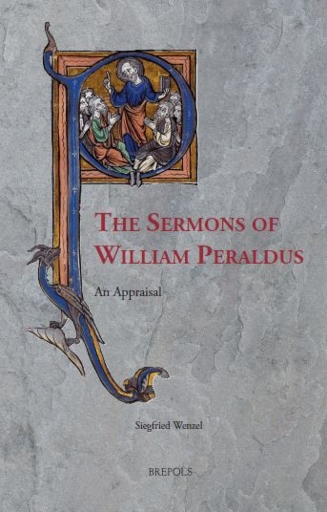
The Sermons of William Peraldus
An Appraisal
show More to view fulltext, buy and share links for:The Sermons of William Peraldus show Less to hide fulltext, buy and share links for: The Sermons of William PeraldusThe French Dominican William Peraldus or Guillaume Peyraut (died c. 1275), well known for his long summae on the vices and virtues, also produced several cycles of sermons, of which two deal with the Epistle and the Gospel readings for the Sundays of the Church year. This study analyzes the latter in some detail and argues that, rather than collecting sermons he had preached earlier, Peraldus wrote these sermons systematically for the use of other preachers. The Epistle sermons for the first Sunday in Advent and the Gospel sermons for the third Sunday in Advent are presented in their original Latin text together with an English translation in order to demonstrate how Peraldus dealt with the biblical text as well as his moral concerns and his literary style. The selected texts are then compared with several other major cycles produced in France in Peraldus’s time. Like his summae on the vices and the virtues, Peraldus’s sermons became very popular in medieval Europe, as is witnessed by selective copying and citations that can be seen in a number of instances primarily from the sermon literature of later medieval England. One aspect of this popularity is the adaptation of his material into a genuine sermon, as it can be found in the sermons attributed to Repingdon, of which one is here examined in detail.
-
-
-
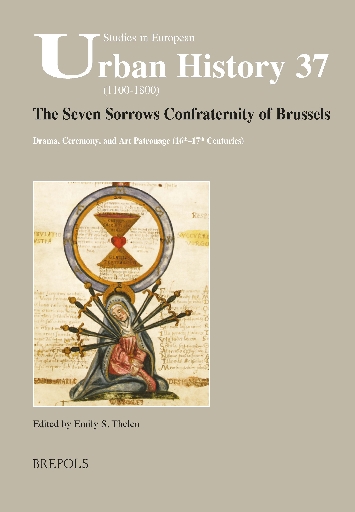
The Seven Sorrows Confraternity of Brussels
Drama, Ceremony, and Art Patronage (16th-17th Centuries)
show More to view fulltext, buy and share links for:The Seven Sorrows Confraternity of Brussels show Less to hide fulltext, buy and share links for: The Seven Sorrows Confraternity of BrusselsDevotion to the Virgin of Seven Sorrows flourished in the Low Countries in the late fifteenth and early sixteenth centuries under the auspices of the court of Philip the Fair. Quickly becoming a widespread phenomenon, the Seven Sorrows devotion generated dramatic plays, artistic works, music, and numerous miracles. Underlying the popularity of the devotion was the network of confraternity chapters dedicated to the Virgin of Sorrows. Of these chapters, the Seven Sorrows confraternity of Brussels was singled out, receiving the special patronage of Philip the Fair, Maximilian I, and Margaret of Austria. Taking the confraternity of Brussels as a focal point, this volume examines the Seven Sorrows devotion in its urban context. The essays of this collection explore the artistic, musical, and dramatic products of the Seven Sorrows devotion as created in and by the civic networks and artistic channels of Brussels. The structure of the confraternity and its historical importance for the city are also demonstrated. As an important counterpoint to work in Italian confraternity studies, this volume is the first interdisciplinary study of a confraternity in the Low Countries in English.
Emily S. Thelen is a musicologist specialising in music and liturgy of the fifteenth and sixteenth centuries in the Low Countries. She received her PhD from Princeton University and most recently has held a post-doctoral fellowship at KU Leuven.
-
-
-
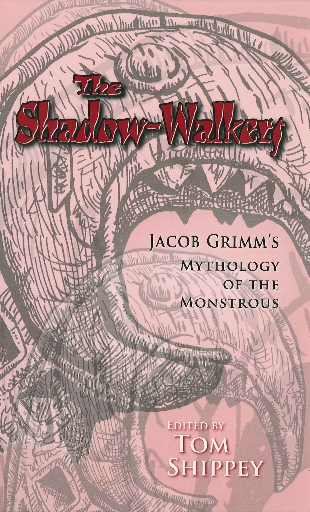
The Shadow-Walkers
Jacob Grimm's Mythology of the Monstrous
show More to view fulltext, buy and share links for:The Shadow-Walkers show Less to hide fulltext, buy and share links for: The Shadow-WalkersElves and dwarves, trolls and giants, talking dragons, valkyries and werewolves: all these are familiar in modern movies and commercial fantasy. But where did the concepts come from? Who invented them? Almost two centuries ago, Jacob Grimm assembled what was known about such creatures in his work on 'Teutonic Mythology', which brought together ancient texts such as Beowulf and the Elder Edda with the material found in Grimm's own famous collection of fairy-tales. This collection of essays now updates Grimm, adding much material not known in his time, and also challenges his monolithic interpretations, pointing out the diversity of cultural traditions as well as the continuity of ancient myth.
-