


Brepols
Brepols is an international academic publisher of works in the humanities, with a particular focus in history, archaeology, history of the arts, language and literature, and critical editions of source works.2751 - 2800 of 3194 results
-
-
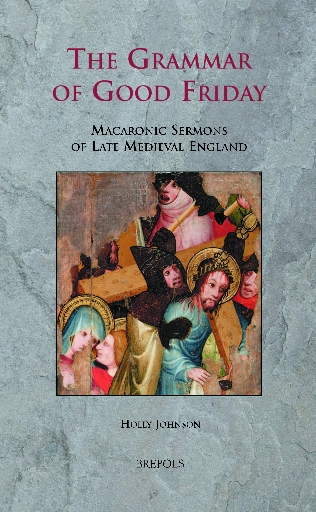
The Grammar of Good Friday
Macaronic Sermons of Late Medieval England
show More to view fulltext, buy and share links for:The Grammar of Good Friday show Less to hide fulltext, buy and share links for: The Grammar of Good FridayThis volume offers a study of Good Friday preaching and an edition (with modern translation) of five highly imaginative, rhetorically sophisticated macaronic (mixed Latin and Middle English) Good Friday sermons preached in late medieval England (c. 1350-1450). The study investigates the way medieval preachers made use of popular topoi and popular categorizations, reworking and recombining well-known material to create new sets of associations and images. The features that these sermons share with other genres, such as Passion plays, meditative treatises, and Middle English lyrics, reveal the rich cross-fertilization of this material and the cultural pervasiveness of topoi and images we often associate with literary works such as Piers Plowman. The sermons in this edition, all but one previously unavailable, increase our understanding of the medieval art of memory, the relationship between verbal and visual images, affective piety, and medieval rhetoric. Finally, all five of the sermons edited are macaronic, two of them switching between Latin and Middle English within almost every sentence; they thus offer a significant witness to this curious linguistic phenomenon. This volume presents new and rich source material and places this material into its wider cultural contexts with a detailed investigation of the rhetorical dimensions and intended effects of late medieval Good Friday preaching.
-
-
-
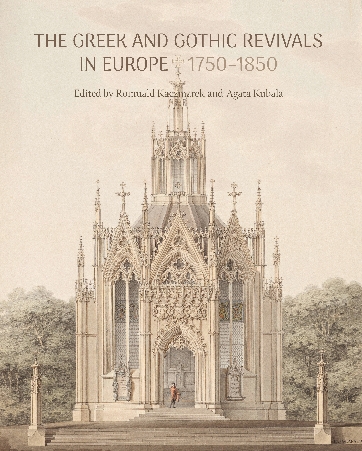
The Greek and Gothic Revivals in Europe 1750–1850
show More to view fulltext, buy and share links for:The Greek and Gothic Revivals in Europe 1750–1850 show Less to hide fulltext, buy and share links for: The Greek and Gothic Revivals in Europe 1750–1850This book combines the Greek and Gothic Revival phenomena in the period between 1750 and 1850, showing the common cultural background of these artistic trends referring to the past. It presents examples from almost all over Europe. In addition to the introductory text problematizing the idea, there are studies of more detailed issues - topographic shots presenting the aforementioned phenomena within artistic regions, presentations of projects undertaken by outstanding personalities of the era, as well as analyses of individual assumptions or works.
-
-
-
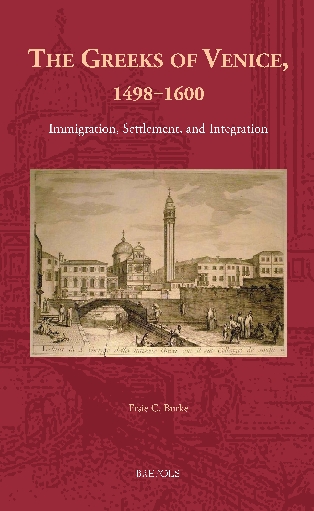
The Greeks of Venice, 1498–1600
Immigration, Settlement, and Integration
show More to view fulltext, buy and share links for:The Greeks of Venice, 1498–1600 show Less to hide fulltext, buy and share links for: The Greeks of Venice, 1498–1600People have always immigrated in search of better working and living conditions, to escape persecution, reconnect with family, or simply for the experience. This volume traces the history of Venice’s Greek population during the formative years between 1498 and 1600 when thousands left their homelands for Venice. It describes how Greeks established new communal and social networks, and follows their transition from outsiders to insiders (though not quite Venetians) through an approach that offers a comparative perspective between the ‘native’ and the immigrant. It places Greeks within the context of multi-cultural, multi-ethnic, and multi-lingual Venice. Personal stories are interwoven throughout for a more intimate account of how people lived, worked, prayed, and formed new social networks. These accounts have been drawn from a variety of sources collected from the Venetian state archives, the archives of the Venetian church, and documentation held by the Hellenic Institute of Venice. Notarial documents, petitions, government and church records, registries of marriages and deaths, and census data form part of the collected material discussed here. Above all, this study aims to reconstruct the lives of the largest ethnic and Christian minority in early modern Venice, and to trace the journey of all immigrants, from foreigner to local.
-
-
-

The Heresy of the Brothers, a Heterodox Community in Sixteenth-Century Italy
show More to view fulltext, buy and share links for:The Heresy of the Brothers, a Heterodox Community in Sixteenth-Century Italy show Less to hide fulltext, buy and share links for: The Heresy of the Brothers, a Heterodox Community in Sixteenth-Century ItalyAround the mid-sixteenth century, one of the largest Italian heterodox communities developed in Modena: the community of ‘Brothers’. At the beginning of the century, a flourishing humanistic tradition had inspired protests against the authority of the Church and had led many of the city’s prominent figures to sympathize with Luther and the Reformation. Over the following decades, such positions became more extreme: most of the ‘Brothers’ held radical convictions, ranging from belief in predestination to contestation of the Antichrist pope. In some cases, the ‘Brothers’ even went so far as to deny the value of baptism.
This heterodox community in Modena created a hidden network for the free expression of its reformed faith. Within twenty years, however, the election of Pope Pius V (1566-1572) and the consolidation of the Holy Office led to a harsh campaign to disperse dissenters in the city. Despite the protection of illustrious members of the Roman Catholic hierarchy, the bishops of Modena, and the dukes of Ferrara, the Holy Office succeeded in repressing the community. The history of the ‘Brothers’ of Modena therefore provides a case study for understanding how the Inquisition influenced the balance of religious Italy, changing the face of the Peninsula forever.
-
-
-
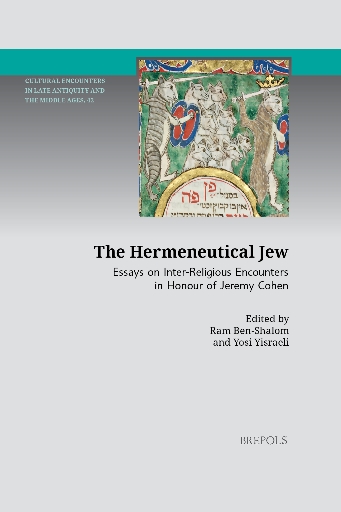
The Hermeneutical Jew
Essays on Inter-Religious Encounters in Honour of Jeremy Cohen
show More to view fulltext, buy and share links for:The Hermeneutical Jew show Less to hide fulltext, buy and share links for: The Hermeneutical JewThe interconnected histories of Judaism and Christianity are explored in this compelling volume honouring the influential work of Jeremy Cohen. Cohen’s pioneering studies have reshaped our understanding of these religious traditions, emphasizing the crucial role of cross-religious engagements in forming their self-perceptions and identities.
Comprising fifteen chapters, the book is organized into four thematic sections. The first section, Literary Mirrors and Inter-Religious Representations, explores patterns of internalizations, (mis)representations, and appropriations between competing religious traditions. The second section, Physical and Figurative Encounters, addresses the roles played by visible and physical markers in setting interreligious boundaries and exchanges. The third section, Agents of Anti-Jewish Discourse, focuses on Christian thinkers of the late Middle Ages who propagated anti-Jewish measures or prejudices across different genres and causes. The final section, The Transformability of the Jews and the Hermeneutics of Inter-Religious Conversion, examines the cultural and intellectual impact of different efforts to convert Jews and Jewishness.
This collection of new studies by leading medievalists serves as a fitting tribute to Jeremy Cohen’s groundbreaking contributions and offers readers an insightful look into the complex world of medieval and early modern religious identity.
-
-
-
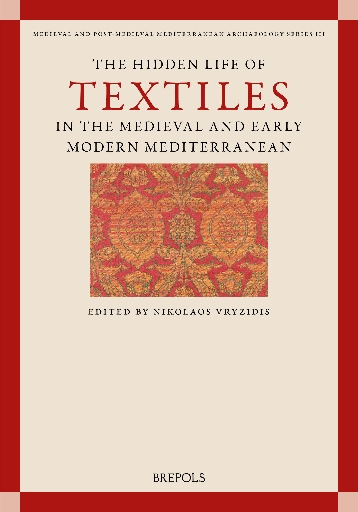
The Hidden Life of Textiles in the Medieval and Early Modern Mediterranean
Contexts and Cross-Cultural Encounters in the Islamic, Latinate and Eastern Christian Worlds
show More to view fulltext, buy and share links for:The Hidden Life of Textiles in the Medieval and Early Modern Mediterranean show Less to hide fulltext, buy and share links for: The Hidden Life of Textiles in the Medieval and Early Modern MediterraneanThe book contains published papers of the conference 'Textiles & Identity in the Medieval and Early Modern Mediterranean: Paradigms of Contexts and Cross-Cultural Exchanges' of the British School at Athens held at the (Benaki) Museum of Islamic Art in 2016, as well as some new contributions.
The focus in this wide-ranging collection of studies by key scholars in the field is on textiles and their functions in various Mediterranean contexts (and beyond) during medieval and post-medieval times (ca. 10th-19th c.). The scope of the contributions encompasses archaeological, anthropological and art historical perspectives on a great variety of subjects, such as textiles from the Byzantine Empire and the Medieval Islamic World (e.g. Spain, Mamluk Egypt, Seljuk Anatolia), as well as the production and use of textiles in Italy, the Ottoman Empire, Armenia and Ethiopia. The volume offers a state-of-the-art of an often still hardly known area of study of textiles as historical and cultural sources of information, which makes it essential reading for scholars and a larger audience alike.
The book includes contributions by Laura Rodríguez Peinado, Ana Cabrera-Lafuente, Avinoam Shalem, Scott Redford, Maria Sardi, Vera-Simone Schulz, Nikolaos Vryzidis, Marielle Martiniani-Reber, Elena Papastavrou, Jacopo Gnisci and Dickran Kouymjian.
-
-
-
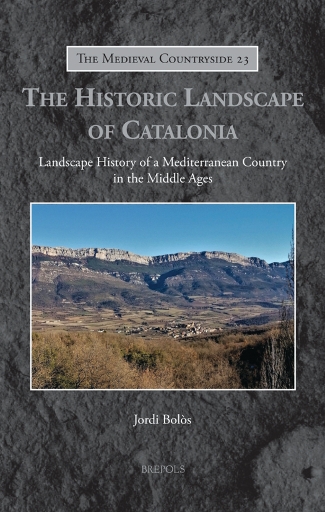
The Historic Landscape of Catalonia
Landscape History of a Mediterranean Country in the Middle Ages
show More to view fulltext, buy and share links for:The Historic Landscape of Catalonia show Less to hide fulltext, buy and share links for: The Historic Landscape of CataloniaThe landscape around us is largely the result of man-made transformations. It consists of villages, farmsteads, cities, fields, ditches, and roads. This book examines how the landscape of the Mediterranean country of Catalonia was created and transformed. Although Catalonia’s history goes back before the Middle Ages, it was during the medieval period that it saw significant development, which has continued ever since. Understanding the landscape helps us understand political, social, economic, and cultural changes. In this book we discover how the settlements built around a castle or a church were created, and what the open villages and new towns were like, both in Catalonia and in neighbouring territories. The book also explores the formation of cities and towns as well as the significance of hamlets and farmsteads, based on data provided by written documents and archaeological excavations. It also explores the formation of fields, ditches, and irrigated areas, and shows the importance of understanding the boundaries and demarcations that enclose valleys, villages, castles, and parishes. Finally, special attention is devoted to place names and cartography, as these shed light on numerous historical realities.
-
-
-
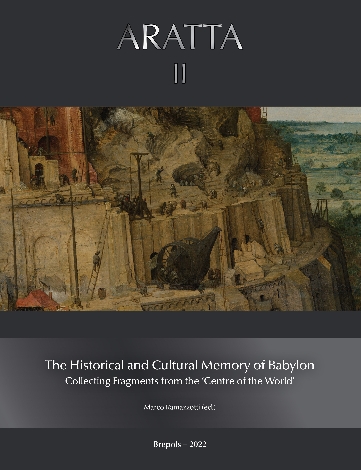
The Historical and Cultural Memory of the Babylonian World
Collecting Fragments from the 'Centre of the World'
show More to view fulltext, buy and share links for:The Historical and Cultural Memory of the Babylonian World show Less to hide fulltext, buy and share links for: The Historical and Cultural Memory of the Babylonian WorldIn the study of the ancient world, Babylon can be considered as the most impressive representation, historically, archaeologically, and in literature, of urbanism in the Near East. This first example of an urban centre and its cultural heritage - both tangible and intangible - provides a focal point for discussions of historical and cultural memory in the region. The eleven contributions gathered here draw together multidisciplinary research into Babylonian culture, exploring the epistemic foundations, contacts, resilience, and cultural transmission of the city and its milieu from ancient times up until the modern day. Through this approach, this volume is able to support conversations concerning the historical and cultural memory of Babylon and promote a dialogue that cuts across, and unites, both cultures and academic disciplines.
-
-
-
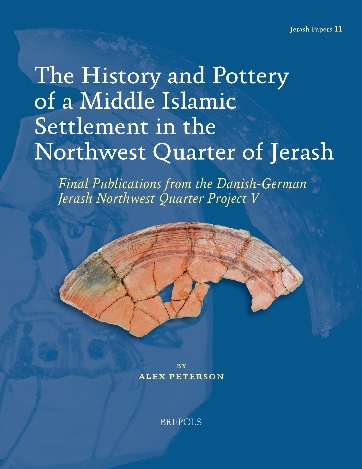
The History and Pottery of a Middle Islamic Settlement in the Northwest Quarter of Jerash
Final Publications from the Danish-German Jerash Northwest Quarter Project V
show More to view fulltext, buy and share links for:The History and Pottery of a Middle Islamic Settlement in the Northwest Quarter of Jerash show Less to hide fulltext, buy and share links for: The History and Pottery of a Middle Islamic Settlement in the Northwest Quarter of JerashIn 2015, the Danish-German Northwest Quarter Project working in Jerash uncovered a Middle Islamic farmstead. Subsequent excavations revealed that this settlement, far from marking a decline at the site, is in fact indicative of a broader active and dynamic rural community living within the ancient urban landscape of Jerash.This volume offers an in-depth focus on this Islamic settlement, with a particular focus on the ceramic material yielded by the site, which is here fully quantified and contextually analysed alongside historical sources. Through this approach, the author has reconstructed a new synthesis of Middle Islamic settlement history, shedding new light on the economic and social structures of a rural community in northern Jordan, as well as establishing a typology that can be used to refine the chronologies of Middle Islamic Jerash.
-
-
-
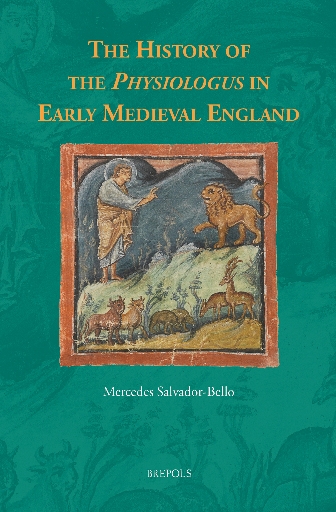
The History of the Physiologus in Early Medieval England
show More to view fulltext, buy and share links for:The History of the Physiologus in Early Medieval England show Less to hide fulltext, buy and share links for: The History of the Physiologus in Early Medieval EnglandThe Physiologus is the ancestor of the bestiary, a collection of chapters describing animal qualities and behaviours, usually with an allegorical meaning, which proliferated especially in England in the late Middle Ages. While much scholarly attention has been directed to the bestiary, the history of the transmission of the Physiologus has hardly been investigated. Evidence of the circulation of this treatise in the early medieval period is certainly scanty, since only two brief versions dating from this period have been preserved, one in Old English and another one in Latin. However, this monograph shows further proof of the knowledge of the Physiologus in Anglo-Saxon England. It also reveals the relationship of the only two surviving texts and their connection to the main Continental recension of the time. This study therefore demonstrates that the popularity of bestiaries in the later Middle Ages was largely due to the prominence that its predecessor, the Physiologus, enjoyed in the preceding period.
-
-
-
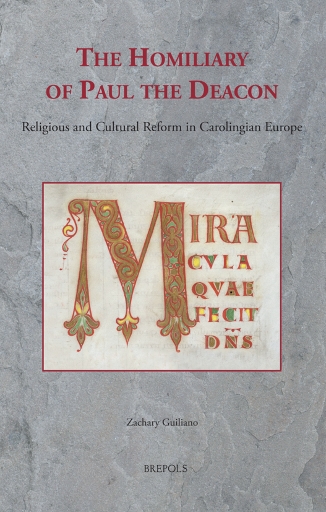
The Homiliary of Paul the Deacon
Religious and Cultural Reform in Carolingian Europe
show More to view fulltext, buy and share links for:The Homiliary of Paul the Deacon show Less to hide fulltext, buy and share links for: The Homiliary of Paul the DeaconAs one of the most widely used products of Charlemagne’s religious and cultural reforms, the homiliary of Paul the Deacon is a unique monument in the history of Western Europe. Completed around AD 797, this collection of patristic homilies and sermons shaped the religious faith and liturgical practices of the churches in Carolingian Europe and those of countless other churches over the course of a millennium of use.
Until now, scholarly study of the homiliary has rested on seven partial witnesses to the collection. This study, however, draws on over 80 newly identified witnesses from the Carolingian period, while providing a brief guide and handlist to hundreds of later manuscripts. It replaces the current scholarly reconstruction of the homiliary, discusses the significance of the collection’s liturgical structure and provisions, and considers the composition of the homiliary in the context of Charlemagne’s reforms and Paul’s patron-client relationships. The study also brings together evidence for the production and use of this text in thirty-three Carolingian monasteries, cathedrals, and churches.
The book then addresses the homiliary’s theological character: the contents of the homiliary reflected a concern for expressing and defending orthodox doctrine at Charlemagne’s court against Trinitarian and Christological heresies, as well as an urgent attention to moral reform in the light of a belief in the imminence of divine judgement. Finally, the study demonstrates the varied uses of Paul’s collection and its historical legacy.
-
-
-

The Idea of the Gothic Cathedral
Interdisciplinary Perspectives on the Meanings of the Medieval Edifice in the Modern Period
show More to view fulltext, buy and share links for:The Idea of the Gothic Cathedral show Less to hide fulltext, buy and share links for: The Idea of the Gothic CathedralCentral to many medieval ritual traditions both sacred and secular, the Gothic cathedral holds a privileged place within the European cultural imagination and experience. Due to the burgeoning historical interest in the medieval past, in connection with the medieval revival in literature, visual arts, and architecture that began in the late seventeenth century and culminated in the nineteenth, the Gothic cathedral took centre stage in numerous ideological discourses. These discourses imposed contemporary political and aesthetic connotations upon the cathedral that were often far removed from its original meaning and ritual use.
This volume presents interdisciplinary perspectives on the resignification of the Gothic cathedral in the post-medieval period. Its contributors, literary scholars and historians of art and architecture, investigate the dynamics of national and cultural movements that turned Gothic cathedrals into symbols of the modern nation-state, highlight the political uses of the edifice in literature and the arts, and underscore the importance of subjectivity in literary and visual representations of Gothic architecture. Contributing to scholarship in historiography, cultural history, intermedial and interdisciplinary studies, as well as traditional disciplines, the volume resonates with wider perspectives, especially relating to the reuse of artefacts to serve particular ideological ends.
-
-
-
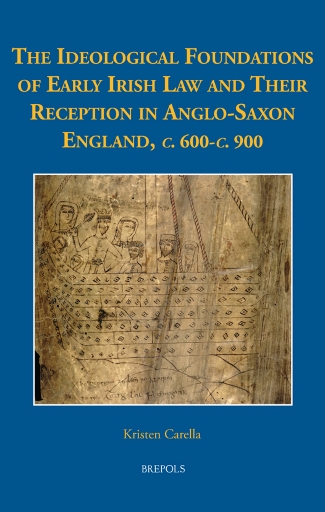
The Ideological Foundations of Early Irish Law and Their Reception in Anglo-Saxon England, c. 600–c. 900
show More to view fulltext, buy and share links for:The Ideological Foundations of Early Irish Law and Their Reception in Anglo-Saxon England, c. 600–c. 900 show Less to hide fulltext, buy and share links for: The Ideological Foundations of Early Irish Law and Their Reception in Anglo-Saxon England, c. 600–c. 900Old Testament Levites who considered the Law of Moses to be the living law: this has long been the established view among many scholars for how early Irish jurists perceived themselves, as well as how they saw the broader theoretical and religious bases of their jurisprudence. In this volume, however, Kristen Carella offers a timely reassessment of scholarly opinion, exploring Irish legal texts within the broader context of both vernacular Irish and Hiberno-Latin literature to argue that early Irish Christian intellectuals in fact saw themselves as gentile converts, subscribing to an orthodox Christian faith that was deeply infused with Pelagian theology.
Certain aspects of Irish legal ideology, particularly Irish views of divine history and pseudo-historical ideas about their own ethnogenesis, moreover, extended out of Ireland and into Anglo-Saxon England; their impact can be seen on lawmakers such as Alcuin, when he helped draft the Anglo-Latin Legatine Capitulary of 786, and King Alfred of Wessex, when he composed the Old English prologue to his law code in the late-ninth century. Through this approach, this volume not only challenges long-held scholarly views on Irish legal ideology and its influences beyond Ireland, but also provides a new paradigm for intellectual relations between early medieval Ireland and England.
-
-
-
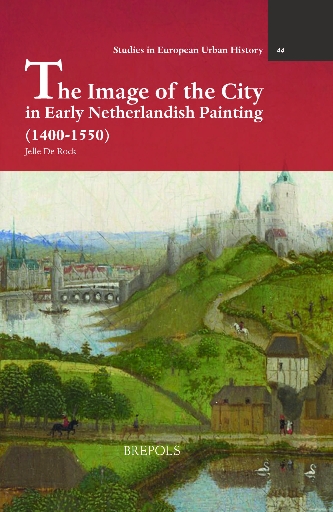
The Image of the City in Early Netherlandish Painting (1400-1550)
show More to view fulltext, buy and share links for:The Image of the City in Early Netherlandish Painting (1400-1550) show Less to hide fulltext, buy and share links for: The Image of the City in Early Netherlandish Painting (1400-1550)Painted cityscapes have always captivated the viewers of medieval works of art. To this day scholars are mesmerised by their capacity to mirror the urban context from which they sprang, combined with their ability to symbolize a more abstract world view, religious idea or social ideal. Especially oil painting, which thrived in the fifteenth-century Low Countries among a heterogeneous elite and the well-off urban middling groups, succeeded as no other medium in capturing the urban landscape in its finest details. In order to gain an insight into how late medieval citizens, clerics and noblemen conceived of urban society and space, this book combines a serial analysis of a large corpus of painted city views with a critical discussion of some well-documented and revealing works of art. Throughout the book a variety of questions are addressed, ranging from the religious conception of the city, the theatrical dimension of urban space, the extent to which Early Netherlandish painting depicted the city as an economic space, how images of city and countryside functioned as identity markers of the donor, and how technical advances in the field of cartography impacted the portrayal of towns in the sixteenth century. In doing so, this study explores the duality of some of the major interpretive schemes that have determined the last few decades of historiography on late medieval Netherlandish culture, oscillating between bourgeois and courtly, realistic and symbolic, profane and religious, and innovative versus traditional.
-
-
-
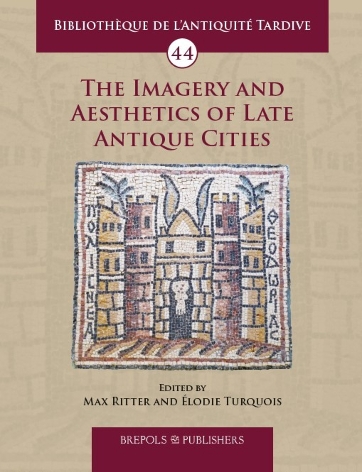
The Imagery and Aesthetics of Late Antique Cities
show More to view fulltext, buy and share links for:The Imagery and Aesthetics of Late Antique Cities show Less to hide fulltext, buy and share links for: The Imagery and Aesthetics of Late Antique CitiesWhile the role of the city in Late Antiquity has often been discussed by archaeologists and historians alike, it is only in recent years that scholarship has begun to offer a more nuanced approach in our understanding to how such cities functioned, stepping away from the traditional paradigm of their decline and fall with the collapse of the Roman Empire. In line with this approach, this deliberately interdisciplinary volume seeks to provide a more multifaceted understanding of urban history by drawing together scholars of literary and material culture to discuss the concepts of imagery and aesthetics of late antique cities.
Gathering together contributions by historians, philologists, archaeologists, literature specialists, and art historians, the volume aims to explore the imagery and aesthetics of cities in Late Antiquity within a strong theoretical framework. The different chapters explore the aesthetics of cityscape representations in literature and art, asking in particular whether literary representations of late antique urban landscapes mirror the urban reality of eclectic ensembles of pre-existing architecture and new buildings, as well as questioning both how the ideal of the city evolved in the imagination of the period and if imperial ideology was reflected in literary depictions of cities.
-
-
-

The Indies and the Medieval West
Thought, Report, Imagination
show More to view fulltext, buy and share links for:The Indies and the Medieval West show Less to hide fulltext, buy and share links for: The Indies and the Medieval WestWinner of The European Society for the Study of English - Book Award 2014 (Cultural Studies in English - Junior scholars)
This volume offers a wide-ranging and interdisciplinary treatment of European representations of the Indies between the twelfth and the fifteenth centuries. Drawing on encyclopaedias, cosmographies and cartography, romance, hagiography, and legend, it traces the influence of classical, late antique, and early medieval ideas on the later medieval geographical imagination, including the imagined and experienced Indies of European travellers. Addressing the evidence of Latin and vernacular manuscripts, the book explores readers’ encounters with the most widely read travellers’ accounts, in particular, those of Marco Polo, Odorico da Pordenone, and Niccolò Conti. Chapters on The Book of Sir John Mandeville, medieval Europe’s most idiosyncratic yet popular work of geography, alongside world maps produced across Europe, point to the ways in which representations of the Indies were inflected by temporal concerns, specifically, their relationship to Latin Christendom’s past, present, and future. The Indies relates the texts, documents, maps, and manuscripts it discusses closely to the changing ideological concerns of their times, notably those of mission and conversion, crusade, conquest, and economics. Nonetheless, the relationships that the work delineates between spatial representations and notions of dominance, whether religious, political, economic, or epistemic, have implications for the post-medieval world.
-
-
-
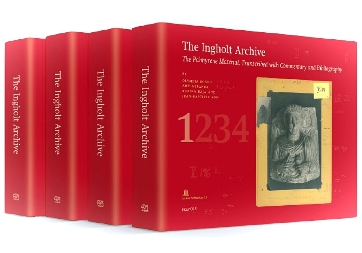
The Ingholt Archive
The Palmyrene Material, Transcribed with Commentary and Bibliography
show More to view fulltext, buy and share links for:The Ingholt Archive show Less to hide fulltext, buy and share links for: The Ingholt ArchiveFor a period of over 50 years, from his first visit to Palmyra in the 1920s until the late 1970s, Danish archaeologist Harald Ingholt carefully collected and curated a detailed archive of Palmyrene sculpture, architecture, and epigraphy. Containing approximately 2000 images, each archive sheet contains handwritten annotations on Palmyrene funerary art, transcribes and translates inscriptions, includes detailed observations on object style and dating, and provides bibliographical information for each sculpture. As such, this archive is a treasure trove of information on Palmyrene sculpture, architecture, and epigraphy. Moreover, Ingholt’s notes go beyond shedding light on the creation of these sculptures, and also provide rich information about their more recent histories: object biographies offer details on provenance, collection history, and excavation photography. In doing so, they offer unique insights into twentieth-century excavation, conservation, and collection practices. Since 1983, Ingholt’s archive has been housed at the Ny Carlsberg Glyptotek in Copenhagen, Denmark, and then, from 2012 onwards, the archive took digital shape within the framework of the Palmyra Portrait Project at Aarhus University. Now available in print for the first time, the Ingholt Archive is here presented in its entirety as a lavishly illustrated four-volume set. The authors have transcribed and commented upon each sheet in the archive, provided new translations of the inscriptions that accompany the sculptures, and compiled an updated bibliography for each item. This unique set is published together with a detailed introduction, thirteen concordances, and a bibliography, making it an invaluable resource for researchers in the field.
-
-
-
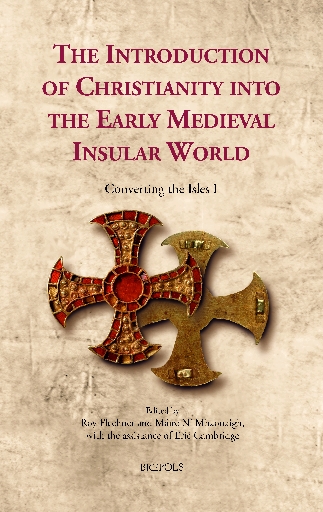
The Introduction of Christianity into the Early Medieval Insular World
Converting the Isles I
show More to view fulltext, buy and share links for:The Introduction of Christianity into the Early Medieval Insular World show Less to hide fulltext, buy and share links for: The Introduction of Christianity into the Early Medieval Insular WorldConversion to Christianity is arguably the most revolutionary social and cultural change that Europe experienced throughout Late Antiquity and the early Middle Ages. Christianisation affected all strata of society and transformed not only religious beliefs and practices, but also the nature of government, the priorities of the economy, the character of kinship, and gender relations. It is against this backdrop that an international array of leading medievalists gathered under the auspices of the Converting the Isles Research Network (funded by the Leverhulme Trust) to investigate social, economic, and cultural aspects of conversion in the early medieval Insular world, covering different parts of Britain, Ireland, Scandinavia, and Iceland.
This is is the first of two volumes showcasing research generated through the ‘Converting the Isles’ Network. This volume focuses on specific aspects of the introduction of Christianity into the early medieval Insular world, including the nature and degree of missionary activity involved, socio-economic stimulants for conversion, as well as the depiction and presentation of a Christian saint. Its companion volume has the transformation of landscape as its main theme. By adopting a broad comparative and crossdisciplinary approach that transcends national boundaries, the material presented here and in volume II offers novel perspectives on conversion that challenge existing historiographical narratives and draw on up-to-date archaeological and written evidence in order to shed light on central issues pertaining to the conversion of the Isles.
-
-
-
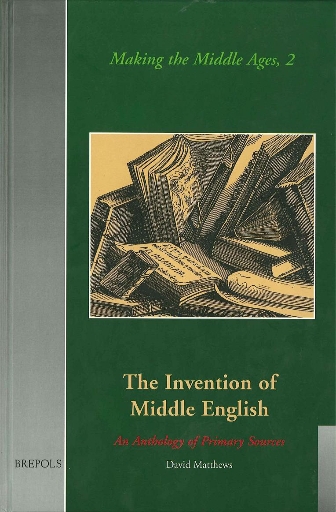
The Invention of Middle English
An Anthology of Sources, 1700-1864
show More to view fulltext, buy and share links for:The Invention of Middle English show Less to hide fulltext, buy and share links for: The Invention of Middle EnglishIn accounts of the emergence of medieval studies in the post-medieval period, the growth of the discipline of Middle English has so far not been fully charted. This study provides the principal source materials for the study of the formation of Middle English, most of which are rare and difficult to obtain. It enables the detailed study of the key documents in the growth of Middle English - gathered together for the first time. It will also enable the setting of courses in this field. Each extract is preceded by a full histroical and critical introduction and bibliography; any passages in late Latin and German are translated.
-
-
-
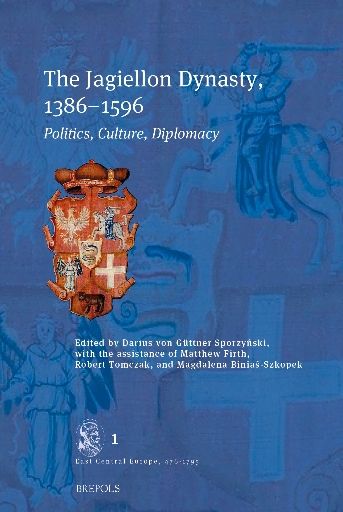
The Jagiellon Dynasty, 1386‑1596
Politics, Culture, Diplomacy
show More to view fulltext, buy and share links for:The Jagiellon Dynasty, 1386‑1596 show Less to hide fulltext, buy and share links for: The Jagiellon Dynasty, 1386‑1596The volume offers a re-examination of the rise of the Jagiellon dynasty in medieval and early modern Central Europe. Originating in Lithuania and extending its dominion to Poland, Hungary, and Bohemia, the Jagiellon dynasty has left an enduring legacy in European history. This collection of studies presents the Jagiellons as rulers with dynamic and negotiated authority. It begins with the dynasty’s origins and its dynastic union with Poland, milestones that have shaped the political and cultural trajectory of the dynasty’s reign. The volume places significant emphasis on the role of royal consorts, thereby broadening traditional gender-focused perspectives. Far from being mere accessories, queens had a considerable influence on governance, economic matters, and diplomacy. The cultural impact of Jagiellon rule is analysed through interactions with humanists and the intellectual milieu of the court. The performative aspects of Jagiellon power, including the use of words, gestures, and even intentional silences, are examined as powerful tools of articulation. Emotional factors that influence governance and intricate dynastic relationships are explored, revealing how political decisions, especially constitutional reforms, are made more rapidly when faced with perceived dynastic vulnerabilities. In Poland, the rise of parliamentary institutions under the earlier Jagiellon monarchs epitomises the concept of negotiated authority, underscoring the growing political role of the nobility. This volume thus provides a multi-faceted and nuanced understanding of the Jagiellon dynasty’s legacy in political, cultural, and gender-related spheres, enhancing understanding of European history.
-
-
-
The Jesuits and the Emblem Tradition
Selected Papers of the Leuven International Emblem Conference, 18-23 August, 1996
show More to view fulltext, buy and share links for:The Jesuits and the Emblem Tradition show Less to hide fulltext, buy and share links for: The Jesuits and the Emblem TraditionThe publication incorporated selected papers concerning the emblematic books published by the Jesuits during the sixteenth and seventeenth centuries in the Spanish Netherlands where they were more active than anywhere else.
Jesuits published more emblematic books than any other group during the sixteenth and seventeenth centuries. And they were probably more active in both the print and material culture in the Spanish Netherlands than anywhere else. The essays are revised versions of papers presented at the Fourth International Emblem Conference held at Leuven in 1996. The table of contents provides an overview of the variety of topics and approaches represented in the volume.
-
-
-
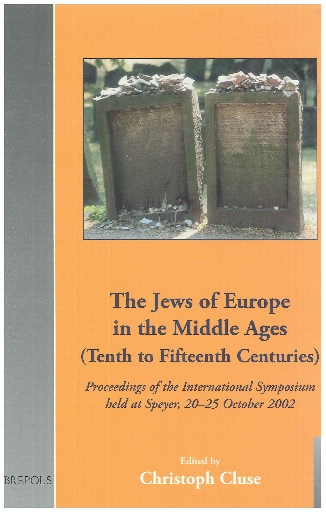
The Jews of Europe in the Middle Ages (Tenth to Fifteenth Centuries)
Proceedings of the International Symposium held at Speyer, 20-25 October 2002
show More to view fulltext, buy and share links for:The Jews of Europe in the Middle Ages (Tenth to Fifteenth Centuries) show Less to hide fulltext, buy and share links for: The Jews of Europe in the Middle Ages (Tenth to Fifteenth Centuries)The Jews of Europe in the Middle Ages presents the proceedings of an international symposium held at Speyer (Germany) in October, 2002. The collection aims at a comprehensive (and comprehensible) overview describing the variety of historical experience for European Jewries from c. 1000 to c. 1500. Leading European historians firmly based in regional, archival research have here been brought together with a number of Israeli and American scholars who concentrate on legal and constitutional aspects of the Jewish community. Historians working on medieval Mediterranean Jewries (Sicily, Spain, Provence, etc.) and those studying the northern communities (England, Northern France, and Ashkenaz) present their findings in a single, one-language collection. Regional overviews are supplemented by studies on cultural, economic, social, and linguistic aspects as well as by portraits of individual (northern) Jewish communities. The collection highlights the similarities and differences among the various European Jewish cultures, demonstrating that these cultures were no less European than they were Jewish. At the same time, the Jewish heritage has deeply influenced medieval and modern European majority cultures. This cultural symbiosis was epitomized in the European Jewish community (kahal, aljama).
-
-
-
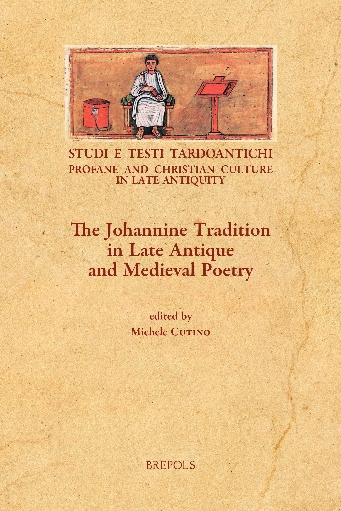
The Johannine Tradition in Late Antique and Medieval Poetry
show More to view fulltext, buy and share links for:The Johannine Tradition in Late Antique and Medieval Poetry show Less to hide fulltext, buy and share links for: The Johannine Tradition in Late Antique and Medieval PoetryThe Johannine Tradition in Late Antique and Medieval Poetry proposes to examine the impact of the Gospel of John, which is fundamental from the point of view of the history of Christian doctrines, on ancient poetic production, with some forays into the Middle Ages. The critical literature on these aspects is particularly abundant, but hitherto an overall view of the presence and importance of the Johannine tradition in the evolution of Christian poetry was lacking. Based on the Strasbourg colloquium that took place on 16-17 September 2021, the present volume aims to fill this gap, with contributions highlighting not an episodic presence of Johannine texts in poetic compositions, but a structuring function in the definition of the poetic choices of the various authors. The focus of attention could therefore only be on the genre of biblical rewritings, which derive their particular significance from their organic attempt to “remake” the biblical text in accordance with very precise cultural objectives and the expectations of a select audience.
-
-
-
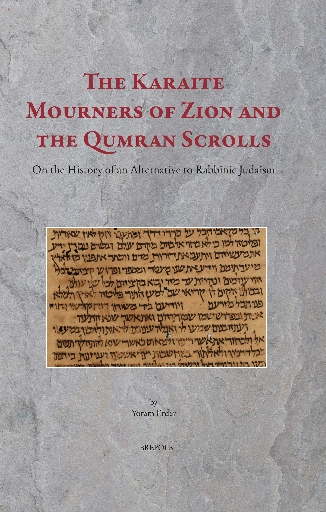
The Karaite Mourners of Zion and the Qumran Scrolls
On the History of an Alternative to Rabbinic Judaism
show More to view fulltext, buy and share links for:The Karaite Mourners of Zion and the Qumran Scrolls show Less to hide fulltext, buy and share links for: The Karaite Mourners of Zion and the Qumran ScrollsThis book is dedicated to studying the Karaite Mourners of Zion - the leading faction within the Karaite movement during its formative period (9th - 11th century). Like all Karaites, the Mourners claimed that the Rabbinic Oral Law was not given by God but is rather the ‘commandment of man’ (Isaiah 29.13). Therefore they called for a return to the Hebrew Bible.
According to the Karaite Mourners, neglecting the Bible caused also the neglect of the Land of Israel. For them the Oral Law was a tool of the Jewish people to strike roots in the exile. Therefore they developed a Messianic doctrine which encouraged the Jewish people not only to return to the Bible, but also to immigrate to the Land of Israel in order to accelerate the redemption.
The Karaite Mourners’ leadership practiced what they preached. From their cradle in the exile of Babylonia and Persia they came to Jerusalem, where they created a community that was called Shoshanim (lilies). This community became the most important community that ever flourished in the history of Karaism. They left behind prolific work, most of it written in Judaeo-Arabic.
Coming to Palestine, and maybe before that, the Karaite Mourners were exposed to some of the Qumran scrolls that were discovered at their time. They did not hesitate to adopt some of the Qumran doctrine and halakha, despite the fact that main Qumran beliefs were not acceptable to the Karaites.
Studying the Qumranic influence on the Karaite Mourners sheds light simultaneously on early Karaism and the Jewish sects of the Second Temple period.
-
-
-
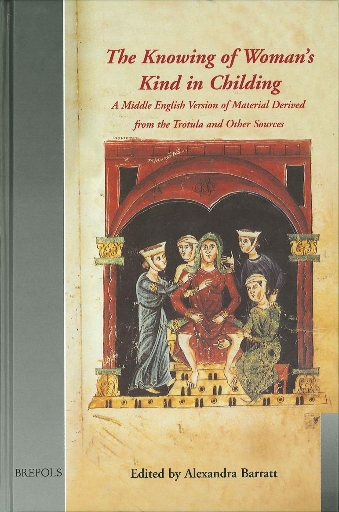
The Knowing of Woman's Kind in Childing
A Middle English Version of Material Derived from the Trotula and other Sources
show More to view fulltext, buy and share links for:The Knowing of Woman's Kind in Childing show Less to hide fulltext, buy and share links for: The Knowing of Woman's Kind in ChildingThis study comprises a critical edition, using all the five extant manuscripts of the most popular of the Middle English gynaecological texts deriving from the Latin Trotula-text. The Knowing of Women's Kind in Childing is a short fifteenth-century prose treatise which claims to be translated from Latin texts (or Latin and French) that derive ultimately from the Greek. It has a unique importance as it was written by a woman, for a female audience, and on the subject of women. The text considers women's physical constitution, what makes them different from men (primarily the possession of a womb) and, in particular, the three types of problem that the womb causes. That it was written for a female audience is made explicit in the Prologue where the writer explains that he has translated this text because literate women are more likely to read English than any other language and can then pass on the information it contains to illiterate women.The text is a translation, no doubt by a man rather than a woman, but one of his ultimate sources was a text attributed to 'Trotula', in the Middle Ages believed to be the name of a midwife or gynaecologist from Salerno, who wrote extensively on women's ailments, childbirth and beauty care. Recent work shows that such a woman, probably named Trota, did exist and that she did write a gynaecological treatise, the Trotula or 'little Trota', which became closely associated with two other texts not by her. All three however became very popular and were widely disseminated under her name. Large sections of The Knowing of Woman's Kind come, via an Old French translation, from a version of one of these texts, Liber de sinthomatibus mulierum.
-
-
-
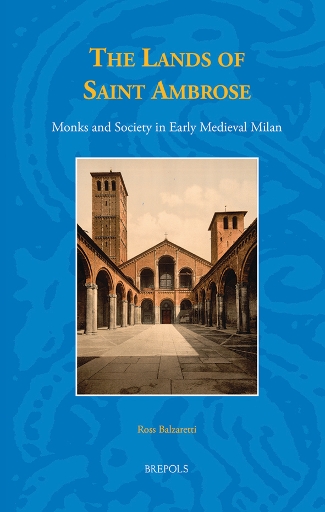
The Lands of Saint Ambrose
Monks and Society in Early Medieval Milan
show More to view fulltext, buy and share links for:The Lands of Saint Ambrose show Less to hide fulltext, buy and share links for: The Lands of Saint AmbroseThis book is a history of Milan in the early medieval period. It investigates the political, social, and economic aspects of the transformation of the Roman world in one of its major centres. Its main theme is the role of monastic communities in this transformation. In the case of Milan a single monastery can be studied in great detail: the Benedictine community founded by Charlemagne, c. 789, next to the basilica in which St Ambrose himself was buried. Surprisingly, the impact which this important Carolingian foundation had upon the existing society of Milan has been underestimated by historians, partly because the history of the monastery has been studied apart from the history of the city.
The book shows how successive generations of monks helped to change the social organisation of the city and much of its hinterland, largely through their substantial dealings in property as recorded in one of the most important surviving collections of early medieval charters. This thesis challenges the views of earlier generations of scholars who downplayed the role of the monastery in the mechanisms of social change, in favour of a ‘new’ mercantile class.
-
-
-
The Language of Byzantine Learned Literature
show More to view fulltext, buy and share links for:The Language of Byzantine Learned Literature show Less to hide fulltext, buy and share links for: The Language of Byzantine Learned LiteratureBuilt on a highly traditional educational system, the language of Byzantine literature was for the most part written in an idiom deeply influenced by ancient Greek texts and grammatical handbooks. The resulting overall archaizing impression of Byzantine Greek is largely why the language of learned literature - as compared with the relatively well researched vernacular literature - has seldom been taken seriously as an object of linguistic study. This volume combines the expertise of linguists and scholars of Byzantine literature to challenge the assumption that learned mediaeval Greek is merely the weary continuation of ancient Greek or, worse still, a poor imitation of it, while proposing that it needs to be treated as a literary idiom in its own right.
The contribution that texts of this kind can offer to sub-fields of Greek historical linguistics is explored using specific examples. Sociolinguistic theory provides a particularly useful framework for a more accurate analysis of the relationship between the vernacular and classicizing varieties of Greek literary language. In addition, the impact of the educational system on the production of texts is examined. In another chapter it is shown that a number of far-reaching assumptions, which originated in the 15th century, about accentuation and the middle voice still tend to colour our understanding of Byzantine, as well as ancient, Greek. Other chapters focusing on particles, the dative and the synthetic perfect reveal that Byzantine authors, while of course influenced by the living spoken language, used their classical linguistic heritage in a creative and innovative way.
-
-
-
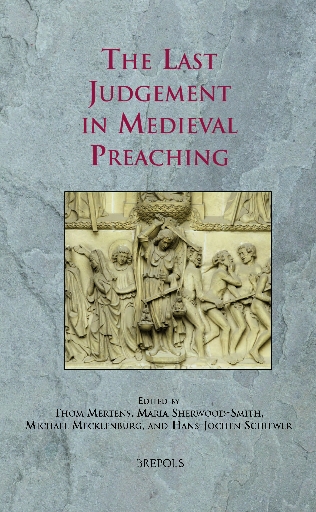
The Last Judgement in Medieval Preaching
show More to view fulltext, buy and share links for:The Last Judgement in Medieval Preaching show Less to hide fulltext, buy and share links for: The Last Judgement in Medieval PreachingIn the Middle Ages, the sermon was a powerful and versatile means of bringing the Word of God to the people. In fact, in the oral culture of that period, it was the primary medium for Christian clergy to convey religious education to lay audiences. Moreover, the sermon played an important role in the liturgy and life of the religious orders. With the growth of lay literacy the sermon collection also developed into a vernacular literary genre of its own.
Two aspects of Christian piety, hopeful expectation on the one hand, and fearful anticipation on the other, were decisive factors for the shaping of religious life and practical pastoral care. Both these aspects were often brought to the fore in sermons on the Last Judgement as part of a recurrent argument against a life too much oriented towards the world. The preachers dwell on both the Particular Judgement occurring immediately after death and the General Judgement over the whole of creation at the end of times.
This volume brings together scholars from several European countries with the purpose to present their research on the theme of the Last Judgement in medieval sermons. The scope of scholars is broadened to incorporate not only specialists in sermon studies, but also historians, theologians, and literary historians to encourage research along new, multi-perspectival lines.
-
-
-
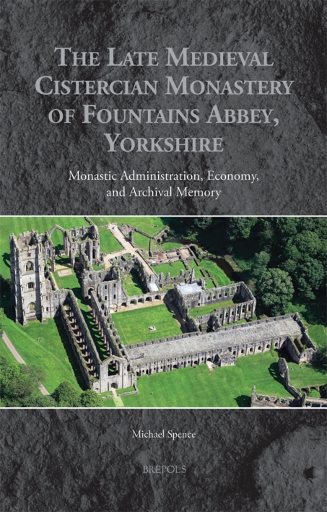
The Late Medieval Cistercian Monastery of Fountains Abbey, Yorkshire
Monastic Administration, Economy, and Archival Memory
show More to view fulltext, buy and share links for:The Late Medieval Cistercian Monastery of Fountains Abbey, Yorkshire show Less to hide fulltext, buy and share links for: The Late Medieval Cistercian Monastery of Fountains Abbey, YorkshireFounded in 1132, Fountains Abbey became the wealthiest English Cistercian monastery - yet relatively little analysis has been made of its surviving records to investigate how its wealth was controlled and sustained. This book deals with this secular aspect of the religious community at Fountains, investigating in particular the way in which prosaic business records were compiled and redacted. It traces the transmission of data from original charters through successive versions of cartularies, and in the process establishes the existence of a previously unknown manuscript. It also reveals how abbots in the fifteenth century interacted with and adapted the records in their care.
In this process, two quite different aspects of monastic life are uncovered. First, it sheds new light on the history of Fountains Abbey through the fourteenth and fifteenth centuries, amongst other things how it responded to the turmoil of the Black Death, and discloses for the first time the allegiance of one abbot to the Lancastrian cause during the Wars of the Roses. Second, it reveals the worldly skills shown by the community of Fountains that were successfully applied to exploit the monastery’s large landholdings across Yorkshire, mainly through wool and agricultural production, but also through fisheries, tanning, mining, and metalworking. The economic success of these activities enabled the abbey to become a prosperous institution which rivalled the wealth of the aristocracy.
-
-
-
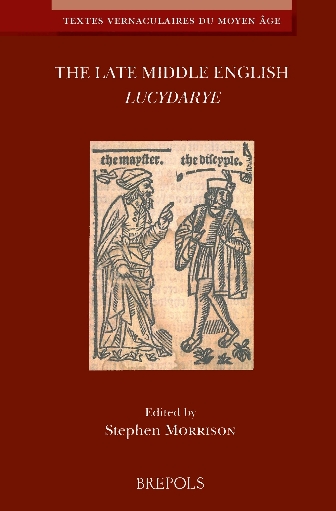
The Late Middle English 'Lucydarye'
show More to view fulltext, buy and share links for:The Late Middle English 'Lucydarye' show Less to hide fulltext, buy and share links for: The Late Middle English 'Lucydarye'The Lucydarye is a late Middle English manual of popular instruction, largely religious in its orientation, though including lengthy discussions of witchcraft, demonology, and meteorological phenomena. There is a strong interest in pastoral instruction. Set in the form of a dialogue between a magister and his discipulus, it is an over-literal translation of a fourteenth-century French text known as the Second Lucidaire, itself a free adaptation of the Latin Elucidarium, traditionally attributed to Honorius Augustodunensis (Honorius of Autun). The translation is the work of one Andrew Chertsey. The Middle English text, edited here for the first time (from a Wynkyn de Worde print), bears striking similarities to other, popular works of an encyclopaedic nature, notably Sydrak and Bokkus and the Pricke of Conscience. Equally, there are many points in common with the sermon literature of the time. The Lucydarye is printed alongside the French source so as to allow the reader both to appreciate points of obscurity in the text and to observe Chertsey's translation technique. A discussion of the relationship between the Lucydarye and the various versions of the Second Lucidaire throws some light on the complicated textual tradition of the French prints.
-
-
-

The Latin Religious Orders in Medieval Greece, 1204-1500
show More to view fulltext, buy and share links for:The Latin Religious Orders in Medieval Greece, 1204-1500 show Less to hide fulltext, buy and share links for: The Latin Religious Orders in Medieval Greece, 1204-1500The monastic and mendicant orders that were so central in the evolution of western religion and spirituality also played a pivotal role in the expansion of Latin Christendom after the eleventh century. In the thirteenth century, following thecapture of Constantinople by the armies of the Fourth Crusade, Cistercians, Benedictines, Franciscans, and Dominicans installed themselves in the former territories of the Byzantine Empire. Here, they had to adapt and compromise in order to survive, whilst Latins, Turks, and Greeks struggled to gain supremacy in the Aegean. They were also, however, faced with the challenge of attracting the devotion of the Greek Orthodox population, advancing the cause of church union, and promoting the interests of their Frankish, Venetian, and Genoese patrons. This volume follows the orders’ fortunes in medieval Greece, examines their involvement in the ecclesiastical and secular politics of the age, and looks at how the monks and friars pursued their spiritual, missionary, and Unionist goals in the frontier societies of Latin Romania.
-
-
-
The Legacy of Bernard de Montfaucon: Three Hunderd Years of Studies on Greek Handwriting
Proceedings of the Seventh International Colloquium of Greek Palaeography (Madrid-Salamanca, 15-20 September 2008)
show More to view fulltext, buy and share links for:The Legacy of Bernard de Montfaucon: Three Hunderd Years of Studies on Greek Handwriting show Less to hide fulltext, buy and share links for: The Legacy of Bernard de Montfaucon: Three Hunderd Years of Studies on Greek HandwritingIn September 2008, the seventh edition of the International Colloquium of Greek Palaeography (Madrid-Salamanca, 15-20 September 2008) celebrated the 300th anniversary of the Palaeographia Graeca, the pioneer work of the Benedictine Bernard de Montfaucon that established the fundamentals of the discipline. Papers by renowned specialists in the field contributed to the methodology of study and to our knowledge of Greek manuscripts, and opened new perspectives for the study of the Greek manuscripts preserved mostly in European libraries, taking into account new methodological approaches, the possibilities of online resources and the results of ongoing research projects.
The Proceedings published here include contributions by specialists from over ten different countries, dealing with palaeographical issues such as ancient capital and lower-case lettering, writing and books in the Macedonian, Comnenian and Palaeologan periods, and Greek scribes and ateliers in the Renaissance (especially in manuscripts from the Iberian Peninsula). Many contributors also take a codicological approach and consider the material aspects of the codex, as well as other new research techniques. Finally, some papers deal with the book as object and how this relates to its content, as well as with the history of texts.
The International Colloquia of Greek Palaeography are organized by the International Committee of Greek Palaeography, presided by Prof. Dieter Harlfinger. The seventh edition payed tribute to the memory of the late Jean Irigoin, who died in 2006.
-
-
-
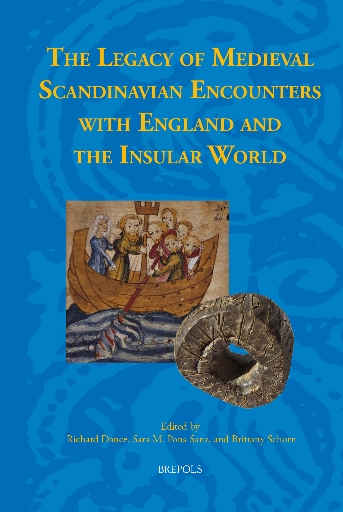
The Legacy of Medieval Scandinavian Encounters with England and the Insular World
show More to view fulltext, buy and share links for:The Legacy of Medieval Scandinavian Encounters with England and the Insular World show Less to hide fulltext, buy and share links for: The Legacy of Medieval Scandinavian Encounters with England and the Insular WorldThe Vikings had a major and lasting impact on the English language. This volume is a unique companion to the study of Anglo-Scandinavian language contact, providing expert discussions of its contexts, backgrounds, and the considerable afterlife of its effects through the Middle Ages and down to the present day. It contains thirteen new articles by leading specialists in the fields of early medieval languages, literature, and history, specially commissioned in order to explore as wide a range as possible of the historical and cultural contexts for Anglo-Scandinavian encounters in the Viking Age and the evidence for them. These essays analyse in detail the Old Norse influence on English, offering studies of words and their meanings in their textual and literary contexts, and including lexicography, dialectology, and syntactic research; they explore findings from archaeology, inscriptions, and place-names; and they situate Anglo-Scandinavian contacts in the larger multilingual, multicultural contexts of the North Sea and Irish Sea worlds.
-
-
-
The Letter Collections of Anselm of Canterbury
show More to view fulltext, buy and share links for:The Letter Collections of Anselm of Canterbury show Less to hide fulltext, buy and share links for: The Letter Collections of Anselm of CanterburyThe letters of Anselm of Canterbury († 1109) provide the clearest insight into his mind and action, and they also constitute one of our finest vantage points to observe the formation of those profound forces moulding Europe in the late eleventh- and early twelfth centuries. The focus of the present study is the transmission of Anselm’s correspondence. It argues that many of the conclusions of earlier scholarship have been constructed on flawed foundations. Using evidence from all known manuscripts and printed editions, the study seeks to demonstrate precisely how Anselm’s letters have survived and how the surviving witnesses relate to one another. The study also aims to define the historical contexts within which our key manuscripts were copied and edited. Only when equipped with this store of information can we begin to understand the editorial processes that shaped the textual tradition of Anselm’s letter collections before and after his death.
Dr Samu Niskanen is Newton Fellow at Jesus College, Oxford.
-
-
-
The Letters of Gelasius I (492-496)
Pastor and Micro-Manager of the Church of Rome
show More to view fulltext, buy and share links for:The Letters of Gelasius I (492-496) show Less to hide fulltext, buy and share links for: The Letters of Gelasius I (492-496)While not completely neglected as a late-antique epistolographer, Gelasius has mainly been considered as a theologian prominent in the Acacian schism and as a forerunner of the mediaeval papacy. This imbalance will be redressed by considering his letters on various problems of his time, such as displaced persons, persecution, ransoming captives, papal property management, social and clerical abuses involving servants, orphans, slaves and slave-owners, the ordination of lower classes, preferential treatment of upper classes, the role of the papal scrinium, violent deaths of bishops, and the celebration of the pagan festival of the Lupercalia. This approach will round out the existing portrait of Gelasius, and make a contribution to a new history of the late-antique papacy, which will revise the view that Gregory the Great was a stand-alone micro-manager without precedent. Comparisons with earlier fifth-century popes like Innocent I and Leo I, and with later popes like Hormisdas and Pelagius I, show the trajectory from Gelasius to Gregory I.
-
-
-
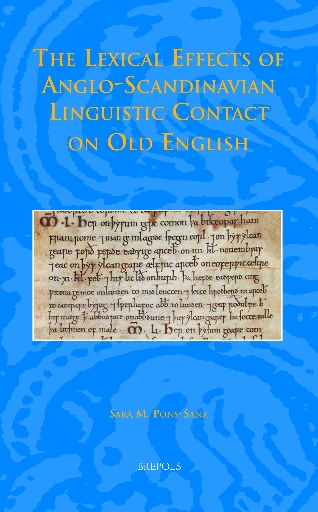
The Lexical Effects of Anglo-Scandinavian Linguistic Contact on Old English
show More to view fulltext, buy and share links for:The Lexical Effects of Anglo-Scandinavian Linguistic Contact on Old English show Less to hide fulltext, buy and share links for: The Lexical Effects of Anglo-Scandinavian Linguistic Contact on Old EnglishAnglo-Saxon England experienced a process of multicultural assimilation similar to that of contemporary England. At the end of the ninth century, speakers of Old Norse from present-day Denmark, Norway, and Sweden started to settle down in the so-called Danelaw amongst the Anglo-Saxon inhabitants, and brought with them cultural traditions and linguistic elements that are still a very significant part of the English speaking world in the twenty-first century.
This book analyses the first Norse terms to be recorded in English. After revising the list of terms recorded in Old English texts which can be considered to have derived from Norse, the author explores their dialectal and chronological distribution, as well as the semantic and stylistic relationships which the Norse-derived terms established with their native equivalents (when they existed). This approach helps to clarify questions such as these: Why were the terms borrowed? At what point did the terms stop being identified as ‘foreign’? Why is a particular term used in a particular context? What can the terms tell us about the Anglo-Scandinavian sociolinguistic relations?
-
-
-
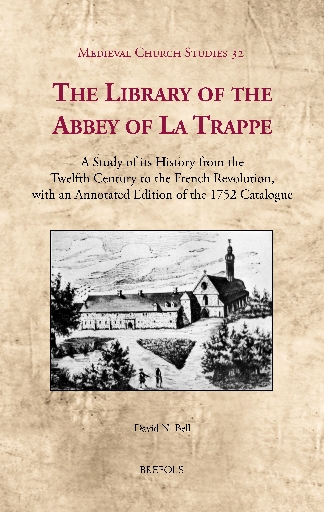
The Library of the Abbey of La Trappe
A Study of its History from the Twelfth Century to the French Revolution, with an Annotated Edition of the 1752 Catalogue
show More to view fulltext, buy and share links for:The Library of the Abbey of La Trappe show Less to hide fulltext, buy and share links for: The Library of the Abbey of La TrappeThis volume presents a study of the library of the Cistercian abbey of La Trappe in Normandy from the twelfth century to the French Revolution, together with an annotated edition of the library catalogue of 1752. The abbey was founded as a Savigniac house, became Cistercian in 1147, and is inseparably linked with the name of Armand-Jean de Rancé, the great monastic reformer and founder of the Order of Cistercians of the Strict Observance. When he became abbot of La Trappe in 1664, he brought with him many of his own books and had a new library built to house the monastic collection. Rancé died in 1700. Other books were then added over time until, in 1752, the abbey possessed about 4,300 volumes. The detailed catalogue is divided into two parts. The first part lists the books by subject, beginning, as might be expected, with bibles; the second part lists the same books by author. The information presented in this study of the abbey and its library is of first importance not only for understanding the nature and development of Cistercian intellectual and spiritual life, but also for the history of early modern libraries and the development of library cataloguing.
-
-
-
The Life and Works of Potamius of Lisbon
show More to view fulltext, buy and share links for:The Life and Works of Potamius of Lisbon show Less to hide fulltext, buy and share links for: The Life and Works of Potamius of LisbonThe main purpose of this book is to revalue Potamius of Lisbon as a historical figure of a certain importance, as a theologian of some originality and especially as a writer of great power. The first part of the research is a historical study on the life of Potamius and on his role in the development of the Arian crisis in the Western part of the empire. Particular attention is given to the problem of the different phases of his doctrinal career, which began in the orthodox party, then had a short Arian phase and finally ended with a return to Nicenism. The second part is a general study on Potamius as a writer. The topics discussed are the establishment of the author's literary corpus, the content of his works, his language and style, and his importance as a cultural figure in the age of the Arian crisis. Part three is composed by five complete commentaries on each work of Potamius: Epistula ad Athanasium, De Lazaro, De martyrio Isaiae prophetae, Epistula de substantia Patris et Filii et Spiritus Sancti, Epistula Potamii (fragment quoted in Phoebadius' Contra Arianos). Part four is an appendix constituted by the Latin text of each work with English translation. This complete translation is the first ever made for this author.
-
-
-
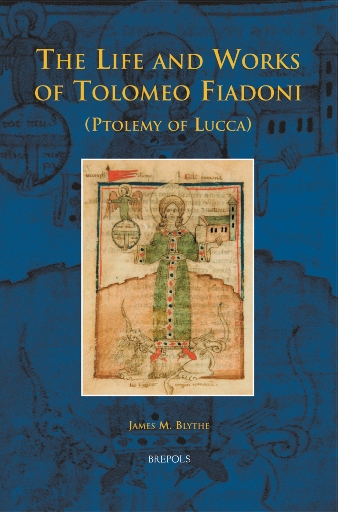
The Life and Works of Tolomeo Fiadoni (Ptolemy of Lucca)
show More to view fulltext, buy and share links for:The Life and Works of Tolomeo Fiadoni (Ptolemy of Lucca) show Less to hide fulltext, buy and share links for: The Life and Works of Tolomeo Fiadoni (Ptolemy of Lucca)Tolomeo Fiadoni (1236-1327) was one of the most remarkable of medieval writers. Living to almost one hundred years of age, Tolomeo bore witness to some of the most important events of the period. He studied and travelled with Thomas Aquinas and was elected Dominican prior in Lucca and Florence. He attended the saintly Pope Celestine V during Celestine’s doomed reign, lived at the papal court in Avignon, served in the households of two cardinals, and associated with the infamous Pope John XXII. At the age of eighty, Tolomeo was appointed bishop of Torcello in the Venetian Lagoon, where his superior, the Patriarch of Grado, subsequently excommunicated and jailed him.
Tolomeo is known today for his major contribution to republican political thought, most notably his continuation of Thomas Aquinas’s only political treatise. However, he also wrote treatises on imperial and ecclesiastical power, a commentary on the six days of creation, a massive Church history, and a European history from 1063 onward. Drawn from all known surviving sources, The Life and Works of Tolomeo Fiadoni is the first full-length study of Tolomeo’s life. It discusses each of his works, and addresses numerous problems of authorship and dating. Its companion volume, The Worldview and Thought of Tolomeo Fiadoni (Ptolemy of Lucca), provides an in-depth analysis of Tolomeo’s beliefs and thought.
-
-
-
The Life of Count Charles of Flanders and The Life of Lord John, Bishop of Thérouanne
show More to view fulltext, buy and share links for:The Life of Count Charles of Flanders and The Life of Lord John, Bishop of Thérouanne show Less to hide fulltext, buy and share links for: The Life of Count Charles of Flanders and The Life of Lord John, Bishop of ThérouanneThis volume revolves around three men who knew each other well, oversaw the political and spiritual life of much of northern France and Flanders during the first third of the twelfth century, and died within five years of one another: Charles the Good, count of Flanders from 1119 to 1127; John of Warneton, archdeacon of Arras from 1096 to 1099 and bishop of Thérouanne from 1099 to 1130; and their common biographer, Walter, archdeacon of Thérouanne from 1116 to 1132. The volume includes a detailed historical introduction and offers the first English translations of Walter's biographies of Charles and John and of several other texts: Lambert of Saint-Omer’s Genealogy of the Counts of Flanders and its continuation, poems on the death of Charles the Good, the inquest into his murder, and selections from Galbert of Marchiennes’ The Transferal of Saint Jonatus to the Village of Sailly-en-Ostrevant, Simon of Saint Bertin’s continuation of the Deeds of the Abbots of Saint ertin’s, Andreas of Marchiennes’ The Miracles of Saint Rictrude, and the third Genealogy of the Flemish Counts (Flandria generosa). The works translated in this volume are the principal sources for the reign and assassination of Charles the Good and the bishopric of John of Warneton that have not yet been translated into English. This volume will be of particular interest to scholars of medieval Flanders and to medieval legal, ecclesiastical, political and social historians in general.
Most of the source texts of this volume were edited in 2006 by Jeff Rider (Corpus Christianorum, Continuatio Mediaevalis, vol. 217). References to the corresponding pages of the Corpus Christianorum edition are provided in the margins of this translation.
-
-
-
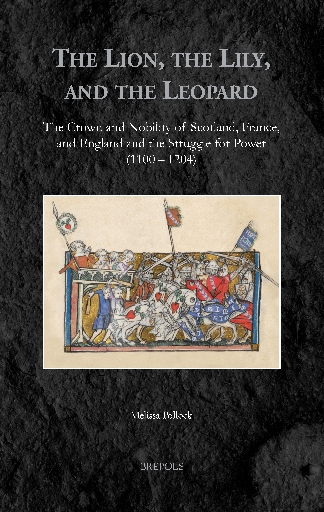
The Lion, the Lily, and the Leopard
The Crown and Nobility of Scotland, France, and England and the Struggle for Power (1100-1204)
show More to view fulltext, buy and share links for:The Lion, the Lily, and the Leopard show Less to hide fulltext, buy and share links for: The Lion, the Lily, and the LeopardThis book examines the relationship between and identities within the three kingdoms of Scotland, France, and England from c. 1100 until the crown of England lost Normandy, Anjou, Maine, and Touraine in 1204. Diplomatic and political relations were unique in the twelfth century because the three kingdoms were united by a ruling class that spanned the Channel. This aristocratic, Anglo-French structure beginning with the Norman invasion in 1066 disrupted and delayed the development of a unitary national identity within each of the three kingdoms. Men and women identified themselves with more than one royal overlord as long as they held fees of multiple kings and, as such, national identity was a moveable feast. This situation created a complex political web that often damaged consistent loyalty to any one king or overlord, as each member of a kin group changed alliances based on territorial threats and on the interests of their familial networks. Furthermore, alliances formed between families in the Anglo-French realm had a significant impact on political decision-making in Scotland because the Anglo-French Scots were intimately bound to this structure through their own kin networks and land bases. Significantly, this work dispels the prevailing myth that the Anglo-French who settled in Scotland did not see themselves as part of the cross-Channel world but as ‘Scots’ by the end of the twelfth century.
-
-
-
The Litany in Arts and Cultures
show More to view fulltext, buy and share links for:The Litany in Arts and Cultures show Less to hide fulltext, buy and share links for: The Litany in Arts and CulturesThe articles in this book encompass a broad historical panorama and consider the presence of litanic prayers and songs in different religions, beginning with written records in the Egyptian, Sumerian and Hebrew languages and finishing with Christian works from diverse denominations. The research presents the litany as an exceptionally long-lasting genre which for several thousand years existed in the Middle-Eastern and European traditions, easily conforming to changes in religious or historical circumstances. An interdisciplinary approach by scholars representing different fields of study, including the history of liturgy, Egyptology, Assyriology, literary studies, musicology and ethnosemiotics, allows the eclectic character of litanies to be revealed, litanies which not only were a form of church prayer but also had an impact on the organization of social rituals as well as being appropriated by all the major fields of art, oetry, the fine arts and music. The musicological articles in the book address the performance of Sumerian prayers, the liturgical songs of the Middle Ages, litanies in Tudor England and polyphonic works of the great composers, such as Wolfgang Amadeus Mozart.
-
-
-
The Literary Legacy of Byzantium
Editions, Translations, and Studies in Honour of Joseph A. Munitiz SJ
show More to view fulltext, buy and share links for:The Literary Legacy of Byzantium show Less to hide fulltext, buy and share links for: The Literary Legacy of ByzantiumNineteen scholars join forces to pay tribute to one of the leading scholars in Byzantine studies, Father Joseph A. Munitiz. As one of the founders of the Series Graeca of the Corpus Christianorum and because of his own exemplary work, Joe Munitiz had and has a lasting impact on the development of Byzantine studies. There is no better way to honour him and his work than to offer him a Festschrift with contributions that mimic his quality, passion, and curiosity.
The Festschrift contains several "firsts": the first English translation of Eustathius' Letter concerning the Two Natures against Severus, and the first critical editions (and studies) of an anonymous iambic canon on St John Chrysostom, of letter Z of the Etymologicum Symeonis, of some additions to letter A in the Florilegium Coislinianum, of a possible credo of Metrophanes of Smyrna, of a letter by Nicolas Pepagomenos to Gregory Palamas, and of Maximus Confessor's Tomos to Stephen of Dor against the Ekthesis.
The innovative studies in this volume deal with the Slavonic and Greek catenae on the Song of Songs, with Athanasius Letter to Marcelinus, with an ascetic miscellany in a thirteenth-century Atheniensis, with the so-called 'First Chapter Titles' in the second recension of the Florilegium Coislinianum, with the date of composition of the Maximia Corpus, with Raimundus Lullus' knowledge of Byzantium, with the reception of the Catalogue of Inventors in Gregory of Nazianzus' fourth oratio, and with Titus of Bostra's polemic against the Manicheans.
-
-
-
The Lord's Prayer. Origins and Early Interpretations
show More to view fulltext, buy and share links for:The Lord's Prayer. Origins and Early Interpretations show Less to hide fulltext, buy and share links for: The Lord's Prayer. Origins and Early InterpretationsIn first-century Palestine, a revival was taking place. Many Jews were looking for a more personal encounter with their God. They believed that the glory of YHWH was not confined to the Jerusalem sanctuary, and that in the ‘temples’ of their homes and synagogues they could be like the priests. They would offer sacrifices not of animals, but of prayer. It was in this setting that Jesus taught his followers to say, “Our Father in heaven ...”
Over the course of two centuries, this Jewish prayer became a central feature of Christian ritual. The process of transformation is discerned in various texts: the Gospels of Matthew and Luke, the Didache, and Tertullian’s De oratione. To a significant degree, each of these interpreters built upon the foundation which Jesus had established. Yet they also created innovatory significance, forms and functions for this simple prayer.
This work presents the early interpretive history of the Lord’s Prayer. It not only surveys what it meant to Jesus and the early Christians, but also seeks to address the question of why the understanding of the Lord’s Prayer changes. Biblical texts invite - even urge - new interpretations. The meaning of the Lord’s Prayer is to be found not just in its ‘original sense,’ but in the history of its meaning. This work traces the beginning chapters of a two-thousand-year-story which we ourselves continue to shape.
-
-
-
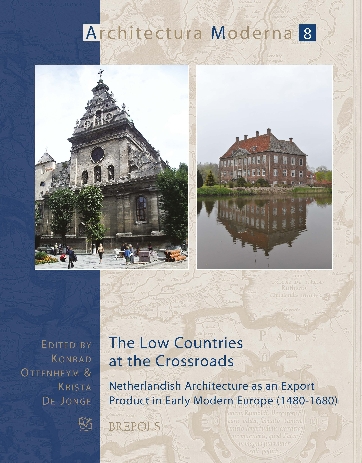
The Low Countries at the Crossroads
Netherlandish Architecture as an Export Product in Early Modern Europe (1480-1680)
show More to view fulltext, buy and share links for:The Low Countries at the Crossroads show Less to hide fulltext, buy and share links for: The Low Countries at the CrossroadsThis book focuses on the diffusion of architectural inventions from the Low Countries to other parts of Europe from the late fifteenth until the end of the seventeenth century. Multiple pathways connected the architecture of the Low Countries with the world, but a coherent analysis of the phenomenon is still missing. Written by an international team of specialists, the book offers case-studies illustrating various mechanisms of transmission, such as the migration of building masters and sculptors who worked as architects abroad, networks of foreign patrons inviting Netherlandish artists, printed models and the role of foreign architects who visited the Low Countries for professional reasons. Its geographical scope is as broad as the period under review and includes all European regions where Netherlandish elements were found: from Spain to Scandinavia and from Scotland to Transylvania.
Konrad Ottenheym is professor of architectural history at Utrecht University, The Netherlands. He is specialised in the architecture of the Northern Low Countries and its international relationships.
Krista De Jonge is professor of architectural history at Leuven University, Belgium. She is well known for her publications on the architecture of the Southern Low Countries of the fifteenth and sixteenth centuries in a European perspective.
-
-
-
The Making of Christianities in History
A Processing Approach
show More to view fulltext, buy and share links for:The Making of Christianities in History show Less to hide fulltext, buy and share links for: The Making of Christianities in HistoryThere has been a major trend among social scientists and historians to assume that the history of modernity can be studied without taking into consideration religion as an important factor. This in contrast to premodern societies in which religion would have played such a predominant and all-embracing role that a total symbiosis between religion and society would have existed. Both of these views are challenged by the authors of this volume. They claim that neither of them does justice to the complexity of the relationship between society and religion. They propose a theoretical framework that fully addresses this complexity by focussing on the variegated active ways in which religious agents (groups and individuals) process(ed) their societal and religious contexts in the modern era as well as in the premodern period. Viewed from this perspective, the history of Christianity appears as the heterogeneous result of an ongoing and unceasing selective processing by all Christians - and non-Christians - of their environment. The application of this new theoretical and methodological framework sheds light - often in a surprising and unexpected way - on various processes in the history of Christianity: the conflict-ridden parting of the ways between Jews and Christians; the emergence and development of early Christian rituals; the formation of a Cathar Counter- Church; the emergence of new forms of Christianity in North America; the complicated and ambiguous evolution of Roman Catholicism in modernity.
-
-
-
The Making of Poetry
Late-Medieval French Poetic Anthologies
show More to view fulltext, buy and share links for:The Making of Poetry show Less to hide fulltext, buy and share links for: The Making of PoetryIn this ground-breaking book, the author explores some late-medieval lyric anthologies. Taking a cue from the French sociologist, Pierre Bourdieu, she sets poetic creation in the context of an understanding of the structures of court society, and sketches the range of social, intellectual and aesthetic positions available to the poet and the patron. Her primary focus is on a series of manuscripts which, she argues, reveal much about the socioliterary dynamics of particular poems, and about the way in which they are vessels for the participation by individuals in a common culture of literary exchange: Charles d'Orléans's personal manuscript, bnf français 25458, in which, she argues, the poets leave implicit or explicit traces of their social interactions; his duchess Marie's album, Carpentras 375, which is interestingly different from the Duke's; bnf fr. 9223 and n.a.f. 15771, 'coterie' manuscripts which allow us to see how social milieu determines shared literary forms and conventions; Marguerite d'Autriche's Album poétique, Brussels br 10572, an anthology which is a cultural commodity allowing a princely court to recognise stylistic expertise and control of form. She finishes by examining the first great French poetic anthology, Antoine Vérard's Jardin de Plaisance (1501), which seeks to recreate, knowingly and imaginatively, via rubrics, illustrations, and choice of texts, the elite sociability for which the other anthologies are evidence.
-
-
-
The Making of Technique in the Arts
Theories and Practice from the Sixteenth to the Twentieth Century
show More to view fulltext, buy and share links for:The Making of Technique in the Arts show Less to hide fulltext, buy and share links for: The Making of Technique in the ArtsWhat is technique in the arts? Now widely used to refer to the practical aspects of art making, ‘technique’ was a neologism in the vernacular, and started to appear in treatises on arts and sciences from around 1750. Rooted in the Greek technè, which was translated routinely as ‘art’ until the mid-eighteenth century, technique referred to processes of making or doing and their products. Described previously as ‘art’, ‘methods’, ‘manners’ or ‘mechanics’, techniques were recorded in text with the intention of documenting or transmitting practical skills and knowledge. This book bridges the gap between the changing concept of technique and the practices currently described by it. It explores the linguistic, philosophical, and pedagogic history of technique in the arts, answering the question why the term ‘technique’ first emerged around 1750, and exploring how its meaning to artists, art theorists, and natural philosophers changed until the twentieth century
-
-
-
The Making of the Eastern Vikings
Rus’ and Varangians in the Middle Ages
show More to view fulltext, buy and share links for:The Making of the Eastern Vikings show Less to hide fulltext, buy and share links for: The Making of the Eastern VikingsHistoriography on the Vikings of the East — the Rus' and the Varangians — has been both multiform and varied, but it has been invariably focused on actual historical events, and the extent to which these are accurately reflected in written sources. In contrast, very little attention has been paid up to now to the narrators behind these medieval accounts, to their motives in writing, or to the context in which they were working.
This volume aims to redress the balance by offering a re-examination of medieval sources on the Eastern Vikings and by highlighting ongoing ‘debates’ concerning the identities of the Rus' and the Varangians in the medieval period. The chapters gathered here compare and contrast sources emanating from different cultures — Byzantium, the Abbasid Caliphate and its successor states, the early kingdoms of the Rus', and the high medieval Scandinavian kingdoms — and examine what significance these sources have attached to the Rus' and the Varangians in different contexts. The result is a new understanding of how different cultures chose to define themselves in relation to one another, and a new perspective on the history of the Scandinavian peoples in the East.
-
-
-
The Manere of Good Lyvyng
A Middle English Translation of Pseudo-Bernard’s 'Liber de modo bene vivendi ad sororem'
show More to view fulltext, buy and share links for:The Manere of Good Lyvyng show Less to hide fulltext, buy and share links for: The Manere of Good LyvyngIn recent years, much critical attention has been devoted to medieval texts written for recluses, such as the Life of Christina of Markyate, Aelred’s Institutio reclusarum, and the Ancrene Wisse. The Manere of Good Lyvyng, in contrast, brings the focus back to the conventual life and to the needs of a nun rather than an anchoress.
The Manere of Good Lyvyng is a late Middle English translation of an earlier Latin text, the Liber de modo bene vivendi ad sororem, long attributed to St Bernard of Clairvaux. Whether in its Latin form or its Middle English rendering, this work is a fascinating text and one with considerable artistic merit. It is neither a flamboyant text nor one strewn with images such as one encounters in the Ancrene Wisse. It is a quiet text, with the beauty and simplicity of a manuscript perfectly written in an elegant script, where no illustration distracts the reader from its reading.
-