


BOB2020MOOT

Collection Contents
3 results
-
-
Das Buch Warum
show More to view fulltext, buy and share links for:Das Buch Warum show Less to hide fulltext, buy and share links for: Das Buch Warum„Der Liber Quare ist ein Traktat über Fragen der Liturgie in Katechismus-Form“, so charakterisiert Pater Götz, der Herausgeber der kritischen Edition, das Buch, geschrieben von einem anonymen Autor im 11. Jahrhundert. In 253 Fragesätzen und Antworten werden für Geistliche die Gründe für die Gestaltung des Offiziums und des Kirchenjahres behandelt. Die Gliederung ist locker: Die Zeit von Septuagesima bis Pfingsten (Fragen 1-118). Das Quatemberfasten und die Weihen der Kleriker (Fragen 119-139). Vom Advent bis Lichtmess (Fragen 140-154). Das Offizium bei Tage (Fragen 155-186) und bei Nacht (Fragen 187-217). Die Hierarchie der Kleriker (Fragen 218-241). Die liturgischen Gewänder (Fragen 242-253).
Der Ausgabe und Übersetzung des Liber Quare wurden auch Texte beigefügt, die in den Handschriften thematisch den einzelnen Fragen zugehörig sind. Sie ergänzen den knappen Test und entsprachen offenbar den Interessen der damaligen Schreiber. In den „Einfügungen“ (12./13. - 15. Jh.) stechen die Erläuterungen zum Vaterunser und die Aufnahme des bekannten Hymnus O Redemptor heraus. Bei den „Zusätzen“ im Anschluss an das Buch, ebenfalls aus dem 12./13. bis 15. Jh., werden manche Themen in den verschiedenen Handschriften ähnlich oder gegenteilig dargestellt: Stundengebet, Advents- und Weihnachtszeit, Fasten- und Osterzeit, liturgisches Brauchtum, allegorisch-aszetische Betrachtungen, Messfeier, Totengedächtnis, Weiheordines, liturgische Kleidung.
Die drei Teile des Bandes - Liber Quare, Einfügungen und Zusätze - ermöglichen einen kulturhistorischen Blick auf die Deutung der Liturgie in Antike und Mittelalter.
Der zugrundeliegende Text dieses Bandes erschien 1983 in der Reihe Corpus Christianorum. Continuatio Mediaeualis als Liturgica. Liber Quare (CC CM, vol. 60), herausgegeben von Georg Polykarp Götz OFMConv. Die Ziffern am Seitenrand verweisen auf die entsprechenden Seiten der Edition.
-
-
-
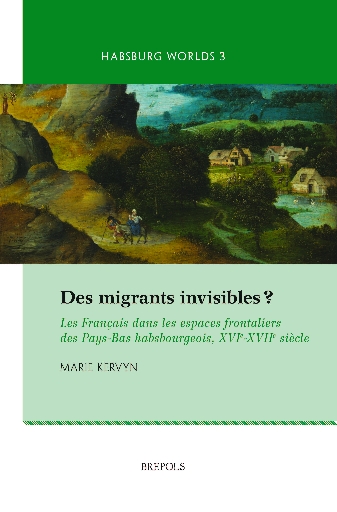
Des migrants invisibles ?
show More to view fulltext, buy and share links for:Des migrants invisibles ? show Less to hide fulltext, buy and share links for: Des migrants invisibles ?During the Modern Period, the condition of the French migrant is fragile. He comes from a suspicious community that does not exist in substance, that of the "French", and is a part of an evolving category, the one of people without "rights". His foreign origin can also be an advantage and he can make it work in his favour. He cannot be defined as being from a State, yet his condition is inseparable from the international conjuncture and the construction of evolving modern States. Actually, to question the stakes in the reception of the French migrants is an open window to a better understanding of the social and political culture of the Spanish Low Countries. Indeed, this work probes the mechanisms of self-definition in border provinces within a catholic global empire, the Spanish Monarchy, in front of France. The exercise of power and the capacity for action appear there as the result of an equilibrium in which all social actors are negotiating their position. Most of all, it is the result of a dialogue fueled by the protagonists of History themselves.
-
-
-
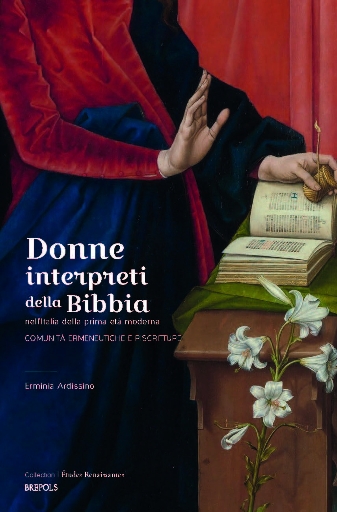
Donne interpreti della Bibbia nell’Italia della prima età moderna
show More to view fulltext, buy and share links for:Donne interpreti della Bibbia nell’Italia della prima età moderna show Less to hide fulltext, buy and share links for: Donne interpreti della Bibbia nell’Italia della prima età modernaLa Bibbia ha rappresentato il libro più familiare per le donne nella prima età moderna e proprio in ambito religioso le donne italiane hanno maggiormente fatto sentire la loro voce. Tuttavia non solo le testimonianze sono scarse, ma anche gli studi hanno trascurato questo interessantissimo campo. Il volume studia le modalità con cui le donne in Italia hanno preso parte al vivissimo dibattito rinascimentale sull’interpretazione e la conoscenza delle Sacre Scritture, da cui hanno anche attinto per sviluppare originali interventi. Sulla base delle riscritture bibliche che ci hanno lasciato, sono individuabili vere e proprie comunità ermeneutiche femminili. Venezia, Firenze, il Centro Italia sono le coordinate geografiche dei circoli qui individuati. A Firenze le scrittrici che lavorano con e sulla Bibbia prediligono il rapporto con la comunità politica, suggerendo modelli comportamentali che possono istruire le donne per il loro inserimento nella società civile. A Venezia la Bibbia ispira argomenti a difesa della dignità femminile e della parità dei generi, infatti sull’episodio edenico sono state fondate coraggiose letture che incisero significativamente nella cosiddetta querelle des femmes europea. Nell’Italia centrale l’interesse femminile si focalizza su una dimensione più devozionale e spirituale, sul problema della salvezza per il beneficio di Cristo, sulla versificazione e sul commento dei Salmi. Con questo studio si intende portare in giusta luce il contributo delle donne italiane al dibattito culturale e religioso nell’età delle Riforme e mostrare la modernità e vivacità delle loro posizioni oltre che recuperarne il valore letterario e intellettuale.
-