


The Medieval Low Countries
History, Archaeology, Art, and Literature
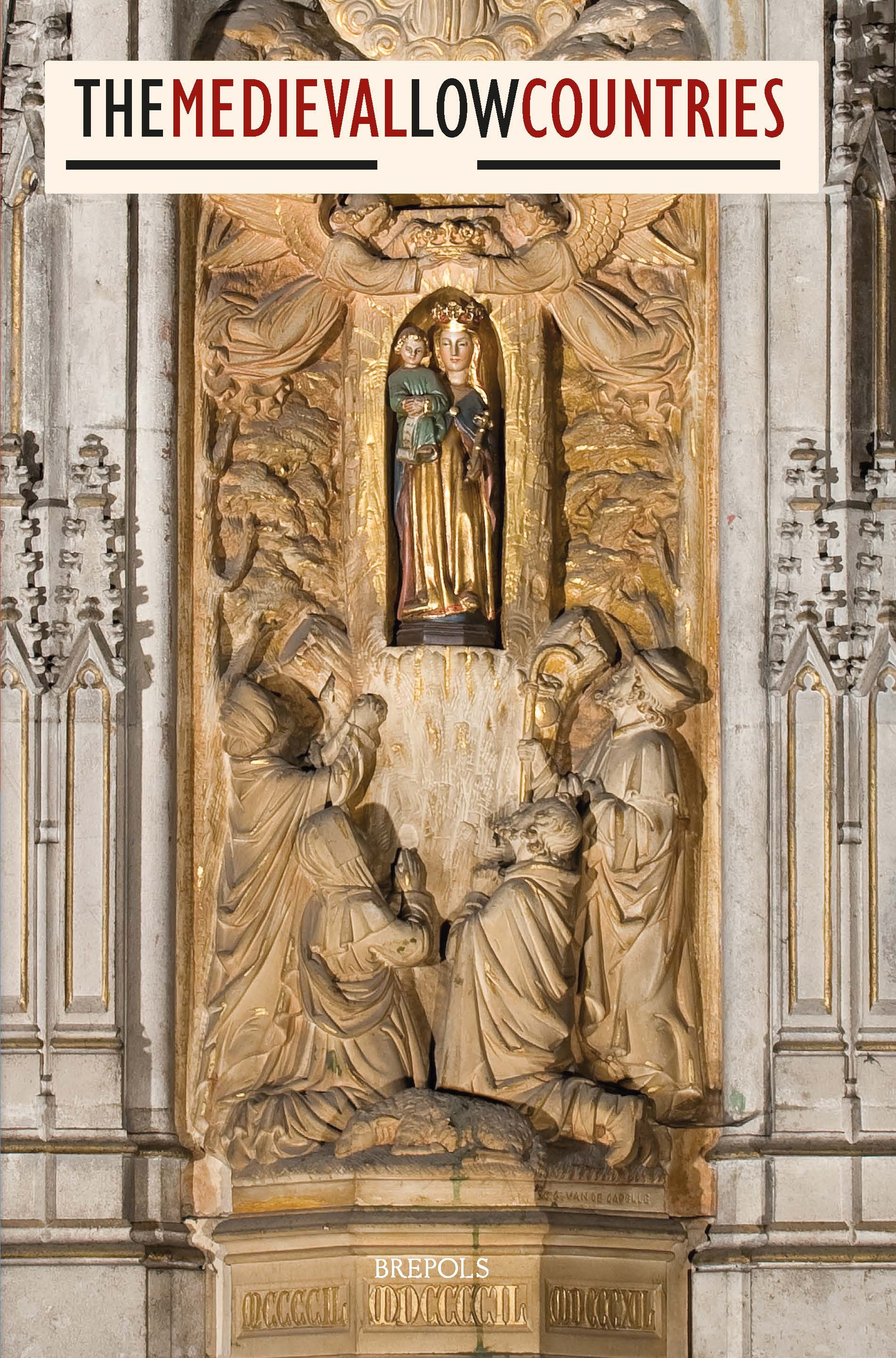
Volume 7, Issue 1, 2020
-
-
Church, Landscape, and Power in ‘Holland’ West Frisia up to the Middle of the Eleventh Century: The Bishop, the Count, and the Development of the Parish System in Frisia between Vlie and Zonnemare
show More to view fulltext, buy and share links for:Church, Landscape, and Power in ‘Holland’ West Frisia up to the Middle of the Eleventh Century: The Bishop, the Count, and the Development of the Parish System in Frisia between Vlie and Zonnemare show Less to hide fulltext, buy and share links for: Church, Landscape, and Power in ‘Holland’ West Frisia up to the Middle of the Eleventh Century: The Bishop, the Count, and the Development of the Parish System in Frisia between Vlie and ZonnemareAuthors: Gilles J. De Langen and Johannes A. MolAbstractRecent research has shown that since the middle of the tenth century, the bishop of Utrecht had a leading role in the introduction and expansion of the parish system in the central Frisian districts east of the Vlie. In this study it is defended that he also played a significant role in Frisia between Vlie and Zonnemare, the area that since the late eleventh century was to be called Holland. Here as well, the demarcation of parishes and the establishment of ecclesiastical jurisdiction took place between 950 and 1025, a relatively short period which can nevertheless be regarded as formative, especially when one considers that, at the same time, the large-scale reclamation of the adjacent peatbogs began. Unlike in Central Frisia, where due to the lack of a strong comital power the bishop had to cooperate with local aristocrats, in Frisia between Vlie and Zonnemare the expansion of ecclesiastical power was realized with the support of the count, whose family appear to have had large estates at her disposal since the Viking period. This supports the assumption that despite a multitude of similarities between the Frisian areas on both sides of the Vlie, there were also fundamental and ancient differences, certainly with regard to the way in which regional power could be derived from land ownership.
-
-
-
La première enceinte « communale » de Tournai aux xiie et xiiie siècles: Documents inédits et bilan des données archéologiques
show More to view fulltext, buy and share links for:La première enceinte « communale » de Tournai aux xiie et xiiie siècles: Documents inédits et bilan des données archéologiques show Less to hide fulltext, buy and share links for: La première enceinte « communale » de Tournai aux xiie et xiiie siècles: Documents inédits et bilan des données archéologiquesAuthors: Isabelle Deramaix and Florian MariageAbstractLa chronologie de la première enceinte communale de Tournai est restée longtemps figée sur base de l’analyse de quelques documents. Les fouilles menées ces dernières années ont révélé de nouvelles données et remis en question ces acquis chronologiques. Parallèlement de nouvelles sources ont été explores argumentant entre autres les découvertes archéologiques. La synthèse ci-dessous tente de faire un bilan de toutes ces informations. Elle met en évidence la complexité de l’érection de cette fortification urbaine qui s’est établie en diverses phases répondant aux événements politiques et historiques de l’époque. Il en va de même pour son abandon et son déclin.
AbstractThe chronology of the first communal enclosure of Tournai remained for a long time frozen on the basis of the analysis of some documents. Excavations carried out in recent years have revealed new data and called into question these chronological achievements. At the same time, new sources have been explored, arguing among other things the archaeological discoveries. The synthesis below attempts to make an assessment of all this information. It highlights the complexity of the erection of this urban fortification, which was established in various phases in response to the political and historical events of the time. The same applies to its abandonment and decline.
-
-
-
Monnikerede: The Rise and Decline of a Medieval Port Community in the Zwin Estuary
show More to view fulltext, buy and share links for:Monnikerede: The Rise and Decline of a Medieval Port Community in the Zwin Estuary show Less to hide fulltext, buy and share links for: Monnikerede: The Rise and Decline of a Medieval Port Community in the Zwin EstuaryAuthors: Wim De Clercq, Kristof Dombrecht, Jan Dumolyn, Ward Leloup and Jan TrachetAbstractHistorians have primarily considered the small harbour of Monnikerede along the Zwin as an outport in service of Bruges. In this short urban biography, Monnikerede is given the centre stage. We investigate its functional development and changing socio-economic character between the twelfth and fifteenth centuries. Originating before 1200 as a landing stage linked to the Cistercian abbey of Ter Doest, Monnikerede developed into a fairly autonomous fishing and trading port during the thirteenth century. Only after 1300 was the port integrated into a rigid and hierarchical harbour network centred on Bruges, prompting a functional shift towards a staple market and service centre. It was primarily the loss of its privileges during the Bruges revolt of 1436-38 that led to the depopulation and the eventual disappearance of the town.
-
-
-
Tam Maiores quam Minores: Craftsmen, Merchants, and Burghers in Thirteenth-Century Bruges
show More to view fulltext, buy and share links for:Tam Maiores quam Minores: Craftsmen, Merchants, and Burghers in Thirteenth-Century Bruges show Less to hide fulltext, buy and share links for: Tam Maiores quam Minores: Craftsmen, Merchants, and Burghers in Thirteenth-Century BrugesBy: Leen BervoetsAbstractFrom the first quarter of the thirteenth century onwards, Bruges was the leading commercial centre of Flanders. The simultaneous expansion of the city and its population increased social polarisation and created opportunities for the nouveaux riches to accumulate capital and penetrate higher social ranks. Contemporary sources divide urban society into maiores and minores or into burgenses and communitas. This terminology is often difficult to interpret. Through a prosopographical approach to the aldermen, burghers, merchants, and craftsmen of thirteenth-century Bruges, this article tries to overcome both the problem of unstable terminology for urban groups and the scarcity of sources in order to provide a clearer picture of the urban elites in a time of profound transformations.
-
-
-
The Acquisition of Seigneuries and the Exertion of Seigniorial Power in Late Medieval Flanders: The Case of Wedergrate and the Goux Family
show More to view fulltext, buy and share links for:The Acquisition of Seigneuries and the Exertion of Seigniorial Power in Late Medieval Flanders: The Case of Wedergrate and the Goux Family show Less to hide fulltext, buy and share links for: The Acquisition of Seigneuries and the Exertion of Seigniorial Power in Late Medieval Flanders: The Case of Wedergrate and the Goux FamilyBy: Tom De WaeleAbstractThis article is a case study of the ownership of a late medieval Flemish seigneury and its socio-economic and political implications. Pierre de Goux, a wealthy Burgundian state official, bought seigneuries in the Land of Wedergrate between 1458 and 1465. We argue that the acquisition of these lordships was part of a family strategy in favour of Pierre de Goux’s youngest son. In addition, the political interaction between the lords of Wedergrate and local stakeholders is analysed, based on existing literature and source material for the period between circa 1450-1500. Furthermore, we analyse the estimated gross income the lord earned from these seigneuries in comparison to the gross incomes earned by their local religious institutions.
-
-
-
Our Lady of Grace at Scheut: Pilgrimage Cult and Pilgrims’ Badges
show More to view fulltext, buy and share links for:Our Lady of Grace at Scheut: Pilgrimage Cult and Pilgrims’ Badges show Less to hide fulltext, buy and share links for: Our Lady of Grace at Scheut: Pilgrimage Cult and Pilgrims’ BadgesAbstractThis essay offers a new perspective on the cult of Scheut with the identification of several pilgrims’ badges. The badges from Scheut form a welcome addition to the written documents in which the pilgrimage cult is hardly mentioned. The metal souvenirs reveal that the simple wooden statue of the Virgin was incorporated in a significant arrangement revolving around spiritual transformation, probably based on the example of Champmol. When miracles started to happen, Brussels’ authorities transformed Scheut into a cult that tied the house of Burgundy to the city, and Champmol seems to have provided a model they aspired to emulate. From the badges it becomes clear that the Carthusians worked in line with the magistrates’ ambitions when they modelled the cult site after Champmol.
-
-
-
Book Reviews
show More to view fulltext, buy and share links for:Book Reviews show Less to hide fulltext, buy and share links for: Book ReviewsAbstractFrits van Oostrom, Nobel Streven. Het onwaarschijnlijke maar waargebeurde verhaal van ridder Jan van Brederode. Amsterdam: Prometheus, 2017 (David F. Johnson)
Wilma Keesman, De eindeloze stad. Troje en Trojaanse oorsprongsmythen in de (laat)middeleeuwse en vroegmoderne Nederlanden. Hilversum: Verloren, 2017 (Jeanne Verbij-Schillings)
Willem Erven (ed., transl.), Nico Pijls, Nico Arts and Lauran Toorians (eds), Nicolaas Clopper, Florarium temporum (Bloemhof der tijden). Een laatmiddeleeuwse wereldkroniek door Nicolaas Clopper, geschreven in het Klooster Mariënhage bij Eindhoven. Hilversum: Verloren / Tilburg: Zuidelijk Historisch Contact / Duisburg: Landesarchiv Nordrhein-Westfalen-Abteilung Rheinland, 2018 (Bram Caers)
Lisanne Vroomen, ‘Ik heb mijn lief in eeuwigheid’. Functies en thema’s van Middelnederlandse devote liederen, collaties en viten. Hilversum: Verloren, 2017 (Karl Kügle)
J. A. Mol, De Friese volkslegers tussen 1480 en 1560, met een editie van de monsterlijsten van Friesland 1552 en Ameland 1558 door P.L.G. van der Meer en J. A. Mol. Hilversum: Verloren, 2017 (Michael Depreter)
Elizabeth den Hartog, Een spoor van vernieling. Het Noord-Nederlandse katholieke kerkinterieur voor, tijdens en na de Beeldenstorm. Hilversum: Verloren, 2019 (Gerrit Verhoeven)
-
Most Read This Month
