


Architectura Medii Aevi
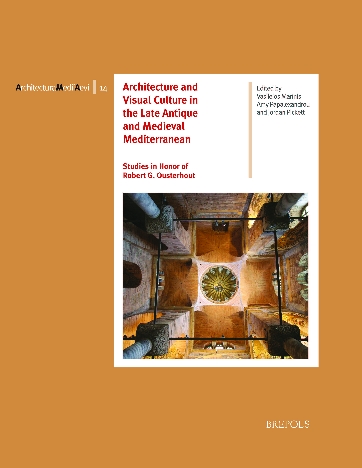
Architecture and Visual Culture in the Late Antique and Medieval Mediterranean
Studies in Honor of Robert G. Ousterhout
This book comprises sixteen essays addressing issues of art and architecture together with archaeology within the context of sacred space broadly defined. It encompasses a wide range of territories methodologies perspectives and scholarly concerns. Our point of departure is the built environment with all that this entails including religious and political ceremony painted interiors patronage contested spaces structural and environmental concerns sensory properties the written word as it pertains to architectural projects and imagined spaces. In all the scholars involved in this project find fresh approaches and uncover new meanings and interpretations in the material examined within this volume including buildings and objects from Europe to Asia and spanning from Late Antiquity through the end of the Middle Ages.
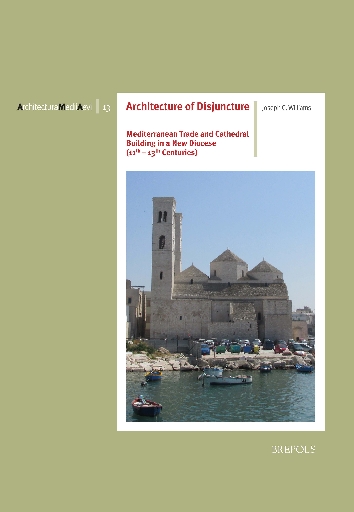
Architecture of Disjuncture
Mediterranean Trade and Cathedral Building in a New Diocese (11th - 13th Centuries)
Through careful analysis of the Romanesque cathedral of Molfetta (in Apulia southern Italy) Williams demonstrates how the commercial boom of the medieval Mediterranean changed the way churches were funded designed and built. The young bishopric of Molfetta emerging in an economy of long-distance trade competed with much wealthier institutions in its own diocese. Funding for the cathedral was slow and unpredictable. To adapt the builders designed toward versatility embracing multi-functionalism change over time specialization and a heterogeneous style.
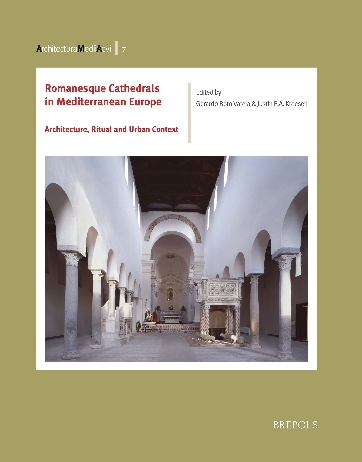
Romanesque Cathedrals in Mediterranean Europe
Architecture, Ritual and Urban Context
This volume explores the architecture and configuration of Romanesque cathedrals in Europe especially around the Mediterranean paying special attention to liturgical ritual furnishings iconography and urban context. From the tenth to the twelfth centuries cultural and artistic interchange around the Mediterranean gave rise to the first truly European art period in Medieval Western Europe commonly referred to as ‘Romanesque’. A crucial aspect of this integrative process was the mobility of artists architects and patrons as well as the capacity to adopt new formulas and integrate them into existing patterns. Some particularly creative centers exported successful models while others became genuine melting pots. All this took shape over the substrate of Roman Antiquity which remained in high esteem and was frequently reused.
In these studies Romanesque cathedrals are employed as a lens with which to analyze the complexity and dynamics of the cultural landscape of southern and central Europe from the tenth to the twelfth centuries. The architecture of every cathedral is the result of a long and complicated process of morphogenesis defined by spatial conditions and the availability of building materials. Their interior arrangements and imagery largely reflected ritual practice and the desire to express local identities. The various contributions to this volume discuss the architecture interior and urban setting of Romanesque cathedrals and analyze the factors which helped to shape them. In so doing the focus is both on the influence of patrons and on more bottom-up factors including community practices.
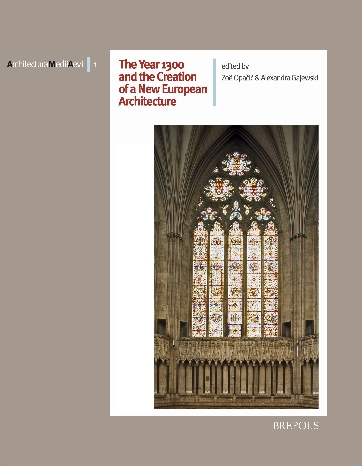
The Year 1300 and the Creation of a new European Architecture
The theme of the book is the origin of Late Gothic architecture in Europe around the year 1300. It was then that Gothic ecclesiastical architecture graduated from a largely French into a wholly European phenomenon with new centres of art production (Cologne Florence York Prague Kraków) and newly-empowered institutions: kings the higher nobility towns and friars. Profound changes in spiritual and devotional life had a lasting effect on the relationship between architecture and liturgy. In short architecture around 1300 became at once more cosmopolitan and more heterogeneous.
The book addresses these radical changes on their own terms-as an international phenomenon. By bringing together specialists in art architecture and liturgy from many parts of Europe and from the USA it aims to employ their separate expertise and to integrate each into a broader European perspective.
Dr Zoë Opačić is lecturer in the history and theory of architecture at Birkbeck College University of London. She specialises in the field of late medieval architecture and art particularly in Central Europe.
Dr Alexandra Gajewski is a Visiting Assistant Professor at the University of Michigan Ann Arbor and a Fellow of the Society of Antiquaries London. She works on Burgundian Gothic architecture and on Cistercian art in medieval France and the Empire.