


Archaeology of the Mediterranean World
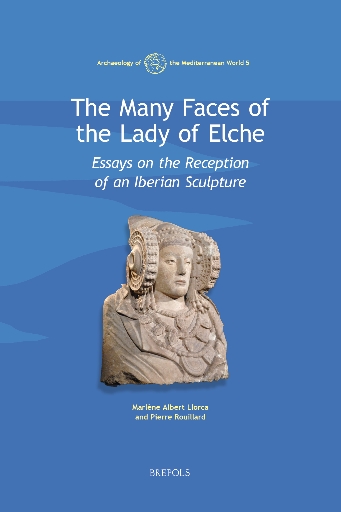
The Many Faces of the Lady of Elche
Essays on the Reception of an Iberian Sculpture
On 4 August 1897 farm workers in Elche — the site of ancient Ilici — discovered an Iberian sculpture of a woman that dated from the fifth– fourth centuries BCE. French archaeologist Pierre Paris dubbed this figure ‘the Lady of Elche’ and promptly purchased the sculpture on behalf of the Louvre Museum. There she drew the attention of European scholars who were intrigued by her stylistic features finally concluding that she bore witness to the existence of a specifically Iberian art. Since her discovery the Lady of Elche has been a source of fascination not only for scholars but also for artists and she has become an icon of regional and national identity across Spain. This volume co-written by an archaeologist and an anthropologist and translated here into English for the first time seeks to explore the importance of the Lady of Elche both for students of the past and for the peoples of Iberia. The authors here explore not only what we know — and still do not know — about her creation but also engage with key questions about what she represents for the men and women of our time who have questioned manipulated admired loved and often reinvented the singular beauty of this iconic figure.
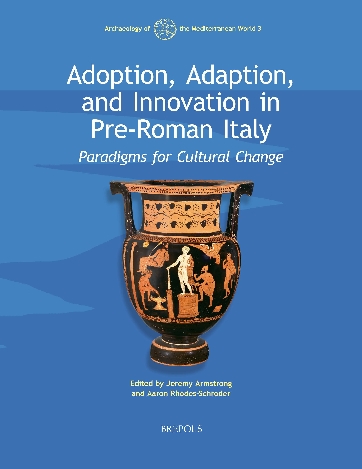
Adoption, Adaption, and Innovation in Pre-Roman Italy
Paradigms for Cultural Change
The ancient Mediterranean basin was once thought to be populated by large monolithic cultural-political entities. In this conception ‘the Greeks’ ‘the Romans’ and other stable and homogenous cultures interacted and vied for supremacy like early modern states or empires. Today however thanks largely to an ever-increasing archaeological record critical and sensitive approaches to the literary evidence and the impact and application of new theoretical approaches the ancient Mediterranean region is instead argued to be full of dynamic microcultures organized in a fl uid set of overlapping networks. While this atomization of culture has resulted in more interesting and accurate micro-histories it has also challenged how we understand cultural interaction and change.
This volume draws on this new understanding of cultural identity and contact to address the themes of adoption adaption and innovation in Pre-Roman Italy from the 9th-3rd centuries BCE. The contributors to this volume build upon recent paradigm shifts in research that challenge traditional Hellenocentric models and work to establish a new set of frameworks for approaching the tangled question of how ‘indigenous’ and ’foreign’ features relate to one another in the material record. Using focused case-studies ranging from the role played by mobile populations in transferring ideas and technologies to the different ways in which ‘foreign’ artistic elements were used by Italian peoples the volume explores what the - now commonly accepted - connectedness of a wider Mediterranean world meant for the people of Italy in practical terms and offers new models for how concepts and ideas were transmitted reinterpreted repurposed and re-appropriated in early Italy to fit within their local context.
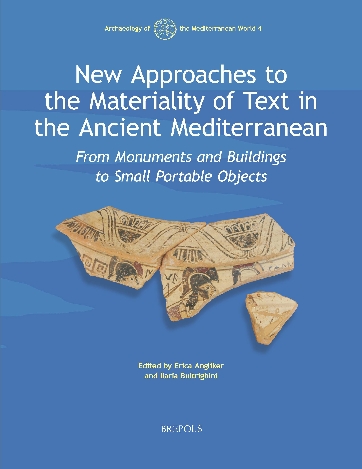
New Approaches to the Materiality of Text in the Ancient Mediterranean
From Monuments and Buildings to Small Portable Objects
In recent years the study of epigraphy and ancient writings has undergone a ‘material turn’ as scholars have increasingly looked beyond just the contents of written sources to also focus on their broader material and visual contexts as a way of exploring the layers of different meanings that can attach to written evidence. Taking this interdisciplinary approach as its starting point this volume draws together contributions from specialists in different fields in order to analyze text-bearing objects and monuments from across the ancient Mediterranean world.
From texts inscribed on large stone monuments and buildings clay or metal tablets to writings on papyrus and parchment rolls jewellery vases coins and textiles writing on different materials had manifold possibilities. The case studies gathered here examine novel approaches to the creation and display of inscribed objects as well as to the ways in which such items were approached and perceived by people during a chronological period ranging from the Late Bronze Age to Late Antiquity. In doing so the volume sheds new light not only on the interplay between ancient texts text-bearers and viewers within their wider spatial and physical contexts but also on the possibilities opened by exploring the material aspects of writing through interdisciplinary approaches.
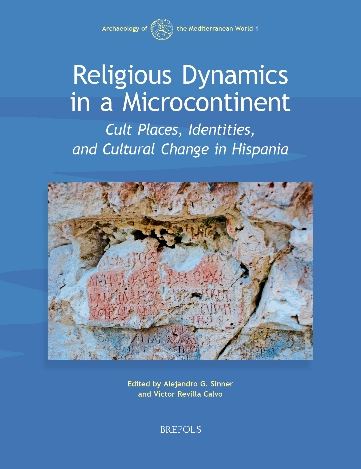
Religious Dynamics in a Microcontinent
Cult Places, Identities, and Cultural Change in Hispania
The Roman conquest of the Iberian peninsula a land already inhabited by peoples who were characterized by cultural ethnic and social diversity was one of the longest and most complex colonial processes to have occurred in the Roman world. Different political entities saw integration and interaction taking place at different speeds and via different mechanisms and these differences had a profound impact on the development of religious dynamics and cultural change across the peninsula.
This edited volume draws together contributions from a number of experts in the field in order to deepen our understanding of religious phenomena in Hispania - in particular cult rituals mechanisms and spaces - and in doing so to offer new insights into processes of cultural and social change and the impact of conquest and colonialism. The chapters gathered here identify how forms of religious interaction occurred at different levels and scales and explore the ways in which religion and religious practices underpinned the construction development and renegotiation of different identities. Through this approach they shed important light on the crucial role of cultic practices in defining cultural and social identity as Iberia’s provincial communities were drawn into the Roman world.
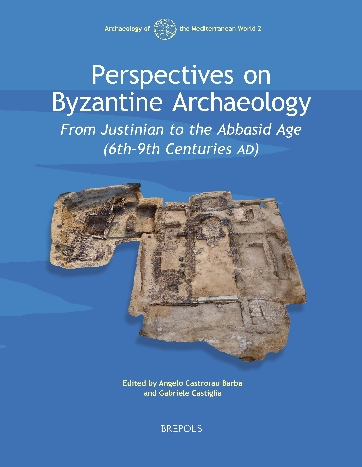
Perspectives on Byzantine Archaeology
From Justinian to the Abbasid Age (6th–9th Centuries)
From the rule of Justinian (AD 527-AD 565) up to the Islamic conquests in the Byzantine Empire the lands of the Mediterranean basin underwent significant change from the sixth to the ninth centuries AD. Urban and rural areas were transformed landscapes altered and material cultures saw a fundamental shift. But such changes were by no means uniform across the region. From Jordan Greece and the Danube to the Italian peninsula Sicily Spain and the Horn of Africa the contributions gathered together in this volume explore new advances and perspectives from the field of ‘Byzantine’ archaeology over the longue durée in order to shed new light on this period.
What was the impact of the reconquest of Justinian? What was the impact of Byzantium in archaeological record? What are the archaeological indicators of urban and rural transformations from the sixth to the ninth centuries? Did architecture represent a marker of socio-economic and cultural change within the Byzantine world? By engaging with such key questions and by drawing on new data from surveys excavations material culture and historical sources this volume offers new insights into archaeological perspectives on the broader Byzantine world.