


ARAXES
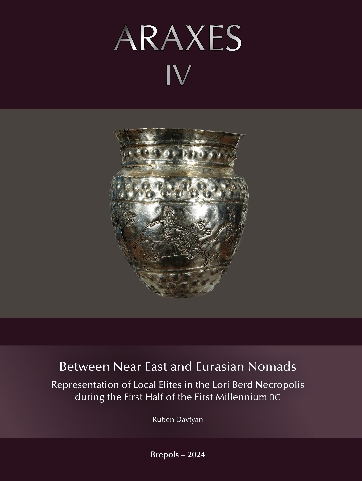
Between Near East and Eurasian Nomads
Representation of Local Elites in the Lori Berd Necropolis during the First Half of the First Millennium bc
The site of Lori Berd located in northern Armenia is home to an extraordinary necropolis that once housed the dead of the local elite during a period that spanned from 2200 to 400 BC. Influenced both by Urartian conquests from the south and by invasions from the Eurasian nomadic tribes from the north the people of this region buried their dead with prestigious artefacts complex customs and a particular reverence shown during the later stages of the Early and Middle Iron Ages (1000–550 BC). This volume offers a detailed account of the archaeological significance of the site providing detailed accounts of thirty-one tombs the majority of which have never before been comprehensively published and seeking to set Lori Berd in its broader historical and material context. Through this approach the book offers a comprehensive exploration of the Iron Age in the South Caucasus unravelling the interconnected themes of wealth power and cultural expressions.
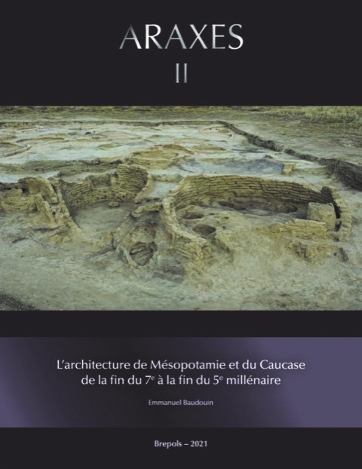
L’architecture de Mésopotamie et du Caucase de la fin du 7e à la fin du 5e millénaire
Cet ouvrage invite à retracer l’histoire des relations culturelles entre les communautés de Mésopotamie et du Caucase durant le Néolithique et le Chalcolithique par une étude des mécanismes d’innovation et de transmission des connaissances en architecture. Le premier objectif est de caractériser ces échanges techniques pour déterminer si les communautés du Caucase se sont installées de manière autonome ou si elles ont profité de l’expérience de celles de Mésopotamie. Le second objectif est de comprendre l’évolution de l’architecture "complexe" au Samarra et à l’Obeid et de mesurer l’impact social de l’expansion obeidienne. Ces recherches montrent que le milieu du sixième millénaire marque un tournant dans les échanges techniques et les relations culturelles entre ces deux régions. Auparavant ces échanges apparaissent diffus dans les régions situées au nord de la Mésopotamie centrale. Ensuite l’expansion obeidienne entraîne une homogénéisation progressive des techniques dans l’ensemble du bassin syro-mésopotamien à laquelle se sont greffés emprunts techniques et adaptations régionales.
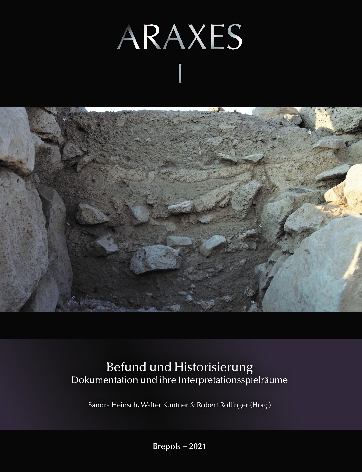
Befund und Historisierung
Dokumentation und ihre Interpretationsspielräume
Archaeological periodization schemes of material culture development in Northern Mesopotamia from 7th to 5th centuries bce traditionally refer to the sequence of dynasties. In particular they highlight historical events related to distinguished members of the royal houses of the Sargonids Urartians Medes Teispids and Achaemenids. However whereas the repercussions these Iron Age empires had on the history of the Near East are undeniable the impact they had on the material culture and its development is not always equally tangible in the archaeological findings. The latter are not infrequently characterized by continuity rather than by incisive changes as recent studies and re-evaluations of key sites in Syria Iraq Iran and Armenia show. This publication uses case studies to address problems that arises when the archaeological (relative concept) and historical (absolute concept) methodology use different intrinsic values of time to reconstruct history and to understand cultural material development.