


Architectura Moderna
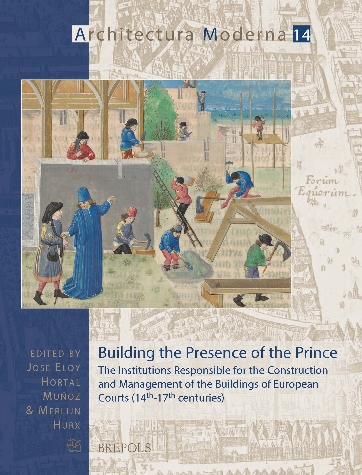
Building the Presence of the Prince
The Institutions Responsible for the Construction and Management of the Buildings of European Courts (14th-17th centuries)
By the late Middle Ages architecture became an increasingly important means of representation of princely rule and institutions. In addition to their symbolic significance the ruler’s buildings served a host of practical purposes. Obviously castles and fortresses defended the territory while urban and rural residences served the itinerant court during its proceedings but their possessions also comprised a wider network of estates that included infrastructure and agricultural commercial industrial and administrative buildings. Together these networks of sites became a significant means of consolidating the sovereigns’ power and served as key instruments for promoting their rule. To tighten the control over their possessions and to ensure their upkeep rulers set up Offices of Works permanent administrative bodies entrusted with their management.
These building administrations have not yet been systematically studied and it remains unclear to what extent such centralised institutions developed autonomously responding to local conditions and requirements or were part of international developments facilitated by the close networks of the European courts.
This volume with contributions from architectural historians administrative historians and court historians represents a first attempt to compare these institutions on a pan-European scale from the late Middle Ages up to the end of the seventeenth century. It aims to explore the relationships between the local specificities of these organisations and their shared characteristics. From a multidisciplinary perspective it addresses questions concerning the nature of such administrations their purpose organisational structure and judicial powers as well as their role in the formation of the state.
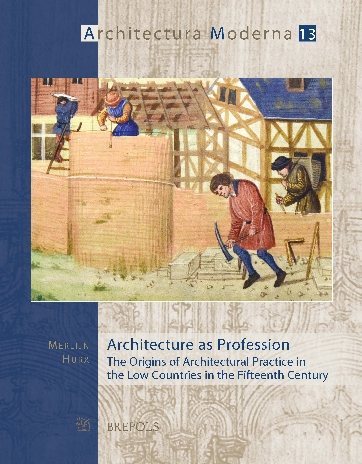
Architecture as Profession
The Origins of Architectural Practice in the Low Countries in the Fifteenth Century
Fifteenth-century Florence is generally considered the cradle of the modern architect. There for the first time since Antiquity the Vitruvian concept which distinguishes between builder and designer was recognised in architectural theory causing a fundamental rupture in architectural practice. In this well-established narrative Northern Europe only followed a century later when along with the diffusion of Italian treatises and the introduction of the all’antic style a new type of architect began to replace traditional gothic masters. However historiography has largely overlooked the important transformations in building organisation that laid the foundations for our modern architectural production such as the advent of affluent contractors public tenders and specialised architectural designers all of which happened in fifteenth-century Northern Europe. Drawing on a wealth of new source material from the Low Countries this book offers a new approach to the transition from the Middle Ages to the Early Modern Period by providing an alternative interpretation to the predominantly Italo-centric perspective of the current literature and its concomitant focus on style and on Vitruvian theory.
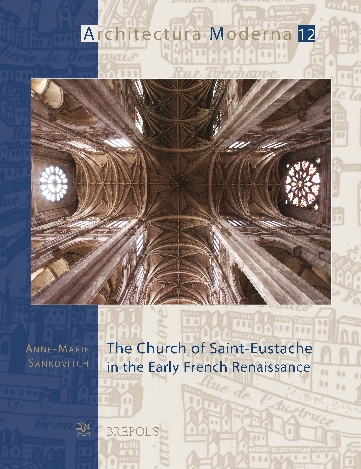
The Church of Saint-Eustache in the Early French Renaissance
Considered the most important French Renaissance church Saint-Eustache in Paris has long remained an enigma. What new circumstances allowed its parishioners long desirous of a new church suddenly to begin buiding it 1532? Did Francis I play a role? Was the obscure Jean Delamarre possibly its architect? Could the ideas of the Italian theorist Serlio have affected his design? These and other key issues are resolved by the author in a sustained reading of all known evidence. The baffling formal complexity of the church is clarified through lucid analysis that employs hundreds of new photographs executed by the author. The building is studied within the context of sixteenth-century French architecture and its roots in antiquity the Italian Renaissance Romanesque and Gothic France and the Flamboyant Style. Sankovitch’s work will serve as a standard for all those who desire to understand this mysterious building and its times. A bright clear window revealing an unseen architecture previously an invisible - or at best murky - episode in the history of art it is a portal to all future research on the building and a key to the architectural life of the period.
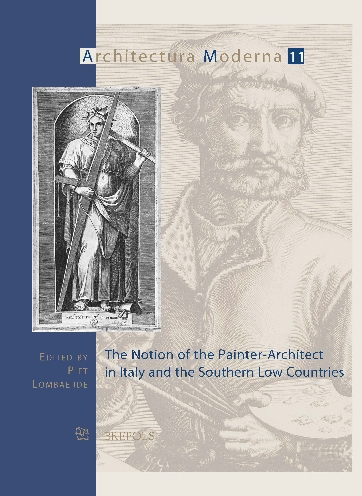
The Notion of the Painter-Architect in Italy and the Southern Low Countries
Since the time of Vitruvius architects have been expected to have a broad knowledge of the arts and sciences. The need for good skills in sketching and working up drawings even led from the sixteenth century onwards to fierce debates on the meaning and status of ‘disegno’. While Italy saw the emergence of famous painters who excelled as architects also in the Southern Netherlands the notion that an architect must also have a mastery of the painter’s art became widespread owing in part to the dissemination of publications by Sebastiano Serlio and Pieter Coecke van Aelst. In the seventeenth century Peter Paul Rubens was able to make his own contribution to this discussion as a consequence of his sojourns in Italy (1601-1608). Bringing together distinguished art and architecture historians from Europe and North America this interdisciplinary approach will shed light on the interrelationship of architecture and painting in the Southern Netherlands.
Piet Lombaerde is professor in theory and history of architecture and urbanism at the University of Antwerp faculty of design sciences. His research interests cover the history of fortifications (1500-1900) urban history and the history of hydraulics. He is co-editor with Krista De Jonge (KU Leuven) of the series Architectura Moderna (Brepols Publisher) and author of several books on the history and theory of architecture and urban planning.
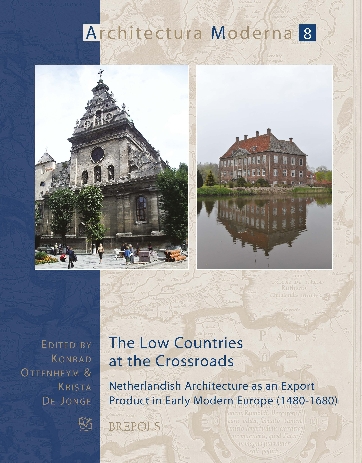
The Low Countries at the Crossroads
Netherlandish Architecture as an Export Product in Early Modern Europe (1480-1680)
This book focuses on the diffusion of architectural inventions from the Low Countries to other parts of Europe from the late fifteenth until the end of the seventeenth century. Multiple pathways connected the architecture of the Low Countries with the world but a coherent analysis of the phenomenon is still missing. Written by an international team of specialists the book offers case-studies illustrating various mechanisms of transmission such as the migration of building masters and sculptors who worked as architects abroad networks of foreign patrons inviting Netherlandish artists printed models and the role of foreign architects who visited the Low Countries for professional reasons. Its geographical scope is as broad as the period under review and includes all European regions where Netherlandish elements were found: from Spain to Scandinavia and from Scotland to Transylvania.
Konrad Ottenheym is professor of architectural history at Utrecht University The Netherlands. He is specialised in the architecture of the Northern Low Countries and its international relationships.
Krista De Jonge is professor of architectural history at Leuven University Belgium. She is well known for her publications on the architecture of the Southern Low Countries of the fifteenth and sixteenth centuries in a European perspective.
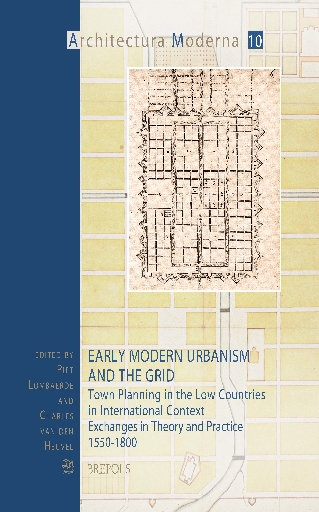
Early Modern Urbanism and the Grid
Town Planning in the Low Countries in International Context. Exchanges in Theory and Practice 1550-1800
From the late sixteenth century until around 1800 new ideas and practices of urban planning and the implementation of public buildings water works and fortifications from the Low Countries were disseminated across Europe and America. Engineers mathematicians and other scientists in the Low Countries applied methods of design and land surveying that were gradually assimilated and often modified following exchanges within local practice. In some cases models were projected onto the existing situation. This phenomenon of disseminating and exchanging theoretical models and practical methods between the Low Countries Europe and its colonies during this period developed into a new Early Modern Urbanism movement within the Western World.
Grid-like plans figured prominently in these processes of dissemination and exchange. In the Low Countries grid-like structures allowed a comprehensive approach to a multitude of complex problems in urban planning (for example the connection of canals streets and fortifications) in parts of existing towns as well as in city extensions and ex novo cities. Moreover the experimental approaches in Antwerp and other urban laboratories resulted in new theories on town planning and fortification as well. Given the distinct cultures of the Catholic Spanish Southern Netherlands and the Republican Dutch Calvinist Northern Netherlands the Low Countries provide an excellent case for studying the identity of urban forms. Both engaged in enormous expansion overseas and the simultaneous exchange of practices between the southern and northern parts of the Low Countries lead to the combination of identities. In this new volume in the Architectura Moderna series various scholars examine the dissemination of practical methods and theoretical models of urban planning from the Northern and Southern Low Countries in addition to exchanges with local practices in Northern and Central Europe and in the New World.
Piet Lombaerde is professor in history and theory of architecture urbanism and fortification at the Faculty of Design Sciences of the University College of Antwerp (UA).
Charles van den Heuvel is Head Research of History of Science at the Huygens Institute for the History of the Netherlands of the Royal Netherlands Academy of Arts and Sciences.
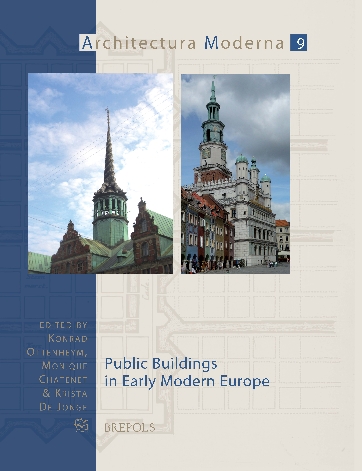
Public Buildings in Early Modern Europe
In the early modern European city public buildings were the main pillars of the political mercantile and social infrastructure. In a first attempt to create a preliminary overview of current knowledge in various European countries the IIIe and Ve Rencontres d’Architecture Européenne held in 2006 and 2008 at Utrecht University The Netherlands in cooperation with the Centre André Chastel Paris were dedicated to this subject. In these two meetings architectural historians from all over Europe discussed the results of their research on the development of various types of public building in the various European regions between the late fifteenth and mid-eighteenth century. This publication brings together most of the contributions to these two conferences subdivided into three categories:
buildings erected for government and justice
buildings serving mercantile functions
buildings for education health and social care.
Konrad Ottenheym is professor of Architectural History at Utrecht University.
Monique Chatenet is senior researcher at the Centre André Chastel/Sorbonne Paris-IV Paris.
Krista De Jonge is professor of Architectural History at the Catholic University Leuven.
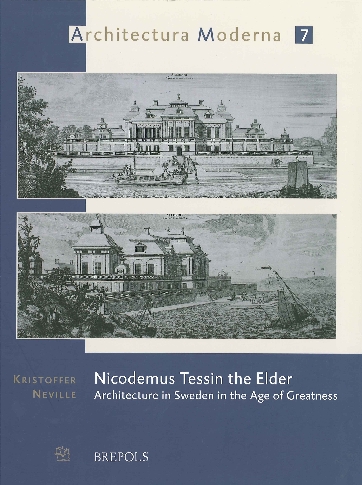
Nicodemus Tessin the Elder. Architecture in Sweden in the Age of Greatness
Nicodemus Tessin the Elder was an architect gentleman and founder of the artistic dynasty that was immensely influential at the Swedish court in the seventeenth and eighteenth centuries. He was architect to the crown to the nobility and to the city of Stockholm and he supplied buildings for a wide range of functions from palaces to banks courthouses and fortifications. His unusually extensive travels in the Netherlands Italy France and Germany provided him with a comprehensive picture of contemporary European architecture which he drew on as he synthesized a new group of buildings that would attract international attention as models for princely architecture. His productivity required a new approach to architecture and he was part of the first generation of architects in northern Europe to develop the architectural studio distinguishing the design process from the business of building and in the process recreating himself as the modern architect.
Kristoffer Neville is assistant professor of early modern art and architecture in the department of art history at the University of California Riverside.
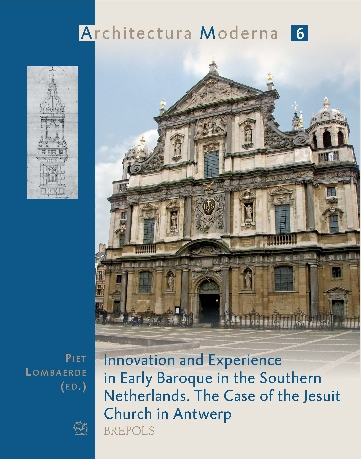
Innovation and Experience in Early Baroque in the Southern Netherlands. The Case of the Jesuit Church in Antwerp
During the sixteenth century Antwerp was at the forefront of the Renaissance north of the Alps. Not only a new architectural style flourished in the Antwerp metropolis but at the end of the sixteenth century sciences such as mathematics optics geometry and perspective became more and more important. They helped to redefine architecture and the other fine arts on a more scientific base. Their introduction in the arts at the beginning of the seventeenth century lead to new experiences applications and even innovations in architecture. The Jesuit Order played a very crucial rule in this process. The realization of their new church in the centre of the city of Antwerp became one of the first attempts to bring together the applications of all those new ideas in one total project. Paintings by Peter Paul Rubens and sculptures by Hieronymus Duquenoy Artus Quellinus etc. were participating in one of the first Early Baroque architectural realizations in the Low Countries. The Jesuit Church of Antwerp currently the St Carolus Borromeus Church was designed by François d'Aguilón a scientist and architect of the Jesuit Order. His publication Opticorum Libri sex on optics and on the reflection of light was edited by the Officina Plantiniana in 1613 the same year he started his project for the church. This scientific and theoretical work helps us to understand the new experiences with light and space he experimented with.
It is the aim of this publication to bring together researchers to confront the results of their studies about the interpretation of the façade of this Counter-Reformation church the phenomenon of diffuse light created by reflection and refraction on marble statues pillars and multiple ornaments the combination of linear and parallel perspective applications the sacral and social use of space the signification of the façade and towers as parts of a perspective scene in the city landscape. Special attention is also devoted to the School of Mathematics installed in Antwerp by the Jesuits at that time.
The central question will be whether we can conclude that at the beginning of the seventeenth century the innovative sense of creating a new architecture so typical for the sixteenth century in Antwerp still persisted in this city during the early seventeenth century and even lead to a new interpretation of architectural space in European context.
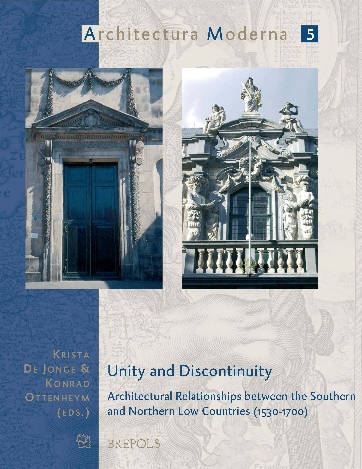
Unity and Discontinuity
Architectural Relationships between the Southern and Northern Low Countries (1530-1700)
This study focuses on change and continuity within the architecture of the Southern and Northern Low Countries from 1530 to 1700. Instead of looking at both regions separately and stressing the stylistic differences between the classicist North and the baroque South the book establishes a new common history of architecture for both parts of the Low Countries during the seventeenth century. Their reception of Antiquity in the guise of the Italian Renaissance first introduced in Court circles in the early sixteenth century constituted the common heritage on which they built after the political separation. The book also reassesses the position of Netherlandish architecture in the international debate on the Renaissance north of the Alps.
Krista De Jonge is professor of history of architecture at the Catholic University of Leuven.
Konrad Ottenheym is professor of history of architecture at Utrecht University.
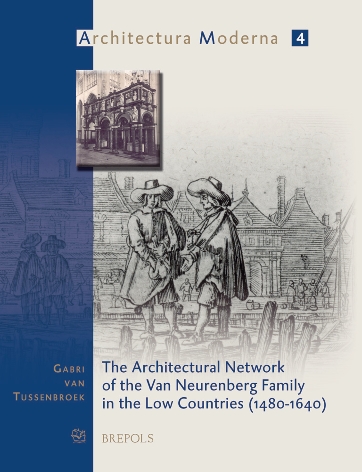
The architectural network of the Van Neurenberg family in the Low Countries (1480-1640)
Stone traders initially based in the Meuse valley the Van Neurenberg family expanded northwards to Nijmegen and Dordrecht from 1530 on becoming an international trading company in the process. Their subsequent activities reflect the huge changes the Dutch building sector underwent during the 17th century. They cooperated with the most famous artists of their time such as Hendrick de Keyser in Amsterdam and were involved in the most modern building projects of the Dutch Golden Age such as Frederik Hendrik of Orange's Honselaarsdijk Palace. This study offers new insights into a relatively neglected aspect of Netherlandish building history in the 16th and 17th century.
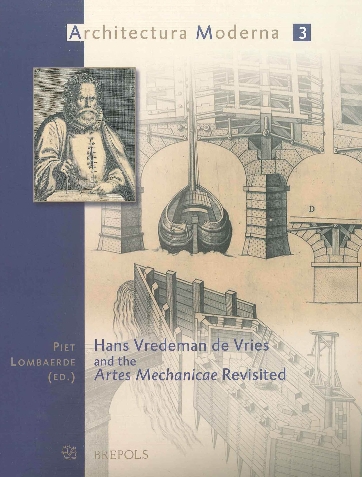
Hans Vredeman De Vries And The Artes Mechanicae Revisited
In this publication attention is devoted to the technical aspects in the work of Hans Vredeman de Vries. Throughout his long career he has perfected his skills as a painter architect fortification engineer and hydraulic engineer. Those technical aspects are considered not so much as discrete characteristics but rather as a particular way in which this late sixteenth- century artist from the Low Countries typically dealt with a number of disciplines of the technical and applied arts. Indeed from a predominantly traditional approach to his work too much emphasis has until now been placed on his highly personal contribution to the dissemination of ornamental elements whereby typical Renaissance characteristics such as technical innovation and engineering are relegated to the background.
During Hans Vredeman de Vries's lifetime attempts began to be made to define the arts and the sciences. Defining the demarcation criteria of the sciences would continue to gain in importance especially at the beginning of the seventeenth century. With his work Vredeman de Vries raised Architectura together with all its technical acquisitions to the level of both the Artes and the Scienciae. Attempts were even made to establish some kind of hierarchy. Yet the artist never strictly separated fine and applied arts nor did he explicitly distinguish between theory and practice. It was the intention of Vredeman de Vries to aim towards an equilibrium between the sciences and the arts. A team of thirteen distinguished art and architectural historians from North America Germany the Netherlands and Belgium focus upon Vredeman de Vries's diverse manifestations of knowledge: urbanism fortification works hydraulics interior decoration architecture (its practical and technical aspects) inlay work and furniture tapestry and the use of scientific instruments. One author points out that the similarity between such 'technical' practices and the structure of for example sixteenth-century rhetorical practices forces us to consider Vredeman de Vries not simply as an architect an engineer or a designer but above all as an experimenter in multiple disciplines and various fields.
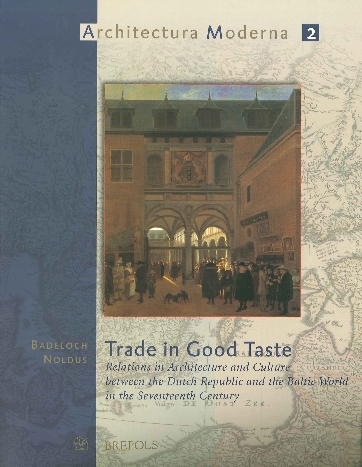
Trade in Good Taste
Relations in Architecture and Culture between the Dutch Republic and the Baltic World in the Seventeenth Century
During the seventeenth century Dutch influence on the Baltic region both economic and aesthetic was unrivaled. In the wake of the Dutch monopoly on Baltic trade cultural contacts between the Dutch Republic and the Baltic world flourished. The Dutch Republic was even to fulfil an exemplary function in the Baltic world (particularly in the Swedish Empire the dominating power in the region) not solely limited to the commerce of commodities but extending to the domain of architecture and art as well.
In this intensive cultural traffic an important role was set aside for Dutch immigrants architects artists and their agents. Apart from their regular activities as diplomats or news correspondents agents mediated in cultural affairs for patrons in the North. As such they occupied a key role in the relations between the Baltic world and the Dutch Republic. The pivotal element in these networks they negotiated between Baltic commissioners and Dutch architects artists and suppliers of luxury items including sculptures tapestries paintings as well as a wide range of books and prints - all of which were available on the Amsterdam market. These extensive networks mark the Dutch Republic as a major centre of architecture art and information crucial to the cultural development of northern Europe.
The history of this lively trade in good taste is told on the basis of rich archival material including drawings book and art collection inventories correspondence travel journals and diaries.
Badeloch Noldus is a Senior Researcher at Frederiksborg Castle the Danish Museum of National History. Her interests cover art agency and art trade in early modern Northern Europe. Recent publications include Your Humble Servant. Agents in Early Modern Europe (2006).
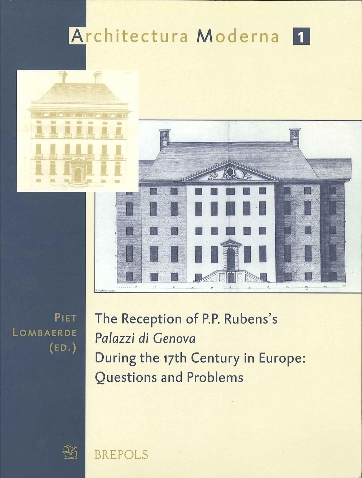
The Reception of P.P. Rubens's 'Palazzi di Genova' during the 17th Century in Europe: Questions and Problems
Rubens' book 'Palazzi di Genova' was well diffused in European countries as England the Netherlands France Germany and Italy thanks to the numerous contacts the famous painter and diplomat maintained in humanistic artistic and political circles. From 1622 on this book containing two volumes was edited at several times during the 17th and 18th Century. But the direct influences of the numerous façades plans cross-sections staircases and building details on modern architecture look rather limited especially in his own country. In this study several scholars in architectural history analyse how the examples of Genoese palazzi and churches as presented by Rubens were accepted in different European countries. Much attention is given to the question if these examples inspired a new architectural typology in which the inner court of the houses was substituted by a 'salone in mezzo'. An attempt is made to situate Rubens' book among the late 16th and early 17th Century treatises and model books. The way in which Rubens presented the new Genoese architecture of villa's palaces and churches and the introduction he wrote as a 'painter-architect' to this book were so modern at that time that the reception of this prestigious edition in folio had more to do with changes in considering architectural theory and practice as with the propagation of a late renaissance style influenced by Antique examples.