


Public Buildings in Early Modern Europe
Abstract
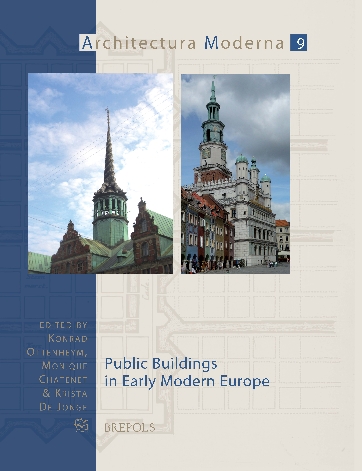
In the early modern European city, public buildings were the main pillars of the political, mercantile and social infrastructure. In a first attempt to create a preliminary overview of current knowledge in various European countries, the IIIe and Ve Rencontres d’Architecture Européenne, held in 2006 and 2008 at Utrecht University, The Netherlands, in cooperation with the Centre André Chastel, Paris, were dedicated to this subject. In these two meetings, architectural historians from all over Europe discussed the results of their research on the development of various types of public building in the various European regions between the late fifteenth and mid-eighteenth century. This publication brings together most of the contributions to these two conferences, subdivided into three categories:
buildings erected for government and justice
buildings serving mercantile functions
buildings for education, health and social care.
Konrad Ottenheym is professor of Architectural History at Utrecht University.
Monique Chatenet is senior researcher at the Centre André Chastel/Sorbonne Paris-IV, Paris.
Krista De Jonge is professor of Architectural History at the Catholic University Leuven.
