


Epitome musical

Chanter par le Si en France au xvii e siècle
Pionniers et prémisses du solfège moderne
En 1666 la « Methode facile pour apprendre à chanter la musique » (Paris Ballard) est le premier ouvrage imprimé en France à recommander l'utilisation du Si. Cette septième syllabe de solmisation permet de s’affranchir du solfège ancien des hexacordes et des muances. La gamme du Si ou gamme française s'impose comme une nouvelle norme parallèlement à une actualisation du discours sur les échelles musicales prélude à l’énonciation des principes de la tonalité.
Pourtant depuis la fin du XVIe siècle des solmisations heptacordales essaiment ailleurs de l’Italie au Danemark. La France semble à rebours du reste de l’Europe : elle tarde à réagir à ce nouveau modèle et s’avère finalement être le seul pays où le Si est intégré durablement. Quel fut le cheminement de ces idées et pratiques ? Que disent-elles des représentations de l’espace sonore qui coexistent et s’anamorphosent au XVIIe siècle isthme entre Humanisme et Lumières ? Ces questions serpentent dans la littérature depuis que Brossard Montéclair ou Rousseau s’en sont emparés.
L’étude de sources essentiellement manuscrites permet aujourd’hui de préciser les jalons de cette histoire en France de mettre en lumière des pionniers autant que des détracteurs du Si. Leurs témoignages sont issus de l'entourage scientifique de Mersenne des sphères huguenotes et mauristes des chapelles musicales parisiennes et finalement des méthodes destinées aux amateurs. C’est en questionnant ces pionniers leurs écrits et les contextes dans lesquels ils ont évolué que ce pan de l’histoire du solfège est ici mis en perspective et d’une certaine manière humanisé.
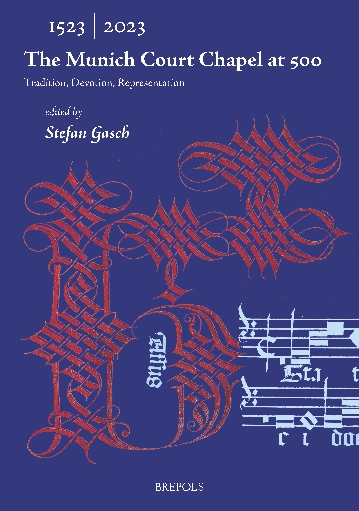
The Munich Court Chapel at 500
Tradition, Devotion, Representation
This collection of essays is the first to focus exclusively on the Wittelsbach court of Duke Wilhelm IV of Bavaria (1493–1550). The contributors argue for a deeper understanding of this duke’s reign and acknowledge his crucial role in shaping the religious and cultural identity of the Duchy of Bavaria. By providing insights into the duke’s cultural aspirations the organisation of the court musical sources religious musical practice and everyday working life this book aims to: (1) situate the court of Wilhelm IV in the context of the religious and political upheavals of the early sixteenth century; (2) trace the development of the musical repertoire and personnel of the Bavarian court chapel between 1500 and 1550; and (3) critically assess the degree to which the Munich court could be considered ‘modern’ by re-evaluating the broader cultural religious and musical life of the court around 1520. The volume thus sheds light on the cultural ambitions of a duke who defined music and art as expressions of strategic elements that interwove tradition devotion and representation in a programme of governance based on humanist education—a duke whose foresight enabled the Munich court to quickly become one of the most prestigious and famous seats of power in the Holy Roman Empire.
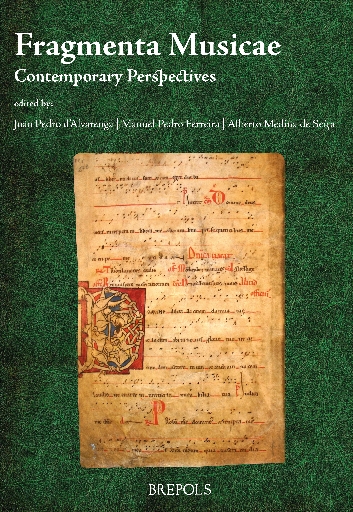
Fragmenta Musicae
Contemporary Perspectives
This volume stems from a research project on medieval and sixteenth-century fragments with music carried out at CESEM–Centre for the Study of the Sociology and Aesthetics of Music Lisbon Nova University between 2021 and 2024 as well as from an international colloquium on fragmentology held in Cascais Portugal in July 2023. It brings together twenty studies that address a varied range of disjecta membra including loose folios from dismembered manuscripts mutilated musical-liturgical codices incomplete sets of part-books truncated musical settings and even the remains of a historic organ. The aim is to invest these materials with significance beyond their condition as fragmented cultural artefacts by exploring their texts contexts meanings trajectories and when appropriate proposing methods for their reconstitution.
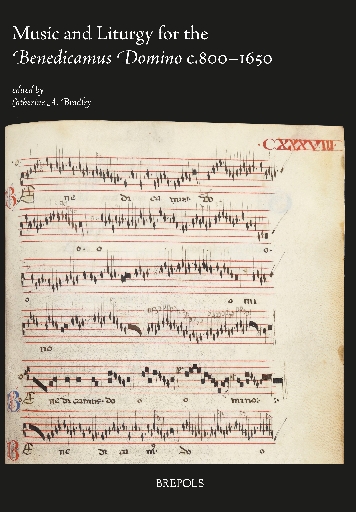
Music and Liturgy for the Benedicamus Domino c.800–1650
For more than a millenium singers in churches monasteries and private chapels across Europe have closed their worship with the joyful musical exclamation Benedicamus Domino (‘Let us Bless the Lord’). This moment has sounded in song many times a day: at the end of the Mass the Office hours outside the church walls in celebratory processions as well as in informal sacred devotional and festive contexts. Benedicamus Domino was uniquely associated with an unprecedented amount of creative freedom in the sacred rituals of the Christian West: plainchant melodies could be adopted at will from other parts of the liturgy and this moment inspired a proliferation of poetic and polyphonic elaborations from the eleventh century on.
This collection of essays brings together interdisciplinary contributions from eighteen scholars illuminating the wide range of ritual musical poetic manuscript and generic contexts for the Benedicamus Domino versicle in the period c.800–1650. Individual chapters engage with the evidence of liturgical commentaries and Patristic texts Ordines and hagiographies. They present and analyse musical and textual embellishments of the Benedicamus Domino as well as their written traces and material contexts with several sources discovered or discussed in detail here for the first time. Encompassing a wide geographical and generic scope this volume reveals unsuspected continuities and contrasts in the history of the Benedicamus Domino versicle in medieval and early modern Europe.

Noble Magnificence
Culture of the Performing Arts in Rome 1644-1740
The thirty chapters in this book are based on the work of an international multidisciplinary team of researchers and archivists brought together for the PerformArt project funded by the European Research Council from 2016 to 2022. This project investigated the artistic patronage of the great Roman aristocratic families of the seventeenth and eighteenth centuries through research in the extant archives.After the accession to the papal throne of Innocent X in 1644 and more so after the Peace of the Pyrenees in 1659 – which led to a greater loss of power for the pope in his relations with other European states – the Roman families stepped up their efforts to assert their social preeminence not only through architecture and the fine arts but also through the ephemeral performing arts: music theatre and dance which were omnipresent throughout the year and especially during the intense period of artistic production that was the Roman Carnival. The search for traces of these spectacles in the archives of these families reveals that their desire to display their magnificence – an ideal well documented in the literature of the period – gave rise to lavish expenditure on a scale that could only be justified by the benefits (if not tangible then at least symbolic) they hoped to gain.The essays in this book which draw on social economic history the history of ideas and the evolving artistic practices of the time make a major contribution to our knowledge of courtly societies in Ancien Régime Europe by integrating the performing arts into their analyses in innovative ways.
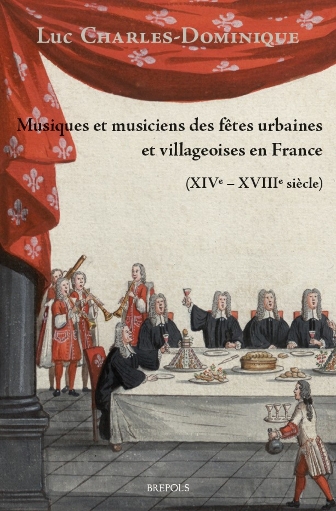
Musiques et musiciens des fêtes urbaines et villageoises en France (XIVe – XVIIIe siècle)
Si les premières traces de ritualisation musicale (noces banquets…) remontent au début du xiii e siècle avec les jongleurs ce n’est vraiment qu’à partir du siècle suivant que les ménétriers ou joueurs d’instruments sont chargés de la représentation des pouvoirs et de l’animation de la vie sociale dans sa totalité (fêtes politiques et religieuses de métiers calendaires votives familiales etc.) et qu’ils se regroupent en confréries ou corporations.
S’appuyant sur son « terrain » toulousain premier ainsi que sur le dépouillement systématique de deux siècles de littérature sur les ménétriers des provinces françaises et sur la collaboration de certains chercheurs en régions l’auteur propose une nouvelle réflexion d’ampleur sur le personnage historique du ménétrier (plus de trois mille musiciens recensés) son genre son statut social (poids de la marginalité musicienne des aveugles mendiants concurrence des musiciens occasionnels comme les maîtres d’école) sa fonction sa pratique et ses formes d’organisation.
Cette étude d’anthropologie musicale historique est doublée d’une approche territoriale cette géographie ménétrière étant abordée au niveau des provinces des villes (notamment des quarante ayant abrité des corporations et confréries ménétrières) des villages et de l’organisation administrative de ce vaste espace de la Ménestrandise (royauté et lieutenances ménétrières). Par ailleurs cette histoire sensible de l’art des ménétriers est aussi celle de leur rapport aux musiques dites « savantes » d’église aux cultures musicales autres comme celle des Bohémiens.
À l’aide de nombreuses archives de tableaux cartes documents iconographiques cet ouvrage dépeint la grande fresque d’une musique historique encore méconnue malgré sa longévité et sa centralité sociale et sociétale celle des ménestrels et joueurs d’instruments.
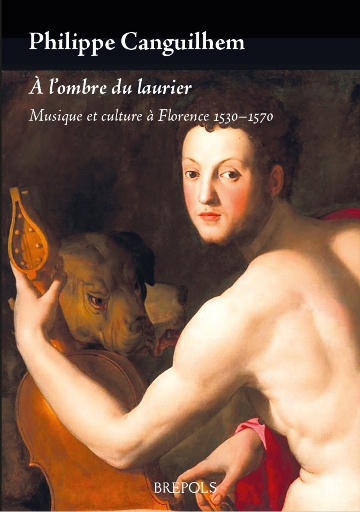
À l’ombre du laurier
Musique et culture à Florence 1530-1570
Fruit de plus de quinze années de recherches dans les bibliothèques et archives de Florence ce livre souhaite mettre en évidence le rôle de la musique dans le dispositif culturel mis en place par les premiers ducs de Florence Alessandro et Cosimo 1 depuis la chute de la dernière République jusqu’à l’obtention par Cosimo du titre de grand-duc de Toscane par le pape Pie V. Ces quatre décennies marquées par des bouleversements politiques sociaux et culturels ont été scrutées avec la plus grande attention dans les domaines de l’histoire de l’art de l’histoire politique économique ou littéraire mais la place de la musique dans cette société en mouvement n’avait jamais été évaluée en profondeur. Observer la vie musicale florentine de cette période permet pourtant de révéler les mutations profondes des structures de pouvoir des réseaux de sociabilité et des référents culturels.
Suivant un plan chronologique le livre s’appuie sur certains personnages-clés qui traversent toute la période les peintres Bronzino et Vasari les écrivains et académiciens Benedetto Varchi Antonfrancesco Grazzini ou Giovan Battista Strozzi dont les collaborations et les amitiés avec les musiciens florentins ont laissé de nombreuses traces. En suivant les activités de cette communauté cette enquête relate la transformation progressive des canti carnascialeschi en mascherate de cour les débats musicaux au sein de l’Accademia Fiorentina le dynamisme de la pratique du madrigal polyphonique dans les milieux amateurs sans oublier les mécanismes du mécénat musical et la construction d’une musique de cour au service du nouveau duché des Médicis.
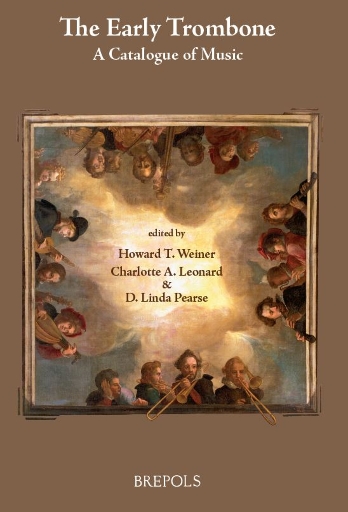
The Early Trombone: A Catalogue of Music
This catalogue documents nearly 9000 musical works specifying the trombone from anonymous pieces mentioned in early sixteenth-century writings up to Haydn’s iconic oratorios The Creation and The Seasons on the cusp of the nineteenth century. As such the catalogue provides a single resource for scholars trombonists chamber musicians and conductors to access instrumental solo and ensemble as well as choral works specifying trombone from the sixteenth through to the end of the eighteenth century. In compiling this inventory the authors have personally examined as many of the sources as possible either the original prints and manuscripts in libraries and archives or copies thereof (microfilm microfiche scans facsimile editions photocopies and photos). Relevant text passages from title pages prefaces and composer’s performance instructions are given in the original language and in English translation. Annotations discuss attributions the situation and peculiarities of sources and relationships to parallel transmissions. Extensive bibliographical information is provided to guide the readers to relevant secondary literature.
The catalogue is divided into three sections: concerted instrumental music (with solo trombone) instrumental music with trombones and vocal music specifying trombones with the vocal works representing the largest portion of the repertoire. The compositions range in size from pieces for a single voice with trombone and basso continuo to large-scale sacred and secular polychoral works with multiple trombones.
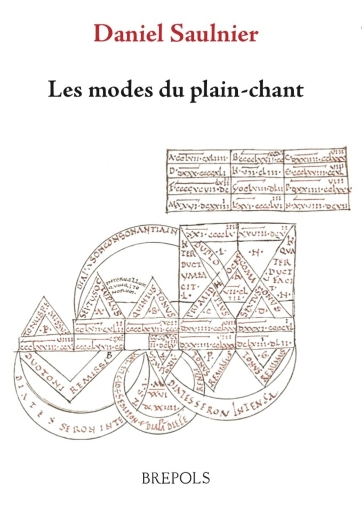
Les modes de plain-chant
Quand la musique européenne a commencé à buter sur les limites du système tonal dans lequel elle s’était progressivement enfermée c’est auprès du plain-chant et des mélodies populaires voire exotiques qu’elle est venue mendier un regain d’inspiration. Au cours de la seconde moitié du xix e siècle la musique dite « modale » apparaît aux yeux de certains compositeurs comme une opportunité de rajeunissement : pentaphonismes de réputation orientale gammes par tons entiers ou avec quarte augmentée s’intègrent dans le paysage musical occidental. De telles turqueries ne sont pas franchement nouvelles mais la situation est inédite. En effet au même moment la redécouverte du chant médiéval et de ses traités dans un contexte fortement idéalisé propulse les vieux modes ecclésiastiques porteurs de noms chatoyants des provinces de la Grèce antique sur le devant de la scène.
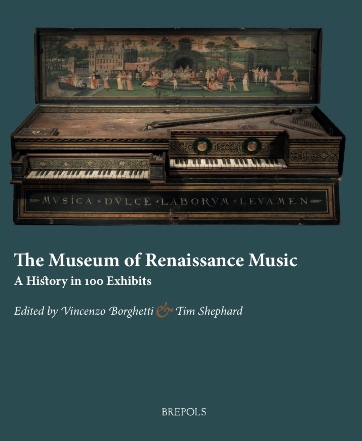
The Museum of Renaissance Music
A History in 100 Exhibits
This book collates 100 exhibits with accompanying essays as an imaginary museum dedicated to the musical cultures of Renaissance Europe at home and in its global horizons. It is a history through artefacts-materials tools instruments art objects images texts and spaces-and their witness to the priorities and activities of people in the past as they addressed their world through music. The result is a history by collage revealing overlapping musical practices and meanings-not only those of the elite but reflecting the everyday cacophony of a diverse culture and its musics. Through the lens of its exhibits this museum surveys music’s central role in culture and lived experience in fifteenth- and sixteenth-century Europe offering interest and insights well beyond the strictly musicological field.
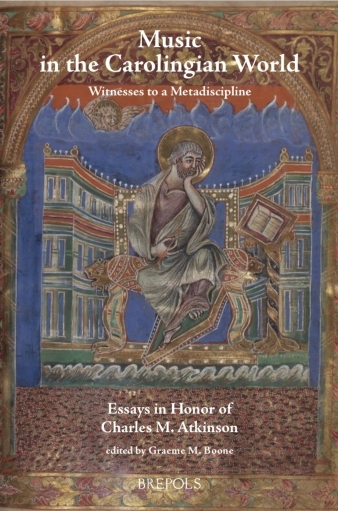
Music in the Carolingian World
Witnesses to a Metadiscipline, Essays in Honor of Charles M. Atkinson
Music in the Carolingian World stems from a conference honoring the career and wide-ranging research of Prof. Charles M. Atkinson leading scholar in early-medieval studies and author of the award-winning monograph The Critical Nexus (2010). The volume brings together seventeen essays to explore the broad ramifications of music as an arena of study in early-medieval culture; taken together they manifest the status of music not just as a field of research but as a metadiscipline that embraces numerous fields and specializations in medieval studies including philosophy theology literature philology paleography liturgy education political and institutional history as well as the practice theory and transmission of chant and related musical repertories. The essays are grouped into the four thematic categories of Verbum Numerus Ars and Cultus bookended by three keynote essays that touch in different ways on the theme of metadisciplinarity.
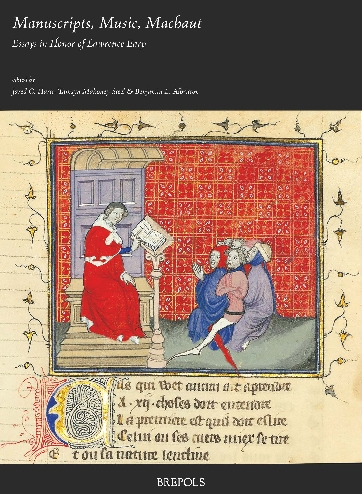
Manuscripts, Music, Machaut: Essays in Honor of Lawrence Earp
This multidisciplinary volume celebrates the scholarship and career of Lawrence Earp whose work has profoundly shaped the fields of Machaut studies musicology codicology and fourteenth-century studies in general. For over four decades Earp’s meticulous scholarship and generosity in collaboration have been a constant inspiration for medieval scholars students and colleagues alike. The twenty-six innovative essays herein gratefully acknowledge his influence and showcase a variety of fresh approaches. Recognizing both the breadth and depth of Earp’s work the sections of this book are devoted to bibliography historiography literature art history and several musicological topics. Many of the chapters focus on the oeuvre of Guillaume de Machaut but readers will also find explorations on Hildegard of Bingen Philippe de Vitry child performers in medieval theater notation genre motets from the late thirteenth to the early fifteenth centuries and polyphony in Italy and England. Made possible by Earp’s foundational and guiding work this amply illustrated volume invites future interdisciplinary research.
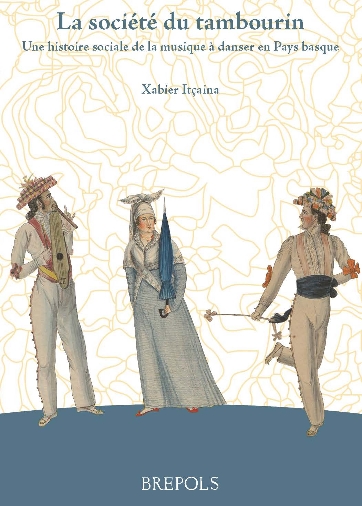
La société du tambourin
Une histoire sociale de la musique à danser en Pays basque
Plus vivaces que jamais les traditions musicales et dansées du Pays basque peuvent parfois donner l’impression d’une intemporalité qui aurait traversé les siècles. Or ici comme ailleurs les traditions ont une histoire et seule l’analyse du temps long permet de restituer l’épaisseur des permanences mutations emprunts qui émaillent l’histoire de la musique et des danses sur ce territoire. Ce livre s’attache à résoudre l’énigme du recours contemporain à la tradition en analysant l’historicité de la musique à danser et de ses usages sociaux. Des ménétriers rehaussant les corporations urbaines d’Ancien régime jusqu’aux usages sociopolitiques contemporains de la farce charivarique en passant par la relecture de la musique par le mouvement culturel basque au xix e siècle ce livre propose un voyage à la fois musical et sociohistorique qui bien au-delà du cas basque informe sur notre rapport sélectif aux héritages culturels.
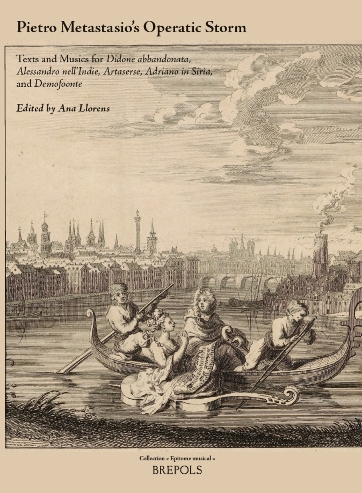
Pietro Metastasio’s Operatic Storm
Texts and Musics for Metastasio’s Didone abbandonata, Alessandro nell’Indie, Artaserse, Demofoonte, and Adriano in Siria
Pietro Metastasio (1698–1782) can be considered as the most renowned operatic dramatist of eighteenth-century Europe. His drammi per musica travelled all around Europe – and beyond – throughout the eighteenth century and the early years of the nineteenth. Courts palaces and public theatres were eager to perform his dramas and so hundreds of composers set them to music sometimes on more than one occasion.
This volume lets the surviving textual and musical traces speak for themselves. As a catalogue of the sources of five of Metastasio’s most successful titles – Didone abbandonata Alessandro nell’Indie Artaserse Adriano in Siria and Demofoonte – it offers their most complete chronology up to date as well as a detailed presentation of the printers and the theatres in which these texts became alive. In the case of the majority of these works thousands of manuscripts and copies attest to more than one hundred complete musical versions and over two hundred and fifty productions. They may thus rightly be considered witnesses to the operatic fever that took Europe by storm in the Enlightenment.
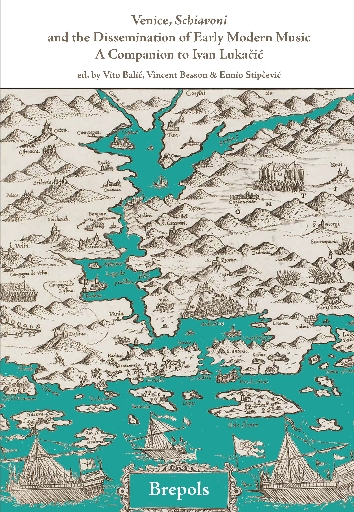
Venice, Schiavoni and the Dissemination of Early Modern Music: A Companion to Ivan Lukačić
Ivan Lukačić (born around 1585 died in 1648) composer Conventual Franciscan long-time “maestro di cappella” of the cathedral in Split is a typical “hero” of local historiography. As early as 1935 the Croatian-American musicologist Dragan Plamenac (real name Karl Siebenschein) prepared a selection from the only known collection of Lukačić’s compositions the Sacrae cantiones (Venice 1620). In the same year Plamenac introduced Croatian Renaissance and Baroque music to the local audience for the first time at a concert held at the Croatian Music Institute. In the aftermath of Plamenac’s emigration to the USA in 1939 it took several decades for new archival stylistic interdisciplinary and international research in Croatian musicology to take place. Despite the availability of earlier material as well as contemporary musical publications of Lukačić’s work (J. Andreis Zagreb 1970; E. Stipčević Padua 1986) it is not an exaggeration to say that Lukačić still remains unknown internationally. For many years a number of studies of Lukačić and the music of his contemporaries from the “other eastern coast of the Adriatic” published almost exclusively in Croatian and thus the international professional public had very limited access to them. This collection of studies dedicated to Lukačić and to the musical and cultural contacts between the two Adriatic coasts is the first volume to be published in both English and Italian. The echoes of the contacts between Italy and Croatia reached the Royal Palace in Portugal shops selling printed music in Denmark and church archives in Slovenia and Poland. The aim of this book is to follow the traces of that cultural dissemination.

Aurélien de Réome, Musica disciplina
La Musica disciplina d’Aurélien de Réome est le plus ancien traité de musique de l’Occident médiéval. Sa rédaction vers 849/850 survient au cours des années qui suivent le partage de l’Empire carolingien entre les fils de Louis le Pieux et s’inscrit dans un temps de consolidation de la réforme de la liturgie et du chant romano-franc. Le traité a pour objet principal la description des catégories tonales du chant liturgique de la messe et de l’office des principes de la psalmodie et surtout de l’articulation des tons en particulier ceux des versets des répons. Il témoigne enfin d’une réception précoce de la Musique de Boèce. Si le traité semble avoir connu une certaine fortune au cours du dernier tiers du ix e siècle comme en témoigne le manuscrit de Valenciennes (Valenciennes Bibl. Mun. Ms. 148) l’évolution de la théorie musicale et des modes de représentation graphique des mélodies autour de 900 par les auteurs de l’Alia musica de la Musica Enchiriadis ou par Hucbald de Saint-Amand enfin l’essor des notations musicales ont progressivement plongé le traité d’Aurélien et ses diverses recensions dans l’oubli.
Édition du texte d’après l’ensemble de la tradition manuscrite (Shin Nishimagi). Traduction en français. Introduction et notes critiques et explicatives (Christian Meyer). Index des chants cités.

Theatres of Belief: Music and Conversion in the Early Modern City
These eleven essays all centrally concerned with the intimate relationship between sound religion and society in the early modern world present a sequence of test cases located in a wide variety of urban environments in Europe and the Americas. Written by an international cast of acclaimed historians and musicologists they explore in depth the interrelated notions of conversion and confessionalisation in the shared belief that the early modern city was neither socially static nor religiously uniform. With its examples drawn from the Holy Roman Empire and the Southern Netherlands the pluri-religious Mediterranean and the colonial Americas both North and South this book takes discussion of the urban soundscape so often discussed in purely traditional terms of European institutional histories to a new level of engagement with the concept of a totally immersive acoustic environment as conceptualised by R. Murray Schafer. From the Protestants of Douai a bastion of the Catholic Reformation to the bi-confessional city of Augsburg and seventeenth-century Farmington in Connecticut where the indigenous Indian population fashioned a separate Christian entity the intertwined religious musical and emotional lives of specifically grounded communities of early modern men and women are here vividly brought to life.
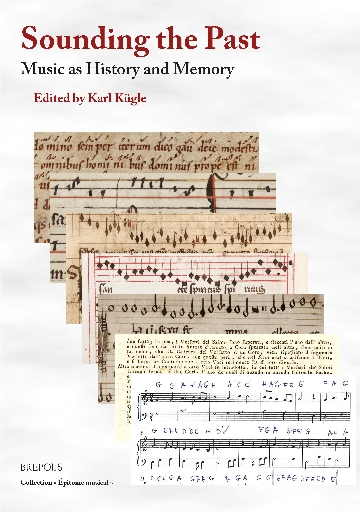
Sounding the Past
Music as History and Memory
This volume offers the first systematic exploration of the past as manifested in music of the later Middle Ages and the early modern period. It takes the reader on a journey of discovery across the continent from the genesis of a new sense of a musical past in early thirteenth-century Paris to the complex and diverse roles and pedigrees given music of the past in sources media genres communities and regions in the Age of Reformations. Particular attention is given to the use of older styles and musical traditions in changing constructions of religious and political identity laying the groundwork for a revised narrative of European music history that accommodates within its framework the full plurality of styles and regions found in the sources. The volume concludes with reflections on the conflicting appropriations and effects of the musical past today in composition performance musicological discourse and tourism.
Ludwig Senfl (c.1490–1543). A Catalogue Raisonné of the Works and Sources
Volume 2: Catalogue of the Sources - Abbreviations, Bibliography, Indexes
Until now scholars have had an inadequate picture of the scope and transmission of the œuvre of Ludwig Senfl (c.1490-1543) one of the most important Renaissance composers of the German-speaking lands. The current publication presents an extraordinary and exceptionally comprehensive catalogue raisonné for this Renaissance composer.
The Senfl Catalogue serves as an encyclopaedic research tool for further scholarly investigation: it not only presents a lively and coherent picture of Senfl’s œuvre but also helps to explore the broader musical culture of his time. At the same time the in-depth presentation and analysis of Senfl’s music provides Early Music performers with new information on repertory that adds to the soundscape of the Renaissance.
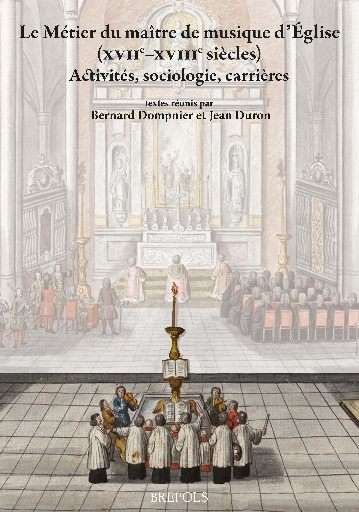
Le Métier du maître de musique d’Église (xvii e-xviii e siècles)
Activités, sociologie, carrières
Loin d’un désert musical la France de l’époque moderne est riche de musique dans ses villes grandes et moyennes. Les institutions ecclésiastiques cathédrales collégiales voire petites églises la Chapelle royale aussi financent chanteurs et instrumentistes mais aussi une maîtrise école destinée à former de futurs artistes musiciens sous la direction d’un maître de musique. C’est à ce personnage à ses différentes fonctions qu’est dédié ce livre. À la fois pédagogue compositeur chanteur et/ou instrumentiste théoricien il est chargé de tout ce qui concerne la bonne exécution de la musique durant les offices conduisant le chœur d’enfants les chantres du bas chœur les instrumentistes (ceux de l’église de la ville ou ceux de passage). Il participe à la rédaction des livres de plain chant compose copie messes et motets polyphoniques rend des comptes au chapitre dont il dépend. Certains maîtres sont sollicités hors l‘institution pour des concerts de musique sacrée ou profane parfois même au théâtre plus souvent dans les établissements religieux d’alentour. La diversité des carrières étonne certains maîtres demeurant leur vie durant dans une même institution comme Poitevin d’autres optant comme Gantez pour de véritables périples rarement au-delà des frontières toutefois ; d’autres comme Campra préfèrent au lutrin les lumières de la scène de l’opéra ; quelques-uns enfin cherchent à laisser une trace de leur œuvre en publiant messes et motets. Toutefois la spécificité française d’un tel métier ne se comprend que par comparaison avec les réalités des pays voisins tels l’Italie ou les Pays-Bas espagnols.