


Late Medieval and Early Modern Studies
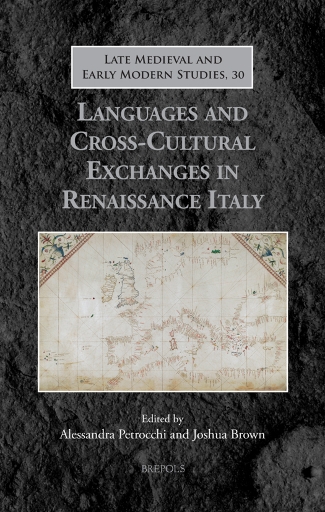
Languages and Cross-Cultural Exchanges in Renaissance Italy
Although much work has been done in the field of Renaissance Studies at present there is no book which offers a comparative overview of the linguistic interaction between Renaissance Italy and the wider world. The present volume is intended to fill this void representing the first-ever collection of essays that deal with multiple types of language contact and cross-cultural exchanges in and with respect to Renaissance Italy (1300‒1600). We bring diverse disciplinary perspectives together: literary scholars historians and linguists with different regional expertise; we argue for multilingualism and language contact as products of a period of dynamic change which cannot be fully grasped through a single framework. The contributions present a variety of case-studies by often cross-fertilising their approaches with other disciplinary lenses. This book aims to provide a comprehensive picture of a truly global Renaissance Italy where languages textual traditions and systems of knowledge from different geographical areas either combined or clashed. It takes a fresh approach to the history of late medieval and early modern Italy by focusing on East/West linguistic and cultural encounters transmission of ideas and texts multilingualism in literature (various genres and various forms of multilingualism) translation practices reception/adaptation of new knowledge transculturalism and literary exchanges and the relationship between languages and language varieties.
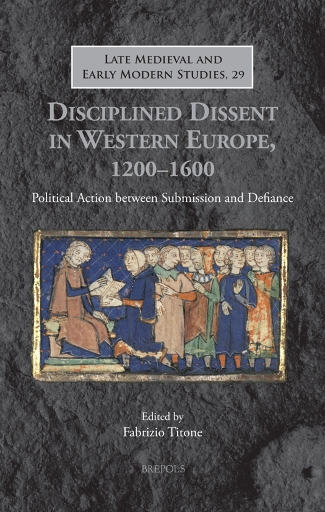
Disciplined Dissent in Western Europe, 1200–1600
Political Action between Submission and Defiance
This innovative collection explores the causes and effects of ‘disciplined dissent’ - forms of protest or political action positioned between the poles of submission and defiance. To identify the political influence of commoners the emphasis is neither ‘top down’ nor ‘bottom up’ but on mutual influence and the interplay between rulers and ruled. Contributions concerning quite diverse polities show a careful opposition of non-elite people through an effort to respect the legislative system and to find common ground with the authorities. The aim was to emphasize aspects of the norms and institutions in favour of the benefit of the community or to ensure adjustments of some aspects if found to be beneficial for the few and detrimental for many. The examination of non-violent pressure can help us to have a more exhaustive understanding of the protagonists causes and effects of socio-political changes in contexts of governmental development. The analysis includes cases of violent action that managed to secure royal approval. The premise of the book is that inequality far from being accepted as normal and inevitable was frequently questioned by less powerful people. When targeted by more or less evident forms of political marginalization they laid claim to principles of justice and on this basis developed a critical comprehension of government pursued a selective rejection of injustice and gained recognition through negotiation.
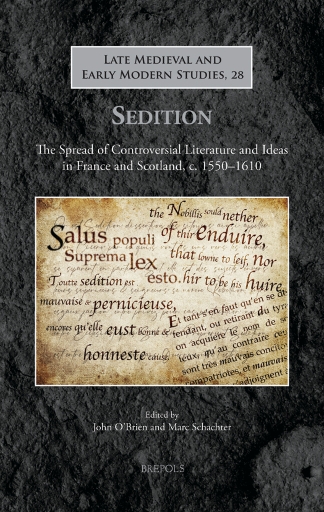
Sedition
The Spread of Controversial Literature and Ideas in France and Scotland, c. 1550–1610
This interdisciplinary collection examines the notion of sedition in the period of the French Wars of Religion (1560-1600) and focuses not only on France itself but also on Scotland during the reign of the French-born Mary Queen of Scots. Composed of eleven chapters written by an international team of experts this volume concentrates on the political aspects of sedition rather than religious heresy and covers writings and publications in a wide range of fields: politics history law literature and gender. A complementary feature of this collection is the spectrum of writings studied; they include edicts and treatises pamphlets broadsides legal documents dialogues and satirical prose and poetry. Several chapters also address visual representations of sedition.
An Introduction and a Conclusion provide synthetic analyses of the material studied in the individual chapters. This is a collection which will appeal to readers with interests in the history of political ideas and thought the comparative study of monarchical government and concepts of tyranny and resistance discord rebellion and revolt.
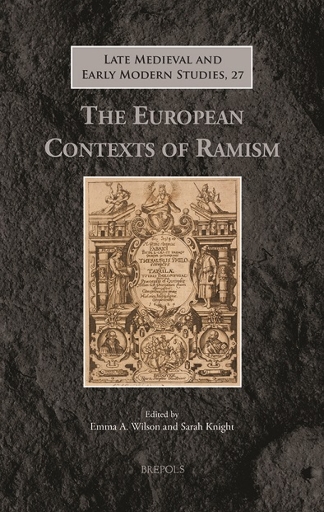
The European Contexts of Ramism
Pierre de la Ramée or Petrus Ramus (1515-1572) has long been a controversial figure in educational reform and innovation from the moment of his first public academic statements in the 1530s to his reception among scholars in the twentieth and twenty-first centuries. What is beyond dispute however is the vast reach of his influence throughout Europe. Ramus’s ideas were disseminated through copious editions and translations of his own textbooks and in wave after wave of adaptations and re-imaginings of his ideas that swept across the continent.
This volume embarks on a European tour of Ramism using a wide range of previously unpublished or untranslated archival evidence from throughout the continent to examine the dissemination of Ramus’s works and his intellectual influence in geographic and in disciplinary terms. The ten chapters explore the spread of Ramism from his home country of France to Protestant strongholds in Germany Holland and Britain and in the Catholic context of the Iberian peninsula. The book also examines Ramism in the less familiar territories (to most Anglophone readers) of Scandinavia and Hungary and considers the preceding and contemporary Dutch and German educational reform movements from which Ramus borrowed to forge his own distinctive intellectual method.
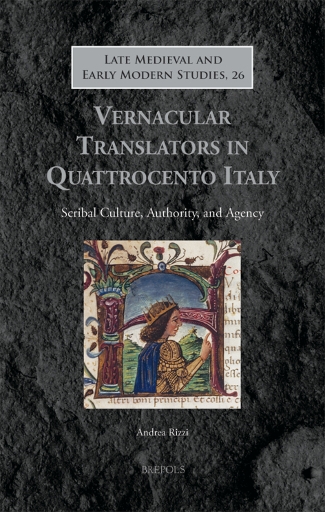
Vernacular Translators in Quattrocento Italy
Scribal Culture, Authority, and Agency
This book provides a richly documented study of vernacular translators as agents within the literary culture of Italy during the fifteenth century. Through a fresh and careful examination of these early modern translators Rizzi shows how humanist translators went about convincing readers of the value of their work in disseminating knowledge that would otherwise be inaccessible to many. The translators studied in this book include not only the well-known ‘superstars’ such as Leonardo Bruni but also little-known and indeed obscure writers from throughout the Italian peninsula.
Rizzi demonstrates that vernacular translation did not cease with the rise of ‘humanism’. Translations from Greek into Latin spurred the concurrent production of ‘new’ vernacular versions. Humanists challenged themselves to produce creative and authoritative translations both from Greek and occasionally from the vernacular into Latin and from Latin into the vernacular. Translators grew increasingly self-assertive when taking on these tasks.
The findings of this study have wide implications: they trace a novel history of the use of the Italian language alongside Latin in a period when high culture was bilingual. They also shed further light on the topic of Renaissance self-fashioning and on the workings of the patronage system which has been studied far less in literary history than in art history. Finally the book gives welcome emphasis to the concept that the creation and the circulation of translations (along with other literary activities) were collaborative activities involving dedicatees friends and scribes among others.
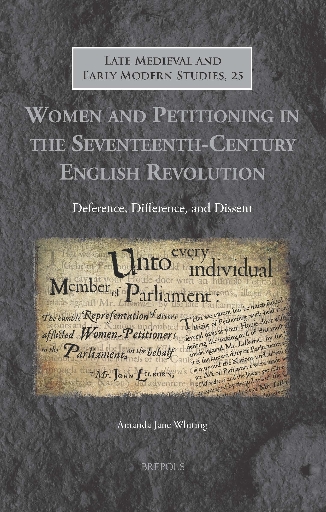
Women and Petitioning in the Seventeenth-Century English Revolution
Deference, Difference, and Dissent
During the English Civil Wars and Revolution (1640-60) the affairs of Church and State came under a crucial new form of comment and critique in the form of public petitions. Petitioning was a readily available mode of communication for women and this study explores the ways in which petitioning in seventeenth-century England was adapted out of and differed from pre-Revolutionary modes whilst also highlighting gendered conventions and innovations of petitioning in that period.
Male petitioning in the seventeenth century did not have to negotiate the cultural assumptions about intellectual inferiority and legal incapacity that constrained women. Yet just because women did not claim separate (and modern) women’s rights does not mean that they were passive quiescent or had no political agency. On the contrary as this study shows women in the Revolution could use petitioning as a powerful way to address those in power precisely because it was done from an assumed position of weakness. The petition is not simply a text authored by a single pen but a series of social transactions performed in multiple social and political settings frequently involving people previously excluded from participation in political discussion or action. To the extent that women participated in collective petitioning or turned their individual addresses into printed artefacts for public scrutiny they also participated in the public sphere of political opinion and debate.
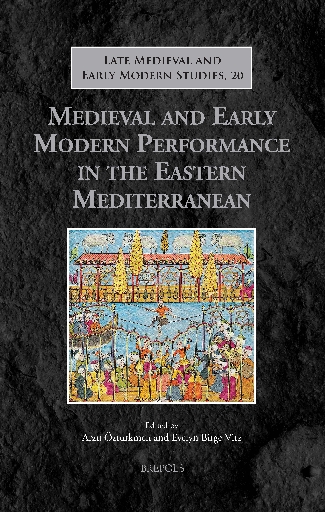
Medieval and Early Modern Performance in the Eastern Mediterranean
This book brings to life an impressively broad array of performances in the Eastern Mediterranean. It covers many traditional types of performance including singers dancers storytellers street performers clowns preachers shadow-puppeteers fireworks displays and semi-theatrical performances in folk and other celebrations. It explores performance of the secular as well as of the sacred in its many forms including Sunni Shiite Sufi and Alevi Muslims; Sephardic Jews and those in the Holy Land; and Armenian Greek and European Catholic Christians. The book focuses on the Medieval and Early Modern periods including the Early Ottoman. Some papers reach backward into Late Antiquity while others demonstrate continuity with the modern Eastern Mediterranean world.
The articles discuss evidence for performers and performance coming from archival sources architectural and manuscript images musical notation historical and ethnographic accounts literary works and oral tradition. Across the broad range of issues chronology and geography certain fundamental topics are central: concepts of drama and theatricality; varied definitions of ‘performance’ and related terms; the sacred and the profane and their frequent intersection; and complex relations between oral and written traditions.
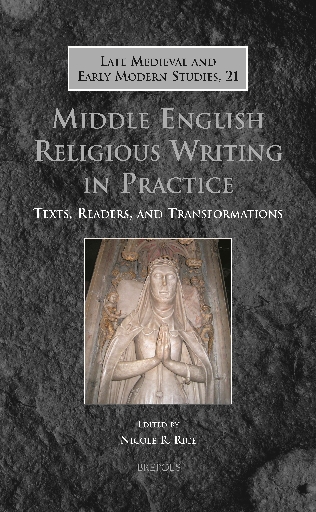
Middle English Religious Writing in Practice
Texts, Readers, and Transformations
Although the Middle English texts broadly categorized as ‘devotional literature’ have received considerable scholarly attention in recent years much work remains to be done on the cultural meanings and textual transformations of vernacular religious writing during the later medieval period and into the sixteenth century. During these years popular (but still little-studied) late medieval works such as the Pore Caitif circulated in varied forms amid changing circumstances: the expansion of audiences for Middle English texts the emergence and persecution of Lollardy attempts at ecclesiastical censorship the advent of printing and the Henrician Reformation. How did Middle English religious texts answer changing cultural and practical needs and the requirements of orthodoxy? How did older texts find new readers; how did these readers alter and deploy them? This collection capitalizes on widespread current interest in these questions gathering original essays that analyse the many forms meanings and legacies of Middle English religious writing.
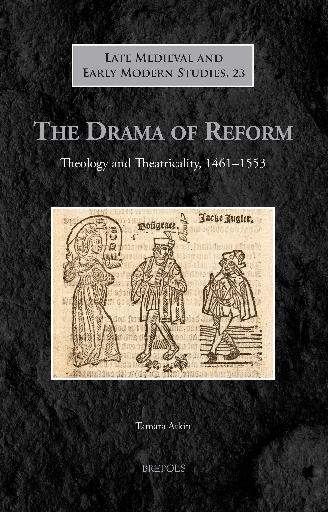
The Drama of Reform
Theology and Theatricality, 1461-1553
The Drama of Reform establishes the impact of late medieval and early modern religious reform on dramaturgy. Taking an interdisciplinary approach it examines the interactions between theatricality and theology across a range of different plays including the Croxton Play of the Sacrament Jacke Jugeler John Bale’s Three Laws and Lewis Wager’s Life and Repentaunce of Mary Magdalene. Tracing the development of arguments concerning the interpretation of the sacraments the relationship between priests and players and the use and abuse of imagery and drama in religious worship The Drama of Reform draws on a rich variety of contextual materials including liturgical texts heresy trial accounts dramatic treatises polemical tracts and religious laws.
Focussed on the period between Archbishop Arundel’s Constitutions in the fifteenth century and Archbishop Cranmer’s second Book of Common Prayer in the sixteenth The Drama of Reform explores the phenomenological similarities between drama and certain religious rites notably the eucharist and proposes that religious reform prompted attempts to reform dramaturgy. In presenting this analysis the author argues that while drama continued to function as dramatic propaganda efforts to initiate new modes of playing were only partially successful.
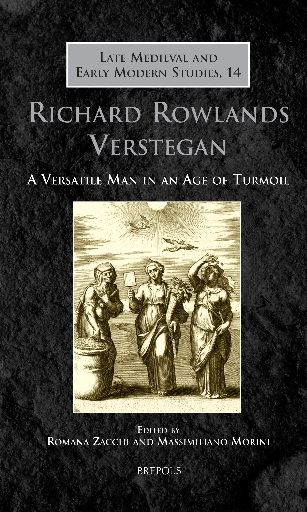
Richard Rowlands Verstegan
A Versatile Man in an Age of Turmoil
Employing a blend of historical philological literary and linguistic methods Richard Rowlands Verstegan: A Versatile Man in an Age of Turmoil paints a full-bodied portrait of Richard Rowlands Verstegan (or Verstegen 1550?-1640) - a man whose multiple and variously spelled name reflects a multifaceted public personality. English by birth and upbringing Dutch by fatherly descent Verstegan spent most of his life on the Continent employed intermittently as a Catholic spy poet religious translator polemicist and philologist. While this many-sidedness is typical of the Renaissance period some of Verstegan’s interests and positions were innovative or extravagant - witness his familiarization of the epigram in the Netherlands (1617) or his description of Teutonic England in the Restitution of Decayed Intelligence (1605). In this collection of essays Verstegan’s life and works are both explored in themselves and as mirrors of his times. As each contributor investigates one or more aspects of Verstegan’s careers a wider perspective is created of English and Dutch religious politics of the prevailing literary modes and fashions of the period and of the picture that Europe was beginning to paint for itself. Conversely this all-encompassing view demonstrates the centrality of a figure who has long been relegated to the margins of English Dutch and European history.
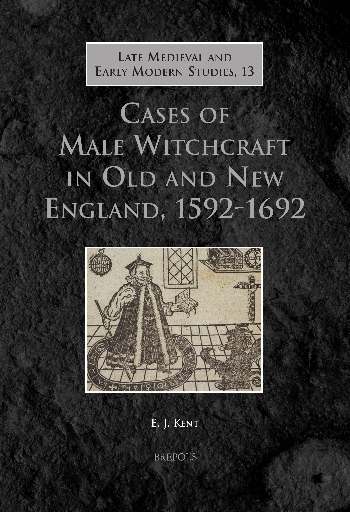
Cases of Male Witchcraft in Old and New England, 1592-1692
This study explores cases in which men were accused of witchcraft in England and the British colonies of New England between 1592 and 1692. Using a series of case studies that begin in Elizabethan Norfolk and end with the Salem trials in Massachusetts this book examines six individual male witches and argues they are best understood as masculine witches not feminized men. Each case considers the social circumstances of the male witch as a gendered context for the accusations of witchcraft against him.
Instead of seeking to identify a single causal condition or overarching gendered circumstance whereby men were accused of witchcraft this study examines the way that masculinity shaped the accusations of witchcraft made against each man. In each case a range of masculine social and cultural roles became implicated in accusations of witchcraft making it possible to explore how beliefs in witches interacted with early modern English gender cultures to support the religious legal and cultural logic of the male witch. The result is an approach to early modern English witchcraft prosecution that includes rather than problematizes the male witch.

Princely Citizen
Lorenzo de' Medici and Renaissance Florence
Lorenzo de’ Medici (1449-92) was in his own time one of the most renowned of Renaissance figures. His myth has continued to fascinate both scholars and the many tourists who are drawn by it to explore what remains of the Medicean presence in Florence. Lorenzo’s first English biographer William Roscoe described him as the most remarkable man who had ever lived in ancient or modern times. This collection of essays explores Lorenzo’s apprenticeship as the de facto ruler of Florence and the means by which he exerted control over friends and clients to ensure the ascendancy of the Medici dynasty. The essays place the religious and artistic patronage of Lorenzo in the context of his political career and explore other important aspects of his emergence as the princely citizen of a still proud republic.
Francis W. Kent (1942-2010) established his reputation as a cultural and social historian of Renaissance Florence with his first monograph Household and Lineage in Renaissance Florence. He turned his attention to Lorenzo de’ Medici in the late 1980s producing a steady stream of essays collected here for the first time and a major study of Lorenzo’s art patronage Lorenzo de’ Medici and the Art of Magnificence. After the death of Nicolai Rubinstein in 2002 the first general editor of the multi-volume critical edition of Lorenzo de’ Medici’s letters Kent took charge of the ongoing project and oversaw the publication of several more volumes. His forthcoming biographical study of Lorenzo’s early career will be published by Harvard University Press.
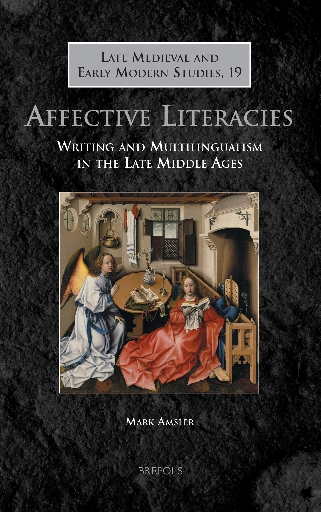
Affective Literacies
Writing and Multilingualism in the Late Middle Ages
New Literacy Studies close reading and historical sociolinguistics inform Amsler's analyses of late medieval writing and textual cultures. Amsler argues that medieval reading and writing make sense not as individual expressions with discrete texts but as multilingual sociocultural and intertextual practices that 'make people up' and that sustain or challenge dominant ideologies and reading formations. Rather than a single Literacy we find socially situated literacies within manuscript matrices. Bringing new historical dimensions to literacy studies Amsler explores the intertextualities affective relations and social contests in these multilingual formations. Individual chapters examine literacies as cultural practice in schooling and in elite and popular texts by Chaucer Christine de Pizan Dante Margery Kempe devotional writers Erasmus and the Jewish convert Hermann von Sheda along with grammatical writing mythography charms drama and educational texts. This volume illustrates the diversity of late medieval multilingual writingstextual performances and embodied readings.
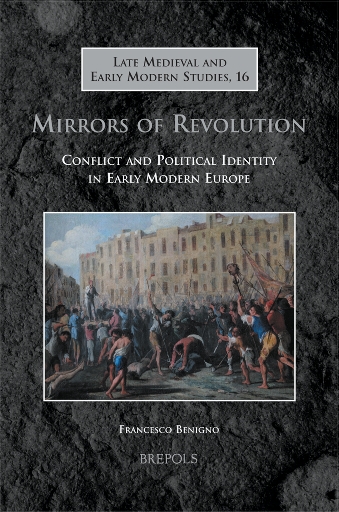
Mirrors of Revolution
Conflict and Political Identity in Early Modern Europe
From the English Civil War to the Fronde from Masaniello to Robespierre this book is one of the first attempts to create a European transnational approach to the problems of the early modern age. It proposes a detailed reconstruction of the main interpretative tendencies that have developed around the English Civil War the French Revolution the so-called ‘Seventeenth-Century Crisis’: the Fronde and the Neapolitan revolt of Masaniello. And yet Mirrors of Revolution agrees with neither the traditional social interpretations of the causes of revolt nor with revisionist approaches that privilege the influence of discursive registers. Instead it proposes an original interpretation of revolution based on the concept of political identity. In the terms of this analysis revolutions do not reveal previously hidden social groups. Rather revolutions become the central ground upon which new identities coalesce. With its usage of the Fronde and Masaniello as case-studies for extensive investigation Mirrors of Revolution outlines a challenging and exciting reformulation of the concept and causes of revolution.
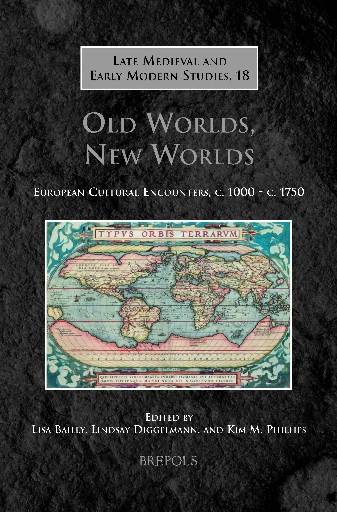
Old Worlds, New Worlds
European Cultural Encounters, c. 1000 - c. 1750
Pre-modern European history is replete with moments of encounter. At the end of arduous sea and land journeys and en route Europeans met people who challenged their assumptions and certainties about the world. Some sought riches others allies; some looked for Christian converts and some aimed for conquest. Others experienced the forced cultural encounter of exile. Many travelled only in imagination forming ideas which have become foundational to modern mentalities: race ethnicity nation and the nature of humanity. The consequences were profound: both productive and destructive. At the beginning of the third millennium CE we occupy a world shaped by those centuries of travel and encounter. This collection examines key themes and moments in European cultural expansion. Unlike many studies it spans both the medieval and early modern periods challenging the stereotype of the post-Columbus ‘age of discovery’. There is room too for examining cross-cultural relationships within Europe and regions closely linked to it to show that curiosity conflict and transformation could result from such meetings as they did in more far-flung realms. Several essays deal with authors events and ideas which will be unfamiliar to most readers but which deserve greater attention in the history of encounter and exploration.
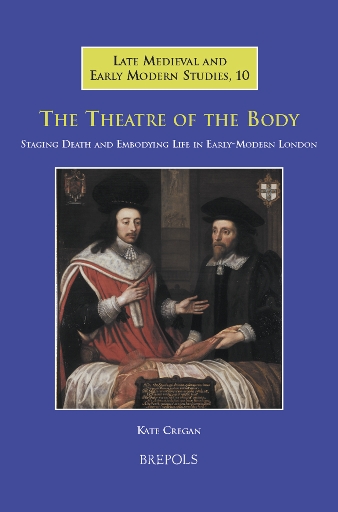
The Theatre of the Body
Staging Death and Embodying Life in Early-Modern London
This study is a threefold investigation of understandings of embodiment - as displayed in the playhouses courthouses and anatomy theatres of London between 1540 and 1696. These dates mark the waxing and waning of the Worshipful Company of Barber-Surgeons’ domination of the practice of dissection in London. In 1540 Henry VIII gave them his approval and encouragement but by 1696 Edward Ravenscroft’s The Anatomist: Or the Sham Doctor staged their loss of power. This loss of power the book contends is symptomatic of a major shift in the concept of embodiment. The book explains the changing understanding of the human body throughout this period by analysis of the interplay between the texts used in and the material practices of three specific public sites: the public playhouses the Sessions House and the Anatomy Theatre of the Worshipful Company of Barber-Surgeons of London. Using an approach which combines the socially textured understandings of fields of practice found in Bourdieu with the interpretations of progression across time found in Elias and Foucault The Theatre of the Body demonstrates how the three fields of drama law and medicine are intimately inter-connected in that process.
In presenting this analysis the author argues that the quality of embodiment begins to shift during this period from the mid-sixteenth century and throughout the course of the seventeenth century. In this shift one can observe how the earlier ‘traditional’ interpretation of embodiment is intensified and resolidified into the beginnings of the medicalized ‘modern’ body.
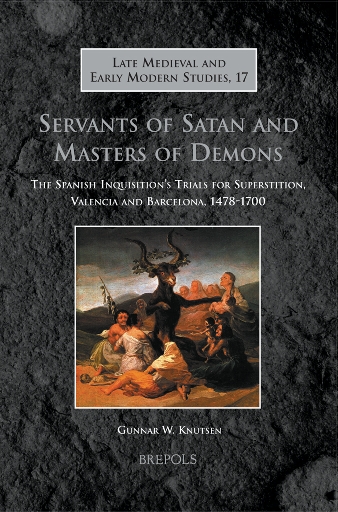
Servants of Satan and Masters of Demons
The Spanish Inquisition’s Trials for Superstition, Valencia and Barcelona, 1478-1700
This book offers a systematic study of the trials for superstition in the Spanish Inquisition’s two tribunals in Valencia and Barcelona in the period 1478-1700. One of the most intriguing contrasts between the trials in northern and southern Spain is that while both areas saw a large number of trials for superstition Valencia did not conduct trials for demonological witchcraft. Catalonia on the other hand saw a large number of such trials the majority of which occurred in secular courts.
These contrasts bring into focus significant differences in culture and mythology. The Barcelona Inquisition was unable to enforce its jurisdiction over trials for diabolical witchcraft while the Valencian Inquisition was able to do just that because Valencians rejected the demonological concept of witchcraft. This was due mainly to the Valencians’ own magical culture which emphasized man’s ability to control and force demons but also to the fact that Moriscos formed the majority of the rural population which was the primary focus of witchcraft trials in Europe. By comparing the Catalan and Valencian tribunals the book thus seeks to explain the absence in the southern half of Spain of brujas witches who gave their souls to the devil flew through the night took part in wild orgies at the witches’ sabbat and caused death and destruction through magical means.
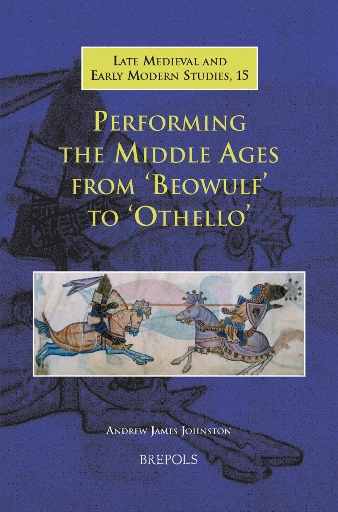
Performing the Middle Ages from 'Beowulf' to 'Othello'
Performing the Middle Ages from ‘Beowulf’ to ‘Othello’ traces the dialogic nature of the relationship between the Middle Ages and modernity. Arguing that modern beliefs in the alterity of the Middle Ages stem from the Middle Ages’ own processes of self-representation Johnston explores varieties of nostalgia through a wide selection of texts. This volume spans an extensive chronological period with a view to demonstrating how our notions of the medieval have been crucially informed by the past itself. The study is focused on works which stage that popular literary archetype - the nostalgic figure of the aristocratic warrior - and argues that it is this image that provides a structural model for so many modern perspectives on the Middle Ages. And yet in the Middle Ages this model was being deconstructed as it was also being generated. By moving from the self-consciously archaic heroism of Beowulf to the scathing comment on chivalric narrative presented in Chaucer’s ‘Knight’s Tale’ Johnston’s analysis offers an intriguing insight into the way medieval texts engage in a continual aesthetic and ideological critique of their own cultural moment. Using Sir Gawain and the Green Knight and the Alliterative Morte Arthure as examples of an incisive critique of the cult of subjectivity and of a highly self-conscious desire for tradition Johnston extends his analysis to the early seventeenth century and explores the ways in which Shakespeare’s Othello brilliantly deconstructs the very concept of ‘Renaissance Man’. With its interest in issues of subjectivity textual performance and the ideological self-awareness of medieval culture Performing the Middle Ages provides a scholarly and compelling investigation into the Middle Ages’ ability both to understand itself and to shape (post)modern notions of the medieval.
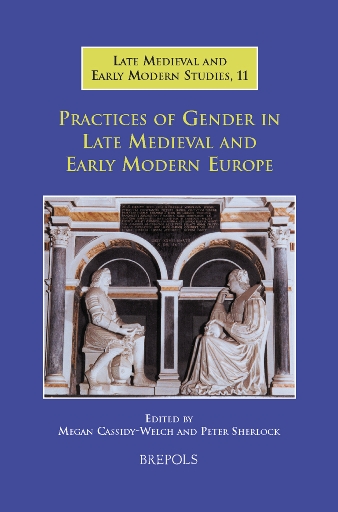
Practices of Gender in Late Medieval and Early Modern Europe
This collection argues that gender must be considered as both an approach to history and as a reflection of the deep workings of the lived historical past. The sixteen original essays explore social and cultural expressions of gender in Europe from the fourteenth to the eighteenth centuries. They examine theories and practices of gender in domestic religious and political contexts including the Reformation the convent the workplace witchcraft the household literacy the arts intellectual spheres and cultures of violence and memory. The volume exposes the myriad ways in which gender was actually experienced together with the strategies used by individual men and women to negotiate resilient patriarchal structures. Overall the collection opens up new synergies for thinking about gender as a category of historical analysis and as a set of experiences central to late medieval and early modern Europe.
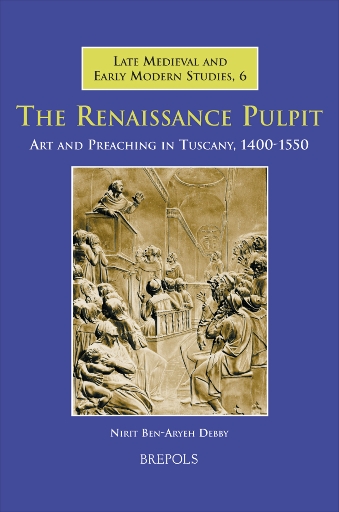
The Renaissance Pulpit
Art and Preaching in Tuscany, 1400-1550
This volume examines the relationship between preaching and art addressing with particular detail the use of works of art in preaching and the importance of the pulpit itself. A challenging issue in the field of sermon studies is the relationship between preaching and art in particular the manner in which preachers used works of art in their preaching and described specific pictures in their sermons; and the pulpit itself.
The thesis of the book is that pulpits should be viewed in the context of the world of preaching in Renaissance Florence and in connection with sacred oratory. Indeed like preached sermons pulpits used rhetorical strategies to deliver religious messages. The author adopts an interdisciplinary approach to the topic by combining art history historical analysis and sermon studies; and she examines the pulpit's patronage location and function as well as its chronological development. This book combines a general survey of pulpits in Tuscany with close analysis of five specific pulpits. Designed and executed by important artists located in Florence and Prato these five pulpits are the most exquisite and impressive monuments of their type and each has a complex and rich iconographic programme. The author reveals that the period between the fifteenth and early sixteenth centuries constitutes a distinct phase in the development of pulpits different from the earlier tradition and from pulpits constructed after the Council of Trent and during the Catholic Reformation.