


Medieval Women: Texts and Contexts

The Sisterbook of Master Geert’s House, Deventer
The Lives and Spirituality of the Sisters, c. 1390‑c. 1460
The Sisterbook of Master Geert’s House contains the lives of sixty-four Sisters of the Common Life who died between 1398 and 1456. Founded as an alms-house for destitute women in 1374 by the end of the fourteenth century Master Geert’s House had become a home for women desiring to live a life of humility and penitence as well as in community of goods without vows. The Sisterbook was likely written sometime between 1460 and 1470 at a time when the religious fervour that had characterized the earlier Sisters had begun to wane. It was to incite the readers and hearers of the Sisterbook which would have been read in the refectory during mealtimes to imitate the earlier Sisters who are portrayed as outstanding examples of godliness and Sisters of the Common Life. The opening sentence of the Sisterbook succinctly sums up the author’s reason for writing it: ‘Here begin some edifying points about our earlier Sisters whose lives it behoves us to have before our eyes at all times for in their ways they were truly like a candle on a candlestick’ and who by implication could still illumine the way for her own generation of Sisters. The first foundation of Sisters of the Common Life Master Geert’s House became the ‘mother’ house of numerous other houses in the Low Countries and Germany directly as well as indirectly and served as an inspiration for others.
This book provides a study of the Sisterbook and its significance in the Devotio Moderna and late medieval female religiosity while the accompanying translation introduces this important source to an English audience.

Saints’ Lives for Medieval English Nuns, II
An Edition of the ‘Lyves and Dethes’ in Cambridge University Library, MS Additional 2604
Cambridge University Library MS Additional 2604 contains a unique collection of prose saints’ lives evenly divided into eleven universal and eleven native saints (predominantly culted at Ely). Clearly intended for the devotional life of nuns presumably in an East Anglian convent the volume comprises nineteen female figures all of whom are virgins martyrs or nuns and three male saints (two apostles and a hermit). These late Middle English lives are translated from a variety of Latin sources and analogues including material by Jacobus de Voragine John of Tynemouth and others. The collection demonstrates an interest in showcasing native saints alongside their universal sisters. Luminaries of the English Church such as Æthelthryth of Ely and her sister Seaxburh are found in the company of notable virgin martyrs like Agatha and Cecilia. Famous saints like John the Evangelist and Hild of Whitby feature alongside others such as Columba of Sens and Eorcengota. Fully analysed and contextualised in its companion volume Saints’ Lives for Medieval English Nuns I: A Study of the ‘Lyves and Dethes’ in Cambridge University Library MS Additional 2604 these texts are edited here for the first time. Alongside the edition of the twenty-two saints’ lives and full textual apparatus there are extensive overviews and commentaries providing details of the sources and analogues as well as explanatory historical and literary notes. The edition concludes with three appendices a detailed select glossary and a bibliography of works cited.

Saints’ Lives for Medieval English Nuns, I
A Study of the ‘Lyves and Dethes’ in Cambridge University Library, MS Additional 2604
Cambridge University Library MS Additional 2604 contains a unique prose legendary almost entirely of female saints all of whom are virgins martyrs or nuns. The manuscript which also has varied post-medieval items is written in one hand probably dating from c. 1480 to c. 1510. This previously unstudied Middle English collection features twenty-two universal and native saints both common (like John the Baptist and Æthelthryth) and rare (such as Wihtburh and Domitilla). These texts are dependent on a complex mixture of Latin sources and analogues. Specific linguistic and art-historical features as well as attention to the predominant female saints of Ely and post-medieval provenance suggest an East Anglian convent for the original readership. Through an exploration of the manuscript and its later ownership (both recusant and antiquarian) a discussion of its linguistic attributes a consideration of local female monastic and book history a comparison of hagiographical texts and a wide-ranging source and analogue study this Study fully contextualises these Middle English lives. The book concludes with a survey of the structural and stylistic aspects of the texts followed by three appendices and an extensive bibliography. The texts are edited for the first time in its companion volume Saints’ Lives for Medieval English Nuns II: An Edition of the ‘Lyves and Dethes’ in Cambridge University Library MS Additional 2604.
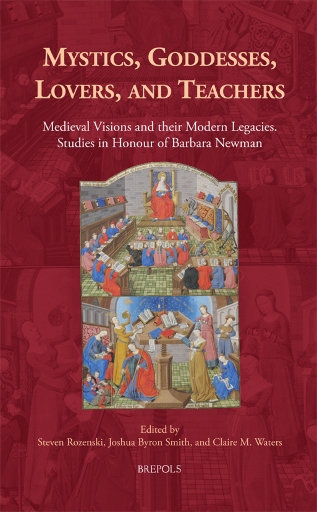
Mystics, Goddesses, Lovers, and Teachers
Medieval Visions and their Modern Legacies / Studies in Honour of Barbara Newman
The conjunction of medieval religious studies and gender studies in the past several decades has produced not only nuanced attention to medieval mystics and religious thinkers but a transformation in the study of medieval culture more broadly. This volume showcases new investigations of mysticism and religious writing in the Middle Ages and the early modern period. It also presents groundbreaking explorations of the feminized divine from medieval to modern and the many debts of medieval secular texts and cultures to the religious world that surrounded them. Medieval crossover also defines this volume: the contributors examine the crossovers between male and female cloister and saeculum divine and human and vernacular and Latin that characterized so much of the complexity of medieval literary culture. These collected chapters examine mystics from Hildegard of Bingen and Juliana of Cornillon to Richard Rolle Julian of Norwich and Tomás de Jesús; the modern theologies of Philip K. Dick and Charles Williams; goddesses like Fame Dame Courtesy and Mother Church; and the role of religious belief in shaping conceptions of pacifism obscenity authorship and bodily integrity. Together they show the extraordinary impact of Barbara Newman’s scholarship across a range of fields and some of the new areas of investigation opened by her work.
Contributors: Jerome E. Singerman Kathryn Kerby-Fulton Jesse Njus Andrew Kraebel Nicholas Watson Laura Saetveit Miles Bernard McGinn Carla Arnell Maeve Callan Katharine Breen Lora Walsh Susan E. Phillips and Claire M. Waters Carissa M. Harris Stephanie Pentz Craig A. Berry Dyan Elliott.
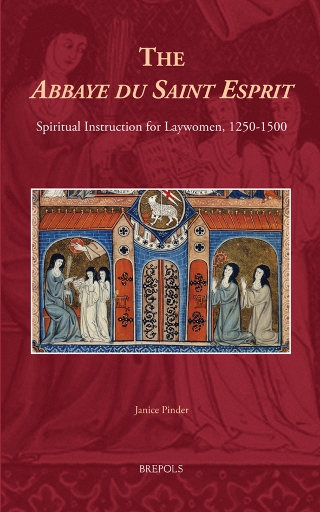
The Abbaye du Saint Esprit
Spiritual Instruction for Laywomen, 1250–1500
The Abbaye du Saint Esprit was a successful work of vernacular spiritual advice for women surviving in sixteen manuscripts and a widely copied Middle English translation. Unlike many other didactic religious texts it offers few prescriptions for behaviour; rather it instructs the reader to build a convent of virtues in her conscience and uses the allegorical structure of the building and its inhabitants to arrange brief teachings on prayer and virtuous practice. Between its genesis in the last quarter of the thirteenth century to its final development towards the end of the fifteenth it was reworked several times for new audiences of women both lay and cloistered bourgeois and aristocratic. The examination of these successive adaptations offers insights into the growth of lay religious culture the participation of women in new religious movements and the use and transformation of twelfth and early thirteenth-century monastic formation literature for new audiences.This book also offers for the first time editions of all the French versions of the Abbaye and a modern English translation of the earliest version.
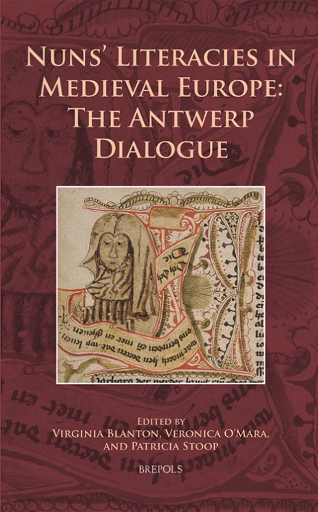
Nuns’ Literacies in Medieval Europe: The Antwerp Dialogue
The present volume is the third in a series of three integrated publications the first produced in 2013 as Nuns’ Literacies in Medieval Europe: The Hull Dialogue and the second in 2015 as Nuns’ Literacies in Medieval Europe: The Kansas City Dialogue. Whereas the first volume focused primarily on Northern Europe the second expanded the range to include material in minority languages such as Old Norse and Old Irish and focused particularly on education and other textual forms such as the epistolary and the legal.
The third volume expands the geographical range by including a larger selection of female religious for instance tertiaries and further languages (for example Danish and Hungarian) as well as engaging more explicitly on issues of adaptation of manuscript and early printed texts for a female readership. Like the previous volumes this collection of essays focused on various aspects of nuns’ literacies from the late seventh to the mid-sixteenth century brings together the work of specialists to create a dialogue about the Latin and vernacular texts that were read written and exchanged by medieval nuns. Contributors to this volume investigate the topic of literacy primarily from palaeographical and textual evidence and by discussing information about book ownership and production in convents.
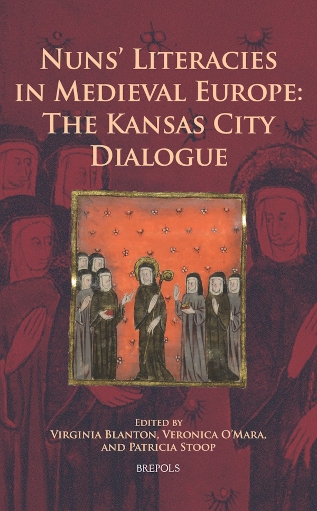
Nuns’ Literacies in Medieval Europe
The Kansas City Dialogue
The present volume is the second in a series of three integrated publications the first produced in 2013 as Nuns’ Literacies in Medieval Europe: The Hull Dialogue. Like that volume this collection of essays focused on various aspects of nuns’ literacies from the late seventh to the mid-sixteenth century brings together the work of specialists to create a dialogue about the Latin and vernacular texts that were read written and exchanged by medieval nuns.
It investigates literacy from palaeographical and textual perspectives evidence of book ownership and exchange and other more external evidence both literary and historical. To highlight the benefits of cross-cultural comparison contributions include case studies focused on northern and southern Europe as well as the extreme north and west of the region. A number of essays illustrate nuns’ active engagement with formal education and with varied textual forms such as the legal and epistolary while others convey the different opportunities for studying examples of nuns’ artistic literacy. The various discussions included here build collectively on the first volume to demonstrate the comparative experiences of medieval female religious who were reading writing teaching composing and illustrating at different times and in diverse geographical areas throughout medieval Europe.
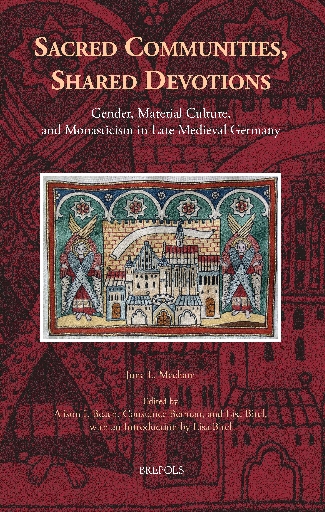
Sacred Communities, Shared Devotions
Gender, Material Culture, and Monasticism in Late Medieval Germany
Sacred Communities Shared Devotions takes us behind the gates of six medieval convents in Lower Saxony and into the lives of rich and noble nuns going about their daily labour of religion just before the Lutheran Reformation. Drawing on writings by and about the nuns as well as an analysis of the costly art and architecture of their monasteries June Mecham reveals how monastic women wielded their wealth to create a ritual environment dense with Christian images and meanings. Mecham argues that nuns chose devotions and rituals within the framework of a distinct material culture influenced by local religious customs gender structures and social protocols. She questions perceived differences between monastic and lay piety emphasizing instead the shared religious culture in which monastic and laywomen actively participated and the continuity that shaped female devotion. Looking through lenses of art history and spirituality Mecham describes the spiritual and social tensions caused by women who vowed poverty but lived a seemingly lavish life funded by private income. Medieval reformers as well as modern scholars suggested that profligate nuns hastened the decline of medieval convents but Sacred Communities Shared Devotions proves that these women did not oppose reform. They simply fought to maintain their traditional devotions and religious environments even as they adapted to new religious sensibilities.
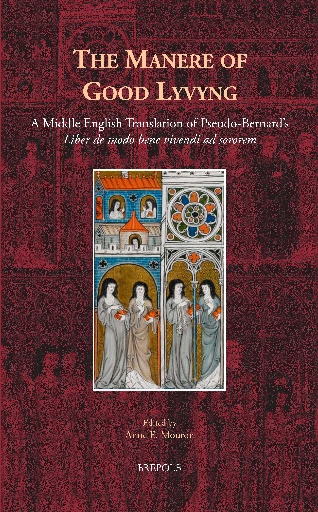
The Manere of Good Lyvyng
A Middle English Translation of Pseudo-Bernard’s 'Liber de modo bene vivendi ad sororem'
In recent years much critical attention has been devoted to medieval texts written for recluses such as the Life of Christina of Markyate Aelred’s Institutio reclusarum and the Ancrene Wisse. The Manere of Good Lyvyng in contrast brings the focus back to the conventual life and to the needs of a nun rather than an anchoress.
The Manere of Good Lyvyng is a late Middle English translation of an earlier Latin text the Liber de modo bene vivendi ad sororem long attributed to St Bernard of Clairvaux. Whether in its Latin form or its Middle English rendering this work is a fascinating text and one with considerable artistic merit. It is neither a flamboyant text nor one strewn with images such as one encounters in the Ancrene Wisse. It is a quiet text with the beauty and simplicity of a manuscript perfectly written in an elegant script where no illustration distracts the reader from its reading.

Partners in Spirit
Women, Men, and Religious Life in Germany, 1100-1500
Partners in Spirit focuses on relations between chaste men and women within religious life in Germany (c. 1100-1500) concentrating on the complex set of negotiations that governed contact between a male priest and his female charge. Although religious women were undeniably reliant on priests for pastoral care (the cura monialium) throughout the medieval period it does not follow that men saw such care as burdensome or that women were spiritually subordinate in their relations with priests. Within the context of the cura ordained men and professed women met regularly often developing intimate friendships and providing each other with crucial spiritual support despite prevailing fears that contact between the sexes must result in sexual temptation and sin.
Examining the various interactions of priests with religious women Partners in Spirit traces the ways in which both viewed the cura highlighting the fluidity of gender and authority within the medieval religious life. In doing so the volume suggests new ways of considering the intersection of gender religion and spiritual power within the medieval world.
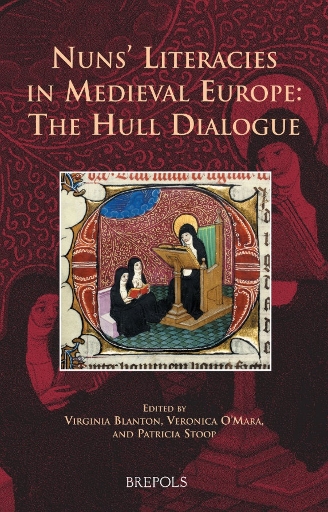
Nuns’ Literacies in Medieval Europe: The Hull Dialogue
This collection of essays focused on the literacies of nuns in medieval Europe brings together specialists working on diverse geographical areas to create a dialogue about the Latin and vernacular texts nuns read wrote and exchanged primarily in northern Europe from the eighth to the mid-sixteenth centuries. To date there has been some significant research in this field but little in the way of cross-cultural study. Drawing especially on the rich body of scholarship that currently exists about nuns and books in England Germany the Low Countries and Sweden these essays investigate the meaning of nuns’ literacies in terms of reading and writing Latin and the vernaculars.
Contributors to this volume investigate the topic of literacy primarily from palaeographical and textual evidence and by discussing information about book ownership and book production in convents. In this first concentrated study that examines the literacy of nuns in a comparative fashion the essays pay close attention to the individual textual and cultural complexities of nuns’ literacies in the European Middle Ages.
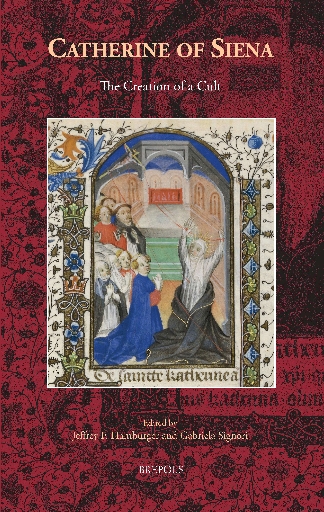
Catherine of Siena
The Creation of a Cult
How does one construct a saint and promote a cult beyond the immediate community in which he or she lived? Italian mendicants had accumulated a good deal of experience in dealing with this politically explosive question. The posthumous description of the life of Francis of Assisi (d. 1226) written by the Master General of the order Bonaventure (d. 1274) could be regarded as paradigmatic in this regard. A similarly massive intervention in the production and diffusion of a cult can be observed in the case of the Dominican tertiary Catherine of Siena (d. 1380) who in many respects (e.g. the imitation of Christ and her stigmatization) ‘competed’ with Francis of Assisi. Raymund of Capua (d. 1399) the Master General of the order established the foundation for the dissemination of the cult by writing the authoritative life but it was only the following generation that succeeded in establishing and disseminating the cult on a broad basis by means of copies adaptations and translations. The question of how to make a cult which stands at the centre of this volume thus presents itself in terms of the challenge of rewriting a legend for different audiences. The various contributions consider the role not only of texts in many dfferent vernaculars (Czech English French German and Italian) but also of images whether separately or in connection with one another.
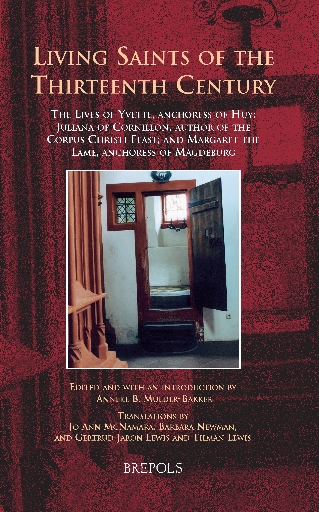
Living Saints of the Thirteenth Century
The Lives of Yvette, Anchoress of Huy; Juliana of Cornillon, Author of the Corpus Christi Feast; and Margaret the Lame, Anchoress of Magdeburg
This volume presents the Lives of three women of the thirteenth century all written by contemporaries. In the late Middle Ages almost every town in Northern Europe had its own anchoress who would keep in touch with the citizens through a window looking onto the churchyard or through a door and window looking into the church (as shown in the cover illustration). Such women along with the beguines Cistercian nuns and monks reform-minded clergy and devout laywomen formed what Barbara Newman has termed ‘close-knit networks of spiritual friendship that easily crossed the boundaries of gender religious status and even language’. This volume presents the lives of two recluses Yvette of Huy whose life was recorded by her spiritual friend the Premonstratensian Hugh of Floreffe and Margaret the Lame of Magdeburg whose lessons were recorded by her confessor the Dominican John of Magdeburg (introduced and translated by Jo Ann McNamara and Gertrud Jaron Lewis and Tilman Lewis respectively). The anchoress Eve of Saint-Martin was an author herself. Her memoir in French on her friend Juliana’s and her own labour for the new Feast of Corpus Christi forms the basis of the Latin Life of Juliana of Cornillon (introduced and translated by Barbara Newman).
Hildegard of Bingen and her Gospel Homilies
Speaking New Mysteries
Hildegard of Bingen (1098-1179) the only medieval woman known to have authored systematic works of exegesis composed fifty-eight little-studied Expositiones euangeliorum homilies on twenty-seven Gospel passages. Hildegard described her divine charge to restore the tottering faith of her era through the revelation of hidden mysteries in the Scriptures. She was to continue the exegetical tradition of the Fathers and to construct moral fortifications with the words of Scripture in order to defend her sisters against the forces of evil. Hildegard of Bingen and her Gospel Homilies constitutes the first in-depth study of Hildegard’s Expositiones and of her exegesis preaching and use of sources. It explores the Expositiones in the context of Hildegard’s intellectual and cultural milieu and underscores the central role of biblical interpretation in the seer’s works. Furthermore this book re-examines Hildegard’s self-depiction in the context of monastic education for women the magistra’s exchange with her mentors and friends and her rich use of divine voice to empower her own expression. This is a new exciting and erudite study on one of the most influential female mystics.
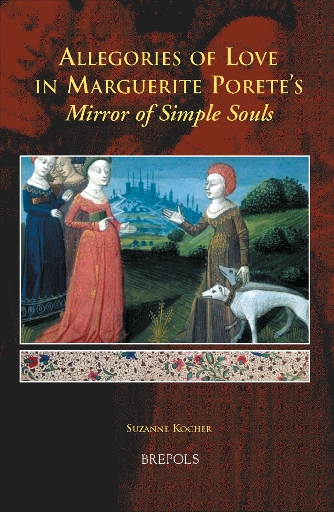
Allegories of Love in Marguerite Porete's 'Mirror of Simple Souls'
Marguerite Porete’s Mirror of Simple Souls dating probably to the 1290s is the oldest known mystical work written in French and the only surviving medieval text by a woman writer executed as a heretic. This volume analyses its use of interconnected allegories that describe the soul’s approach toward God in terms of human social relationships. These include romantic love between lovers in same-sex and mixed-sex pairs relations among people of differing social rank such as servants and nobles and rich and poor engaged in economic transactions such as taxation and gift-giving. Gender rank and exchange serve as remarkably versatile allegories for spiritual states. Porete uses comparison as an organizing principle that underlies her supple and creative use of allegory personification parables metaphors similes proverbs and glosses. The theologian invites her audience to cross boundaries among literal and figurative registers of meaning in ways that are emblematic of the soul’s ultimate leap toward the divine. Porete’s social allegories the author contends can provide us with valuable evidence of a medieval thinker’s conceptions of God gender language and human capacity for change.
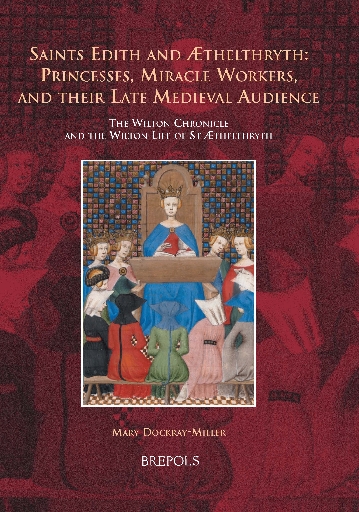
Saints Edith and Æthelthryth: Princesses, Miracle Workers, and their Late Medieval Audience
The Wilton Chronicle and the Wilton Life of St Æthelthryth
Saints Edith and Æthelthryth: Princesses Miracle Workers and their Late Medieval Audience narrates the lives of two Anglo-Saxon princesses who were venerated as saints long after their deaths. St Edith the daughter of King Edgar was renowned as a patron of the arts and the church during her lifetime; her posthumous miracles included protection of Wilton Abbey and the English royal family. St Æthelthryth who retained her virginity through not one but two royal marriages also worked numerous miracles at her tomb at the Abbey of Ely. The poems composed at Wilton Abbey in the early fifteenth century allow us to see how late medieval religious women practised their devotion to early medieval women saints. The Middle English verse texts are presented here in the original and in translation with explanatory notes and glossary. A thorough introduction provides extensive contextualization and analysis of the two poems as well as description of the manuscript and its language and prosody. These primary source texts are important contributions to the study of English history language literature religion and women's studies.
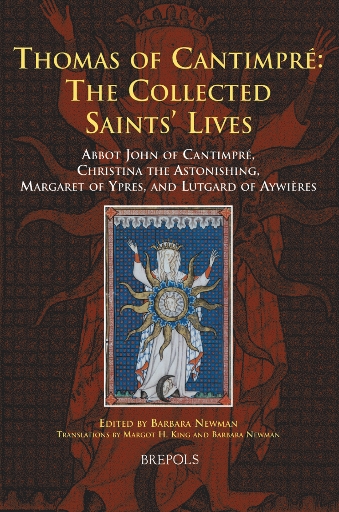
Thomas of Cantimpré: The Collected Saints' Lives
Abbot John of Cantimpré, Christina the Astonishing, Margaret of Ypres, and Lutgard of Aywières
The Dominican Thomas of Cantimpré (c. 1200-c. 1270) was a key figure in the 'evangelical awakening' of the thirteenth century. A prolific hagiographer he lauded such diverse subjects as the abbot and apostolic preacher John of Cantimpré; the teenaged ascetic Margaret of Ypres an urban recluse who died at twenty; Lutgard of Aywières a Cistercian nun and mystic; and the theatrical mentally troubled Christina 'the Astonishing' of Sint-Truiden. Thomas had few peers in portraying the ritual theatre of penance. He gives us such memorable scenes as a naked moneylender led out of a pit by a rope a formerly rapacious prince kissing his peasants’ feet as he restores their stolen goods St Christina leaping into fires and boiling cauldrons to save souls in purgatory and the deceased Pope Innocent III in agony begging St Lutgard for her prayers. In this volume readers will find all four lively and eventful lives between the same covers for the first time. The Life of Abbot John of Cantimpré has been newly translated by Barbara Newman who has also supplied a new introduction. The other three Lives are revised reprints from Margot H. King's Peregrina Translations Series.
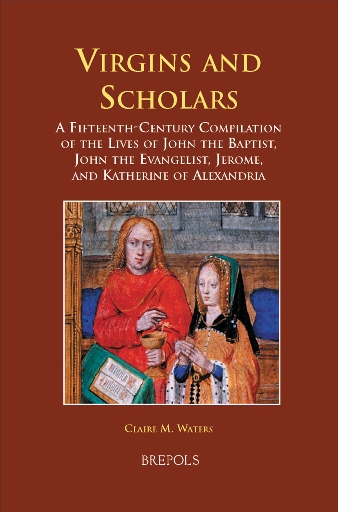
Virgins and Scholars
A Fifteenth-Century Compilation of the Lives of John the Baptist, John the Evangelist, Jerome, and Katherine of Alexandria
This collection of prose vitae of four virgins and scholars - Saints John the Baptist John the Evangelist Jerome and Katherine of Alexandria - was almost certainly copied and the texts very likely composed at Syon Abbey or Sheen Charterhouse in the mid-fifteenth century. The lives cover a wide range of hagiographic modes from hagiographic romance to affective devotional appreciation to doctrinal treatise in narrative form. From the life of Jerome composed by a monk for his aristocratic spiritual daughter to the life of Katherine reputedly translated for Henry V to those of John the Baptist and John the Evangelist which set their subjects in a recognizably Birgittine context they show the interaction of men and women lay and monastic in the production of devotional literature. The diversity of their approaches and sources moreover shows the links between English dynastic politics and continental religious literature and spiritual traditions. As examples of translation practices of monastic politics and of religious instruction these lives provide a window onto the devotional culture and literary worlds of fifteenth-century Europe.
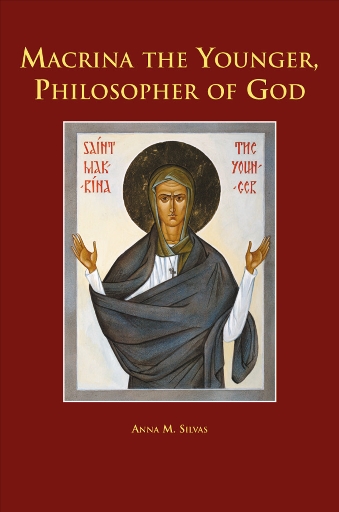
Macrina the Younger
Philosopher of God
This book presents St Macrina the Younger (c. 327-379) eldest sister of Ss Basil the Great and Gregory of Nyssa. All the sources of Macrina's life are gathered together translated afresh into English and provided with up-to-date introductions and notes. Documents include: Testimonies of St Basil St Gregory Nazianzen's epigrams on Macrina and her siblings; Gregory of Nyssa's letter 19 which appears in English for the first time; The Life of Macrina a jewel of fourth-century Christian biography; and the dialogue On the Soul and Resurrection in which Macrina appears as the Teacher expounding Christian doctrine with reasoned argument. The introduction shows how Macrina gradually changed the family household of Annisa into the proto-monastic community that became model of the monasticism that has come down under Basil's name. A specially commissioned icon a map of Central Anatolia and a report of the author's expeditions to ancient Pontus are included.
'In contrast with those works that seek to translate the ancient texts into colloquial English with a pedestrian tone Silvas' translations have a grand and noble quality about them that is fully fitting Gregory's rhetoric and that conveys to the reader the seriousness of the lofty subject. Silvas does not "over translate"; her translation preserves those points of ambiguity in Nyssen's writing that should be resolved (if possible) not in the translation itself but in scholarly debate'.
Warren Smith Duke University.
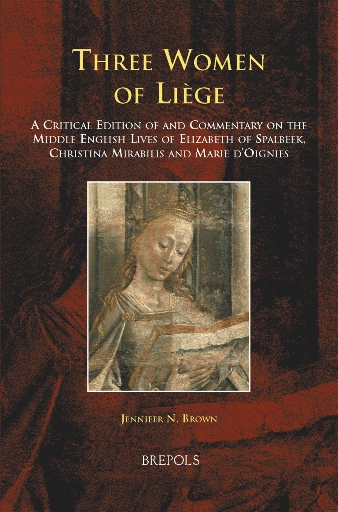
Three Women of Liège
A Critical Edition of and Commentary on the Middle English Lives of Elizabeth of Spalbeek, Christina Mirabilis, and Marie d'Oignies
Elizabeth of Spalbeek Christina Mirabilis and Marie d'Oignies were three of the famous late twelfth-/early thirteenth-century 'holy women' from the region of Brabant and Liège: their life stories (written in Latin by Philip of Clairvaux Thomas of Cantimpré and Jacques of Vitry) were read throughout later medieval Europe and Margery Kempe modelled her Book and her life upon Marie’s. The Latin lives of these beguine saints were not well known in England but they were translated into English in the fifteenth century and survive in a single manuscript together in Oxford Bodleian Library Douce 114.
Three Women of Liège is the first critical edition of these Lives which represent some of the only evidence of English interest in continental female mysticism. This edition includes an introduction that discusses the role of the manuscript in England and three essays that analyze the roles of these beguines in their Low Countries home of Liège along with the English reception of their lives. The edition itself is also extensively annotated and glossed making it accessible to any scholar of English medieval literature.