


New Approaches in Archaeology
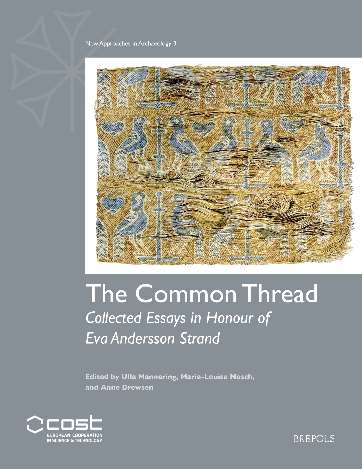
The Common Thread
Collected Essays in Honour of Eva Andersson Strand
The Ancient Egyptians used it for both the living and the dead the Greeks and Romans used it to signal their status and it aided the Vikings in reaching the far shores of Europe and Eurasia. Textiles have surrounded us literally and figuratively for millennia but this common thread has long been ignored in scholarly research. With the inception of the Centre for Textile Research at the University of Copenhagen in 2005 however this approach changed fundamentally and today every type of research discipline comes together to begin unravelling the stories told by textiles. How do we understand textiles and how do we talk about them? Who produced textiles where and for what purposes? How do we conduct research into the origins of materials? How did cultivating flax or raising sheep change the ancient landscape? How have we researched textiles so far? What can we learn from textiles about society gender and production? This volume engages with these questions and explores how the fabric of society has changed through researching textiles in all its facets from archaeology and history to natural sciences. Taking as its starting point the research interests and career of its honorand Eva Andersson Strand this meticulously researched volume consists of three parts covering the tools and techniques that form the basis of all research explores; how craftspeople made use of tools and techniques; and how textiles have been used over millennia to signify identity and status.
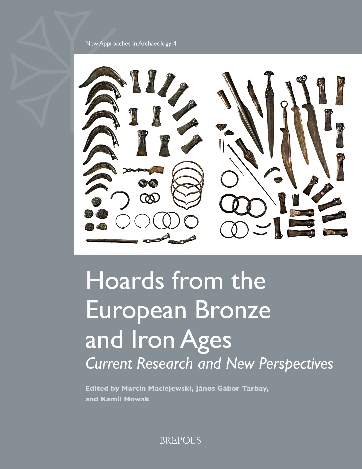
Hoards from the European Bronze and Iron Ages
Current Research and New Perspectives
Hoards are among the most enigmatic of archaeological finds. The term ‘hoard’ itself has been applied to different assemblages across space and time from the Stone Age into the modern era with an inventory that typically includes artefacts made of valuable raw materials to which significant symbolic meanings can also be assigned. Archaeologists have been trying to understand this phenomenon for much of the last century sometimes emphasizing the universal nature of hoards but more typically focusing on specific regions chronologies and finds. They have for the most part used results derived from typolo-chronological methods. Contemporary archaeology has however developed a broad spectrum of paradigms and methods and hoardresearch in the twenty-first century draws on an increasingly wide range of approaches.This volume presents examples of research that make use of these multi-faceted approaches through a focus on European hoards of metal objects dating to the Bronze and Iron Ages. The contributors to this volume make use of diverse methods among them archaeometallurgical analyses studies of use- and production-wear destruction patterns and landscape archaeology but together their common denominator is the search for a methodological toolkit that will allow researchers to better understand the phenomenon of hoard-deposition more broadly.
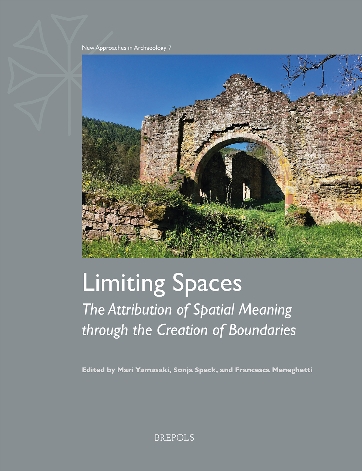
Limiting Spaces
The Attribution of Spatial Meaning through the Creation of Boundaries
This volume explores how boundaries were created perceived and experienced in past societies. Bringing together diverse theoretical and methodological approaches — from cognitive and processual to sensory and phenomenological — the contributors examine how spatial meaning is attributed through the creation and negotiation of boundaries. The volume is structured into three thematic sections: the first investigates how boundaries define and characterize space; the second focuses on the act of crossing boundaries and its role in shaping spatial significance; and the third examines the experience of boundaries of their crossing and of the spaces contained within them. Drawing on case studies from Prehistory to the Early Modern period and spanning regions from Europe and Africa to Central Asia the chapters reflect a wide range of archaeological traditions and perspectives. Through innovative analyses and interdisciplinary dialogue this collection advances our understanding of how past societies organized perceived and interacted with space.
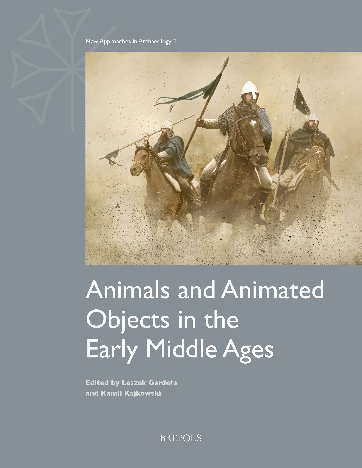
Animals and Animated Objects in the Early Middle Ages
Since time immemorial animals have played crucial roles in people’s lives. In Continental and Northern Europe especially in the Migration Period and the Early Middle Ages animals were both feared and revered. Varying and often ambivalent perceptions of fauna were expressed through everyday practices religious beliefs and the zoomorphic ornamentation of a wide plethora of objects that ranged from jewellery weapons and equestrian equipment to wagons and ships. This timely volume critically investigates the multivalence of animals in medieval archaeology literature and art in order to present human attitudes to creatures such as bears horses dogs and birds in a novel and interdisciplinary way.
The chapters gathered together here explore the prominence of animals animal parts and their various visual representations in domestic spaces and the wider public arena on the battlefield and in an array of ritual practices but also examine the importance of zoomorphic art for emerging elites at a time of social and political tensions across Scandinavia and the oft-overlooked Western Slavic and Baltic societies. This innovative book draws together scholars from across Europe in order to pave the way for a nuanced international and interdisciplinary dialogue that has the capacity to substantially increase our perception of human and animal worlds of the Early Middle Ages.

Consumption, Ritual, Art, and Society
Interpretive Approaches and Recent Discoveries of Food and Drink in Etruria
Food determines who we are. We are what we eat but also how we eat with whom we eat where we eat and in some cases even why we eat. Food production and consumption in the ancient world can express multiple dimensions of identity and negotiate belonging to or exclusion from cultural groups. It can bind through religious praxis express wealth manifest cultural identity reveal differentiation in age or gender and define status. As a prism through which to investigate the past its utility is manifold. The chapters gathered together in this ground-breaking book explore the intersections between food consumption and ritual within Etruscan society through a purposeful cross-disciplinary approach. It offers a unique and innovative selection of up-to-date analysis from a variety of Etruscan food-related topics. From banqueting feasting fish rites and symbolic consumption to bio-archaeological data this volume explores a new and exciting field in ancient Italian archaeology.