


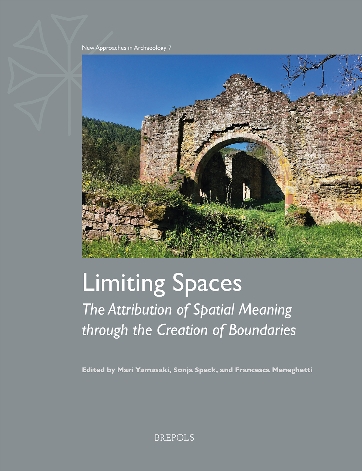
Limiting Spaces
The Attribution of Spatial Meaning through the Creation of Boundaries
Abstract
This volume explores how boundaries were created, perceived, and experienced in past societies. Bringing together diverse theoretical and methodological approaches — from cognitive and processual to sensory and phenomenological — the contributors examine how spatial meaning is attributed through the creation and negotiation of boundaries. The volume is structured into three thematic sections: the first investigates how boundaries define and characterize space; the second focuses on the act of crossing boundaries and its role in shaping spatial significance; and the third examines the experience of boundaries, of their crossing, and of the spaces contained within them. Drawing on case studies from Prehistory to the Early Modern period, and spanning regions from Europe and Africa to Central Asia, the chapters reflect a wide range of archaeological traditions and perspectives. Through innovative analyses and interdisciplinary dialogue, this collection advances our understanding of how past societies organized, perceived, and interacted with space.
