


Rencontres de Philosophie Médiévale
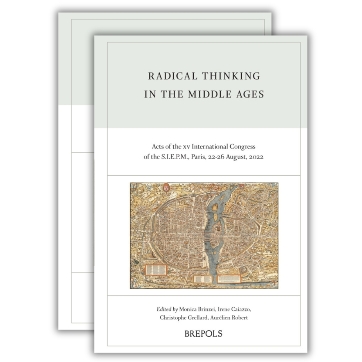
Radical Thinking in the Middle Ages: Acts of the XVth International Congress of the SIEPM, Paris, 22-26 August 2022
These volumes present a selection of papers delivered in Paris at the XV International Congress of the Société Internationale pour l’Étude de la Philosophie Médiévale August 22-26 2022. The appearance of the term radix positionis in medieval debates inspired the contributors to investigate whether there was something that could be considered radical thought in the Middle Ages and if so what the roots of this radical thought were in the different philosophical traditions in various geographical cultural religious and linguistic contexts (Arabic Greek Hebrew Latin).
Medieval philosophy often engaged in a quest for origins but it could also be radical in its methodology or in its attitude when it refused any compromise on its principles or basic concepts be they innovative or rediscovered. Radicalism could be conceived as extremism in pushing a hypothesis procedure or line of inquiry to its limits leading to extreme positions. Radical thought could mean being intellectually inflexible on principles obstinate in embracing theses that broke from tradition progressive but also extremist. The contributions in these volumes thus analyse case-studies of doctrinal conflict dogmatic struggle and condemnation by religious or academic institutions presenting examples of both intellectual courage and philosophical intransigence.
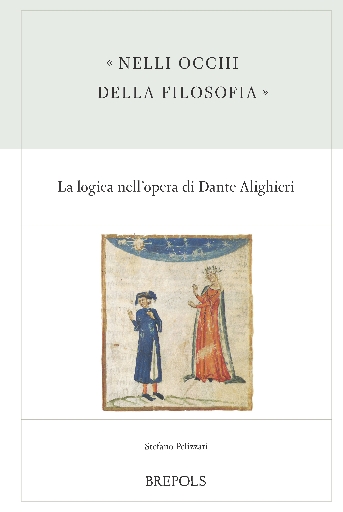
«Nelli occhi della filosofia». La logica nell’opera di Dante Alighieri
Codificata a partire da una sezione specifica del corpus aristotelico la logica rappresentava nel Medioevo latino quell’"arte delle arti" (ars artium) che studiava le regole del ragionamento corretto e le era riconosciuta una universalità di tipo strumentale. Come notato sin dai primi biografi e commentatori Dante dimostra in svariate occasioni una maestria e una padronanza della materia del tutto degne per dirla col Boccaccio di un «maraviglioso loïco». Giustamente celebri sono i versi di Inferno XXVII in cui «un d’i neri cherubini» con un raffinato ragionamento strappa l’anima di Guido da Montefeltro all’impotente San Francesco («forse / tu non pensavi ch’io loïco fossi!» v. 123); ma è soprattutto nel Convivio nella Monarchia e nella controversa Questio de aqua et terra che l’Alighieri sfoggia una competenza difficilmente riducibile alla consultazione occasionale di qualche ‘manuale’. Questo studio analizza sistematicamente i passaggi dell’opera dantesca riconducibili a questo specifico ambito disciplinare; e offre una panoramica sugli ambienti culturali in cui il Poeta avrebbe verosimilmente potuto formarsi (Firenze Bologna la Toscana occidentale la marca Trevigiana). Da un lato quindi si inserisce nel fortunato filone di studi che si è occupato di valutare la conoscenza che Dante poté avere delle dottrine di Aristotele e dei suoi interpreti. Dall’altro tenta di ricostruire i tempi i luoghi e i modi in cui «peregrino quasi mendicando» poté acquisire tale competenza specialistica. In tal modo non viene solo illuminato un lato inesplorato di questo eccezionale «amatore di sapienza» ma viene anche offerto uno scorcio privilegiato sullo stato delle conoscenze filosofiche in Italia fra XIII e XIV secolo.

Per cognitionem visualem. The Visualization of Cognitive and Natural Processes in the Middle Ages
Acts of the XXV Annual Colloquium of the SIEPM, Porto, 14-15 and 21-22 June 2021
Visual representations were deeply involved in medieval traditions related to the dissemination and teaching of philosophy and science. Consequently they were not only examples of theological or philosophical interpretation but rather brought together manifold intellectual activities illuminating various perceptual cognitive and spiritual concerns. Visual tools which appear frequently in medieval manuscripts have often been considered as “illustrative material” intended to facilitate the comprehension and interpretation of texts. These “visual aids” offer something more than a straightforward correspondence between a conceptual interpretation and its figurative depiction. They are in fact key to understanding the methods of acquiring and shaping knowledge through visual frameworks with didactical disputational or heuristic purposes. The aim of this volume is to deepen our understanding of medieval visual tools that represented and demonstrated philosophical and scientific knowledge and to an extent the accumulation of empirical information.
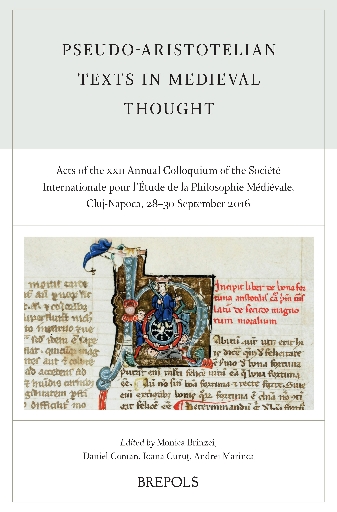
Pseudo-Aristotelian Texts in Medieval Thought
Acts of the XXII Annual Colloquium of the Société Internationale pour l’Étude de la Philosophie Médiévale, Cluj-Napoca, 28–30 September 2016
The Philosopher the Master of Those Who Know was the dominant pagan authority in all four of the main traditions of medieval philosophy: Arabic Greek Hebrew and Latin. Yet we now know that a number of works attributed to Aristotle were in fact spurious authored by others who claimed to be or whom others claimed to be the Stagirite for example the Secretum secretorum the Liber de causis De mundo De proprietatibus elementorum De pomo and De plantis. These writings strongly impacted medieval thought in various and fascinating ways both in the original language be it Arabic Greek Hebrew or Latin and in translation. The mechanisms of their production dissemination and translation are themselves worthy of attention. Many of these works spawned commentary traditions of their own parallel to those involving the classic texts of Peripatetic philosophy. Apparent contradictions between ideas expressed in these treatises and those found in what we consider to be authentic works for instance ideas that appeared to derive more from the Academy than from the Lyceum provoked questions about authenticity and about the possible evolution of Aristotle’s thought. Finally these texts were employed in one way or another in many genres of philosophical literature in the Middle Ages including metaphysics natural and moral philosophy theology and even more exotic disciplines like chiromancy and alchemy. This volume aims to shed new light on various aspects of the history of Pseudo-Aristotelian texts in the Middle Ages.
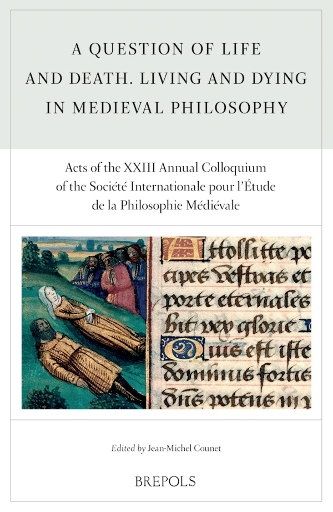
A Question of Life and Death. Living and Dying in Medieval Philosophy
Acts of the XXIII Annual Colloquium of the Société Internationale pour l’Étude de la Philosophie Médiévale, Leuven, 11–12 October 2018
Living and dying are essential concepts in Aristotelian natural philosophy and psychology. It is then no surprise that when the libri naturales were translated into Latin from the twelfth century onwards this gave birth to an extensive interpretative tradition in the Latin West in which life and death as conceived by Aristotle were theorized and reflected upon for example in the numerous commentaries of the De Anima but also of the Parva Naturalia. Yet the medieval inquiry into living and dying is not limited to natural philosophy nor the Aristotelian tradition but can also be found in ethics metaphysics theology medicine and others domains. Many topics are addressed in the volume: radical moisture and the possibility of increasing lifespan suicide essence of life contrast between life of the body and life of the soul future life and so on. The volume is also a hommage to Pieter De Leemans an eminent specialist of the Latin translations of Aristotle’s books on natural philosophy who was the intitiator of this scientific project.
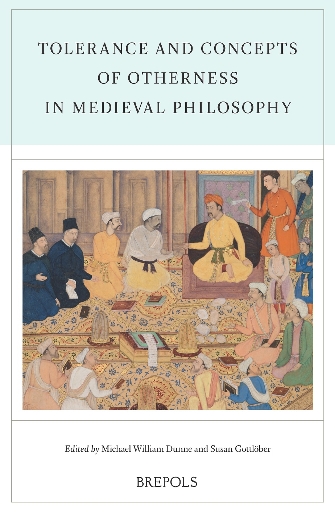
Tolerance and Concepts of Otherness in Medieval Philosophy
Acts of the XXI Annual Colloquium of the Société Internationale pour l’Étude de la Philosophie Médiévale, Maynooth, 9–12 September 2015
The proceedings of the S.I.E.P.M. Colloquium at Maynooth published in this volume shed new light on the development of the perception of the other within the different philosophical religious and cultural traditions in the late Middle Ages as well as the early modern era in both Christian and Islamic thought. The contributions consider not only the theological background but also the philosophical presuppositions of the concepts which were used to develop various apologetic writings and theological treatises that dealt with questions of cultural and religious difference. The rich and diverse medieval and early modern tradition of engaging with the other and the arguments for or against toleration on topics that are equally diverse are discussed with reference to both the Western and Eastern Christian tradition to the contributions of Islamic Thinkers on the topic and to the flourishing tradition of a constructed interreligious dialogue such as that between Christians and Jews. Finally this book includes a number of important investigations exploring the relationship between toleration and rights not only within Europe but also in the lands of the so-called new world and its indigenous peoples where arguments of exclusion were grounded intheories such as grace-based dominium.
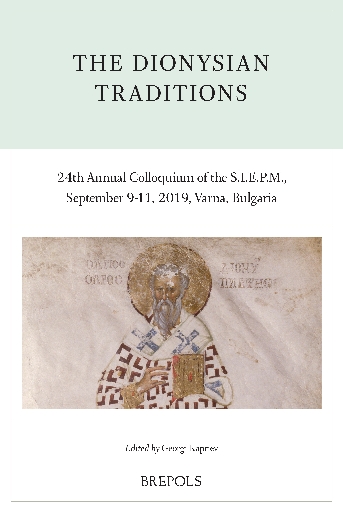
The Dionysian Traditions
24th Annual Colloquium of the S.I.E.P.M., September 9-11, 2019, Varna, Bulgaria
The volume contains the contributions of the 24th Annual Colloquium of S.I.E.P.M. "The Dionysian Traditions" which took place in Varna Bulgaria from September 9 to 11 2019. The theme of the colloquium is not coincidentally related to the topic of the 9th Annual Colloquium "The Dionysius Reception" (1999 in Sofia Bulgaria). The aim was to consider the continuity of research and to ensure its new dimensions. The colloquium demonstrated the multifaceted advanced development of Dionysius research over the past twenty years. The Corpus Dionysiacum exerted an enormous influence on the Christian cultures of the European Middle Ages which also had and still has an impact on modern times. Focal points of the medieval - Latin and Byzantine - Dionysius traditions are discussed in detail previously undiscussed topics and perspectives are presented. A large part of the analyses develop a new approach to post-medieval culture and a clearly defined commitment to the current problems of thought and social life. The profoundly analyzed questions and topics convincingly open new horizons for today's science.
Centres and Peripheries in the History of Philosophical Thought / Centri e periferie nella storia del pensiero filosofico
Essays in Honour of Loris Sturlese
This volume is an homage to the great intellectual contribution made by Loris Sturlese to the field of history of medieval philosophy. Its point of departure lies in a methodological line which Sturlese has maintained throughout his whole academic career: the importance in the historical and conceptual reconstruction of medieval philosophical thought of focusing not only on the classical most famous centers of knowledge production and transmission but also on the often-neglected peripheries which during the Middle Ages were increasingly more relevant in propelling the circulation of texts and ideas. In this volume the notions of ‘center’ and ‘periphery’ are not understood in a merely geographical sense but also in conceptual linguistic historical and literary terms. The richness of this approach is demonstrated by the broad spectrum of the contributions which range from Islamic philosophy to Italian Renaissance including the reception of ancient philosophy and of Arabic scientific works in the Latin world and up to eighteenth-century French geography. Special attention is devoted to the philosophical thought developed in the German area. The volume does not lack in giving space to important medieval figures such as Dante as well as to more general philosophical notions such as the concept of rationality.
The volume explores connections ruptures relations and affinities through the analysis of paradigmatic figures places and topics within the micro- and macro-histories of philosophy.
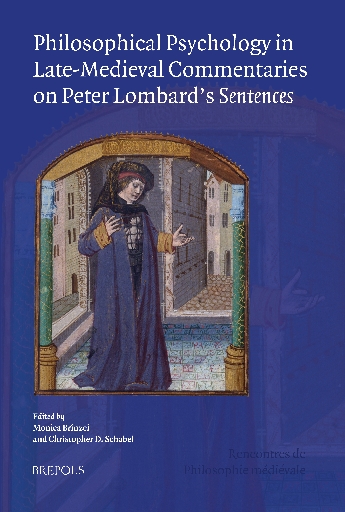
Philosophical Psychology in Late-Medieval Commentaries on Peter Lombard’s Sentences
Acts of the XIVth Annual Colloquium of the Société Internationale pour l’Étude de la Philosophie Médiévale, Radboud Universiteit, 28-30 October 2009
The proceedings of the SIEPM Colloquium at Nijmegen published in this volume bring together new evidence for how the corpus of late-medieval commentaries on the Sentences especially from the second half of the fourteenth century contributed to the development of philosophical psychology within the discipline of theology. The relation among the faculties of the soul the limits of knowledge hylomorphism and the union of soul and body intuitive and abstractive cognition the immortality of the soul the experience of the beatific vision divine foreknowledge and the knowability of species are some of the topics involving psychological issues that are examined in this volume. The wealth of new information presented in this volume results from the interpretation of previously unexplored sources. The essays in this volume demonstrate that the various parts and Books of Peter Lombard’s Sentencesthe standard textbook of theology in the Middle Ages provided lecturers and commentators with a variety of loci for the discussion of philosophical topics from the principia (Denys of Montina) the Prologue (Alfonsus Vargas of Toledo Hugolino of Orvieto John Regis Francis Toti of Perugia) Book I (Gregory of Rimini John of Mirecourt Pierre Ceffons Hugolino of Orvieto Pierre d’Ailly Peter of Candia the Vienna Group John Capreolus Henry of Gorkum Denys the Carthusian) Book II (Pierre Ceffons Peter of Candia Guillaume de Vaurouillon Gabriel Biel Denys the Carthusian) and Book III (Heymericus de Campo). This diversity within large works on theology conceived broadly constitutes a tradition parallel to that found in commentaries on Aristotle’s De anima in the late Middle Ages.
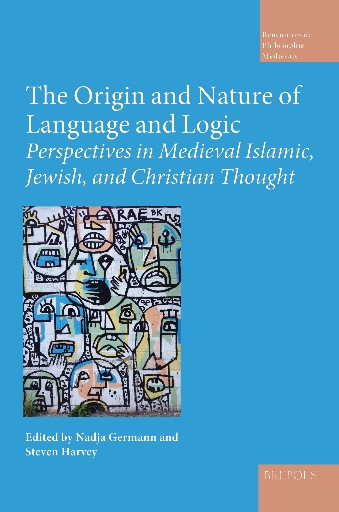
The Origin and Nature of Language and Logic.
Perspectives in Medieval Islamic, Jewish, and Christian Thought
The annual colloquium of the SIEPM in Freiburg Germany was groundbreaking in that it featured a more or less equal number of talks on all three medieval cultures that contributed to the formation of Western philosophical thought: the Islamic Jewish and Christian traditions. Indeed the subject of the colloquium ‘The Origin and Nature of Language and Logic in Medieval Islamic Jewish and Christian Thought’ lent itself to such a cross-cultural approach. In all these traditions partially inspired by ancient Greek philosophy partially by other sources language and thought semantics and logic occupied a central place. As a result the chapters of the present volume effortlessly traverse philosophical religious cultural and linguistic boundaries and thus in many respects open up new perspectives. It should not be surprising if readers delight in chapters of a philosophical tradition outside of their own as much as they do in those in their area of expertise.
Among the topics discussed are the significance of language for logic; the origin of language: inspiration or convention; imposition or coinage; the existence of an original language; the correctness of language; divine discourse; animal language; the meaningfulness of animal sounds; music as communication; the scope of dialectical disputation; the relation between rhetoric and demonstration; the place of logic and rhetoric in theology; the limits of human knowledge; the meaning of categories; the problem of metaphysical entailment; the need to disentangle the metaphysical implications of language; the quantification of predicates; and the significance of linguistic custom for judging logical propositions.
Homo, Natura, Mundus: Human Beings and Their Relationships
Proceedings of the XIV International Congress of the S.I.E.P.M., July 24-28, 2017, Porto Alegre, Brazil
The present volumes contain a number of studies first presented at the XIV International Congress of the Société Internationale pour l’Étude de la Philosophie Médiévale July 24-28 2017 Porto Alegre Brazil - which happened to be the first SIEPM Congress in Latin America and the first in the Southern Hemisphere. In 65 essays on current research questions in Latin Jewish and Arabic Philosophy and Early Modern Scholasticism the contributors explore the general theme of "Homo - Natura - Mundus: Human Beings and their Relationships" and lead us to new perspectives. These essays relate to the following areas of interest: the human being’s self-understanding as a rational creature in multiple relationships (with God the other the community the fellow and the different); the human being’s place in the natural world and the possibility of relating to nature through knowledge; medieval philosophical traditions and the challenges introduced by the "discovery" of the "New World" (dominium war hierarchies and new areas of concern with respect to justice the human good and the law). Thus these volumes offer a unique sample of scholarly studies that work with the idea of "relationships" in two distinct but not opposing directions. Firstly they explore the ways in which human beings according to the reach of their soul’s powers construct their self-understanding and existence in relation to God themselves others and the natural world. Secondly they explore the ways in which the philosophical bases for the understanding of these relationships were challenged by the transportation of medieval ideas to the "New World" and by the reception of these ideas in early modern times.
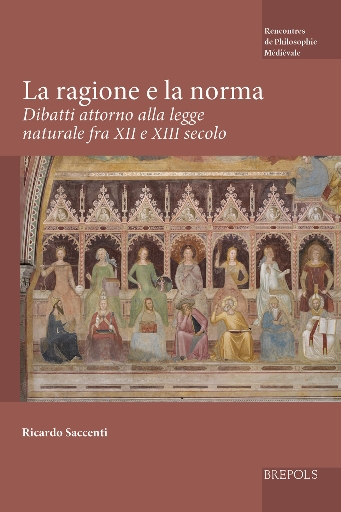
La ragione e la norma
Dibattiti attorno alla legge naturale fra XII e XIII secolo
La legge naturale rappresenta un elemento centrale nello sviluppo della cultura del medioevo latino. Frutto della rilettura di un'antica tradizione stoica e del diritto romano alla luce di alcuni passi della Scrittura in particolare del capitolo secondo dell'Epistola ai Romani di Paolo questa idea diviene uno dei pilastri del discorso giuridico politico e teologico a partire dal XII secolo. Il volume ricostruisce le forme molteplici nelle quali la legge di natura viene affrontata da canonisti e civilisti esegeti e teologi in un contesto nel quale prende forma la grande cultura scolastica e inizia a muovere i primi passi l'istituzione universitaria. Lo studio mostra come questi molteplici orientamenti dialogano fra loro e al tempo stesso rispondono ad un quadro storico e religioso particolarmente vivace e magmatico segnato dalla costruzione della monarchia papale dal tentativo di definire una ideologia imperiale di portata universale e dall'emergere delle monarchie europee a partire da quella francese. Un panorama variegato nel quale gli scritti di Abelardo dei maestri di Laon dei Vittorini e dei maestri di Chartres assieme a quelli di Graziano e dei canonisti e successivamente di maestri parigini come Langton Giovanni de La Rochelle e Alberto Magno fissano i termini di un lessico il perimetro di una discussione destinata ad essere ripresa e ridefinita nei decenni successivi e declinata in forme molteplici non solo lungo i secoli del Medioevo ma anche lungo tutta l'età moderna.
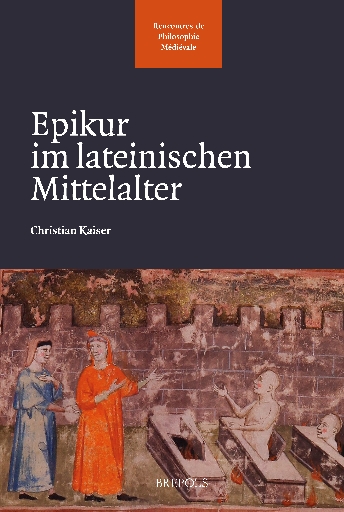
Epikur im lateinischen Mittelalter
Mit einer kritischen Edition des X. Buches der Vitae philosophorum des Diogenes Laertios in der lateinischenÜbersetzung von Ambrogio Traversari (1433)
Die Studie liefert im ersten Teil erstmalig eine umfassende historisch-systematische monographische Aufarbeitung der Rolle Epikurs in der Philosophie- Kultur- und Ideengeschichte des lateinischen Mittelalters (von Isidor von Sevilla bis zum Ende des 15. Jahrhunderts). Quellennah werden viele mittelalterliche Denker von Rang und Namen besprochen. Neben der Philosophie im engeren Sinne wird auch die Bedeutung die Epikurs Denken im theologischen medizinischen und poetologischen Diskurs innehatte eingehend beleuchtet. Durch diese Fülle wird es jetzt erstmals möglich ein fundiertes Bild über das mittelalterliche Wissen zur epikureischen Philosophie - das sehr viel detaillierter und facettenreicher war als bisher allgemein angenommen - und vor allem zu deren systematischer Funktion innerhalb der mittelalterlichen Denkgebäude zu gewinnen. Der zweite Teil bietet die kritische und kommentierte Edition der ersten lateinischen Übersetzung des X. Buches des Diogenes Laertios die Ambrogio Traversari 1433 fertiggestellt hatte. Diese Übersetzung bildete den Grundlagentext für die Epikur-Rezeption der Renaissance und Frühen Neuzeit. Für die Edition wurden neben Traversaris Autograph 16 weitere Handschriften aus dem 15. Jahrhundert sowie die Editio princeps von Marchese (ohne Epigramme; ca. 1472) und die zweite Edition von Brugnoli (erstmals mit lat. Übersetzung der Epigramme; 1. Auflage 1475) herangezogen.
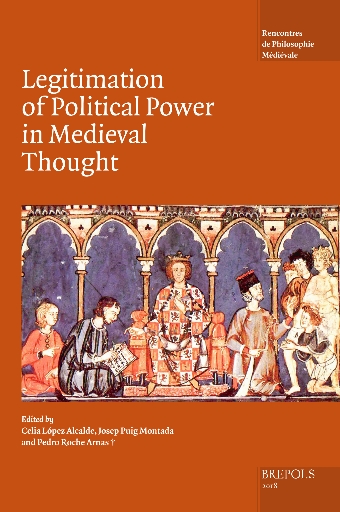
Legitimation of Political Power in Medieval Thought
Acts of the XIX Annual Colloquium of the Société Internationale pour l’Étude de la Philosophie Médiévale Alcalá, 18th-20th September 2013
What makes political power legitimate? Without legitimation subjects will not accept power and since religion permeated medieval society religion became foundational to philosophical legitimations of political power.
In 2013 the xix Annual Colloquium of the International Society for the Study of Medieval Philosophy took place in Alcalá de Henares one of the medieval centers of political debate within and between Jewish Christian and Muslim communities. The members of these communities all shared the common belief that God constitutes the remote or proximate cause of legitimation. Yet beyond this common belief they differed significantly in their points of departure and how their arguments evolved. For instance the debate among Western Christians in the conflict between secular power and Papal authority sowed the seeds for a secular basis of legitimacy.
The volume reflects the results of the colloquium. Many contributions focus on key Christian thinkers such as Marsilius of Padua Thomas Aquinas John Quidort of Paris Giles of Rome Dante and William of Ockham; other studies focus on major authors from the Jewish and Muslim traditions such as Maimonides and Alfarabi. Finally several papers focus on lesser-known but no less important figures for the history of political thought: Manegold of Lautenbach Ptolemy of Lucca Guido Terrena John of Viterbo Pierre de Ceffons John Wyclif and Pierre de Plaoul. The contributions rely on original texts giving the readers a fresh insight into these issues.
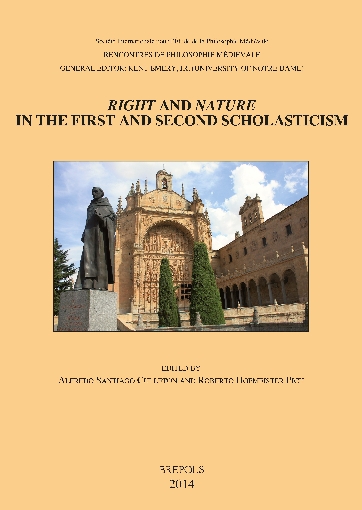
Right and Nature in the First and Second Scholasticism. Derecho y Naturaleza en la primera y segunda escolástica
Derecho y Naturaleza en la primera y segunda escolástica
Authors of the ‘Second Scholasticism’ (as discussed in this volume at least mainly Iberian philosophers and theologians of the sixteenth and seventeenth centuries) not only commented on the works and updated the teachings of medieval Scholastic masters but also introduced many new ideas in all areas of philosophy namely logic natural philosophy metaphysics moral philosophy political philosophy and the philosophy of law. In particular issues arising from the “discovery” of the New World presented new challenges to these thinkers provoking various reactions among them and causing them to develop new interpretations and theories especially in practical philosophy and theology. In this volume scholars from Europe North America and South America identify and describe some of the main topics and central lines of thought in this still quite unknown chapter in the history of philosophical ideas. The contributors focus on the reception and development of Aristotelian-Thomistic and (to a lesser extent) Scotistic political theory natural law positive law and the law of nations in the sixteenth and seventeenth centuries; some authors moreover address issues in the development of metaphysics during the same period. For the most part the studies presented here concern the writings and thought of masters from the Universities of Salamanca Alcalá Évora and Coimbra who responded to new questions and conceived new theories in political philosophy law and moral philosophy closely related to the issues pertaining to the Spanish and Portuguese colonies in the New World.

Philosophy and Theology in the 'Studia' of the Religious Orders and at Papal and Royal Courts
Acts of the XVth Annual Colloquium of the Société Internationale pour l’Étude de la Philosophie Médiévale, University of Notre Dame, 8-10 October 2008
Most scholars know that the great universities were the institutional setting of Scholastic philosophical and theological activity in the later Middle Ages. Fewer realize however that perhaps far more Scholastic learning in the liberal arts and theology took place in the studia or study-houses of the religious orders which out-numbered the universities and were more widely distributed across Europe. Indeed most members of the mendicant orders received most or all of their learning in the liberal arts and theology in the studia of their order and the most famous members of the orders (e.g. Albert the Great Thomas Aquinas and John Duns Scotus) spent more time teaching in the studia than they did serving as Regent Masters in the university proper. As a consequence the greater part of later medieval Scholastic literature was produced in the institutional context of the studia of the religious orders. Moreover there were other significant institutional loci for Scholastic learning and discourse in the later Middle Ages besides the universities and the study-houses namely the Papal Court—notably the Sacred Palace at Avignon—and several royal courts for example the courts of Robert the Wise in Naples and of the Emperor Lewis IV in Munich. It is not surprising therefore that many of the greatest Scholastic masters at different times taught in or were associated with all of these venues. This volume which originated at the XVth annual Colloquium of the Société Internationale pour l’Étude de la Philosophie Médiévale held at the University of Notre Dame (USA) in October 2008 contains essays concerning the study and teaching of philosophy and theology in the studia of the Dominicans Franciscans Augustinian Hermits Carmelites Benedictines and Cistercians as well as the intellectual activity at the Papal Court in Rome and Avignon and at various royal courts (London Naples Munich).Contributions by: Fabrizio Amerini Luca Bianchi Alain Boureau Stephen F. Brown Amos Corbini William O. Duba Russell L. Friedman Hester G. Gelber Joseph Goering Wouter Goris Guy Guldentops Jacqueline Hamesse Maarten J.F.M. Hoenen Roberto Lambertini Alfonso Maierù Michèle Mulchahey Patrick Nold Adriano Oliva OP Alessandro Palazzo Giorgio Pini Sylvain Piron François-Xavier Putallaz Christopher D. Schabel and Garrett R. Smith Neslihan ?enocak Thomas Sullivan OSB Christian Trottmann with an introduction by Kent Emery Jr. and an epilogue by William J. Courtenay.
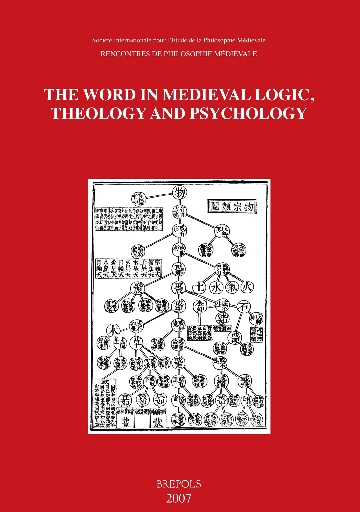
The Word in Medieval Logic, Theology and Psychology
Acts of the XIIIth International Colloquium of the Société Internationale pour l’Étude de la Philosophie Médiévale, Kyoto, 27 September-1 October 2005
The holding of the 2005 annual colloquium of the SIEPM in Kyoto Japan presented the opportunity to explore the very foundations of communication: the word in all its aspects. Whether mental concepts as Aristotle had claimed were the same for all people whether from the East or the West; how these mental concepts were transformed into words; how words affected the concepts (e.g. in regard to the colour spectrum); how angels communicated with one another and whether any words were appropriate for talking about God; whether words for things arise merely from convention or have an essential relationship to what they describe; what exactly do the words for individuals species and genera describe; why words can have powerful effects; what is the relationship between the inner word and the spoken word. The essays in this volume explore these questions largely from the texts of medieval Western philosophers and theologians from Boethius to Meister Eckhart but some Hebrew and Arabic texts are also taken into consideration. The contexts range from the lively debates in the Parisian schools of the early twelfth century through the subtle arguments of thirteenth and fourteenth century scholars to mystical writings of the fifteenth century. Running as a thread through the essays are the translations and commentaries of Boethius on the Vetus logica of Aristotle and the divine word of the Bible. The combination of contributions of Japanese scholars with both younger and more established scholars from the Western tradition ensures a rich and varied approach to this subject.
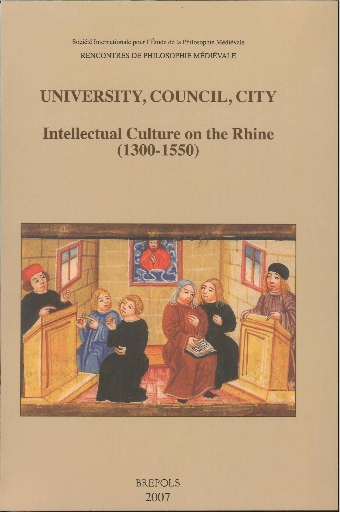
University, Council, City. Intellectual Culture on the Rhine (1300-1550)
Acts of the XIIth International Colloquium of the Société Internationale pour l’Étude de la Philosophie Médiévale, Freiburg im Breisgau, 27-29 October 2004
Stretching from Basel to Cologne the Rhine formed the geographical axis of a broad cultural realm in the late Middle Ages lending vitality not only to its cities and universities but also to the two great Councils to which it played host. Already in the fourteenth century the lives of such famous German mystics as Meister Eckhart Heinrich Seuse and Johannes Tauler testify to the presence of an advanced intellectual culture in the cities of the upper and lower Rhine. In the fifteenth century the most famous Councils of the late Middle Ages took place along the Rhine namely the Councils of Constance and Basel which formed loci of intellectual exchange and which became seedbeds of philosophical ideas that engaged and influenced such participants as Heymericus de Campo and Nicholas of Cusa. With the establishment of the Universities of Cologne (1388) Freiburg (1457) Basel (1459) and Mainz (1476) the intellectual culture of this region took an institutional form that continues to exist to this day and symbolizes the stability of the intellectual culture of the Rhineland. The main purpose of this volume is to explore the intellectual richness and vitality of the Rhineland in its various facets and on its different levels.
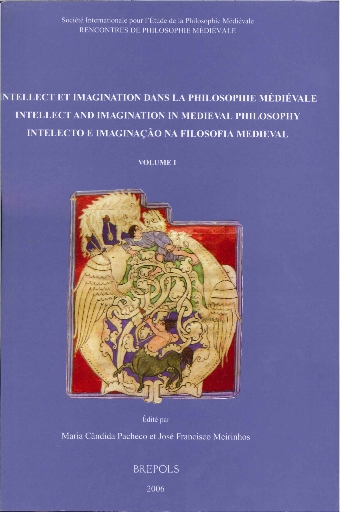
Intellect et imagination dans la philosophie médiévale / Intellect and Imagination in Medieval Philosophy / Intelecto e imaginação na Filosofia Medieval
Actes du XIe Congrès International de Philosophie Médiévale de la Société Internationale pour l’Étude de la Philosophie Médiévale (S.I.E.P.M.). Porto, du 26 au 31 août 2002
Le XIème Congrès International de Philosophie Médiévale de la Société Internationale pour l’Étude de la Philosophie Médiévale (S.I.E.P.M..) s’est déroulé à Porto (Portugal) du 26 au 30 août 2002 sous le thème général: Intellect et Imagination dans la Philosophie Médiévale. A partir des héritages platonicien aristotélicien stoïcien ou néo-platonicien (dans leurs variantes grecques latines arabes juives) la conceptualisation et la problématisation de l’imagination et de l’intellect ou même des facultés de l’âme en général apparaissaient comme une ouverture possible pour aborder les principaux points de la pensée médiévale. Les Actes du congrès montrent que «imagination» et «intellect» sont porteurs d’une richesse philosophique extraordinaire dans l’économie de la philosophie médiévale et de la constitution de ses spécificités historiques. Dans sa signification la plus large la théorisation de ces deux facultés de l’âme permet de dédoubler le débat en au moins six grands domaines: — la relation avec le sensible où la fantaisie/l’imagination joue le rôle de médiation dans la perception du monde et dans la constitution de la connaissance; — la réflexion sur l’acte de connaître et la découverte de soi en tant que sujet de pensée; — la position dans la nature dans le cosmos et dans le temps de celui qui pense et qui connaît par les sens externes internes et par l’intellect; — la recherche d’un fondement pour la connaissance et l’action par la possibilité du dépassement de la distante proximité du transcendant de l’absolu de la vérité et du bien; — la réalisation de la félicité en tant qu’objectif ultime de même que la découverte d’une tendance au dépassement actif ou mystique de toutes les limites naturelles et des facultés de l’âme; — la constitution de théories de l’image sensible ou intellectuelle et de ses fonctions.
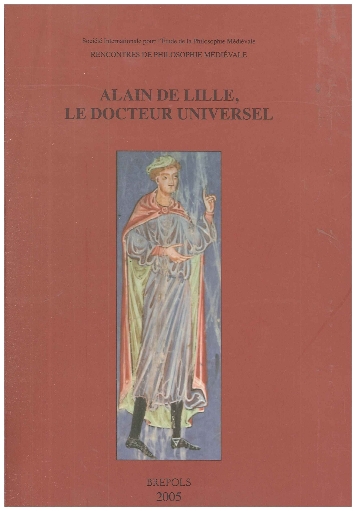
Alain de Lille, le docteur universel
Philosophie, théologie et littérature au XIIe siècle
Né aux alentours de 1120 surnommé le «Docteur universel» Alain de Lille doit ce titre à ses talents de philosophe de théologien de prédicateur et de poète ainsi qu’à l’étendue de ses connaissances. Celui dont l’épitaphe dit qu’«il a su tout ce que l’homme pouvait savoir» est à lui seul un résumé des intérêts multiples de son temps. Sa pensée est le point de rencontre des grands courants philosophico-théologiques du XIIe siècle; au fait des dernières avancées techniques dans les arts libéraux il demeure en même temps un parfait témoin de l’humanisme littéraire. A l’occasion du huitième centenaire de sa mort il était nécessaire de réexplorer la synthèse qu’a opérée Alain des savoirs de cette époque charnière et de rappeler les pistes et les problématiques qu’il a ouvertes peu avant le grand essor universitaire du XIIIe siècle.