


Rural History in Europe
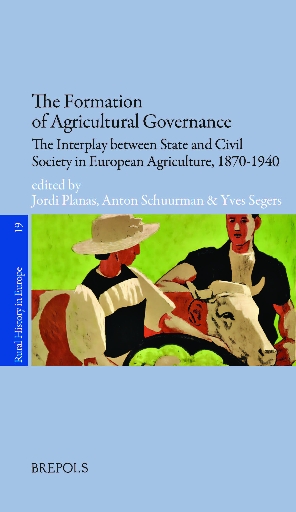
The Formation of Agricultural Governance
The Interplay between State and Civil Society in European Agriculture, 1870-1940
This book unravels how the agricultural sector and the rural world in Europe became more and more organised within capitalism in the years 1870-1940 and this with the aim of tackling the important challenges of the time. The focus is not so much on the myriad of individual farmers’ actions but on the collective efforts undertaken through the interplay between the state and the agricultural civil society.
A wide variety of actors from landowners associations farmers’ unions cooperatives scientific institutions and researchers to farmers themselves (or civil society) played a critical role in the process of drafting a policy agenda developing agricultural policies and were instrumental in implementing them in close relationship with the state. The result was a metamorphosis from mobilisation and representation of agrarian interests to a form of self-government or co-government of the agricultural sector at the national level which would only reach its highest point after the Second World War.
These issues are explored by established rural historians covering a period of seven decades (1870-1940). The papers provide a wide geographical perspective from the north of Europe to the Mediterranean.
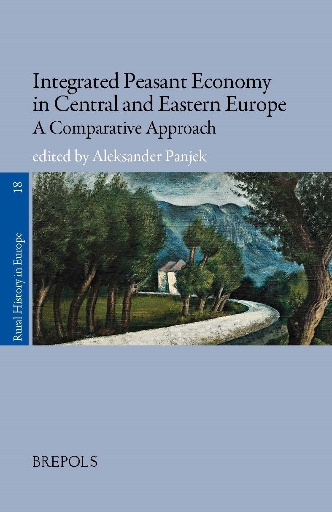
Integrated Peasant Economy in Central and Eastern Europe
A Comparative Approach
Income integration based on the peasants’ engagement in non-agrarian sectors is a prominent and widespread feature in the history of the European countryside. While listing a multitude of activities outside the narrow scope of farm management aimed at self-consumption prevailing interpretations emphasize how survival was the goal of peasant economies and societies. The “integrated peasant economy” is a new concept that considers the peasant economy as a comprehensive system of agrarian and non-agrarian activities disclosing how peasants demonstrate agency aspirations and the ability to proactively change and improve their economic and social condition. After having been successfully applied to the Alpine and Scandinavian areas the book tests this innovative concept through a range of case studies on central and eastern European regions comprising Poland the Czech Republic Slovenia Serbia Bosnia and Herzegovina and Ukraine. By enhancing our knowledge on central and eastern Europe and questioning the assumption that these regions were “different” it helps overcome interpretive simplifications and common places as well as the underrepresentation of the “eastern half” of Europe in scholarly literature on rural history. That’s why the book represents a refreshing methodological contribution and a new insight into European rural history.
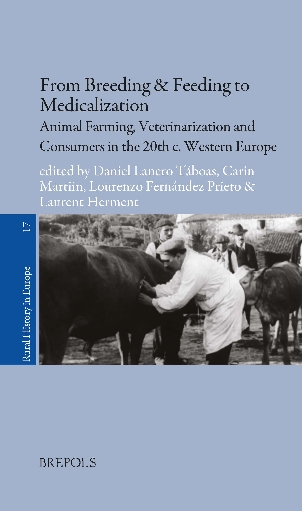
From Breeding & Feeding to Medicalization
Animal Farming, Veterinarization and Consumers in Twentieth-Century Western Europe
To fully understand the changes in European animal husbandry during the long twentieth century it is necessary to examine all aspects of the food chain devoted to supplying proteins and fats to a growing population. Indeed the twentieth century saw great changes in animal husbandry - towards a market-oriented intensified and specialized production. This influenced and was influenced by policies trade aspects of animal and public health food supply issues aims in animal breeding development of production systems principles in feeding and impact of producer cooperatives.
Because it is not possible to apprehend all these global changes from a rural point of view this book aims to bring together many different expert perspectives in fields such as: agronomy veterinary medicine microbiology history of sciences economic and cultural history and sociology. Taking into account both national idiosyncrasies and changes from an international perspective the book gathers scientists from Italy Spain France England The Netherlands and Sweden.
The first part of the book will be devoted to the evolution of animal husbandry and commercialization from the end of the nineteenth century to the beginning of the twenty-first century. The second part of the book is devoted to the increasing medicalization of this sector with a special focus on the role of veterinarians and the on the increasing uses of antibiotics.
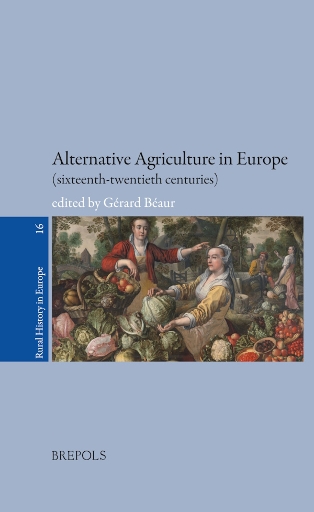
Alternative Agriculture in Europe (sixteenth-twentieth centuries)
The treatment of long-term agricultural transformation remains a lively topic for historians. Much debate arose when agricultural development patterns were discovered that did without a dominant production-oriented cereal crop even when it was accompanied by livestock farming. Joan Thirsk hoped to conclude this debate by putting forward the hypothesis that such “alternative agriculture” was the farmers’ way of responding to the difficulties caused by periods of low agricultural prices. This theory stirred up controversy and arguments both for and against.
The contributions to this volume take this hypothesis seriously and attempt to assess its validity. Examining a large number of “alternative agricultures” over the long term from the fifteenth to the twentieth century they discuss the issues encountered in tracing the links between the spread of alternative crops such as fruits and vegetables flowers and industrial crops and the general economic environment across a vast swathe of territory stretching from Flanders to Spain and from France through Italy and Switzerland as far as Russia.
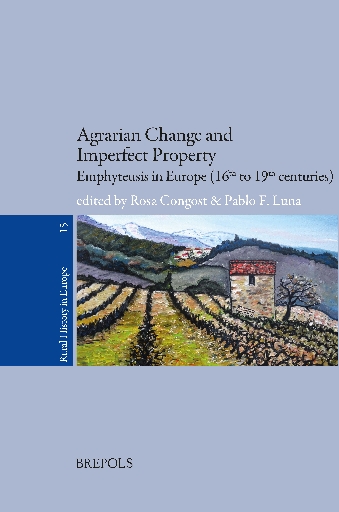
Agrarian Change and Imperfect Property
Emphyteusis in Europe (16th to 19th centuries)
This book is situated at the crossroads of two recurring themes in rural history: agrarian contracts and property rights. Emphyteusis is at the heart of agrarian history in that it brings together agricultural history and the nature of social relations in traditional societies. Despite this many such contracts have been blithely ignored or unjustly dismissed either because they are hard to identify given the many variants that existed or because as a form of divided property they are generally perceived in a negative light.
Nevertheless emphyteusis is to be found everywhere even in regions which deny its existence and it is far from being obsolete. Rather it is flourishing prospering and long-lived particularly in urban areas. Emphyteusis has a long history and has played a central role sometimes misleading but always crucial in the process of agricultural development. It has held sway as a substitute when access to property has been impossible and as a source of conflicts has often revealed the nature of power relations between property owners on the one hand whether seigneurial or not and cultivators short-term and long-term tenants on the other. The different chapters in this volume illuminate these multiple facets and forms of this type of contract and imperfect property rights. Though the focus is on Mediterranean societies the questions raised have relevance far beyond this specific area.
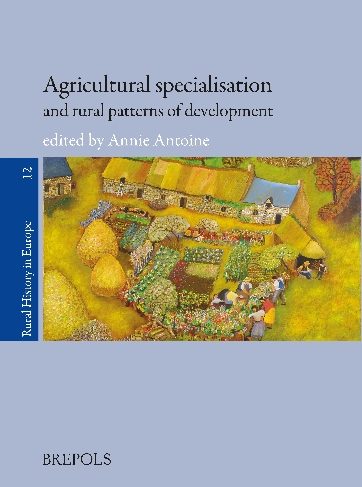
Agricultural specialisation and rural patterns of development
In agricultural history specialisation is usually considered as progress turning peasants into market-orientated farmers and allowing them to escape from self-sufficiency. Recent developments in the field of productivist agriculture and the recent rise of alternative agriculture cast doubt on this conventional concept of agricultural specialisation. Several questions arise: Did specialisation necessarily mean that farms concentrated on a single product? Was it always a great step forward? Did it occur in the same form in earlier centuries as in contemporary economies?
The chapters of this book draw attention to several factors relevant to processes of specialisation such as markets transport and the natural environment. The contributions deal with regions in 10 countries of Europe from Sweden to Spain and from England to Bulgaria and with periods between the seventeenth and the twentieth centuries. They suggest several conclusions. Specialisation can take place in various forms ranging from focussing on a single major cash crop to giving preference to a combination of products. This is true both at the level of an individual farm as at a regional level. Specialisation did not always improve the farmers’ standard of living. And it was neither a linear nor an irreversible process. This can be observed in periods of war but also in recent developments in post-communist countries.
Annie Antoine professor of modern history at Rennes 2 University (Brittany France) specialises in the history of rural societies and farming practices. Her latest book is a history of the rural landscape in Western France.
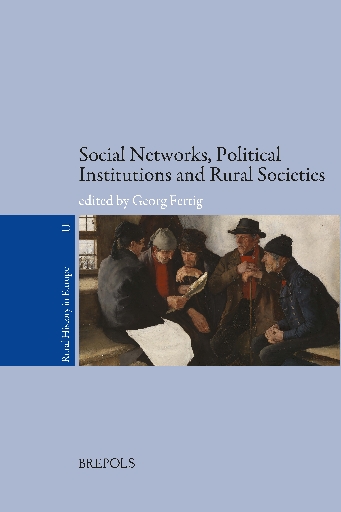
Social Networks, Political Institutions, and Rural Societies
This book is a collection of essays on social networks social capital and kinship in historical and contemporary rural societies. They span a wide range of European countries and historical situations from early modern Flanders and Italy to present-day Austria and Armenia. All the essays describe in detail how people on the countryside connected with one another in formal or informal relations. In doing so the authors use and critically discuss methods of historical interpretation social network analysis and econometrics. The book analyses these topics in three steps. First the authors address whether social relations can be of economic use. Secondly they examine the institutional conditions for such a conversion of social into economic capital reconstructing the often unexpected ways in which the economic and social spheres were connected both in ‘pre-modern’ and in ‘modern’ settings. Thirdly they show how political institutions were constructed out of social networks.
Georg Fertig is professor of economic and social history at Halle University in Germany. He has worked extensively on 18th and 19th-century historical demography and agrarian history.
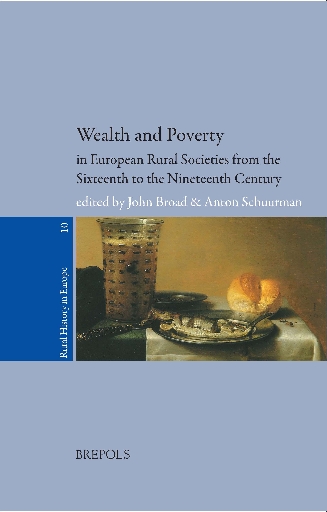
Wealth and Poverty in European Rural Societies from the Sixteenth to Nineteenth Century
This book sheds new light on old problems of wealth poverty and material culture in rural societies. Much of the debate has concentrated on north-west Europe and the Atlantic world. This volume widens the geographic range to compare less well known areas with case studies on the Mediterranean world (Catalonia and Greece) from central Europe (Bohemia and Hungary) and from the Nordic countries (Denmark). Methodologically several papers link the possession of goods to the use of room space while others highlight the importance of the channels for the circulation of goods problems of stocks and flows of goods and the complexities of urban/rural difference. Finally this book seeks to stimulate new comparative studies in living standards and lifestyles by providing an overview of achievements up till now.
John Broad is visiting academic at the Cambridge Group for the History of Population and Social Structure University of Cambridge. He has published on rural society and poverty in England and his current research interests include a book on English rural housing and large-scale surveys of population religion and landholding in England in the eighteenth century.
Anton Schuurman is associate professor of Rural History at Wageningen University. He has published on the history of material culture and rural transformations in the Netherlands. Currently he is writing a book on the processes of modernisation and democratisation in the Dutch countryside from 1840 till 1920.
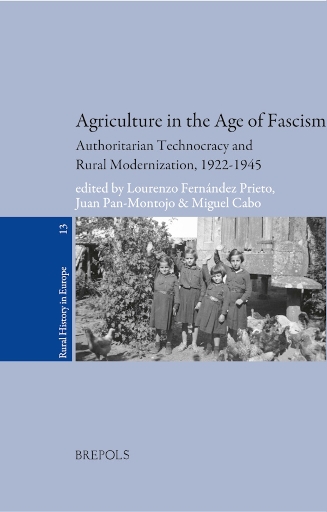
Agriculture in the Age of Fascism
Authoritarian Technocracy and rural modernization, 1922-1945
The agrarian policies of fascism have never before been studied from a comparative perspective. This volume offers an up-to-date overview as well as new insights drawn from eight case-studies on Italy Portugal Hungary Germany Austria Spain Japan and Vichy France. The consensus that emerges from them is that the agricultural and rural policies of fascist regimes tended towards modernization and that many of them resembled initiatives pursued in the post-war decades and the Green Revolution When viewed in this perspective the fascist era appears less as an aberration and more as an integral part in the global process of agrarian “modernization” a process whose merits are now being called into question.
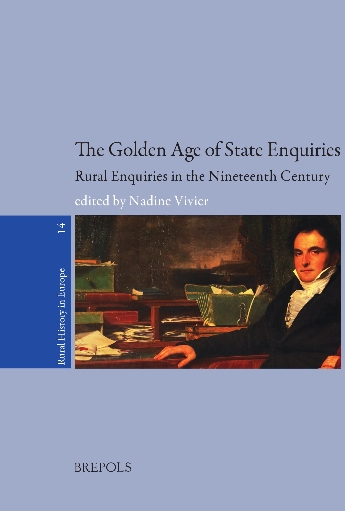
The Golden Age of State Enquiries
Rural Enquiries in the Nineteenth Century. From Fact Gathering to Political Instrument
Any state intervention in society requires a high degree of knowledge. This is usually given by a state-sponsored enquiry. Some of these surveys can be traced back to Antiquity but by the nineteenth century enquiries proved to be different because the nature of the state and the distribution of political influence had changed and the scientific and financial means to investigate had progressed. This new context prompted states to launch large enquiries to assess transformations in the rural world: new techniques opening to long distance trade. The heart of the nineteenth century was the golden age of state enquiries. Inspired by the nascent sociology they fulfilled the desire for scientific knowledge accessible to everyone and the search for innovative solutions for the improvement of agriculture and rural life.
The present volume does not focus on the content of the enquiries; it examines their origins and functioning as new and important objects of historical research with fourteen studies gathered from twelve countries. The main focus is on Western Europe with broadening perspectives to the East (Ottoman Empire) and West (Canada and Mexico). The international comparative perspectives highlight the importance of transnational cultural transfers in the nineteenth century. French and British methods were considered models of progress and of a civilised state. Statistical methods and the needs of the administration were discussed and adapted in each state according to their conception of state power in a context of the construction of the nation state.
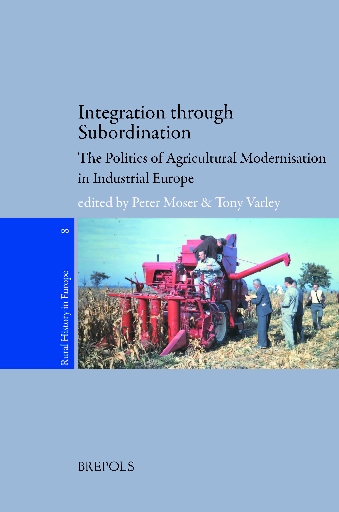
Integration through Subordination
The politics of Agricultural Modernisation in Industrial Europe
Starting from the hypothesis that states were crucial as agents of modernisation this book explores why how and with what results European states have striven to transform their agricultural sectors in the nineteenth and twentieth centuries. Modernising agriculture has increasingly meant emulating the new organisational models of manufacturing industry. But since agriculture continues to rely heavily on living resources (plants and animals) the results of modernising farming have often differed significantly from the manufacturing sector. Modernised agriculture in other words is something quite different than simply industrialised agriculture.
Ranging from the Iberian Peninsula to Hungary and from Greece to England the chapters of this book deal with four principal questions: Why have state elites and their civil society allies chosen to modernise agriculture? What have they understood by agricultural modernisation? What sort of power resources have they taken as necessary for effective modernisation? And what were the consequences of the pursuit of modernising policies for the farming population and for agriculture?
Peter Moser is director of the Archives of Rural History in Bern. His research interests centre on the interaction of industrial societies with their agricultural sectors.
Tony Varley lectures in political science and sociology at the National University of Ireland Galway. His research interests centre mainly on agrarian politics and rural social movements.
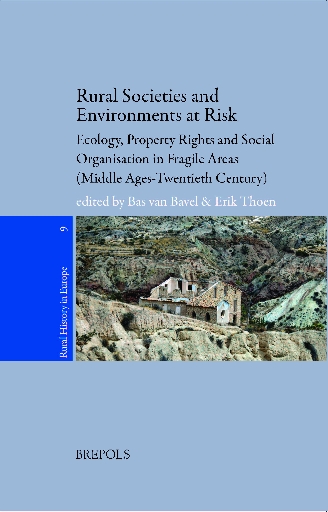
Rural societies and environments at risk
Ecology, property rights and social organisation in fragile areas (Middle Ages-Twentieth century)
This book discusses the relationship between ecology and rural society in fragile environments of the past. Rural land use in these areas entailed an inherent vulnerability for instance because of their poor soils aridity or their location in mountain areas near the sea or in severe climatic conditions. The various chapters analyse how societies coped with this vulnerability by way of the organization of property rights to land. These rights formed the framework which shaped the use of the land and were a main constituent of the relationship between mankind and ecology in these fragile areas. To a large extent therefore they determined - and still determine - the success or failure of rural societies to cope with the challenges posed by their environment. In their turn however these property rights were shaped within a wider social and political context in which political and ideological considerations and special interests also played their part. As a result the organization of these rights was not always geared towards sustainability as demonstrated in these chapters which discuss and analyse long-term developments in several parts of Northwestern Central and Southern Europe.
Bas van Bavel is professor of economic and social history of the Middle Ages head of the section of Economic and Social History and coordinator of the knowledge centre Institutions of the Open Society at Utrecht University (the Netherlands).
Erik Thoen is ordinary professor at Ghent University (Belgium) specialised in rural and environmental history. He is co-ordinator of the CORN history network (Comparative Rural History of the North Sea Area).
Property Rights, Land Markets and Economic Growth in the European Countryside (13th-20th Centuries)
By exploring the fundamental issues of property rights and markets in land this book will offer important insights into long-term economic change in Europe. The essays gathered here provide a major consideration of the institutional constraints which can be employed by historians and other commentators in order to explain both the slowness or even absence of growth in certain areas of the European economy between the thirteenth and nineteenth centuries as well as the discrete experiences of countries within Europe in this broad period.
This is an issue of current interest not least because discussion of 'institutional determinism' has become a standard of explanations of historical and economic change; that said those promoting such approach have sometimes been criticised for generalising from an 'institutional' perspective rather than taking full account of the variety of potential causative explanations within particular historical contexts.
The present collection of essays will therefore explore the conditions which permitted the progress of agriculture in Europe and the emergence of capitalism in the countryside. The research presented in this volume helps to demonstrate that changes in the market (demand relative prices...) encouraged changes in property rights but certainly did not do so in ways that were consistent or that led inexorably towards individual and exclusive rights of the kind described by the nineteenth-century liberal paradigm.
Specialist of rural and economic history Gérard Béaur is Directeur de Recherches at CNRS and Directeur d’Etudes at EHESS (Paris France). He was Chair of the COST Action A35 Progressore and he is currently director of the GDRI (International Research Network CNRS) CRICEC (Crises and Changes in the European Countryside).
Phillipp Schofield is Professor of Medieval History and Head of the Department of History and Welsh History Aberystwyth University. His research interests focus on rural society in England in the high and late Middle Ages.
Jean-Michel Chevet is a French researcher in the Institut National de la Recherche Agronomique ADESS-UMR-5185. He is a specialist in the economic history of the countryside particularly of the development of the English and French growth and of the history of vine growing.
Maria-Teresa Pérez-Picazo was Professor of Economic History at the University of Murcie (Spain). Her principal work was on agrarian history and she focused particularly on the subject of water management in the modern period.
Inheritance Practices, Marriage Strategies and Household Formation in European Rural Societies
Conventional wisdom holds that over a long period of history many women and men in the countryside were prevented from marrying because they lacked access to land. This volume offers an up-to-date discussion of the interaction between inheritance practices marriage and household formation both for those who inherited and those who did not. It asks why and to what extent inheritance patterns and household structures differed between countries and regions in Europe right up to the present day.
Dealing with both impartible and partible inheritance it examines how retirement practices and choices between ante-mortem or post-mortem property transfers gave rise to a wide range of specific strategies. The chapters cover rural Europe from the seventeenth to the twentieth century ranging from semi-subsistence and seignorial societies to highly market-oriented economies. They offer case studies drawn from the Iberian Peninsula to Scandinavia and from the British Isles to Russia.
Anne-Lise Head-König is professor em. of social and economic history at the University of Geneva (Switzerland). Her main fields of research relate to the transformations in rural societies in Switzerland and in Europe with their social and demographic implications including social mobility migration and gender.
Péter Pozsgai is associate professor of social and economic history at the Corvinus University of Budapest (Hungary). His research interests in rural studies cover demography agrarian social relations property transfer and the land market in Hungary and in Europe from the eighteenth to the twentieth century.
Growth and Stagnation in European Historical Agriculture
Agricultural production has been the basic and single most important factor for the well-being of mankind since the Neolithic revolution. Insufficient agricultural output has led to deficient means of subsistence and sometimes even starvation while rich harvests brought about plenty and prosperity. Continuous increases in agricultural output have transformed whole societies and continents bringing about radical changes in people’s lives and economic prospects.
This book is focused on measuring and explaining agricultural growth in Europe. For most countries statistics on agricultural production are either non-existing or shaky for the period up to the end of the nineteenth century. Consequently researchers dealing with historical farming have been forced to put a lot of effort into reconstructing reliable data on inputs and outputs. The last decades have seen major progress and new approaches to quantify and explain agricultural development have been adopted. The book is the result of these efforts and it encompasses estimations and explanations of European historical agriculture over time from the ninth to the twentieth century and over space from the Iberian Peninsula to Scandinavia and from the British Isles to Russia.
Mats Olsson and Patrick Svensson are associate professors in Economic History at Lund University. Their major research area is the agricultural transformation of Sweden and its social and demographic consequences covering the manorial system peasant production and labour productivity social mobility and preindustrial land and capital markets.
Contexts of Property in Europe
The Social Embeddedness of Property Rights in Land in Historical Perspective
The essays in this book tap the potential of the historical analysis of social contexts in which property rights are embedded - social relations power and agency political institutions culture - to understand how landed resources are actually appropriated. This exploratory approach seeks both to take advantage of the existing theory of property rights as it is applied by the institutionalist outlook on economic history and to go beyond it by explicitly incorporating social processes and factors in the analysis of property institutions. With this common aim in mind the book covers a wide variety of historical cases throughout space and time from the late Middle Ages in the Czech lands and in Tuscany to the very recent de collectivisation of the countryside in former socialist countries which will contribute rich and grounded insights to the discussion of the topic and of its implications.
Rosa Congost is senior researcher at the Centre de Recerca d'Història Rural and teaches at Facultat de Lletres in Universitat de Girona. Her research interests cover the history of landed property and agrarian social relations.
Rui Santos is senior researcher at CESNOVA and teaches at Faculdade de Ciências Sociais e Humanas in Universidade Nova de Lisboa. His research interests cover historical and economic sociology and rural studies.

Agrosystems and Labour Relations in European Rural Societies
(Middle Ages-Twentieth Century)
It goes without saying that agriculture is a form of colonisation of nature by society. In the course of history the articulation of natural and societal features gave rise to a wide variety of agrosystems within the boundaries of Europe which were embedded in supra-regional political and economic contexts at least from the High Middle Ages onwards. By following an integrative approach this volume defines agrosystems as production systems based on the ecological and socioeconomic relations involved in the reproduction of rural societies at multiple levels. The authors explore the articulation of natural and societal factors through the prism of labour relations. The structural and practical organization of labour is seen as the crucial link between rural production and reproduction. Accordingly the contributions focus on the rural household as the basic unit of production and reproduction in different temporal and spatial contexts. Therefore the question arises if the changes in ecosystems and social systems have so fundamentally altered European agriculture up to now that peasant family farming will disappear (if it is no longer sustained by state intervention).
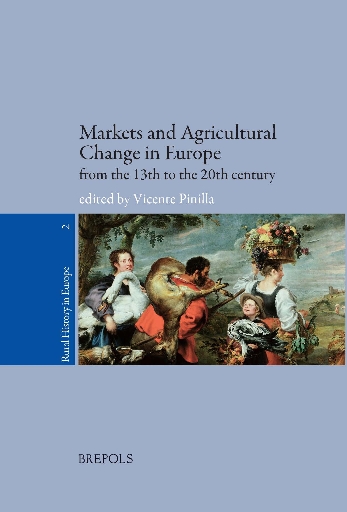
Markets and Agricultural Change in Europe from the 13th to the 20th century
The main target of this book is to explore how the involvement of rural populations and communities in different kinds of markets (mainly for agricultural commodities) has influenced the management of rural land in Europe. Most of the papers focus on precisely what were the forces driving agricultural change in rural Europe. Although the importance of these changes were very different from the Middle Ages until the present days a common approach that emerged was to stress the importance of urban and external markets in order to give incentives to changes in the management of rural land. The transition of agriculture and its producers respectively into a highly market-integrated sector and strongly market-oriented peasants formed the driving force and prima causa of European agricultural revolutions during early modern times. Expansion of market allowed for an intense process of specialization with clear competitive advantages with respect to earlier land uses.
Vicente Pinilla professor of Economic History at the University of Zaragoza has published widely in the field of economic history notably of nineteenth- and twentieth -century Spanish agriculture and international trade in agricultural products.
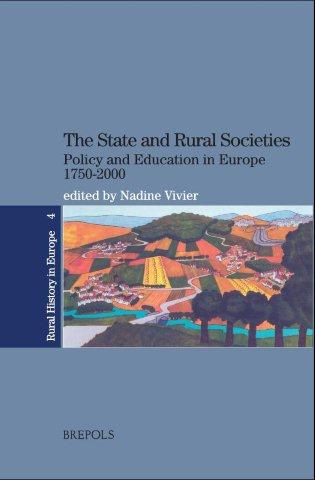
The State and Rural Societies
Policy and Education in Europe. 1750-2000
Rural societies are conventionally thought to be bound by tradition and resistant to change. But from the 18th century onwards many countries began to see the countryside as the basis of national prosperity with a healthy and increasing population and rising agricultural output fostering general economic growth. It became an objective of the State to encourage the trend but also to exert social control on this major part of the population in order to civilize the rude peasantry and acquire their electoral support.
This book deals with the various aspects of rural life in which the State intervened: economic matters such as property rights and market regulations; social questions from moral concerns to demographic policy; and the key issue of rural education.
From Sweden to the Iberian Peninsula the United Kingdom to Hungary and from the eighteenth century to the twentieth using both broad surveys and in-depth studies with an extensive introduction written from a comparative perspective an international group of historians (brought together by the COST network A35) for the first time examine the rural concerns of the state both economic and social in a comparative European context.
Nadine Vivier is professor of social and economic history at the University of Maine (France). She has worked extensively on rural societies from 1750 to 2000 in France and in Europe.