


Integration through Subordination
The politics of Agricultural Modernisation in Industrial Europe
Abstract
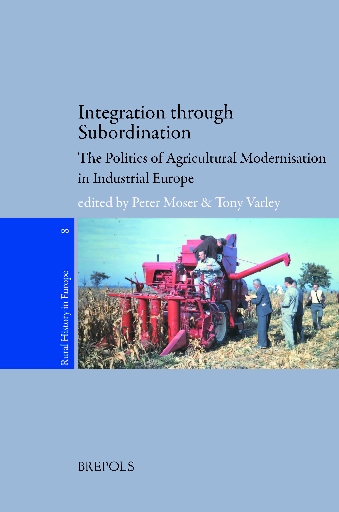
Starting from the hypothesis that states were crucial as agents of modernisation, this book explores why, how and with what results European states have striven to transform their agricultural sectors in the nineteenth and twentieth centuries. Modernising agriculture has increasingly meant emulating the new organisational models of manufacturing industry. But since agriculture continues to rely heavily on living resources (plants and animals), the results of modernising farming have often differed significantly from the manufacturing sector. Modernised agriculture, in other words, is something quite different than simply industrialised agriculture.
Ranging from the Iberian Peninsula to Hungary and from Greece to England, the chapters of this book deal with four principal questions: Why have state elites, and their civil society allies chosen to modernise agriculture? What have they understood by agricultural modernisation? What sort of power resources have they taken as necessary for effective modernisation? And what were the consequences of the pursuit of modernising policies for the farming population and for agriculture?
Peter Moser is director of the Archives of Rural History in Bern. His research interests centre on the interaction of industrial societies with their agricultural sectors.
Tony Varley lectures in political science and sociology at the National University of Ireland, Galway. His research interests centre mainly on agrarian politics and rural social movements.
