


The Medieval Countryside
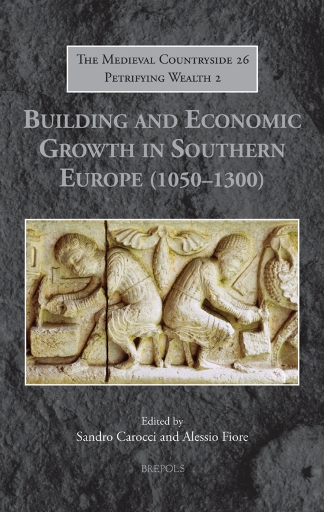
Building and Economic Growth in Southern Europe (1050–1300)
The four-volume sub-series ‘Petrifying Wealth’ explores the sudden ubiquity of masonry construction between 1050 and 1300 in Southern Europe and its profound effect on the European landscape. New questions about wealth society and medieval building are explored which highlight the link between construction in durable materials and the shaping of individual collective and territorial identities: the birth of a new long-lasting panorama epitomising the way we see the space and territory of Europe nowadays.
Volume 2 of the ‘Petrifying Wealth’ series focuses on economic growth in Southern Europe between 1050 and 1300 discussing investments on buildings connected with production and trade. It examines buildings that served a primarily economic purpose in various aspects: agricultural activity and the conservation and processing of its products crafts and exchanges and their material infrastructures. The growth in this period resulted in a multiplication of material structures closely linked with economic activity such as mills barns canals workshops and arsenals. Focusing on the dynamics connected with these buildings thus offers a vantage point to better understand the contexts and characteristics of the ‘economic take-off’ in Southern Europe in this period.
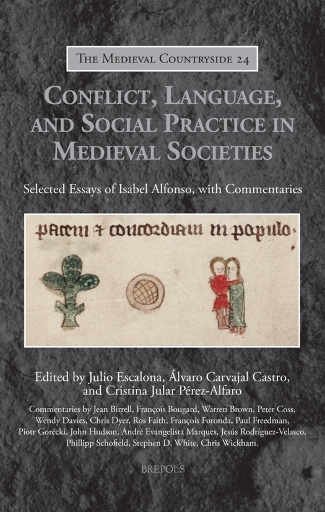
Conflict, Language, and Social Practice in Medieval Societies
Selected Essays of Isabel Alfonso, with Commentaries
Isabel Alfonso is one of the finest scholars on the rural and political history of the European Middle Ages. She is widely known for her contributions to the study of the peasantry social conflict and political discourses. Her research has transcended the boundaries of medieval studies incorporating insights from disciplines beyond including legal anthropology philology and discourse analysis among others. Over her academic career Isabel Alfonso has made a continued effort to make the work of international scholars known in Spain and to communicate advancements in Spanish historiography to international audiences; and yet most of her own research has only been published in Spanish. As a means to acknowledge her long-standing commitment to bridge different historiographies and overcome national boundaries this unusual Festschrift offers a selection of her most relevant publications many of which appear in English for the very first time. Each paper is preceded by commentaries by leading scholars that discuss the enduring relevance of Isabel Alfonso’s work its richness and complexity and its potential to inspire further research along a vast array of lines.
Commentaries by Jean Birrell François Bougard Warren Brown Peter Coss Wendy Davies Chris Dyer Ros Faith François Foronda Paul Freedman Piotr Gorécki John Hudson André Evangelista Marques Jesús Rodríguez-Velasco Phillipp Schofield Stephen D. White Chris Wickham.
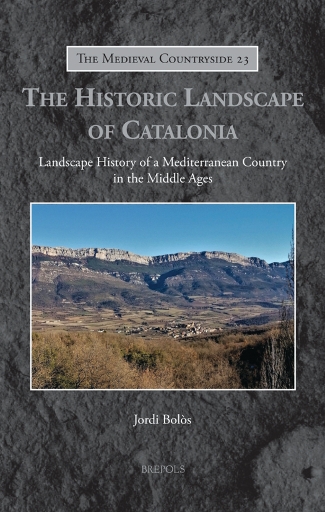
The Historic Landscape of Catalonia
Landscape History of a Mediterranean Country in the Middle Ages
The landscape around us is largely the result of man-made transformations. It consists of villages farmsteads cities fields ditches and roads. This book examines how the landscape of the Mediterranean country of Catalonia was created and transformed. Although Catalonia’s history goes back before the Middle Ages it was during the medieval period that it saw significant development which has continued ever since. Understanding the landscape helps us understand political social economic and cultural changes. In this book we discover how the settlements built around a castle or a church were created and what the open villages and new towns were like both in Catalonia and in neighbouring territories. The book also explores the formation of cities and towns as well as the significance of hamlets and farmsteads based on data provided by written documents and archaeological excavations. It also explores the formation of fields ditches and irrigated areas and shows the importance of understanding the boundaries and demarcations that enclose valleys villages castles and parishes. Finally special attention is devoted to place names and cartography as these shed light on numerous historical realities.
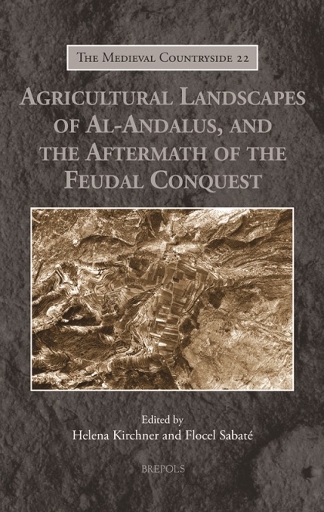
Agricultural Landscapes of Al-Andalus, and the Aftermath of the Feudal Conquest
This volume presents recent archaeological research on the agriculture and society of al-Andalus during the Middle Ages especially from the perspective of ‘hydraulic archaeology’ - an avenue of research developed by Spanish researchers which focuses on the analysis of irrigation systems created by Islamic colonists from the eighth century onwards. More recently this research perspective has incorporated the analysis of other agricultural systems such as dryland agriculture and pasturelands. All of these agricultural regimes are complementary in peasant-led subsistence agricultural systems. From a methodological perspective this archaeological approach is highly innovative and uses a wide range of techniques (aerial photography cartographical analysis field survey archival research and archaeological excavation) in order to outline the size and boundaries of cultivation and grazing areas to define specific plots of land and the related road networks and to identify other associated facilities such as watermills.
In connection with these topics several issues are discussed: the earmarking of rural or urban farming areas for irrigation draining or dryland agriculture; the process of construction and the subsequent evolution of these farming areas; the transformations undergone by these areas after the feudal conquest; and finally the identification of pasturelands and the analysis of the evidence concerning their management.
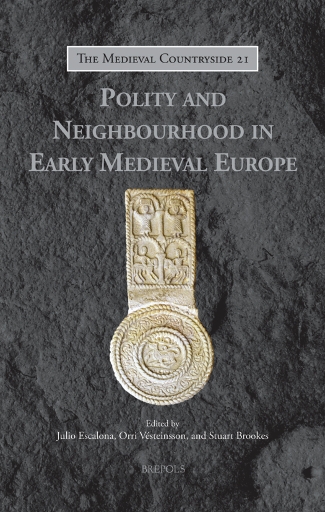
Polity and Neighbourhood in Early Medieval Europe
How were early medieval people connected to each other and to the wider world? In this collection archaeologists and historians working in very different areas of early medieval Europe explore diverse evidence - from landscape and burial archaeology to charters and chronicles - to discuss the relationships that constituted neighbourhoods and the roles these played in the processes of state formation that can be observed in the peripheries of the Frankish world. What these case-studies teach us the contributors argue is that polities are formed not through the exclusive operation of either top-down or bottom-up agencies but from the interplay between them. By exploring the ways in which local knowledge social ties and understandings of landscape interacted with higher-level authorities and institutions we can gain real insights into the nature of early medieval power and people’s experiences of it.
Marking the culmination of a collective effort that has spanned over a decade and three funded projects this volume brings together case-studies from Spain Italy England northern Frankia Norway and Iceland to offer a comparative view of polities and neighbourhoods in early medieval Europe. Drawing on new research and offering new perspectives driven by an interdisciplinary approach this volume is of relevance to a range of disciplines including archaeology history onomastics geography and anthropology.
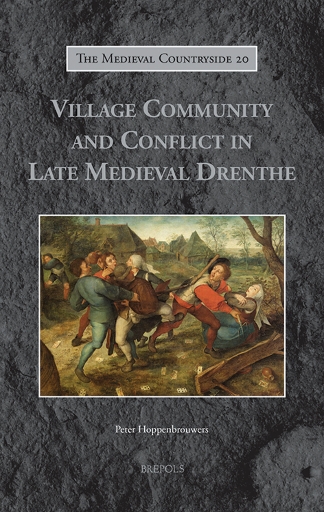
Village Community and Conflict in Late Medieval Drenthe
Village communities were the heart of the medieval countryside. But how did they operate? This book seeks to find some answers to that question by focusing on late medieval Drenthe a region situated in a remote corner of the Holy Roman Empire and part of the prince-bishopric of Utrecht. Drenthe was an overwhelmingly localized rural world. It had no cities and consisted entirely of small villages. The social and economic importance of traditionally privileged sections of medieval society (clergy and nobility) was limited; free peasant landowners were the dominant social class.
Based on a careful reading of normative sources (Land charters) and thousands of short verdicts given by the so-called ‘Etstoel’ or high court of justice in Drenthe this book focuses on three types of conflict: conflicts between villages feud-like violence and litigations about property. These three types coincide with three levels of involvement: that of village communities as a whole that of kin groups and that of households.
The resulting comprehensive analysis provides a rigorous interrogation of generalized notions of the pre-industrial rural world offering a snapshot of a typical peasant society in late medieval Europe.
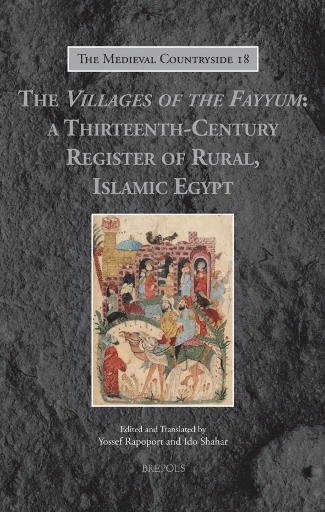
The Villages of the Fayyum, a Thirteenth-Century Register of Rural, Islamic Egypt
Medieval Islamic society was overwhelmingly a society of peasants and the achievements of Islamic civilization depended first and foremost on agricultural production. Yet the history of the medieval Islamic countryside has been neglected or marginalized. Basic questions such as the social and religious identities of village communities or the relationship of the peasant to the state are either ignored or discussed from a normative point of view.
This volume addresses this lacuna in our understanding of medieval Islam by presenting a first-hand account of the Egyptian countryside. Dating from the middle of the thirteenth century Abū ‘Uthmān al-Nābulusī’s Villages of the Fayyum is as close as we get to the tax registers of any rural province. Not unlike the Domesday Book of medieval England al-Nābulusī’s work provides a wealth of detail for each village which far surpasses any other source for the rural economy of medieval Islam. It is a unique comprehensive snap-shot of one rural society at one significant point in its history and an insight into the way of life of the majority of the population in the medieval Islamic world. Richly annotated and with a detailed introduction this volume offers the first academic edition of this work and the first translation into a European language. By opening up this key source to scholars it will be an indispensable resource for historians of Egypt of administration and rural life in the premodern world generally and of the Middle East in particular.
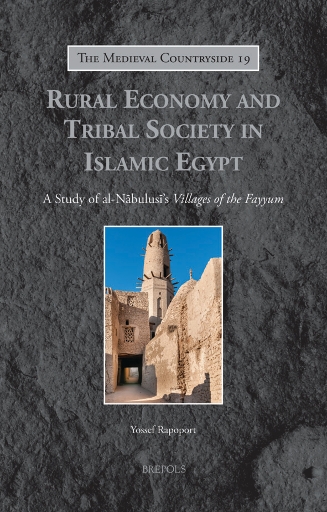
Rural Economy and Tribal Society in Islamic Egypt
A Study of al-Nābulusī’s Villages of the Fayyum
The Villages of the Fayyum is a unique and unparalleled thirteenth-century Arabic tax register of the province of the Fayyum in Middle Egypt. Based on this tax-register this book utilises quantitative research methods and spatial GIS analysis to provide a rich account of the rural economy of the medieval Fayyum the tribal organization of the village communities and their rights and duties in relation to the military landholders. It also draws on the rich documentary evidence of the Fayyum which stretches back to the Greco-Roman and early Islamic periods to trace the transformation of the Fayyum into a Muslim-majority and Arab province.
This volume thus offers a radically new perspective on the social and economic history of the medieval Islamic countryside. It makes a major contribution to the history of Islamic Egypt its rural economy and to our understanding of taxation and administration under the Ayyubids. Most importantly its argument for the metamorphosis of the Coptic peasantry into Muslim and tribal Arab society has profound implications for Middle Eastern history in general and challenges our modern concept of Arab identity.
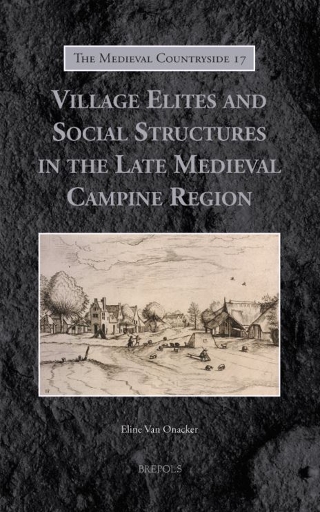
Village Elites and Social Structures in the Late Medieval Campine Region
The economy of the late medieval Low Countries is often portrayed in terms of dynamism and economic growth. However several regions within this larger entity followed an alternate path of development. One example of this is the Campine (Kempen) a communal peasant region situated to the northeast of the sixteenth-century ‘metropolis’ of Antwerp. By contrast with other regions in the Low Countries this area was characterised by a remarkable stability.
By focusing on ‘independent’ peasant elites this study explores the social structures and the characteristics of inequality of this region showing how these factors led to a different more stable mode of economic development. Looking past standard societal measurements such as property distribution this work combines a wide variety of sources to grasp the nuances of inequality in a communal society. It therefore takes into account other economic factors such as control over the commons and market integration. It also focuses on political and social inequality shedding light on aspects of inequality in village politics social life and poor relief.
Thus in contrast to dominant depictions of pre-modern societies on the road to capitalism this book provides a comprehensive portrayal of inequality and elite groups in a communal peasant society.
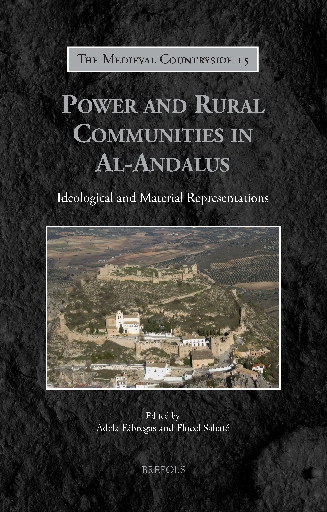
Power and Rural Communities in Al-Andalus
Ideological and Material Representations
This volume explores new definitions of state power in Al-Andalus throughout the Middle Ages by examining the interactions of the Andalusian state with its Islamic society looking at specific moments in Andalusian history in a variety of local geographical contexts. The essays collected here adopt largely archaeological methodologies considering in turn the various spaces reclaimed by the state and its material remains as well as the footprints of state impact on other local and territorial organizational structures. In addition these means of analysis directly highlight those spaces that remained outside of state control while also supporting consideration of how and why they managed to do so.
The essays use the territorial dimension of the kinship–state dichotomy as a starting point for considering its means of operation and evolution over time. Beginning with the traditional assumption that territorial configuration patterns are heavily determined by the relative weight of the different authorities operating in a given territory the essays identify the different agents operating in Al-Andalus (mainly the state and gentry-based peasant communities) through insightful archaeological and historical considerations of medieval Andalusian society’s material remains. With special attention also paid to the Nasrid Kingdom of Granada — the Andalusian territory lasting longest under Muslim rule — this collection makes an important contribution to larger historiographical debates surrounding the medieval Islamic world.
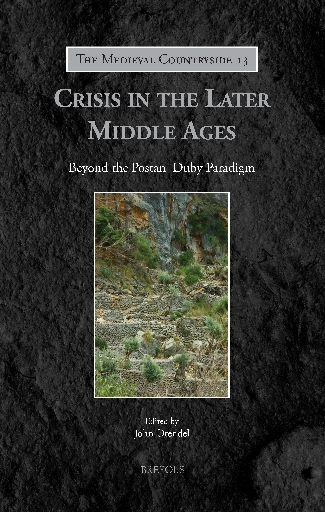
Crisis in the Later Middle Ages
Beyond the Postan-Duby Paradigm
These papers are taken from the first of a series of five international conferences devoted to the European conjuncture in 1300. They examine the enduring influence of Michael Postan’s Malthusian model of economic crisis and in particular the impact upon non-English speaking historians of Postan’s ideas as interpreted by Georges Duby. Through both historiographical essays and original research the authors reinterpret the later medieval crisis on the continent and in Britain. The vision they express is of a medieval society in which economic political and social threads wove together town and country in a complex web extending to the furthest reaches of the ‘margin’ in the highlands of the Mediterranean and on the heaths of England. In order to understand the later medieval crisis our attention must shift to how individuals negotiated and manoeuvred among institutions of exchange power and culture in their bewildering complexity rather than focus upon the modelling of reified factors.
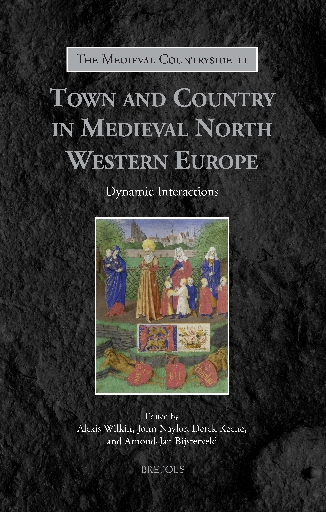
Town and Country in Medieval North Western Europe
Dynamic Interactions
This volume explores the relationships and interactions between medieval urban populations and their rural counterparts across north western Europe from the seventh to sixteenth centuries. This theme has become increasingly fragmented in recent decades resulting in scholars being largely unaware of developments outside their own areas. The present volume brings together historians and archaeologists in order to highlight the varied ways in which town–country interactions can be considered from perspectives that include economy politics natural environment material culture and settlement hierarchy. As a whole the papers offer innovative interdisciplinary perspectives on the topic that create a new platform from which to understand more fully the complex bilateral relationships in which both urban and rural spheres were able to influence and challenge each other. Contributions are wide-ranging from the activities of elite aristocratic groups in and around individual towns to large-scale surveys covering wide areas. With coverage from the North Sea to the western Baltic the book will be relevant to a range of disciplines including archaeology history and geography and is aimed towards both advanced students and established scholars.
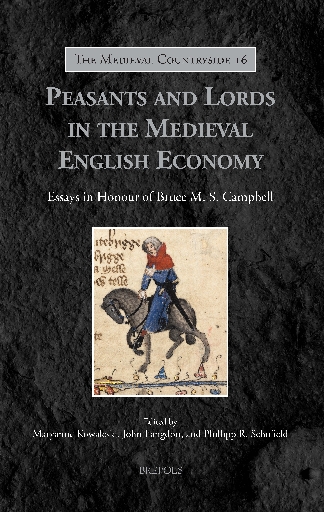
Peasants and Lords in the Medieval English Economy
Essays in Honour of Bruce M. S. Campbell
Professor Bruce Campbell’s career has been devoted to providing systematic and highly influential studies of the medieval economy and society of the British Isles including his innovative work on the role of the elites in defining medieval agricultural practices. This volume draws together essays from a distinguished group of researchers who have been inspired by Campbell’s work and the spirit of collegiality and inclusiveness that he has always demonstrated and who wish to celebrate his significant contributions to scholarship. Many of the essays collected here engage directly with critical issues raised in Professor Campbell’s own research: how medieval society fed itself with reputedly very low levels of technology the productivity of medieval society as a whole the impact of external forces (particularly climate) the relationship between lords and peasants and the importance of nonseigniorial contributions to the medieval economy.
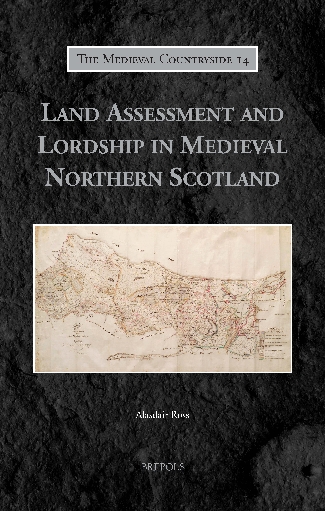
Land Assessment and Lordship in Medieval Northern Scotland
This book re-examines the ancient landscape divisions of medieval northern Scotland and discusses these in a European context. It demonstrates for the first time that the secular and ecclesiastical units of lordship across more than half of medieval and later Scotland were built out of an earlier Pictish (pre-ad 900) unit of land assessment the dabhach (plural dabhaichean). It is also demonstrated that these dabhaichean remained in use as viable units of land assessment for many hundreds of years. Some were still being listed in estate rentals in the 1930s giving them a working lifespan of over 1000 years.
Essentially dabhaichean were the building blocks from which the medieval kingdom of the Scots was largely founded. They formed the basis of larger units of secular and ecclesiastical lordship parishes tax assessments and common services. The latter included bridge service road service fighting service and hunting service. They provided order for society. Importantly this book also argues that each of these units contained all of the natural resources required to sustain communities from year to year such as access to fishings woodland peat meadows arable land and grazings. In terms of environmental history the division of the landscape into dabhaichean resulted in the increasingly efficient exploitation (and management) of these resources across time.
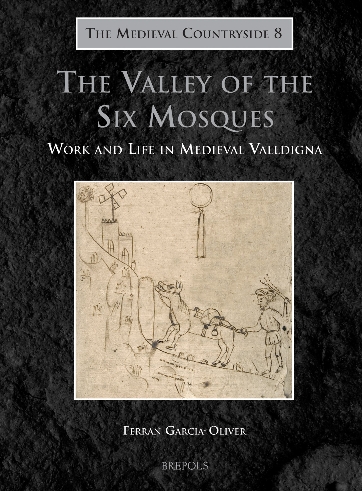
The Valley of the Six Mosques
Work and Life in Medieval Valldigna
This is a detailed and fascinating account of a Muslim valley in Christian-ruled Spain at the end of the Middle Ages. Valldigna is located south of the city of Valencia and was part of a region conquered by the king of Aragon-Catalonia in the thirteenth century. Unlike much of Spain where the Muslim inhabitants were expelled or eventually departed after the Christian conquests the Valencia countryside remained predominantly Muslim in the fourteenth and fifteenth centuries the period on which this book is focused.
A bestseller in its Catalan edition The Valley of the Six Mosques recreates in vivid and memorable terms the lives of the villagers describing both what held them together (families the agricultural economy) and what divided them (crime violence). Garcia-Oliver shows the often tense relations between the peasants and their landlord (the monastery of Valldigna) but he is especially concerned to show the autonomy and inner life of the communities - the extent to which women held power within families what the rhythms of everyday life were like and how money land and labour inflected the struggle for survival. The result is a tour de force that evokes a particular place and time but one that tells us about the complicated formation of modern European and Mediterranean cultures and societies.

Scale and Scale Change in the Early Middle Ages
Exploring Landscape, Local Society, and the World Beyond
Kings aristocrats peasants and the Church are among the shared features of most early medieval societies. However these also varied dramatically in time and space. Can petty regional kings for instance be compared to those in charge of a whole empire? Scale is a crucial factor in modelling explaining and conceptualizing the past. Furthermore many issues that historians and archaeologists treat independently can be theorized together as processes of scale decrease or increase: the appearance of complex societies the rise and collapse of empires changing world-systems and globalization. While a subject of much discussion in fields such as ecology geography and sociology scale is rarely theorized by archaeologists and historians. This book highlights the potential of the concepts of scale and scale change for comparing and explaining medieval socio-spatial processes. It integrates regional and temporal variations in the fragmentation of the Roman world and the emergence of medieval polities which are often handled separately by late antique and early medieval specialists. The result of a three-year research project the nine case studies in this volume offer fresh insights into early medieval rural society while combining their individual subjects to generate a wider explanatory framework.
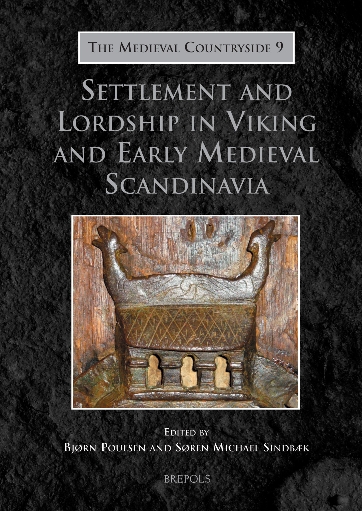
Settlement and Lordship in Viking and Early Medieval Scandinavia
This volume aims to define the changing nature of lordship in Viking and early medieval Scandinavia. Advances in settlement archaeology and cultural geography have revealed new aspects of social power in Viking Age and early medieval Scandinavia. The organization of settlement is increasingly well understood and gives evidence of strong social differentiation in rural settlement. Historical research however increasingly portrays these societies as characterized by elementary social networks at a personal level rather than at the level of formal institutions. Can these representations be reconciled? When did the possession of land in the form of manors or large demesne farms become an important source of power and authority? This question has generated intense debate internationally in recent years but there is no comprehensive overview for Scandinavia. New sources and approaches allow us to question the traditional view that Scandinavian aristocrats developed from Viking raiders into Christian landlords. Seventeen thematic chapters by leading scholars survey and assess the state of research and provide a new baseline for interdisciplinary discussions. How were social ties structured? How did lordship and dependency materialize in modes of agriculture settlement landscape and monuments? The book traces the power of tributary relations forged through personal ties gifts duties and feasting in great halls and their gradual transformation into the feudal bonds of levies and land-rent.
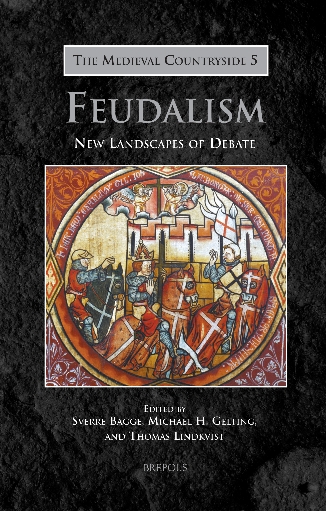
Feudalism
New Landscapes of Debate
This up-to-date discussion takes as its starting point the challenge to the traditional notion of feudalism in the twenty-five years since the publication of Jean-Pierre Poly and Eric Bournazel’s work on the ‘mutation féodale’ and Susan Reynolds’s attack on the very idea of a feudal society in the Middle Ages. While these challenges have presented a new picture of Western Europe in the so-called feudal age one more focused than the traditional model of feudalism was no new scholarly consensus has yet emerged.
The volume has two objectives. Firstly it discusses the present state of research bringing together leading representatives of the various interpretations of feudalism. It examines the character of medieval society including questions of landholding government and the relationship between king and aristocracy. Secondly it provides a new geographic perspective on the subject by considering countries little discussed from a feudal perspective. In addition to discussing countries that have been prominent in previous studies of feudalism such as England and France the book also includes contributions on Germany Spain Scandinavia Hungary and Romania thus supplying a truly European perspective and a comparative view of social structure in different regions of Europe.
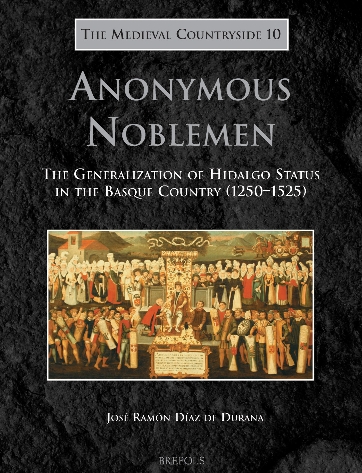
Anonymous Noblemen
The Generalization of Hidalgo Status in the Basque Country (1250-1525)
Towards the end of the Middle Ages one of Europe’s most important concentrations of nobility was to be found on the Spanish Atlantic coast between Asturias and Guipúzcoa. Many of these nobles were hidalgos proud but impoverished nobles common in sixteenth-century picaresque novels a full four hundred years before historians turned their attention to them. This book (which is linked to over a decade of research by a team of specialists into the social economic political and ideological transformations that the Basque Country underwent between the fourteenth and sixteenth centuries) analyses the group in the Basque Country with particular emphasis on the question of how and why hidalgo status became universal in the coastal areas but not in the interior. In part one the author reviews the historiography both of this group and of the lesser nobility elsewhere in Europe. The group is then characterized and placed in its historical context: the social conflicts that racked the fourteenth and fifteenth centuries. Finally in a series of case studies of the hidalgos of Álava and their commoner neighbours with whom they frequently struggled for control of village life the author studies their reactions to the political transformations which took place at the time as well as their relationship with the landed aristocracy in whose client networks they inevitably became involved.
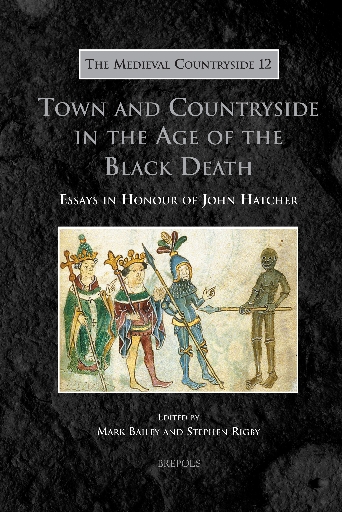
Town and Countryside in the Age of the Black Death
Essays in Honour of John Hatcher
The arrival of the Black Death in England which killed around a half of the national population marks the beginning of one of the most fascinating controversial and important periods of English social and economic history. This collection of essays on English society and economy in the later Middle Ages provides a worthy tribute to the pioneering work of John Hatcher in this field. With contributions from many of the most eminent historians of the English economy in the later Middle Ages the volume includes discussions of population agriculture the manor village society trade and industry. The book’s chapters offer original reassessments of key topics such as the impact of the Black Death on population and its effects on agricultural productivity and estate management. A number of its studies open up new areas of research including the demography of coastal communities and the role of fairs in the late medieval economy whilst others explore the problems of evidence for mortality rates or for change within the village community. Bringing together broad surveys of change and local case studies based on detailed archival research the chapters offer an assessment of previous work in the field and suggest a number of new directions for scholarship in this area.